The first cottage garden began with three plants that I picked up on clearance.
Two years later, neighbors were coming by to take pictures. This is the enchanting thing about this style.
It’s not a matter of perfection when it comes to cottage landscaping in the front yard.
It’s all about layers, color, and a bit of wildness. I’ve compiled 17 looks that work in real yards, not magazine shots.
You don’t need much land. Some good ideas can be implemented, and they all add up. Here’s a place to begin.
Layered Flower Beds
1. Mixed Perennial Border
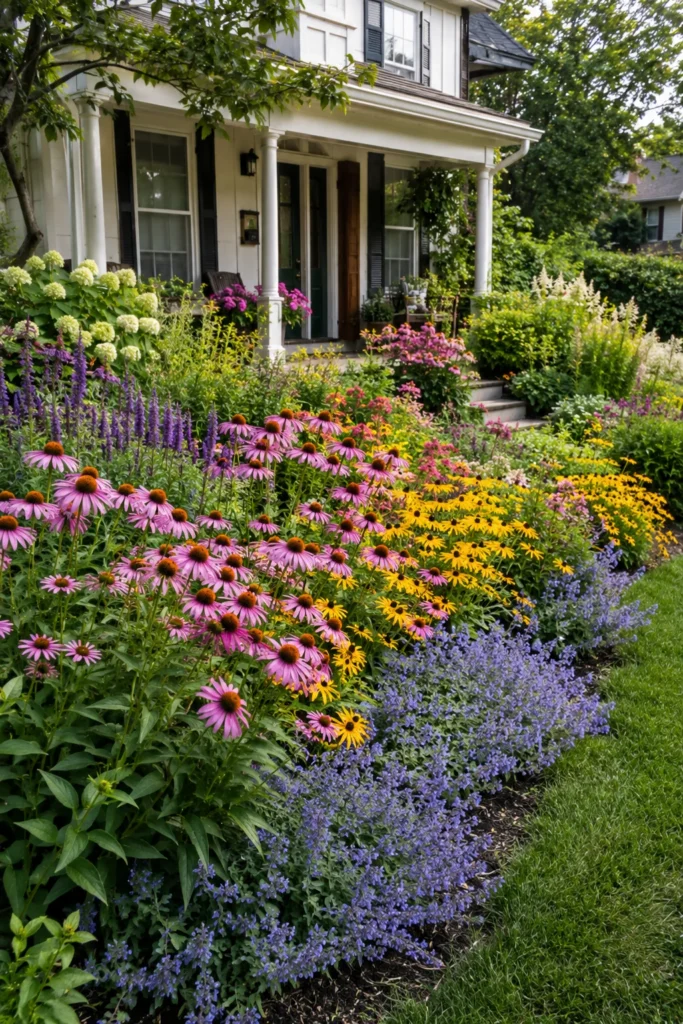
The base of a cottage front yard is a mixed perennial border. The bed will be interesting throughout the season due to the different heights and bloom times.
It’s always fascinating to me to see it change every month.
Mix coneflower, black-eyed Susan, and catmint for simple color throughout the summer and fall. Plant plants close together so the bed fills in quickly.
This will work for full-sun spots in average soil. Perfect for first-time gardeners.
My suggestion: Plant in groups of three, rather than singly. It is written in a planned manner rather than haphazardly.
2. Cutting Garden Corner
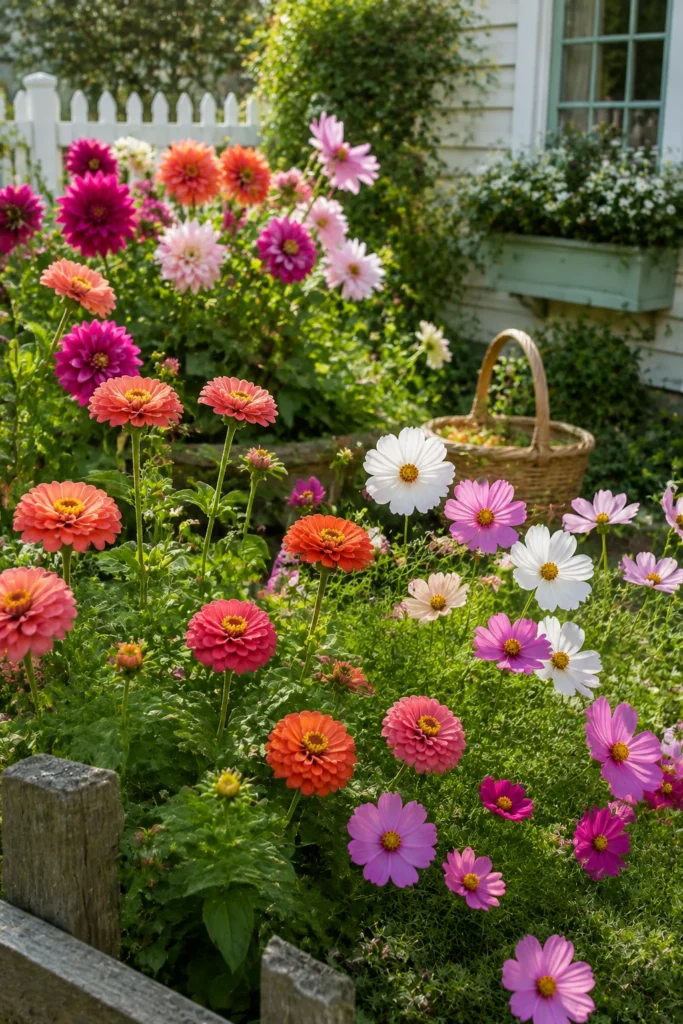
A small cutting garden patch provides fresh flowers throughout the summer. It also brings a sense of usability and habitation to the front yard. I made almost weekly cuts from mine in July.
Zinnias, cosmos, and dahlias will rebloom when cut. Place them in a sunny corner of the garden where people don’t walk.
This is perfect for anyone who really wants flowers in their home. If you prefer a more formal, untouched look, skip it.
My advice: Deadhead frequently, every few days. Helps plants continue to flower rather than seed.
3. Self-Seeding Cottage Flowers
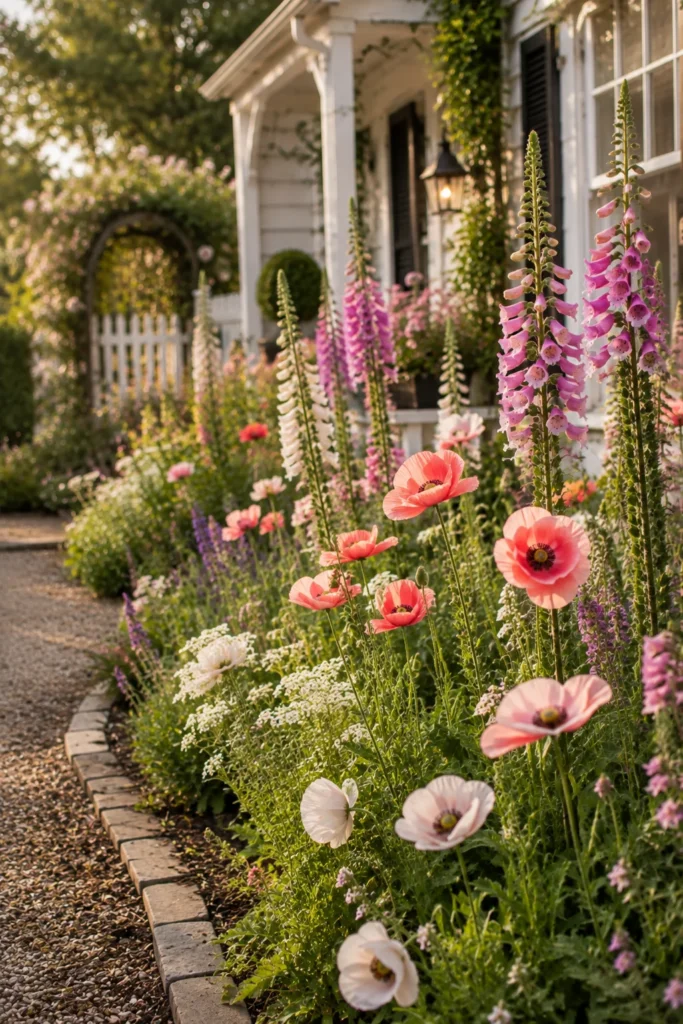
You don’t have to do much to have gaps filled with self-seeding flowers. They return annually with a few variations. I enjoy the element of surprise as to where they turn up next.
Foxglove, poppies, and larkspur are all self-seeding plants that will grow in most climates in the US.
Allow some seed heads to mature on the plant in the fall.
This is suitable for those gardeners who aren’t too demanding and don’t mind some variability. If you’re looking for a consistent layout, it’s not the best option.
My suggestion: Avoid using heavy mulch in areas for reseeding. Bare soil aids seed-to-soil contact and germination.
4. Layered Height Planting
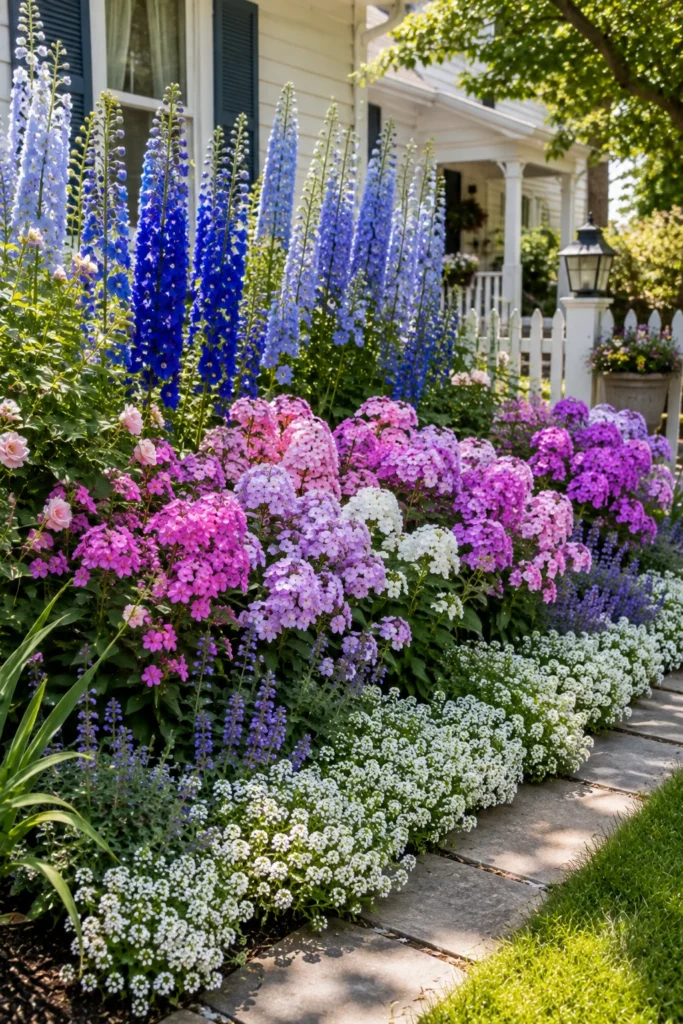
A cottage bed is full because of layering the plant heights. Tall plants at the back, medium in the middle, and low plants at the front. It’s a simple rule with a profound impact.
Use delphinium and hollyhock for the tallest, phlox for the medium, and sweet alyssum for the front.
Repeat the pattern throughout the bed to create a rhythm.
This can be used in any 3′ or more deep bed. Taller beds may be able to skip the highest layer in narrow beds.
My suggestion: Don’t plant plants in rows, but rather in staggered rows. Uneven spacing feels more natural.
Pathways and Garden Structure
5. Gravel Stepping Stone Path
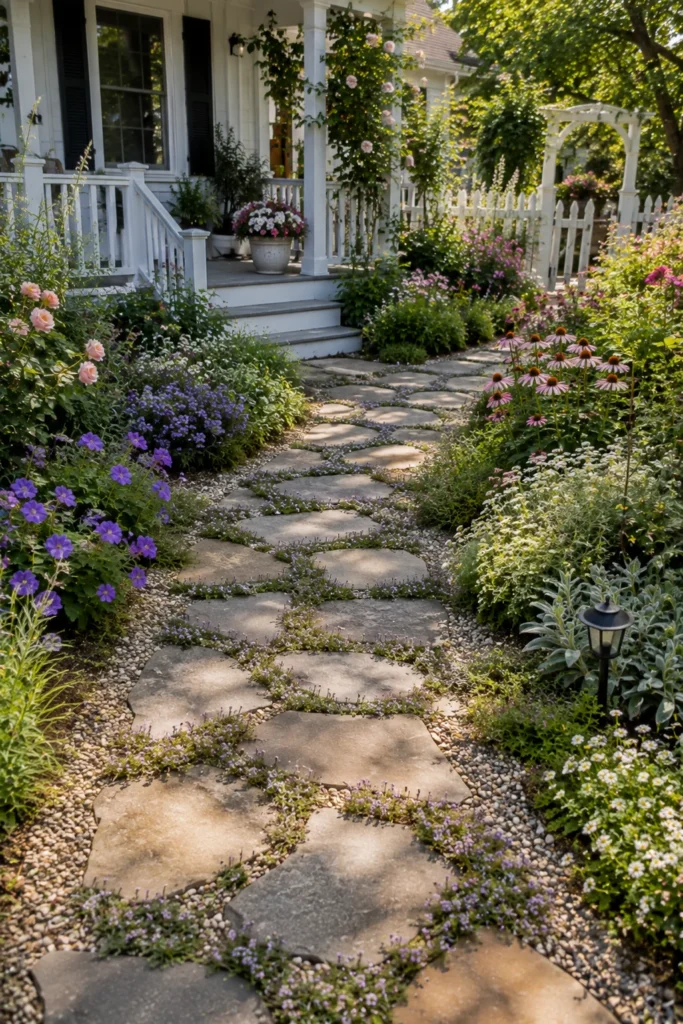
A stepping stone path with gravel suits the cottage style better than concrete. Allows plants to overhang the side of the walk without destroying it. I love its maturing quality; it’s like a good wine.
Install pea gravel, flagstone, or fieldstone steps set apart for a natural step. A weed barrier underneath will help keep maintenance low.
This is ideal for an informal front yard with curved beds. Not suitable for high heels or very steep slopes.
My suggestion: Allow low-growing plants such as creeping thyme to grow between the stones. Softens edges and has a nice smell when you step on it.
6. Arched Garden Gate
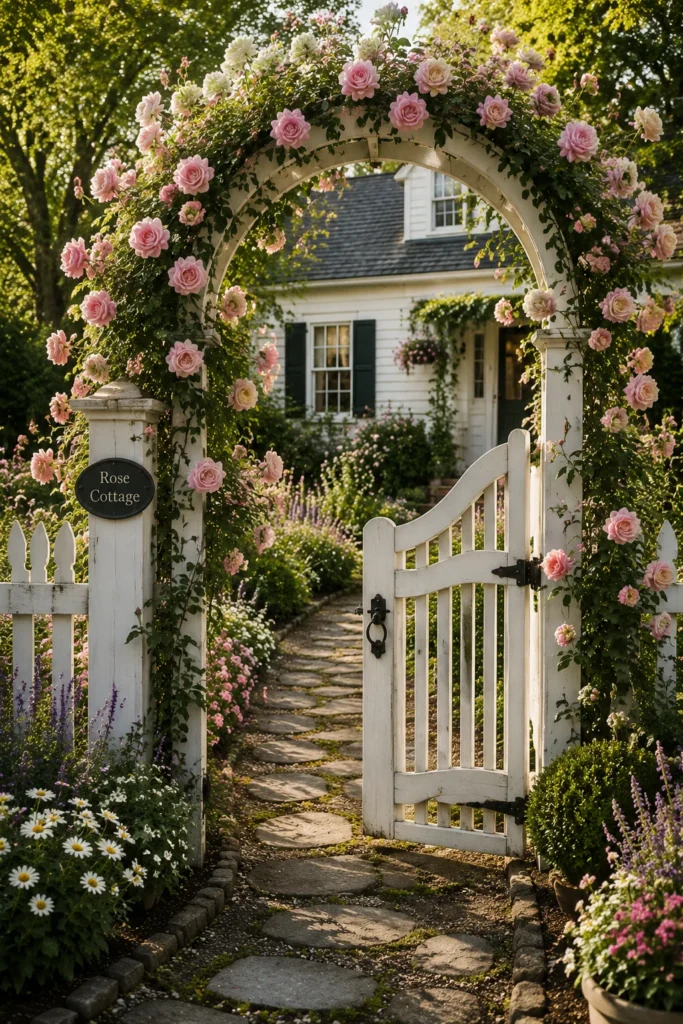
The front walk leads to an arched entrance gate, which prefigures the cottage style of the house.
It also provides climbing plants with something to cling to. It’s a small building that has a tremendous visual impact.
Either a wood or wrought iron arch can be used. Use with a low picket or wire fence on each side.
This applies to yards with front walk access. If the yard is very open, with no fences, then it may not be necessary.
My suggestion: Is to grow a climbing rose on one side, at first. It is less difficult to train than vines on both sides at the same time.
7. Picket Fence with Climbing Vines
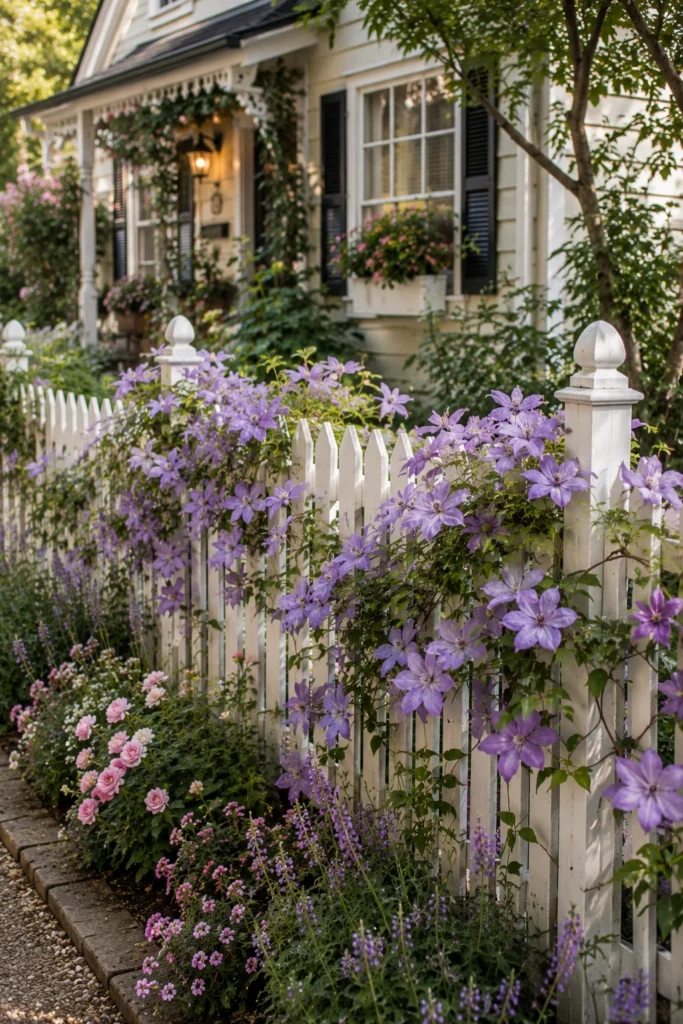
A picket fence with vines growing on it is a typical cottage front yard. It simply marks the area; it does not close it off. This is one of the most attractive methods to increase the height.
Both Clematis and climbing roses will grow well on picket fencing. Provide vines with wire or lattice to hold on to the wood.
This is ideal for yards with or wishing to have fencing on the front. If local rules restrict fence height, skip it.
My advice: Plant vines every 4′ as opposed to every post. It doesn’t look overplanted in the early stages, and it fills in quicker.
8. Curved Garden Beds
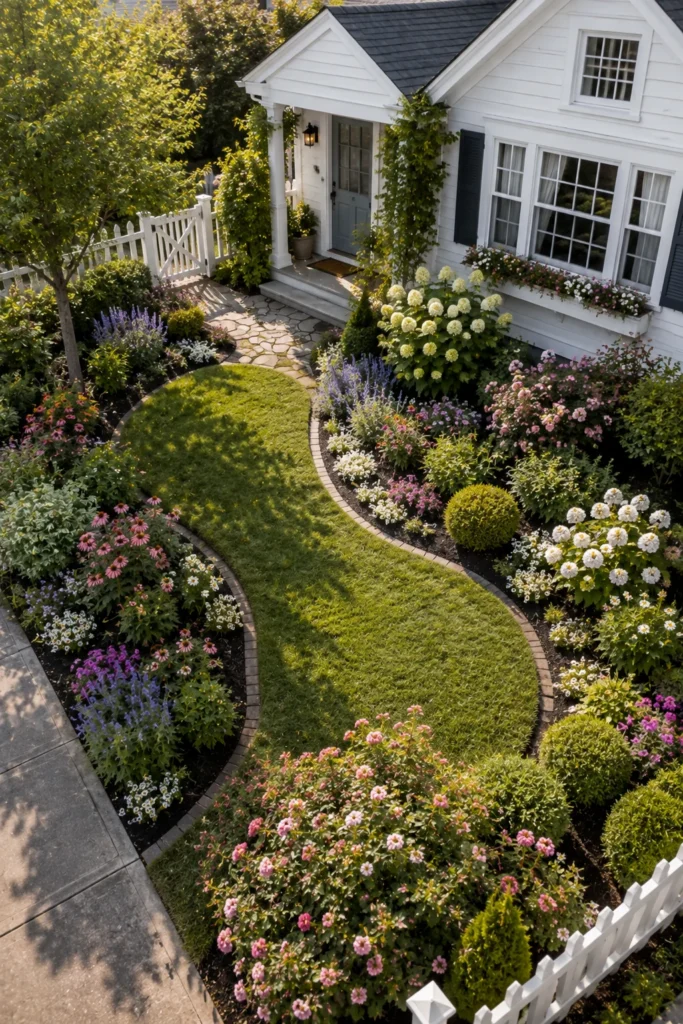
Curved beds are more natural than straight lines, and better suit the cottage look. They also help to make a small yard appear larger. I always make a curve in straight lines.
Use a garden hose to mark curves before digging for a natural shape. Plant with a variety of perennials and flowering shrubs.
This works for nearly any front yard, but especially smaller or odd-shaped lots. Straight lines, on the other hand, may be more fitting for very formal homes.
My advice: Avoid overly tight curves. Steep turns are harder to mow around and may look choppy.
Cottage Landscaping Plant Favorites
9. Climbing Roses on the Porch
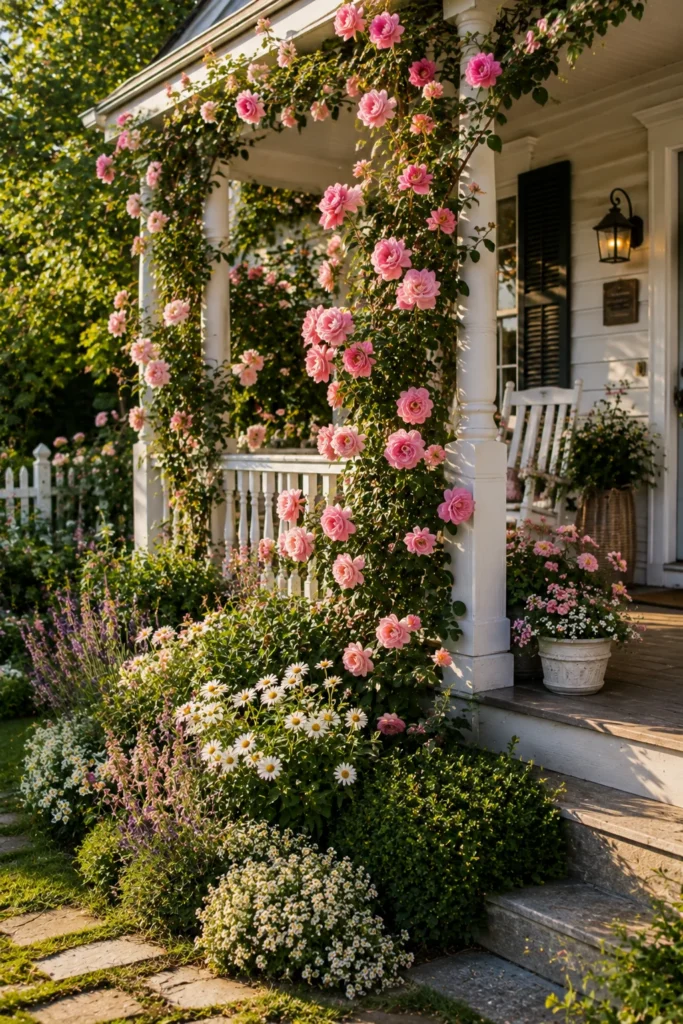
A signature of the cottage front yard is rose-covered porch posts or railing. Add them where you walk in and out for added fragrance. This is the first plant I put in a new cottage house.
Both New Dawn and Climbing America will flower several times during summer. Use soft ties to train stems on a post.
This applies to porches with a post, rail, or trellis you can climb on. Requires full sun to produce the most flowers.
My advice: Water at ground level, not overhead. Wet leaves on roses cause fungal issues.
10. Hollyhocks Against the Wall
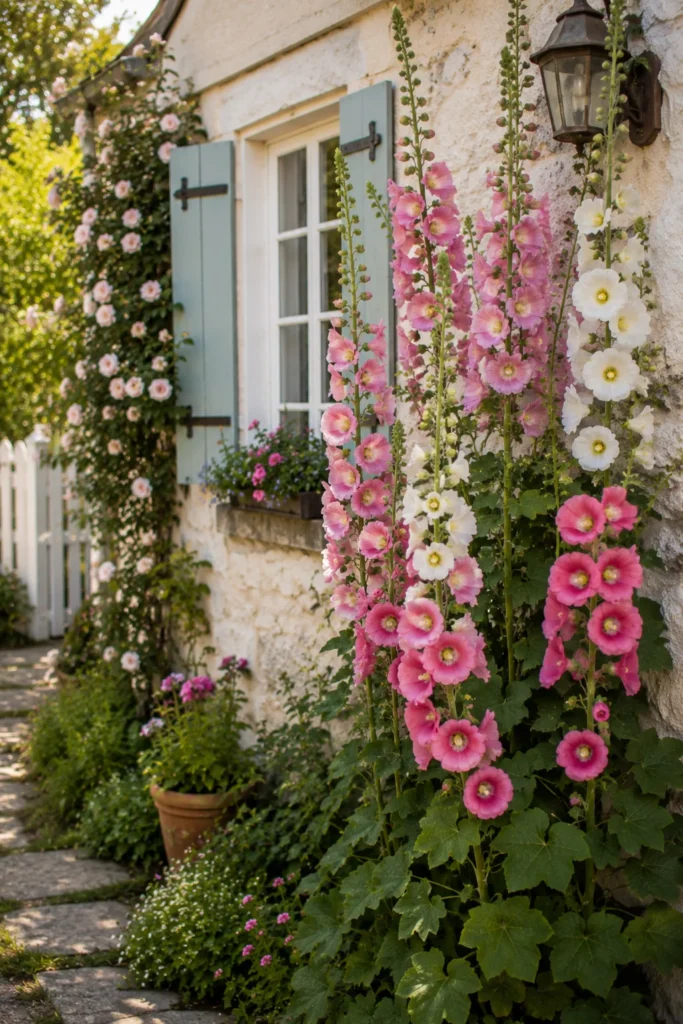
Hollyhocks are a tall plant that will reach up to a wall or fence, where they will be at their best. The old-fashioned flowers look like they’ve come out of a storybook. I love the way that they stand above all other plants by mid-summer.
For the very traditional appearance, plant hollyhocks that have only a single flower. They will grow best against a south- or west-facing wall.
It’s perfect for yards with an empty wall or fence that needs softness. Staking may be necessary if the sites are very windy.
My suggestion: Allow a couple of seed pods to dry each fall. Save seed to maintain the hollyhock patch, as they may not come up the following year.
11. Lavender Edging
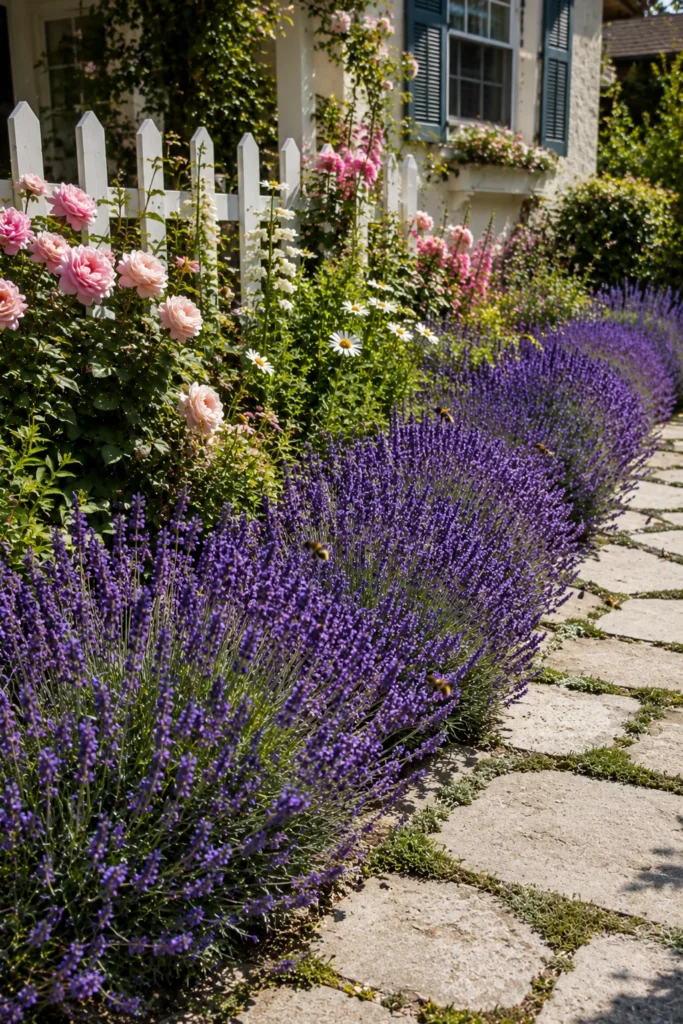
Lavender planted on a front bed will provide fragrance, color, and a slightly wild look. It also will withstand heat better than many cottage flowers. Whenever I pass by, I brush my hand against it.
Most climates in the United States are suitable for English lavender. Plant 18″ apart in a well-drained soil.
This will grow in full sun in well-drained soil. Avoid heavy clay soils.
My advice: Cut off the first flower head. It helps prevent the plant from becoming woody and thin in the middle.
12. Foxglove Clusters
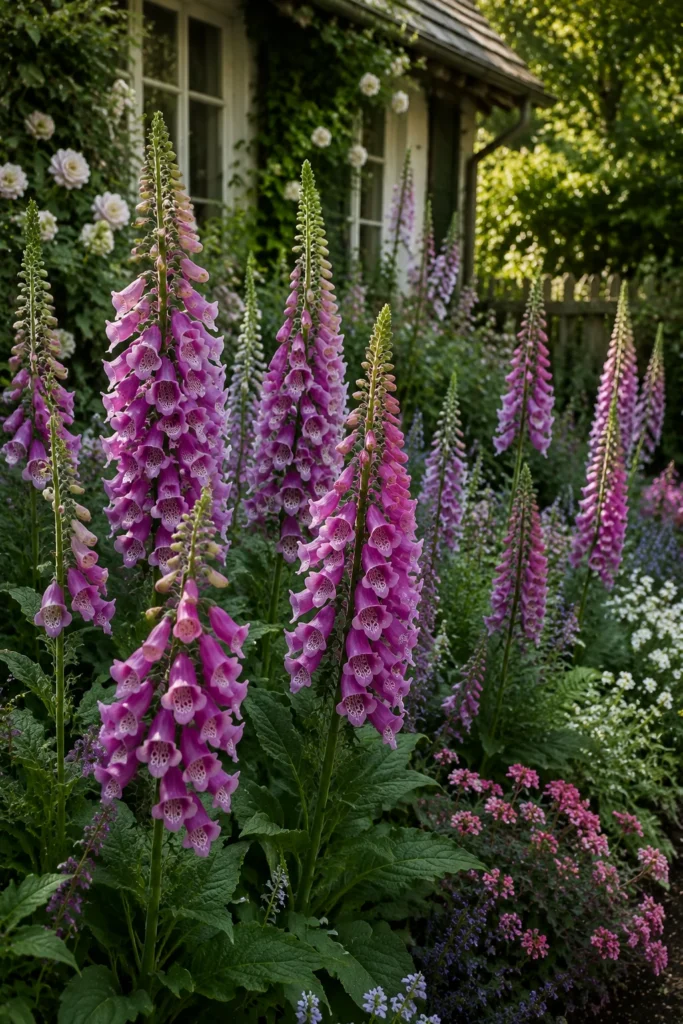
Foxglove clusters give a slightly dramatic, tall mid-bed. The spotted flowers are a favorite of bees throughout the season. I always have a couple of just for the bumblebees.
The old-fashioned cottage variety is Digitalis purpurea. In hotter climates, provide part shade; further north, provide full sun.
This is suitable for beds that get some afternoon shade. Foxglove is poisonous if ingested; keep it away from pets and children.
My suggestion: Plant in groups of 3-5. Single stems get lost among bushier plants.
13. Herb Garden Border
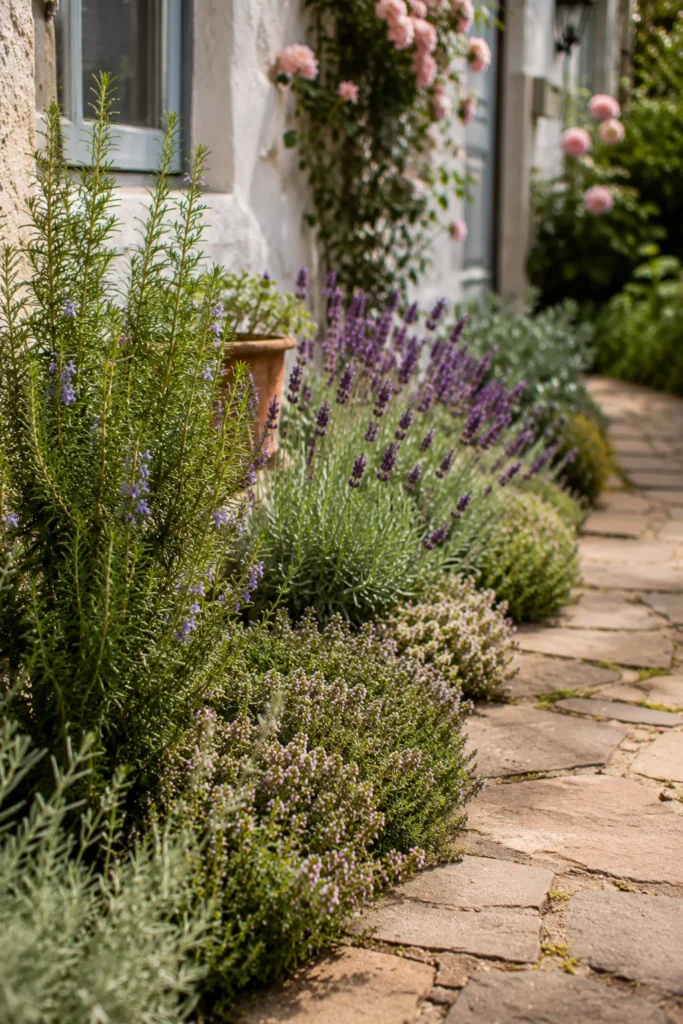
A herb border along the front walk is helpful and attractive. It adds fragrance to the flowers. I use my own in the kitchen more than I’d thought I would.
Lavender, rosemary, and thyme are all sun- and drought-tolerant. Trim them short so that they won’t obstruct the walk.
This is for all cooks who want a low, fragrant border. It’s a good size for a frequently used front door.
My suggestion: On purpose, brush past them when watering. Half the reason to plant herbs up front is the aroma that they give off.
A Quick Plant Comparison
Here is a fast reference for four of the cottage flowers covered above.
| Plant | Lights needs | Height | Bloom Season |
| Foxglove | Part Shade | Tall | Late Spring |
| Lavender | Full sun | Low to Medium | Summer |
| Hollyhock | Full sun | Tall | Summer |
| Sweet Alyssum | Full sun | Low | Spring through Fall |
Finishing Cottage Charm
14. Rustic Birdbath Feature
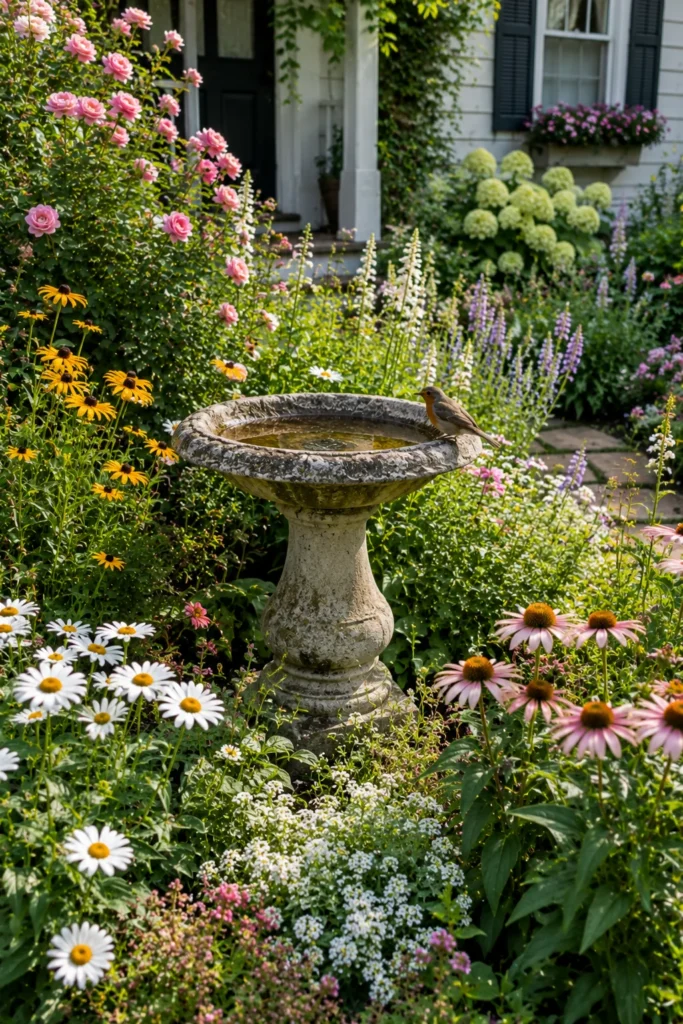
A cottage bed with a rustic bird bath in the center provides a place for birds to stay. It also serves as a focal point amid all the loose, layered planting.
It was more enjoyable to watch than I expected.
Cast stone or weathered metal birdbaths are the best option. Place it in an area where you can view it from a window.
This is suitable for beds with enough room to accommodate a small feature. The beds can be very full and may not have room.
My suggestion: Clean it out each week during the summer. Birds use it more if the water is fresh.
15. Vintage Watering Can Décor
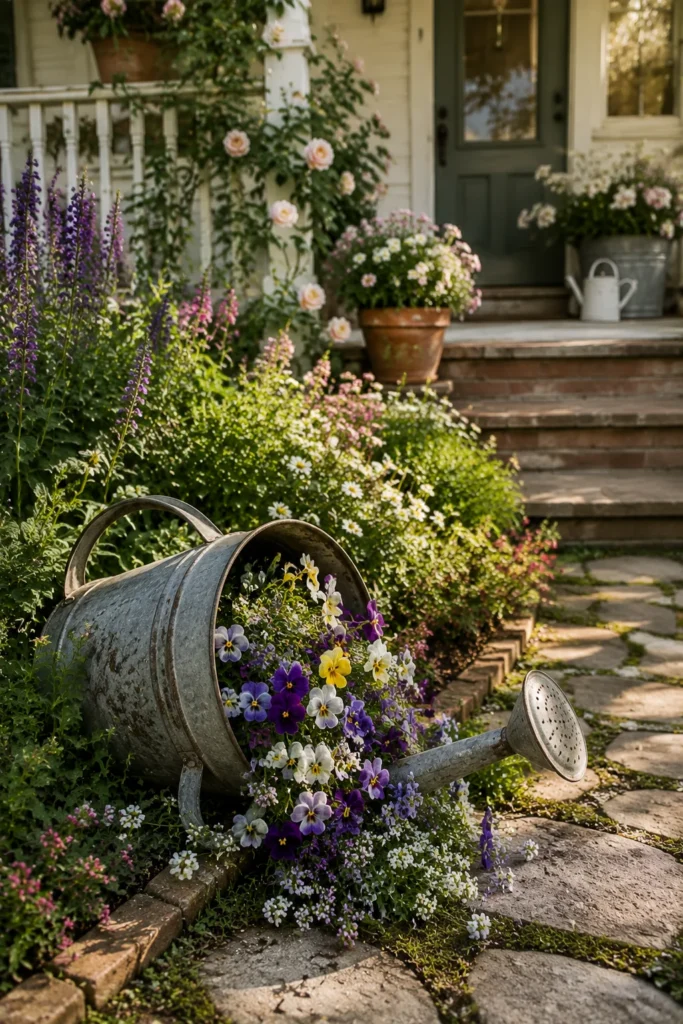
A small but lovely cottage feature is an old watering can tipped over, with flowers cascading over the top. If you already have one, it’s very cheap. I got mine at a yard sale for $2.00.
For a lush overhanging design, plant trailing lobelia or sweet alyssum in it. Place it up against the front porch or edge of a bed.
This is perfect for adding a bit of fun to any location, without spending a lot of money. If you are new to cottage style, it’s a good project to begin with.
My suggestion: Make a couple of holes in the bottom. Plants will have their roots rot quickly if there is standing water.
16. Wooden Trellis Accents
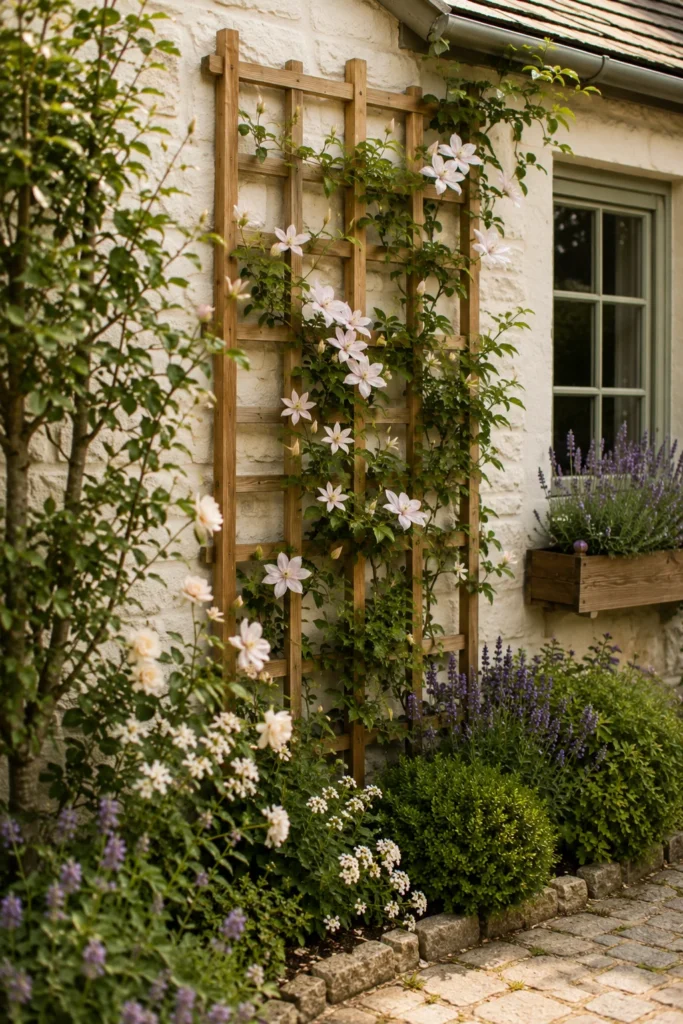
Climbing plants need a structure to climb on, but a simple wooden trellis will not appear burdensome. Use it on a wall, in a bed, or near a window. I prefer to use more than one for a multi-layered effect.
Both cedar and pressure-treated pine will last for several years outdoors. Stain or don’t stain, depending on your color story.
Ideal for any location that needs support for a climbing plant. If you enjoy a do-it-yourself project, it’s a simple weekend build.
My suggestion: Make the trellis a little bit off-center from the wall. This provides air circulation and prevents plants from rotting against the siding.
17. Butterfly-Friendly Planting
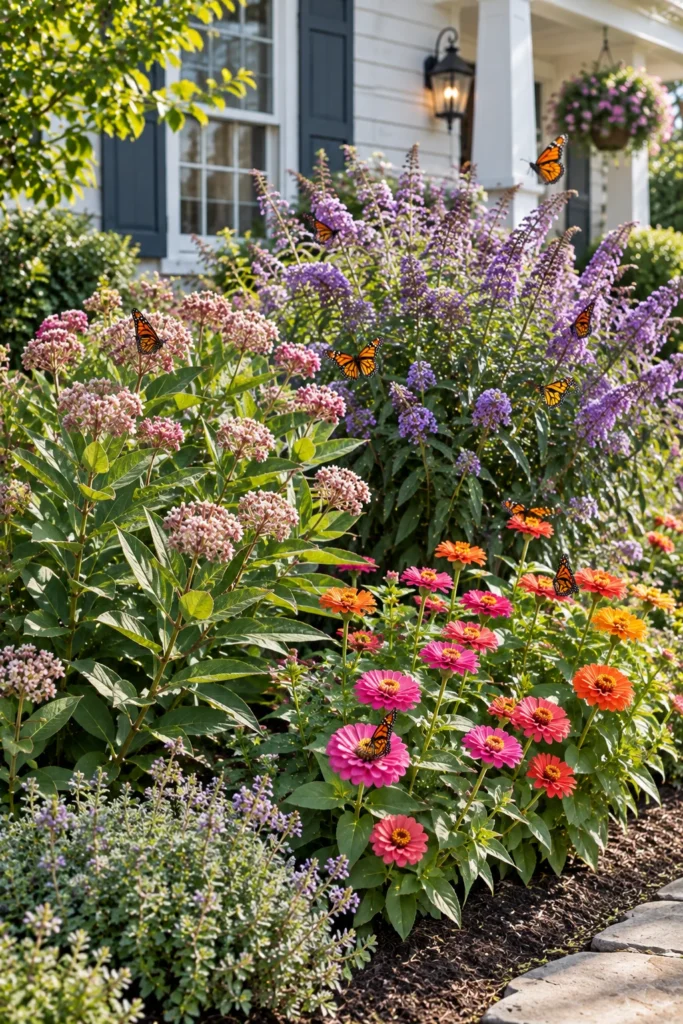
Cottage style is an ideal choice for planting for butterflies, as many of the cottage flowers attract butterflies, and it is a natural choice for them.
It brings vitality and activity to the yard. Since I began planning with this in mind, I have seen a lot more pollinators.
Plants that are sure to attract butterflies include milkweed, butterfly bush, and zinnias.
Do not plant individual plants, but rather clusters.
This works for any sunny bed, especially one in front of a porch or window where you can observe them—a quick and easy way to make a difference in your planting.
My suggestion: Avoid using any pesticides in these beds. Organic sprays, too, can be detrimental to the larvae of butterflies.
A Quick Plant Comparison
Here is a fast reference for four of the cottage flowers covered above.
| Plant | Light Needs | Height | Bloom Season |
| Foxglove | Part Shade | Tall | Late Spring |
| Lavender | Full Sun | Low to Medium | Summer |
| Hollyhock | Full Sun | Tall | Summer |
| Sweet Alyssum | Full Sun | Low | Spring through Fall |
Frequently Asked Questions
What flowers work best for a cottage front yard?
Foxglove, hollyhock, lavender, and climbing roses are classic choices. Mixing bloom times keeps color going from spring through fall. Self-seeding flowers like poppies add an easy, informal touch too.
Is cottage landscaping hard to maintain?
It looks wild, but it is not necessarily high maintenance. Perennials and self-seeders come back with little help. The main work is occasional deadheading and keeping beds edged.
Can I do cottage landscaping in a small front yard?
Yes, cottage style actually works well in smaller spaces. Layered, close planting fills gaps fast without needing much room. A curved bed or two is often enough to get the look.
What is the difference between cottage and English garden style?
They overlap a lot, but English gardens tend to be more structured with clipped hedges. Cottage style leans looser and more casual, with plants allowed to spill and self-seed. Both share a love of layered, colorful planting.
Do I need a fence for cottage-style landscaping?
No, but a low picket fence or arched gate does add to the look. Plenty of cottage yards work with curved beds alone. A fence just gives climbing plants somewhere to grow.
Final Thoughts
Cottage-style landscaping rewards patience more than perfection. A bed that looks sparse in April can be overflowing by July. I remind myself of that every single spring.
Start small if the whole list feels like a lot. One layered bed or one climbing rose is enough to begin.
Pick your favorite look from this list and plant it this weekend.