For years, my front door felt like a no-man’s-land. I painted it, changed out the hardware, and still didn’t feel a thing.
Then I added one front door planter, and it all worked out. A large pot did what paint couldn’t!
Here are 17 looks I’ve seen or tested for an front yard planters entrance. Pairs, color matches, shade fixes, and low-effort setups await.
Choose the one that will complement your porch. Classics and Formal Entrances are available.
Classic and Formal Entrances
I like things to be symmetrical. Any door can be made complete with matching pots. These four looks are my fallback options for nice “curb appeal.”
1. Boxwood Spheres in Matching Urns

Clipped green globes add a tranquil and neat appearance. The evergreen leaves keep the entrance dressed up year-round. A matching pair is not too much to ask for and isn’t too costly.
The best plants are dwarf boxwood or Japanese holly (Ilex crenata) in 20″-24″ fiberglass urns. In areas affected by boxwood disease, holly is a good alternative.
Ideal for: Traditional, colonial, and brick houses.
My tip: Late spring – when new growth is hardened. For sharp cuts, use sharp shears.
2. Compact Hydrangeas in Oversized Pots
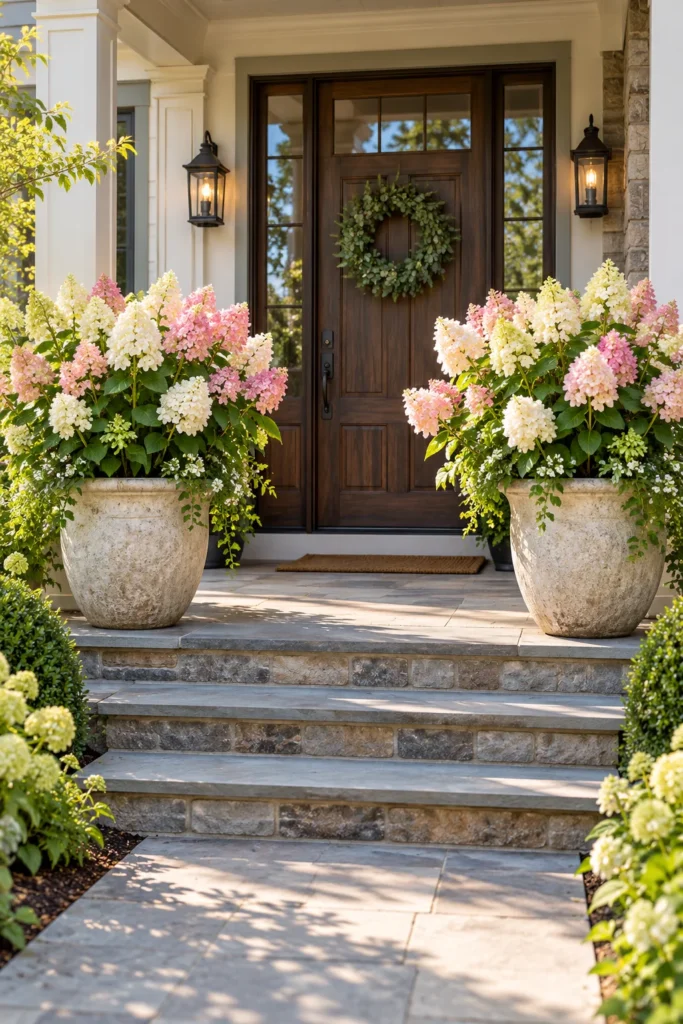
Sturdiness is enhanced by big blooms that add soft romance to a sturdy door. Compact panicle hydrangea blooms from mid-summer to fall, and turns to dusty pink. I have two by my side; they slow down all passersby.
Ideal plants: 24″ pots of ‘Bobo’ or ‘Little Lime’ panicle hydrangea.
Ideal for: Porches that are shaded in the afternoon and get morning sun.
My tip: Hydrangeas like to drink! Water generously in the morning during the summer in July.
3. Dwarf Japanese Maple as a Statement Piece

One sculptural tree makes a pot into art! The leaves change hues throughout the year, and the stark bare branches in winter are still beautiful. A small entry will require just one tree.
Best plants: A small Japanese maple, like “Crimson Queen” in a large glazed ceramic pot.
Ideal for: Shady entrances and modern and/or Asian homes.
My suggestion: Keep it out of the hot afternoon sun and wind. Unfortunately, scorched leaf edges are difficult to repair.
4. Spiral Topiary Pair Front Door Planter
Spirals add drama and height. They look sculptured but remain green year-round. The two flanking the door seem to be a large portal.
Ideal plants: Spiral juniper or dwarf Alberta spruce in tall terracotta or concrete pots.
Ideal for: Tall entries and houses with good architecture.
My suggestion: Turn the pot 1/4 turn every month. They’re light on both sides and won’t get too heavy.
Planters Matched to Your Door Color
Most people struggle with color pairing. I solved it by starting with my door, then my flowers. These 4 combinations eliminate the guessing.
5. Lime and White for Black Doors

Bright foliage will stand out against a black background. This color combination is easy to see at night, in chartreuse and white. The result is fresh, not fussy.
Best plants: Chartreuse sweet potato vine and white petunias in a matte black pot.
Ideal for: Contemporary, modern, and farmhouse homes.
My suggestion: Pinch the vine back every two weeks. Grows quickly and will eat the petunias.
6. Blue and White for Red Doors

I don’t want to plant anything too hot and crazy, since Red already shouts. Balance it out with blue and white, without competing. A little silver is all that’s needed to complete the look.
Best plants: Blue salvia, white sweet alyssum, and dusty miller.
Ideal for: Brick houses and traditional red doors.
My suggestion: Avoid red flowers here. It’s best to match Red with Red.
7. Sunny Yellow and Orange for Blue Doors
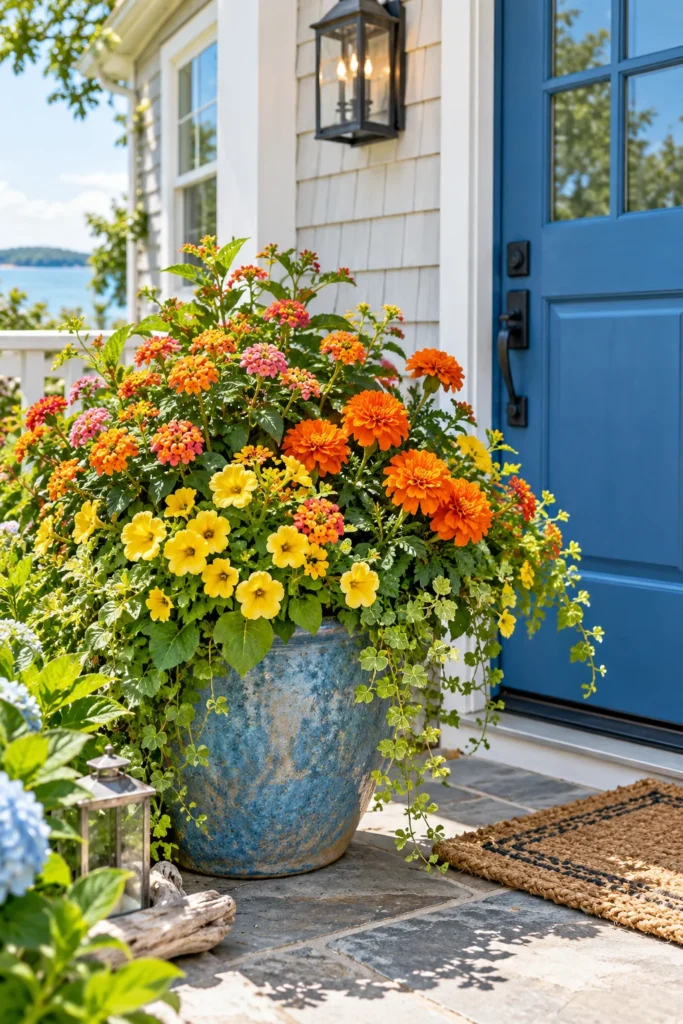
Orange is opposite blue on the color wheel, which means all flowers will stand out. Yellow is a warm, light color. This combination will give the navy or teal door a friendly look.
Best plant: Lantana, yellow calibrachoa, and orange marigolds are the best plants.
Ideal for: Houses by the ocean and country houses.
My suggestion: Use only one orange plant. With orange, too much is a bad thing.
8. Burgundy and Blush for Gray or White Doors

Add richness to neutral doors. The pot’s anchor is deep burgundy leaves, with soft pink flowers for warmth. I love how this will look on cloudy days.
Ideal plants: Burgundy coleus and blush pink begonias in a cream coloured glazed pot.
Ideal for: gray siding and white-colored trim.
My suggestion: For sunny porches, choose coleus that can tolerate sun. Shade varieties don’t look as dark in bright sunlight.
Planters for Your Light and Wind
My porch is north-facing and gets wind in March. I had to kill three plants before I realized that I had to select plants based on conditions, not appearance. These three setups suit the weather.
9. Fern and Caladium Trio

Flowers are reluctant to grow where big, bold leaves grow. Ferns provide soft texture, and caladiums will provide pink, white, and red color.
The blend is lush and has a bit of tropical character.
Plants to use: Boston fern, caladiums, and creeping Jenny in a fiberglass pot.
Ideal for: Covered porches and doors on north- or east-facing walls.
My suggestion: Wait until the soil temperature is around 70 degrees to plant caladium tubers. They can rot in cold soil.
10. Heat-Proof Pot with Lantana and Sedum
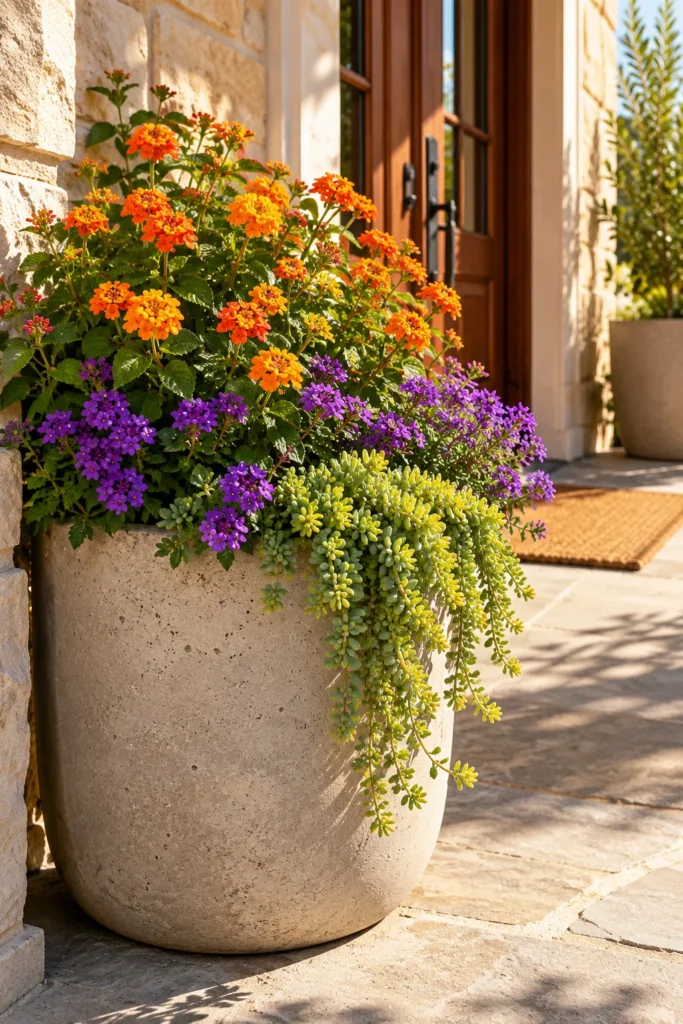
South and west doors heat up during the summer.
Lantana and verbena thrive in hot temperatures and keep on producing flowers. Sedum fills the edges and stores water in its leaves.
Best plants: lantana, verbena, and creeping Sedum in a heavy, concrete or terracotta container.
Ideal for: Hot, sunny entries and forgetful waterers.
My suggestion: Water deeply, but not too often. Sips will cause weak roots, as they are shallow.
11. Wind-Proof Pot with Low Grasses

Wind knocks over tall, top-heavy pots. Low grasses bend and bounce back instead. A heavy base helps hold the entire planting in place.
Best plants: Blue fescue and Carex in a large, deep concrete container.
Ideal for: Corner lots, hillside homes, and open porches.
My suggestion: Choose a pot wider than it is tall. A broad base can withstand wind.
Small Porch and Low-Effort Setups
In my first rental, I had a porch about the size of a doormat. I discovered that when you’re designing a small space, it’s not about the size of your dreams; it’s about the shape of your dreams. These three work well in tight spaces.
12. Tall Slim Planter for Narrow Entries

A tall, narrow pot adds vertical interest without taking up much floor space. Upright plants lead the eye upward and help the door appear larger.
Can be used even when there is a close step.
Suitable plants: Feather reed grass or a small spruce in a long, narrow fiberglass container.
Ideal for: Townhouses, condos, and narrow stoops.
My tip: Choose a planter that is at least 30″ tall. The shorter ones feel like an afterthought.
13. Railing Planter and Hanging Basket Combo

If the floor is full, move upwards. Add color at eye level with a rail planter and a basket—no impediments along the way.
Best plants: Trailing verbena, calibrachoa, and petunias in lightweight coir-lined or plastic containers.
Ideal for: Tenants and mini porches.
My suggestion: Use wet-soil-weight-rated brackets! Wet containers weigh much more than you’d think.
14. Self-Watering Planter for Busy Weeks

The built-in reservoir keeps roots evenly moist for several days. I’m more of a traveler than I like to think, and this is what saved my plants.
This means far fewer watering tasks.
Best plants: Geraniums, dragon wing begonias, and ornamental peppers in a planter with a fill tube.
Ideal for: Tourists, new gardeners, and hot climates.
My suggestion: Add water to the reservoir gradually the first week. Root systems need time to develop the ability to grow downward.
Fragrance and Year-Round Interest
The most desirable entrances have a good odor and appearance. I learned this when a visitor came to see my pots, rang the bell, and stopped to smell them—currently planting for fragrance and for each season.
15. Lavender and Rosemary Pair
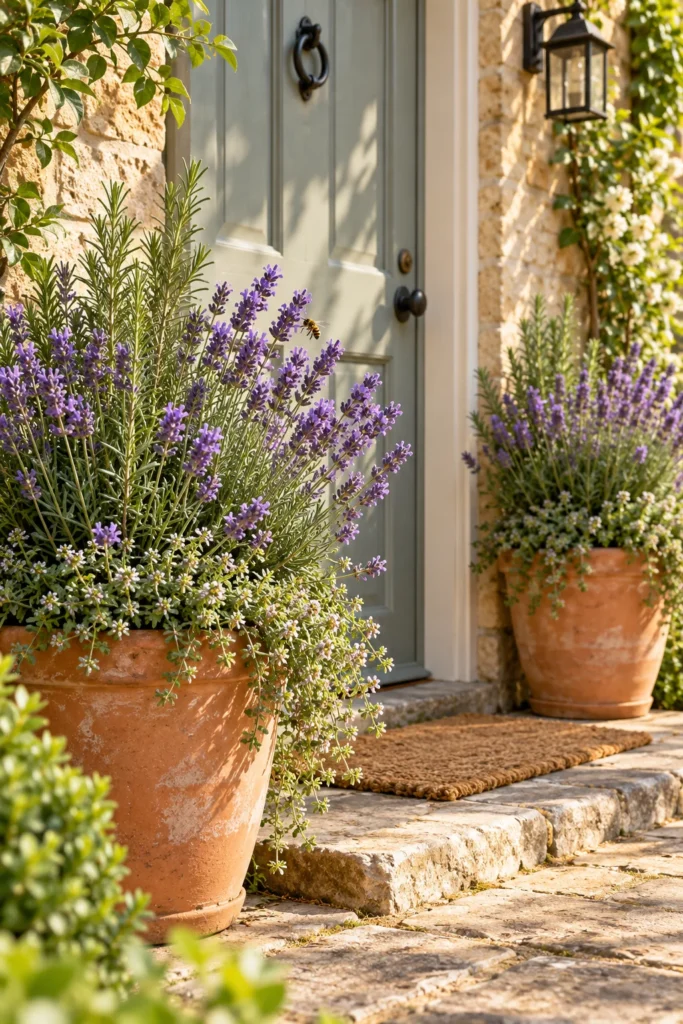
The fragrant leaves give off fragrance every time they pass by. Both plants prefer a sunny location and fast-draining soil.
Bees are attracted to them all summer, and the gray-green leaves are attractive.
Best plants: English lavender, rosemary, and thyme in unglazed terracotta.
Ideal for: Sunny doors and Mediterranean and cottage designs.
My tip: Don’t use rich potting soil. Add coarse sand to prevent roots from being in wet soil.
16. Four-Season Evergreen Pot with Seasonal Toppers

The pot is held in place by an evergreen shrub all year. I then add seasonal color. This saves money and keeps the entrance well planned each month.
Ideal plants: Dwarf boxwood or Japanese holly, plus pansies in spring, geraniums in summer, mums in fall, and cut boughs in winter.
Ideal for: Those who want a clean, tidy look without a complete overhaul.
My tip: Plant the evergreen in the middle of the planting area. This lets additional color pop.
17. Herb and Strawberry Welcome Pot
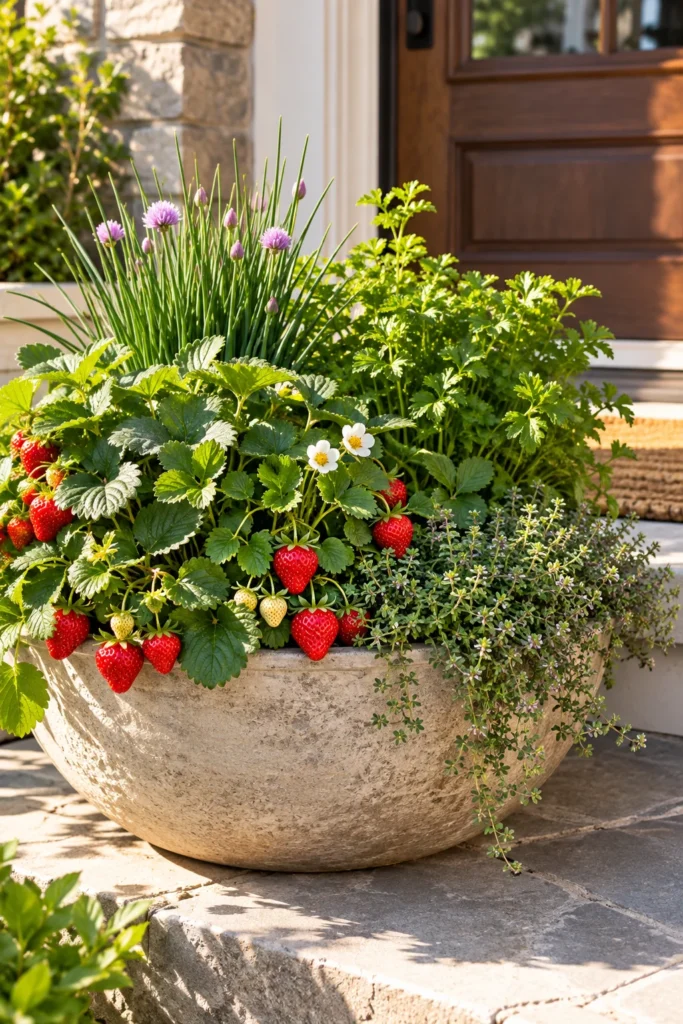
Edible plants create a lived-in entrance. Herbs sit in the center of the basket, and strawberries overflow it. Guests love picking up a sprig as they leave.
Best plants: In a large, shallow pot, everbearing strawberries, thyme, chives, and parsley.
Great for: Families, cooks, and sunny porches.
My advice: Pick fruit often. Birds quickly pick ripe berries, so I net mine when needed.
Planter Materials Compared
| Material | Weight | Winter Durability | Best Use |
| Terracotta | Medium | Can crack in hard freezes | Herbs, lavender, dry-loving plants |
| Concrete | Very heavy | Strong | Windy entries and large shrubs |
| Fiberglass | Light | Excellent | Tall pots and cold climates |
| Glazed ceramic | Heavy | Can crack if left full of wet soil | Statement pots and color matching |
| Galvanized metal | Light to medium | Strong | Modern homes and cool climates |
Frequently Asked Questions
How many planters should I put by my front door?
Two matching pots give a formal look. One large pot works well for a narrow entry. For a casual feel, try a cluster of three in mixed heights.
What size planter looks best at an entrance?
Aim for 18 to 24 inches wide and at least 20 inches tall. Small pots look lost next to a standard door. Bigger pots also hold moisture longer.
What plants last longest in entrance pots?
Boxwood, dwarf evergreens, ornamental grasses, and sedum last the longest.
They handle weather and forgive missed waterings. Add seasonal color on top when you want a change.
Does the direction my door faces matter?
Yes. South and west doors get hot afternoon sun and need heat-tolerant plants. North and east doors stay cooler and suit ferns and caladiums.
How do I keep planters from blowing over?
Choose heavy materials like concrete and pick wide, low pots. Use dense, low plants instead of tall, top-heavy ones. Move lightweight pots to a sheltered spot during storms.
Final Thoughts
Your entrance does not need a redesign. It needs a little life.
Start with one good pot and one good plant. Add a second when you feel ready. I promise you will not look at your porch the same way.
Measure your door this weekend and buy one pot bigger than you think you need.