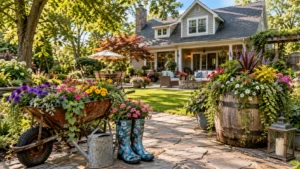
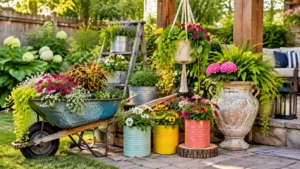
At first, all I had back there was a patch of dirt and a single, dying rosebush. It took three summers of figuring things out, but now the neighbors actually pause to look at it.
Most of that transformation came down to backyard planters.
I lost a lot of plants along the way, and there are definitely a few planters I wish I hadn’t bought.
Here are the 17 creative planters that were actually worth keeping, along with the advice I would give a friend before buying.
Planter Materials at a Glance
| Material | Durability | Weight | Price Range | Best For |
| Wood | Moderate, 5 to 10 years | Light to medium | $ to $$ | Raised beds, DIY builds |
| Terracotta | Low in freezing climates | Medium | $ | Herbs, small plants |
| Metal | High | Medium to heavy | $$ | Vegetables, modern looks |
| Concrete | Very high | Heavy | $$$ | Permanent statement pieces |
| Plastic or resin | Moderate | Light | $ | Budget setups, renters |
Small Space and Corner Backyard Planters
1. Corner Herb Spiral Planter

The spiral design packs an unexpected amount of planting room into a very tight area.
It suits an awkward corner or a yard where open ground is at a premium. Its silhouette alone can turn wasted space into a focal point.
Stack up stone or use cedar rounds to build it, since both will last for years outdoors.
Keep herbs that need quick drainage, such as oregano, thyme, and basil, up toward the top.
My tip: Put it right by the back door, as I did with mine. I cook with it nearly every day, and that regular use is how you really know an herb planter is worth having.
2. Vertical Pallet Planter

You can turn an empty wall or fence into growing space with a salvaged pallet, without losing an inch of yard.
It costs less than almost anything else here, and it gets photographed just as often.
Line the back and bottom with landscape fabric first; otherwise, your soil spills right out.
Lettuce, succulents, and strawberries all thrive in the pallet’s narrow slots.
My tip: Lean it against the wall for the first week rather than hanging it immediately. Soaked soil weighs a lot more than most folks realize, as I found out the hard way.
3. Fence Rail Hanging Planters
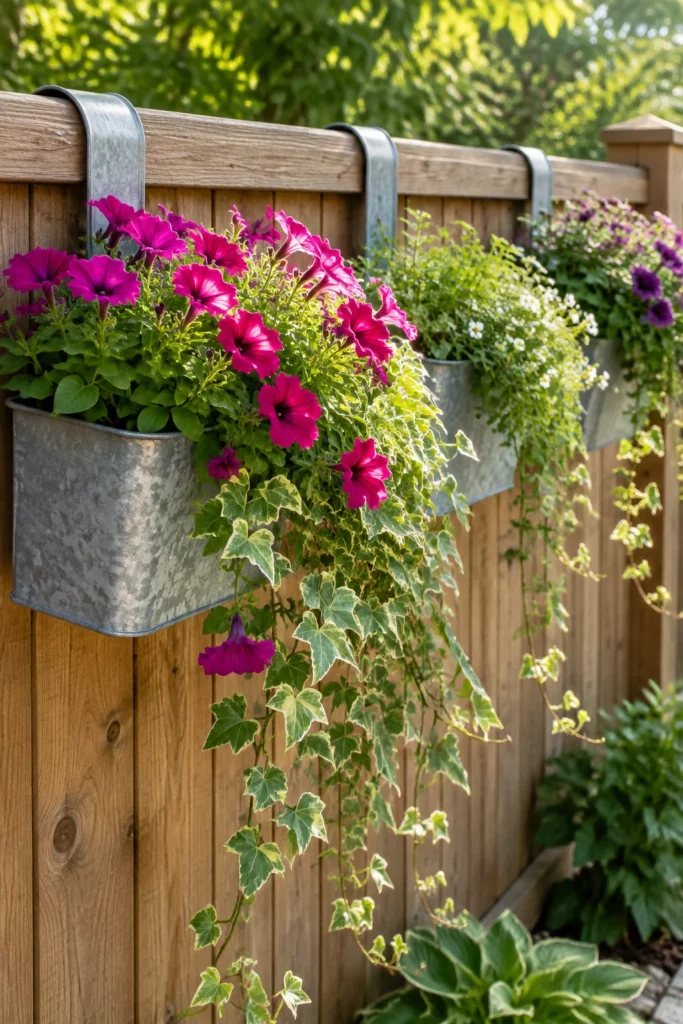
Because they hook directly over a fence rail, these are ideal if your yard has plenty of fencing but very little lawn. You don’t need to dig or build anything new; they use unused space you already have.
For heavy wind and rain, galvanized steel brackets work best. Trailing varieties such as ivy, petunias, or even cherry tomatoes drape nicely over the rail.
My tip: Leave a couple of inches of breathing room between each box. I put mine too close together when I started, and within weeks they were competing for sunlight.
4. Stacked Terracotta Tower

Threading a central rod through nested terracotta pots turns them into a vertical stack rather than a horizontal line.
It looks great in a dry, bright corner where you otherwise cannot grow much of anything.
Succulents and sedum suit terracotta well because both thrive on the quick drainage it offers. Leave this design alone if you get hard freezes, unless you can move it indoors.
My tip: Mine sits on a small wheeled furniture dolly. It takes about thirty seconds to roll it into the garage ahead of the first freeze.
Raised and Tiered Planters
5. Cedar Raised Bed
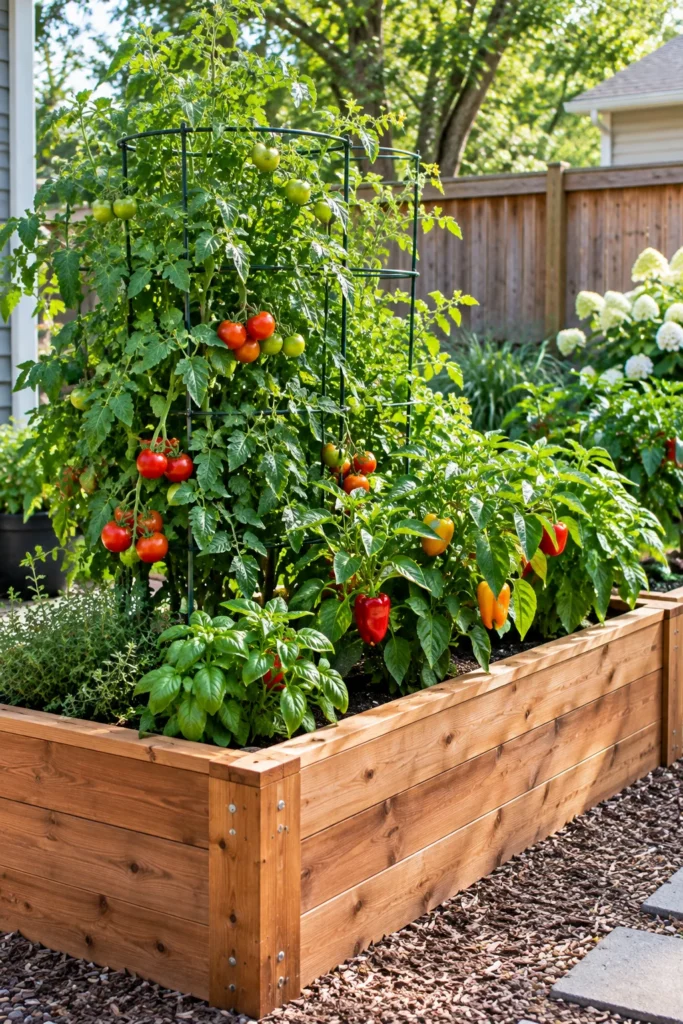
You get a real vegetable patch from a raised bed without digging up a single inch of lawn. It also sorts out poor soil and bad drainage at the same time.
Cedar naturally resists rot, so paying more than for pine pays off. Tomatoes, peppers, and root crops will all thrive with this kind of depth.
My tip: Aim for a minimum depth of 12 inches. The tomatoes in my first bed never topped my knees because I didn’t make the frame deep enough.
6. Ladder Tiered Planter

Lay an old wooden ladder on its side for quick tiers, each catching its own mix of sun and shade. You get great results with this on a shady patio or uneven, sloping ground.
Track down a reclaimed wooden ladder if possible, because brand-new ones lack that character.
Lettuce, strawberries, and low-growing herbs are all well suited to the shallow tiers.
My tip: Reserve the top tier for whatever needs the most sun. The first time around I did the exact opposite, then sat there wondering why nothing took off.
7. Cinder Block Raised Planter

Few raised beds cost less to throw together than stacked cinder blocks, and their open cores give you bonus pockets to plant in.
You do not need to cut anything or drive screws; you stack them.
Tuck drought-tolerant flowers or trailing herbs into the side openings, and save the main bed up top for real vegetables.
It is a great arrangement if you want to try gardening without committing to a permanent build.
My tip: Set the blocks up dry before adding any dirt to make sure you like where they sit. Trying to shift a block after you’ve added dirt is no fun.
8. Galvanized Stock Tank Planter
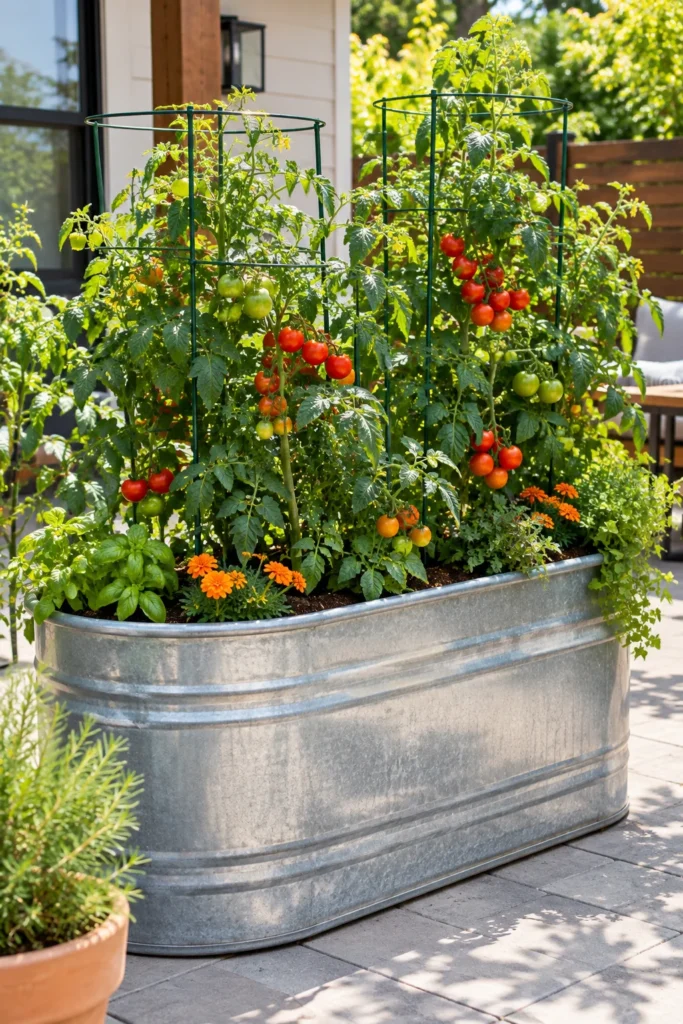
A galvanized steel stock tank works as a ready-to-use, oversized bed with practically zero assembly.
Because the steel heats the soil early in the year, it gives colder regions a longer growing window.
Squash, peppers, and tomatoes do especially well with all that soil depth and warm metal. It works particularly well if your growing season is short or your climate runs hot.
My tip: Put the drainage holes in before you add dirt, not once it is full. They do not ship with drain holes pre-drilled, a lesson I learned the hard way.
Budget and DIY Planters
9. Repurposed Wine Barrel Planter

Cutting a wine barrel in half gives you deep rooting space along with an immediate, rustic look.
Use one on its own as a focal point, or set several in a row along a fence line.
Because they’re made of oak, these barrels retain water effectively and hold up outdoors for years.
There is plenty of room for root systems to stretch out, whether you plant dwarf fruit trees or full-size tomatoes.
My tip: Check with a nearby winery to see if they have old barrels before you pay for a new one. I paid next to nothing for mine, and it came with years of weathered charm already.
10. Stacked Tire Planter

Stacking two or three scrap tires gives you an ideal potato planter that costs practically nothing.
Toss on another tire and pile in more dirt as the vines shoot up, boosting your yield without taking up more yard space.
If you dislike the look of bare rubber, go ahead and paint them, though the plants don’t care either way.
Families looking for fast turnarounds with their kids will find this project hard to beat.
My tip: Put down a layer of landscape fabric inside before you fill it. That keeps the dirt from drying out as quickly between hose trips.
11. Crate Planter Cluster

Grouping wooden produce crates gives you modular, easily shifted garden beds without having to build a thing. Mix different sizes so the arrangement looks deliberate instead of like random clutter.
Since the slats have spaces between them, staple or tuck in landscape fabric to keep dirt from spilling out.
A blend of annuals will thrive in these, as will a contained patch of mint.
My tip: Always dedicate a single crate entirely to mint and nothing else. I put it in a shared crate once, and within a month it had choked out every other plant.
12. Modular Concrete Block Planter

Set large concrete blocks in a basic grid, and you get a tidy, modern bed that needs virtually zero upkeep.
It works because it looks deliberate, not like a cheap workaround.
Sedum ground cover or low-growing succulents tuck into the pockets nicely and don’t demand much soil depth.
Minimalist gardens that favor crisp lines over soft edges will find this a great fit.
My tip: Draw your grid out on paper before doing anything else. Before I found an arrangement that worked, I shifted heavy concrete blocks around twice.
Statement and Multi Purpose Planters
13. Glazed Ceramic Statement Planter

A single large glazed ceramic planter grounds a whole entry or patio in a way a cluster of ten smaller pots cannot touch.
It provides that single focal point an outdoor space calls for.
Both a neat boxwood and a Japanese maple match the polished, formal feel of glazed ceramic.
If you prefer one bold centerpiece over a clutter of smaller pots, this is the planter to get.
My tip: Go as big as your budget and floor space allow. If you buy a small one, it just looks like an everyday flowerpot rather than a statement piece.
14. Woven Rattan Basket Planter
All-weather synthetic rattan adds texture and warmth to a covered porch or patio, without the maintenance real wicker demands.
It softens any spot that feels too stark or contemporary.
Because rattan isn’t waterproof, put a plastic liner inside before you fill it with soil. Both hostas and ferns thrive in the shady spots these pots usually end up in.
My tip: Leave these under a roof. Synthetic rattan breaks down much quicker under direct rain and sun than the manufacturer claims.
15. Built In Bench Seat Planter

Planter boxes on both ends of a bench do two jobs at once, packing seating and plants into one piece. Among the projects on this list, this ranks as one of the most practical.
Pressure-treated lumber holds up best in outdoor conditions.
Lavender and ornamental grasses put fragrance and motion right beside the seating area.
My tip: Put a fresh coat of sealant on the lumber every spring. One year I let it go, and the seating area began splintering while the planter boxes were still completely fine.
16. Privacy Screen Planter Wall

Setting tall trough planters in front of a trellis or lattice back turns an ordinary fence into a living wall. You get the privacy you need, but it still looks like an actual garden.
Trained against the trellis, climbing hydrangea, clematis, or fast-growing bamboo are all great options.
Choose this if your yard faces a street or sits close to the neighbors.
My tip: Make sure you get a clumping bamboo variety, not a running type. Running types will overrun the whole yard in just a couple of seasons.
17. Fire Pit Surround Planters

Circling a fire pit with heat-resistant planters turns an open, empty area into a proper outdoor room. In certain layouts, these planters can also serve as low bench seating along the edge.
Metal or concrete pots stand up to the heat better than anything else.
Short, heat-tolerant groundcovers like sedum or thyme fill the pots nicely without blocking the view of the flames.
My tip: Keep at least a three-foot gap between your planters and the fire pit. One year I set mine too close and ended up burning an entire tub of thyme.
Frequently Asked Questions
What’s the best material for a backyard planter?
Cedar and metal hold up best outdoors long term. Terracotta looks beautiful but cracks in freezing climates unless it comes inside for winter.
How deep should a planter be for vegetables?
Most vegetables need at least 12 inches of soil depth. Tomatoes and peppers do better with 18 inches or more.
Can I leave planters outside all winter?
Wood, metal, and concrete planters can generally stay outside year round. Terracotta and thin ceramic should come inside or get covered before a hard freeze hits.
How do I keep pests out of my planters?
Fresh potting soil solves most pest problems before they start. A thin layer of gravel on top also stops many bugs from laying eggs in the soil.
Final Thoughts
None of these planters need a big budget or a big yard. They just need one open spot and a little patience.
I started with a single crate on a bare patio. Three years later, half my yard is planters.
Pick one from this list, build it this weekend, and see what it does to your yard.