
My ranch house was one like all the other houses on the block.
Same lawn. Same three shrubs, as before, at the door. Same nothing-says-welcome-home feeling.
When I took the plunge and started to take a more serious look at my ranch house landscaping, everything changed.
It didn’t take a complete makeover; it just took a plan I could tackle one weekend at a time!
It is a long, low ranch, and it turns out to be bigger to play with than a two-story house. A large Ranch home front yard won’t be an issue. It’s a chance!
I tried many of these hacks in my own garden! Some worked instantly. Others took an entire season to turn the right way.
If you attempt to put all the items in one large lot, it can be overwhelming. Divide it up into smaller tasks, and it’s fun!
The 15 that had the biggest impact are listed here.
Foundation Plantings That Frame a Large Front Yard
1. Multiple Foundation Beds Alone the Façade
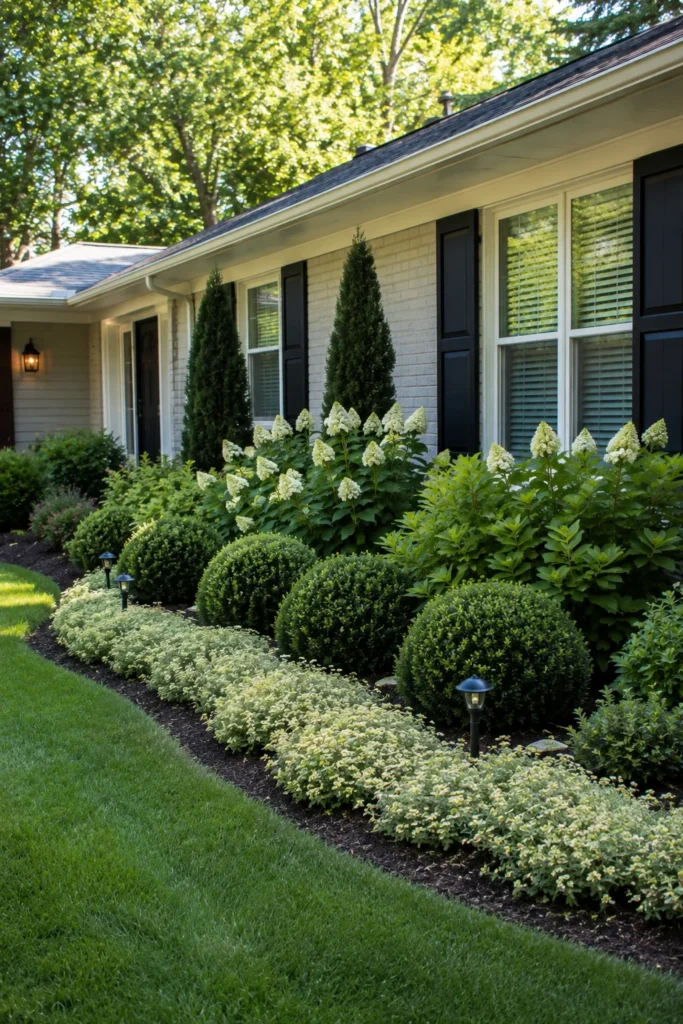
The ranch homes are long front houses. The one row of shrubs seems to be an isolated specimen in the middle of the field.
Use three height levels instead. Low ground cover in front, medium shrubs in the middle and tall accent plants in the back.
Best plant: Boxwood, Dwarf hydrangea and ornamental grasses are good plants to combine.
This style is ideal for people who want some structure in their home but don’t want to trim it all the time.
My suggestion: I did mine in odd-number groupings. Odd rows are more natural-looking than even rows.
Leave 3 feet of space between shrubs and the foundation for large shrubs. It will keep your siding safe and allow them to expand.
2. Mixed Evergreen and Flowering Shrub Border

A ranch roof is long and flat. A shrub border breaks up that straight line and adds movement.
Combine evergreens to provide winter interest with flowering shrubs for spring interest.
Best plants: Boxwood or holly with hydrangea or spirea.
Best for those who want colour changes throughout the year.
My hint: I always have spaces between shrub groupings. A solid wall on a long façade feels heavy.
It is best to plant in the early spring. Roots can establish for an entire season before the summer heat.
3. Symmetrical Entryway Planting Ranch House Landscaping

A balanced ranch home is achieved with an even frame around the entrance.
Plants or plant pairs on either side of the door will automatically create symmetry when matched.
The best materials: Are matching ceramic planters, boxwood spirals, or dwarf conifers.
This is ideal for homeowners who want a classic, tidy look.
My tip: Use the same pot size as the doors. Giant planters always look out of balance next to a small door.
That symmetry continues with a matching brick or stone walkway all the way to the street.
Driveway and Walkway Upgrades for a Large Front Yard
4. Curved Paver Walkway Across the Lawn
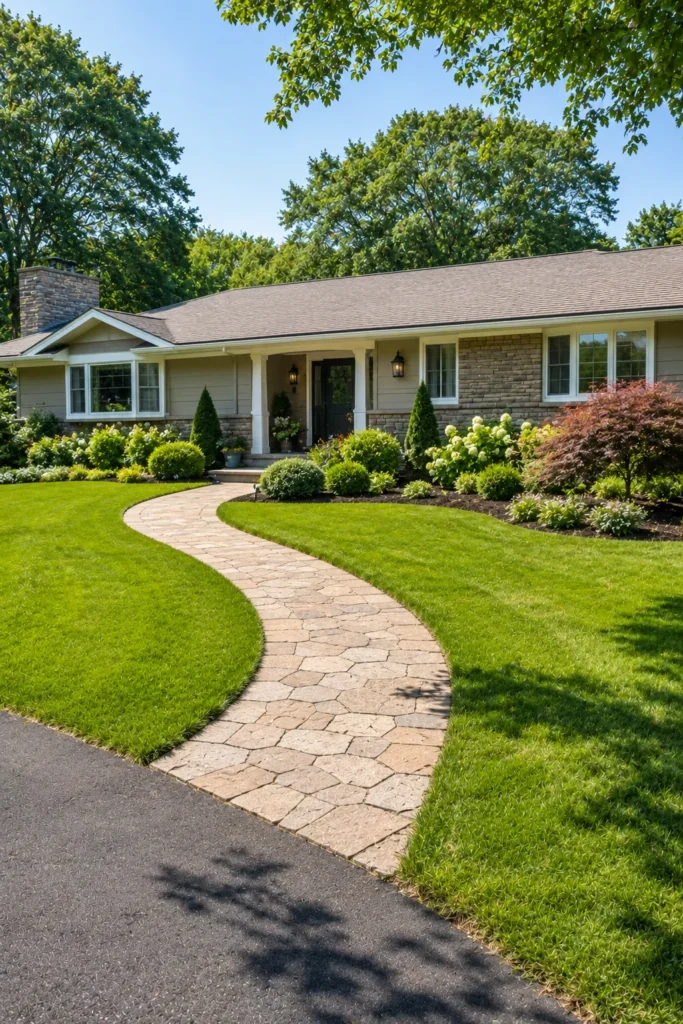
A straight sidewalk is OK, but a curved paver path is a nice addition to a large lawn.
Curves help slow the eye and make the yard appear larger, not smaller.
Best materials: Natural stone pavers, brick or stamped concrete.
Ideal for yards that are 20 feet or more from the driveway to the front door.
My suggestion: I didn’t go too crazy with the curve. Zigzags are sharp, rather than a path.
Outline with small solar lights. Once the sun sets, they will lead visitors to the door.
5. Circular Driveway With a Planted Island

A wide ranch home will certainly make a statement with a circular driveway.
The centre island is no longer an eyesore and becomes a focal point.
Best plants: A small ornamental tree, boxwood ring or seasonal flowers in the island bed.
This is ideal for houses with ample frontage and plenty of space to spare.
My suggestion: I maintain a low planting rate on the island. Tall plants don’t allow sightlines when backing out of the driveway.
Instead of plants, consider replacing with a small water feature or decorative boulder for less maintenance.
6. Stone or Brick Driveway Edging

This is a great way to finish off a stone or brick driveway.
A simple asphalt driveway is not appealing on a large property.
Stones or bricks can edge it for a well-defined, finished border.
Best material: Cobblestone, brick pavers or cut granite edging are the best materials.
This is ideal for those replacing an older driveway but not replacing the entire driveway.
My suggestion: I selected the same colour of edging as my house trim. It is an integral part of the front yard.
Use edging that is 4″ or more wide. Narrow strips are more likely to crack over time due to mower wheels.
Big Lawn Layout Strategies for Ranch Homes.
7. Zoned Lawn With Defined Mulch Beds

A large, open lawn can seem like a lot of work and have a lot of space to fill.
Mulch beds create zones which provide eye rest.
Materials to use: Shredded hardwood mulch, steel edging or stone borders to mark the different zones.
This is best suited for those fed up with mowing a single long, flat lawn.
My tip: I started with one shade tree to zone around. The rest of the company’s development came from that.
Mulch to 2-3 inches deep. It is better not to stack it too high; otherwise, roots will be smothered.
8. An Off Center Shade Tree for Scale

One tree in the centre will give a stiff appearance to a ranch yard.
If planted off to one side, it will provide natural balance and shade.
Best trees: red maple, oak or serviceberry for smaller areas.
This is ideal for yards that receive a lot of sunlight on the west side.
My recommendation: I planted mine close to the corner of the lot. It provides shade to the porch in the late afternoon, but doesn’t obscure the view from the interior.
Large trees should be at least 15 feet away from the foundation. Roots can cause problems within pipes less than that distance.
9. Native Grass or Wildflower Patch

Don’t have to have a large lawn consisting of all grass.
An area of native wildflowers reduces mowing and provides movement and colour.
Best plant: Black-eyed Susan, coneflower and native little bluestem grass.
This is best suited for those homeowners who wish to save on their water bill and mowing time.
My suggestion: I planted mine in the back third of my lawn, off the street. It does not appear neglected; it looks like it was done on purpose.
Mow late fall for a second cutting. This one pass will maintain it from becoming overgrown.
Color and Texture for a Standout Front Yard
10. Seasonal Color Near the Porch
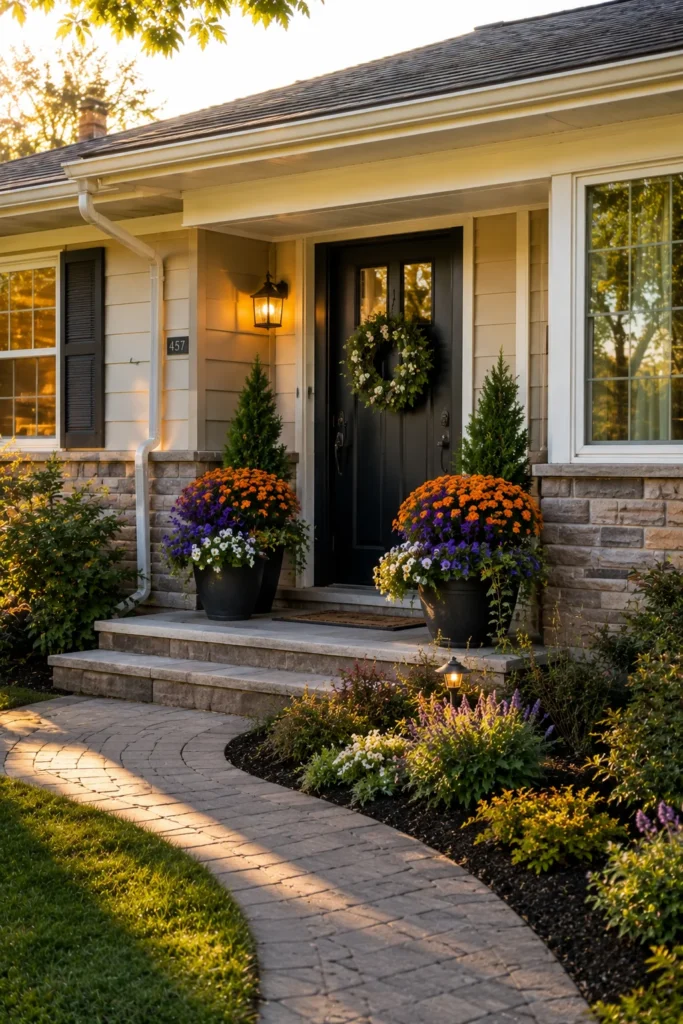
A rotating pop of colour is a great addition to a porch, making it more inviting and welcoming.
Rotate annuals throughout the year for a fresh-looking front porch.
Best plants: Pansies in the spring, petunias in the summer and mums in the fall.
This is ideal for those who want to have a small project to work on at home every few months.
My suggestion: I don’t plant them in the ground; I plant them in containers. It will only take 10 minutes to change colours, not an afternoon.
Deadhead: do a weekly pruning of dead blooms. Helps to maintain the display throughout the season.
11. Ornamental Grasses for Movement
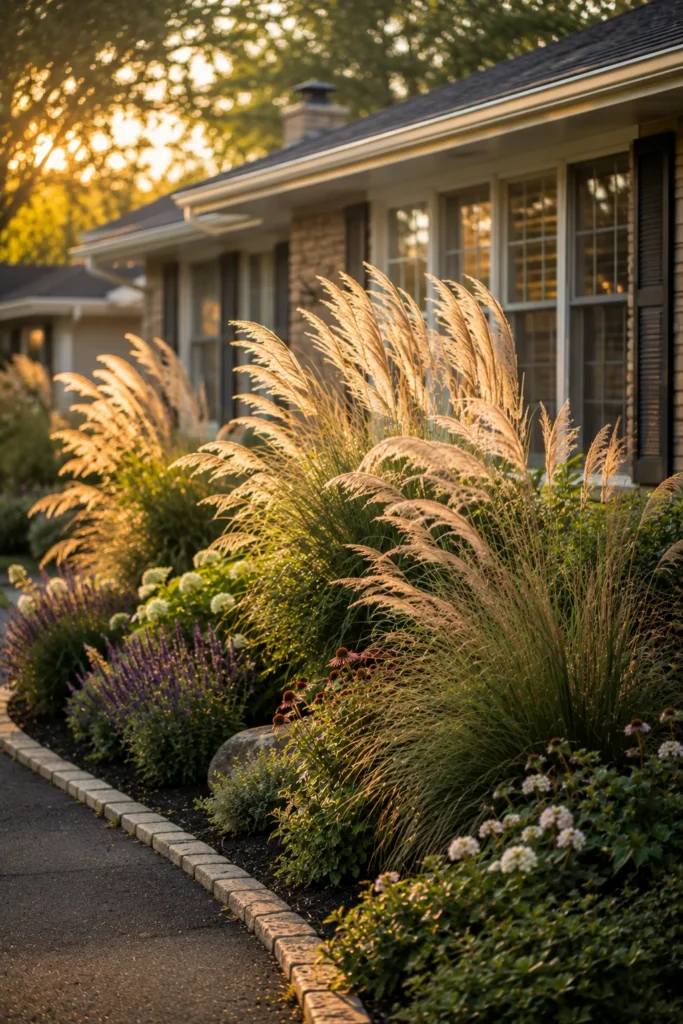
Grasses provide movement to a lawn which shrubs don’t.
Wind blows through them, giving life and sound to an otherwise quiet yard.
Best plants: Are feather reed grass, fountain grass or muhly grass.
Ideal for anyone who does not want to put a lot of water or work into their lawn.
My suggestion: I leave mine out over the winter. The seed heads will retain frost and will be a nice accent against snow.
Prune hard in early spring, just before new growth. This helps to maintain neatness all summer.
12. Perennial Border for Year Round Color
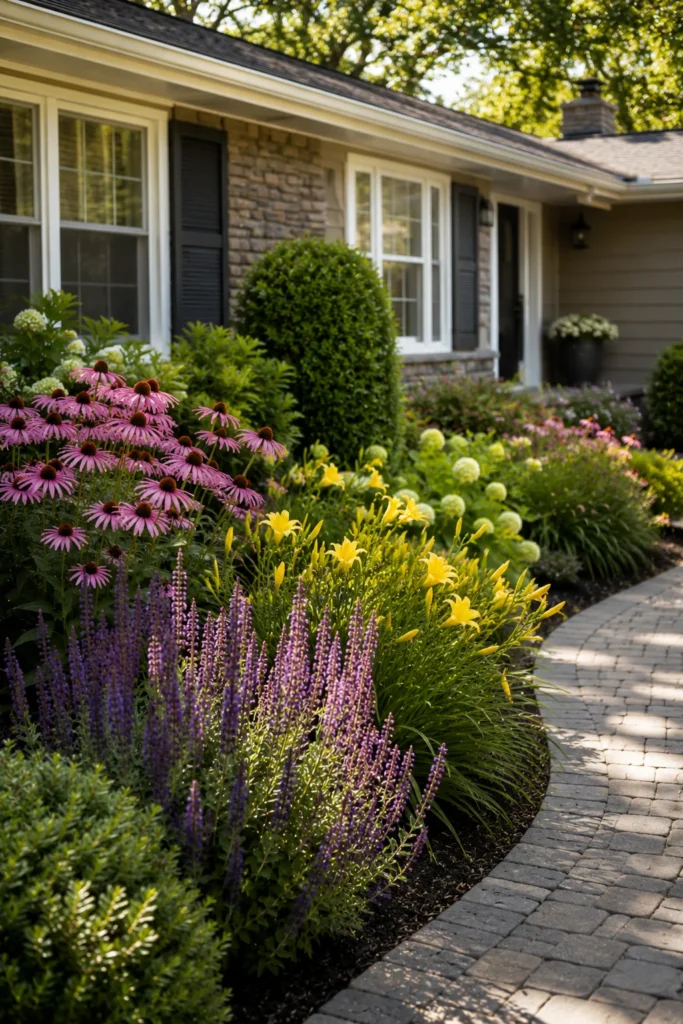
Annuals are excellent, but must be replanted annually.
A perennial border will re-establish itself and grow in more every season.
Best plants: Coneflower, daylily, salvia and black-eyed Susan, which will bloom for a long time.
This is ideal for those who want colour but don’t want to replant regularly.
My suggestion: Planting in clumps of 3-5—or a few plants scattered throughout a large yard.
Divide plant masses into groups every 3 or 4 years. This keeps the border from getting overgrown.
Low Maintenance Wins for a Large Front Yard
13. Rock Garden or Xeriscape Bed
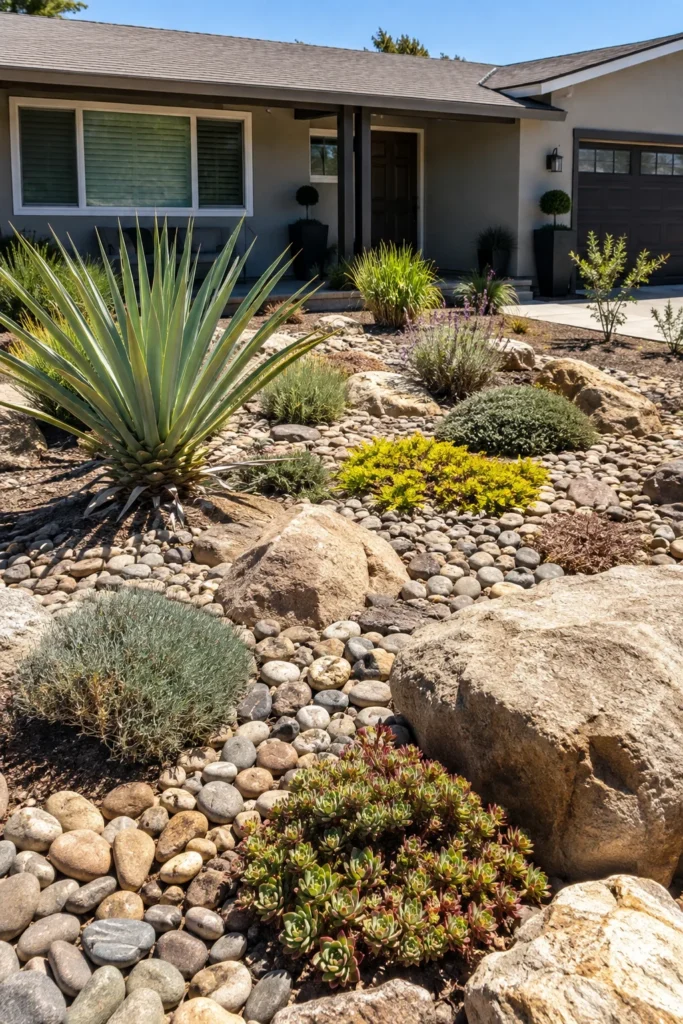
Mowing and watering time is reduced in a rock garden area.
It is particularly effective in hot, sunny areas where grass is not growing well.
Best materials: Biver rock, decomposed granite, or drought-resistant plants such as yucca or sedum.
It’s ideal for dry climates or those who wish to reduce their water bills.
My tip: I used some larger rocks to add some structure. Boulders are essential to keep a rock from looking flat.
Place landscape fabric underneath and then cover with rock. This reduces the amount of weeds that will pop up later.
14. Low Voltage Landscape Lighting
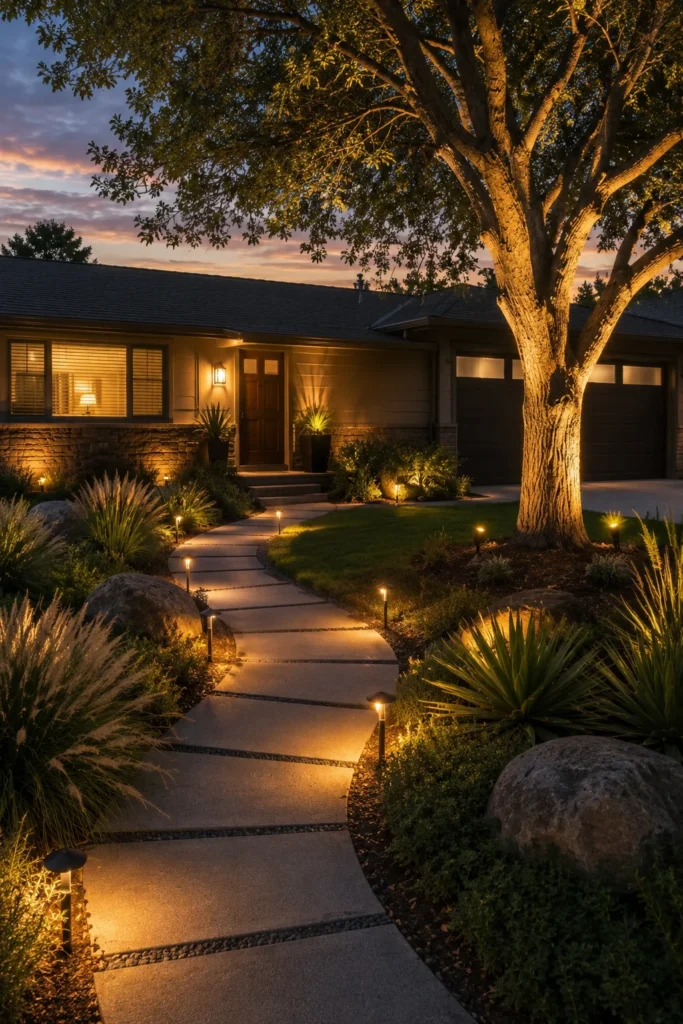
After dark, a dark front yard obscures all that you’ve worked for.
Low-voltage lights along the walkway and façade highlight your landscaping at night.
The best materials: Are solar path lights, LED uplights and a low-voltage transformer kit.
This is ideal for homeowners who want the curb appeal they desire not only during the day, but at night as well.
My suggestion: I will try shooting two uplights at my largest tree. It is the highlight of the evening when it’s dark.
Dig a small hole in the ground and run the wiring in it. It is concealed and protected from pedestrian traffic.
15. Raised Planter Boxes or Berms

From the street, a flat ranch yard may appear one-dimensional.
Raised planter boxes or a slight elevation (berm) provide height and break up the monotony.
Ideal materials: Are cedar planter boxes, retaining wall blocks, or plain soil berms with groundcover.
This is ideal for those who want dimensions without having to regrade the yard.
My suggestion: Build one low berm near the mailbox. Not much, but it made a huge difference to the front view.
Top dress raised boxes with new soil and compost. The box is not as important as good soil.
Quick Comparison: Front Yard Styles for Ranch Homes
Not sure where to start. This table breaks down the five styles above by effort and cost.
| Style | Maintenance Level | Best for | Estimated Cost |
| Foundation planting beds | Low to medium | Classic, timeless curb appeal | $ |
| Rock garden or xeriscape | Low | Hot, dry climates | $$ |
| Native grass or wildflower patch | Low | Water-wise big lawns | $ |
| Zoned lawn with mulch beds | Medium | Breaking up an empty big yard | $ |
| Circular driveway with island | Medium to high | Wide frontage ranch lots | $$$ |
Frequently Asked Questions
What is the best front yard landscaping style for a ranch home?
Low, layered plantings work best because they follow the ranch home’s horizontal lines. Foundation beds with three plant heights are a safe, classic choice, and they need very little rework year to year.
How much does it cost to landscape a large front yard?
Costs vary widely based on size and materials. Simple upgrades like mulch beds and shrubs can start under a thousand dollars, while hardscaping or a new driveway can run into the thousands, so it helps to phase the project over a few seasons.
What plants work best for a big front yard?
Drought tolerant perennials, ornamental grasses, and native plants handle large spaces well with less water and upkeep. Mixing heights and textures keeps a big area from feeling flat, and grouping plants in odd numbers reads as more natural.
How do I add more curb appeal to a ranch style home?
Focus on symmetry at the entry and layered plantings along the facade. Adding lighting and a defined walkway also makes a big visual difference, especially after dark when a bare front yard disappears completely.
What is the easiest way to landscape a big yard on a budget?
Start with mulch beds and a few key shrubs instead of trying to fill the whole yard at once. Native grasses and perennials also stretch a budget further than annuals, since they come back on their own year after year.
Final Thoughts
A ranch home does not have to blend into the block.
A little structure, some layered plants, and one or two bold features change everything.
I started small with my own front yard. One bed at a time, one season at a time.
Some projects took a single weekend. Others stretched across a full year of small updates.
Now it actually looks like someone lives there and cares. My neighbors stop and ask about it more than I ever expected.
Pick one option from this list and start this weekend.


