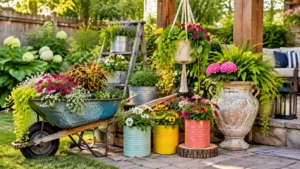
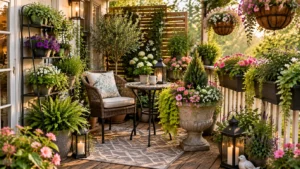
For two whole summers, I left my deck empty. It was nothing but bare boards and a grill.
Once I put out a few deck planters, I finally began spending time out there.
People started choosing to hang out outside rather than indoors.
Before I added plants and color, that never happened; that’s when I really started testing which plants hold up outside.
Gardening on a deck is harder to get right than planting in a regular yard. Weight limits, drainage, and sun exposure matter more than most people think.
Material Comparison at a Glance
| Material | Weight on Deck | Drainage Risk | Price | Best For |
| Wood barrel | Heavy | Low | $$ | Rustic decks |
| Fiberglass | Light | Low | $$$ | Modern decks |
| Metal | Light to medium | Medium, rust rings | $$ | Contemporary decks |
| Plastic or resin | Very light | Low | $ | Budget decks |
| Concrete | Very heavy | Low | $$ | Permanent anchors only |
Classic Deck Styles
I started with a classic look, largely because I already had whiskey barrels out in the garage.
1. Whiskey Barrel Planters
Genuine whiskey barrel planters add immediate rustic character to any deck. The thick wood keeps roots protected from sharp temperature changes.
Ideal on decks with a rustic or cabin feel.
My tip: I prop mine up on small blocks so the base doesn’t sit on wet boards and rot.
2. Matching Terracotta Rows

Line up terracotta pots along the edge of your deck to get a clean, classic border. In direct sun, terracotta tolerates the heat far better than plastic.
Ideal for traditional backyard decks.
My tip: Cluster them in odd numbers, like three or five, so the arrangement looks more natural.
3. Woven Rattan Deck Pots
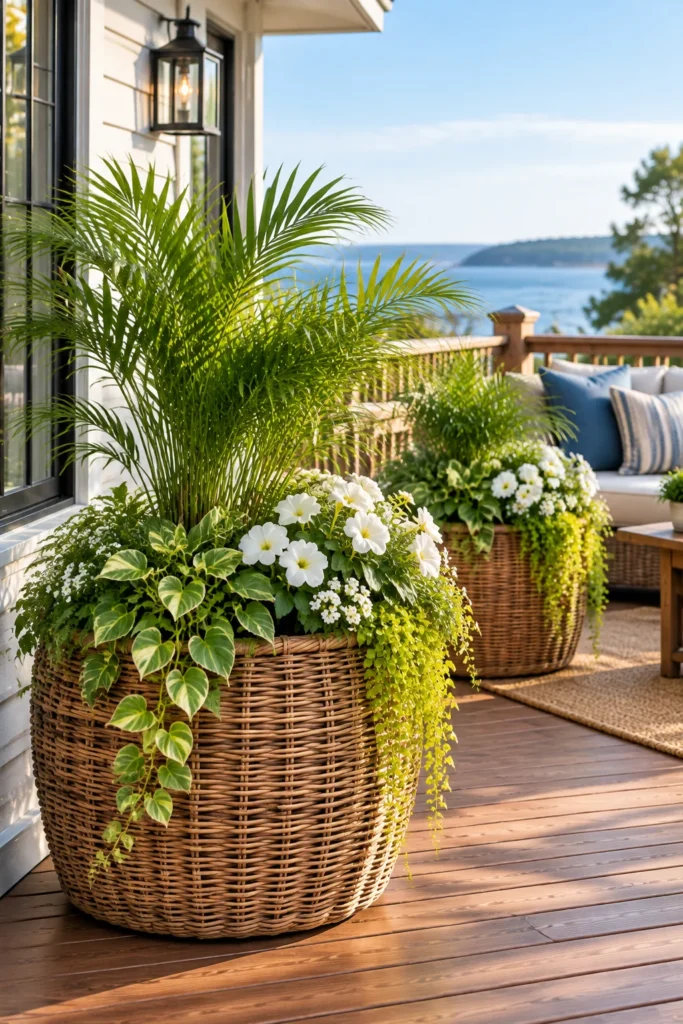
Rattan planters bring in texture without visually weighing down a compact deck. Using a plastic liner stops rainwater from drenching the woven exterior.
Ideal for decks with a coastal or cottage look.
My tip: When prolonged rain sets in, I move them under cover to help them last longer.
Check Out: 21 Big Outdoor Planters That Made My Patio Look Expensive
4. Wood Crate Planters

Plain wood crate planters look deliberate, yet you can build them for next to nothing. Untreated lumber decays the quickest, so make sure your liner is thorough.
These suit a farmhouse or rustic deck best.
My tip: Rubber liners last longer outside, so I run those rather than plastic.
Modern Deck Looks
I rebuilt my deck last year and committed heavily to clean, simple shapes.
5. Modern Concrete Cubes

Concrete cubes bring genuine physical presence to a modern deck and ground the space. Before setting them out, always make sure the deck structure can take the load.
Ideal if your deck is newly built or properly reinforced.
My tip: Keep them right above the support beams, never centered on an open joist span.
6. Sleek Black Metal Planters.
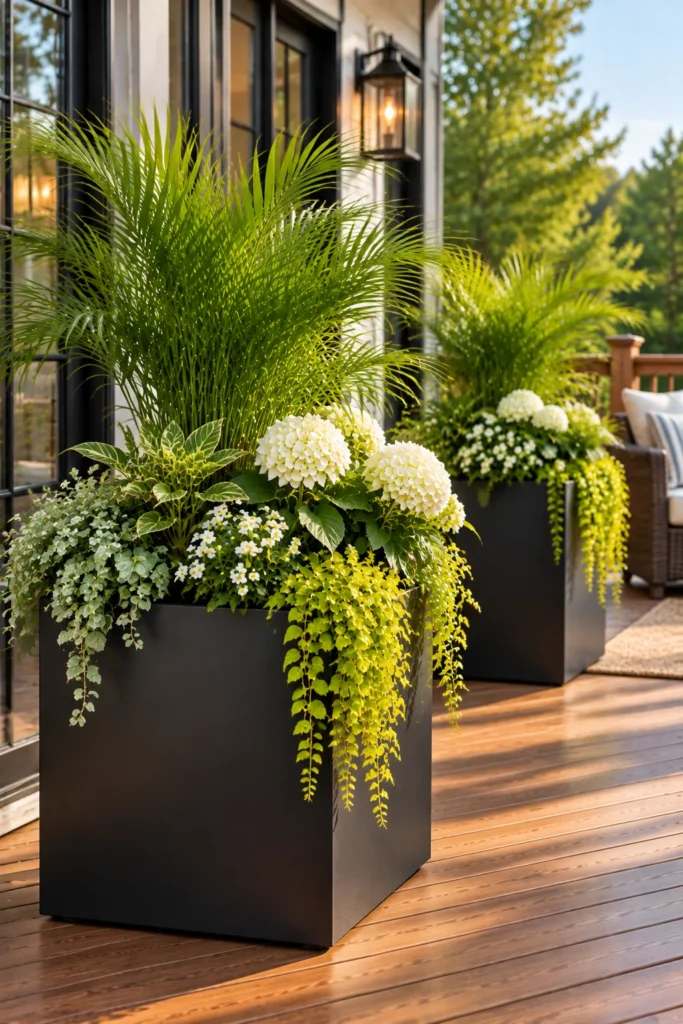
Against natural wood boards, matte black metal creates a clean, striking contrast. Dropping a liner inside keeps rust from leaching into your potting soil.
They work best in contemporary backyard setups.
My tip: Raw metal rusts quickly outside, so I stick to powder-coated finishes.
7. Tall Fiberglass Towers

Tall fiberglass planters give you vertical presence without putting extra strain on the deck boards. That counts double if your deck is raised or sits on a second story.
Ideal for raised decks where load limits are a worry.
My tip: Packing peanuts in the bottom third cut down on both potting mix and total weight.
8. Two-Tone Modern Pots

A pale rim over a deep-toned base gives these resin pots some visual punch. They give you that made-to-order look at a fraction of ceramic’s heft.
Best if you want high-end styling on a realistic budget.
My tip: Tying the darker shade directly to my railing finish pulls everything together.
Railing and Space-Saving Options
Working with small decks drilled one key rule into my head: don’t waste an inch of floor.
9. Railing Planter Boxes

Boxes that hang right off the railing keep the entire deck floor open underneath them. Check the width of your top rail before you order anything.
Ideal if your deck is small or on the narrow side.
My tip: Standard hooks don’t fit every rail design, so I stick with adjustable brackets.
10. Over-the-Rail Hanging Pots

Hanging these pots on the outer edge of the railing gives your plants a layered look. The quality of your clips matters far more than the container itself.
Ideal for decks built with solid, heavy-duty railings.
My tip: Wind tends to work the clips loose over time, so I inspect them once a month.
11. Corner Wedge Planters
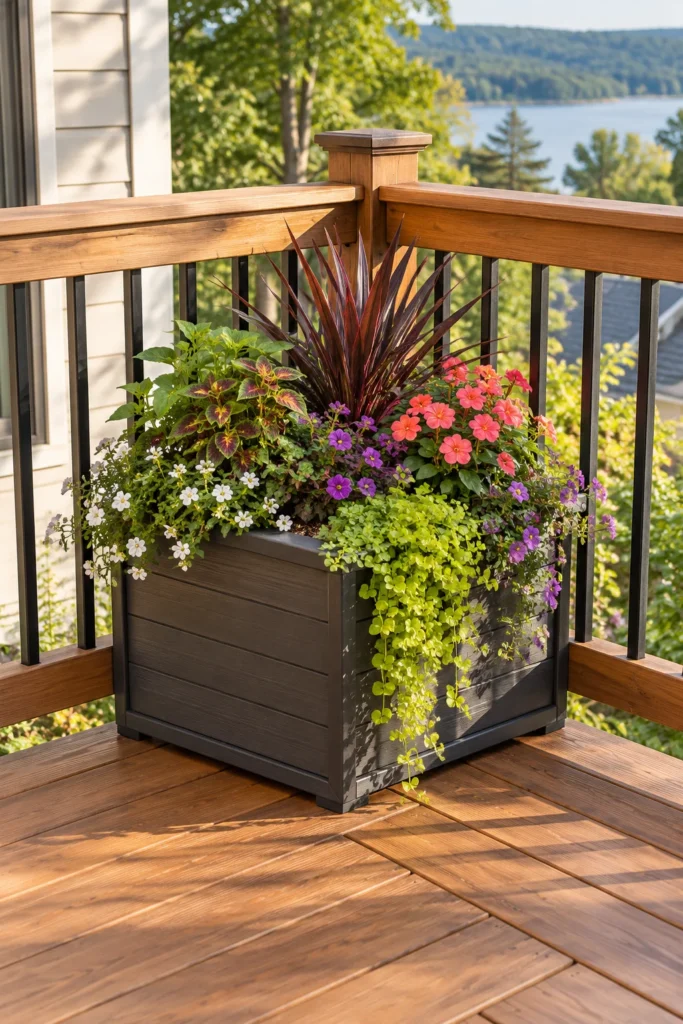
Triangular deck corners usually gather dust, but wedge planters put them to work. You lose practically no usable square footage with this profile.
Ideal if you have empty deck corners going to waste.
My tip: People rarely brush against corner areas, so I put my taller varieties there.
12. Stackable Tiered Planters
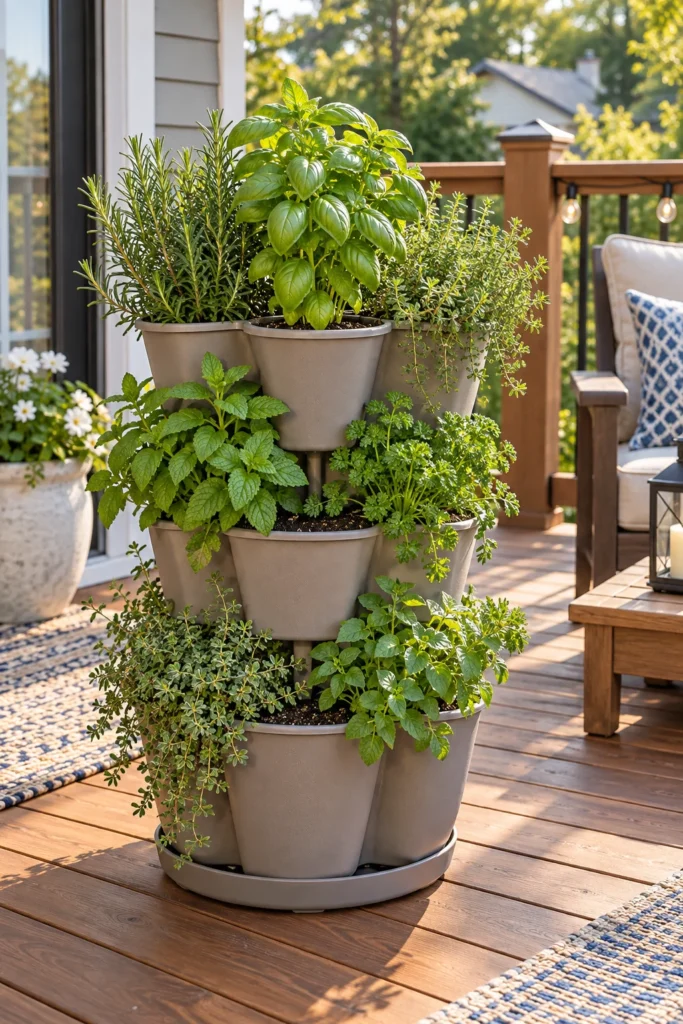
Stacking planters let you build an upright garden tower on a very small footprint. Shallow-rooted varieties and kitchen herbs thrive the most in these.
A great fit if your deck has almost no floor space left.
My tip: Give the tower a quarter or half turn each week so the plants get balanced light.
Budget and Upcycled Picks
Deck updates don’t always require a big budget. These were the specific choices that kept my costs down.
13. Upcycled Pallet Planters

Take apart old wooden pallets to make surprisingly durable shallow planters. Give any splintery spots a quick sanding before you add the dirt.
A natural match for deck owners who do not mind a small DIY project.
My tip: A coat of exterior wood stain keeps them from rotting out after just one summer.
14. Budget Resin Pots With Style

Current resin pots look convincing alongside real ceramic or stone, but cost much less. Because they weigh so much less, your deck framing and boards take far less strain.
A great fit if you want to update your deck on a budget.
My tip: Go with a textured finish, because smooth resin tends to look cheap when you are standing right next to it.
15. Repurposed Galvanized Tubs

You can turn old galvanized tubs into striking, extra-large planters without spending much money. Make sure to drill a few drainage holes in the bottom before you plant anything.
Ideal for a deck with a farmhouse look.
My tip: I set them on rubber pot feet so the bare metal never rests directly on wet wood.
Seasonal Deck Displays
If you change these out with the seasons, the whole deck will keep feeling like new.
16. Summer Herb and Vegetable Containers
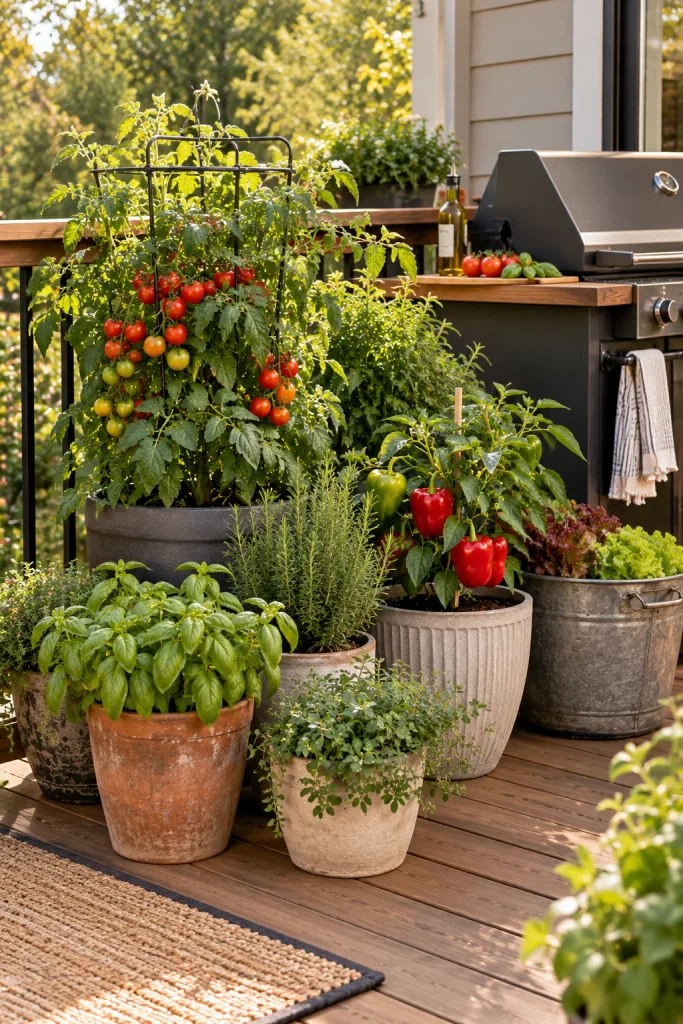
Herbs and smaller vegetable varieties grow really well in deck pots, as long as water drains freely. Give them larger pots, and basil, peppers, and tomatoes will all thrive.
Ideal for people who do a lot of outdoor cooking.
My tip: Place the herbs right next to the grill so you can grab sprigs while you cook.
17. Fall Mum and Ornamental Grass Pots
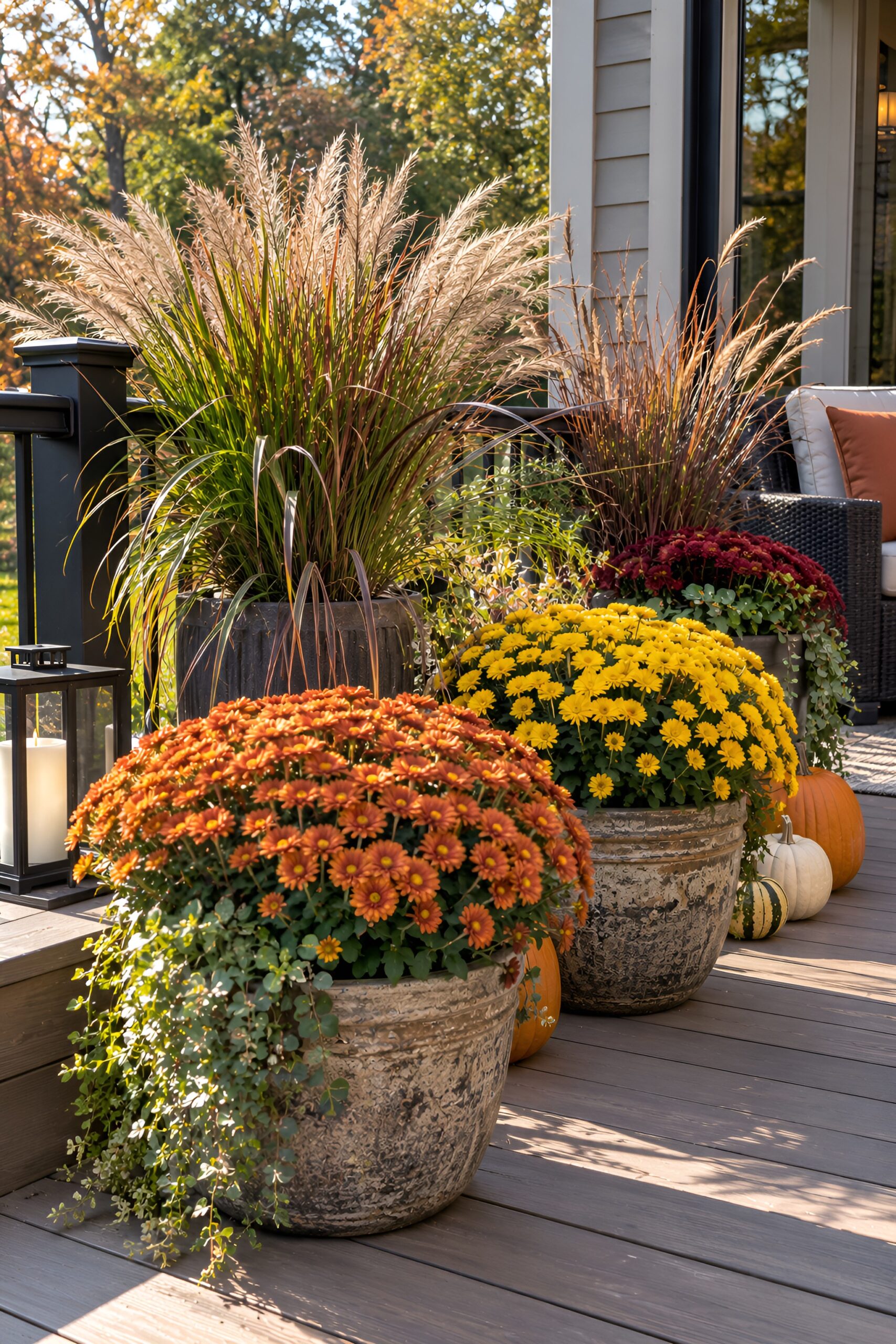
Putting mums alongside ornamental grasses adds both color and motion as the weather cools down. Grasses stand up to the wind far better than fragile blooms do.
Best suited for hosting guests on the deck in autumn.
My tip: Once the mums die back, I keep the grasses standing into early winter so the pots still have some texture.
FAQ
What is the best planter for a wood deck?
Fiberglass and resin pots work well since they stay light and will not stain the wood. Pot feet help with airflow underneath.
How do I stop planters from staining my deck?
Use pot feet or a rolling caddy to lift containers off the boards. A saucer underneath also catches extra runoff.
Can heavy planters damage a deck?
Yes, very heavy concrete pots can strain older deck boards over time. Always check your deck’s weight limit before adding several large containers.
What plants grow best in deck planters?
Herbs, compact vegetables, and flowers like petunias thrive in deck containers. Match your plant choice to your deck’s actual sun exposure.
Final Thoughts
My deck went from ignored to my favorite spot outside. Every style here earned its place through trial and error.
Some planters lasted one summer. Others are still going strong years later.
Start with just one or two styles from this list. Match them to your deck’s actual space and sun.
Go measure your railing this weekend and pick your first planter.