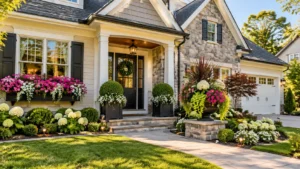
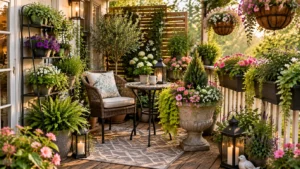
Until I stopped buying small pots, nothing I put on my patio looked full.
Big outdoor planters completely transformed the space in a single weekend.
Since then, I have covered my yard, driveway, and pool deck with them, making a few pricey mistakes along the way.
Below are the 21 oudoor front yard planters that justified every cent, along with lessons I learned the hard way.
Big Planter Materials at a Glance
| Material | Weight (Empty) | Durability Outdoors | Price Range | Best For |
| Fiberglass | Very light | High | $$ | Poolside, rooftops, anywhere weight matters |
| Concrete | Very heavy | Very high | $$$ | Permanent, high wind spots |
| Glazed ceramic | Heavy | Moderate to high | to $ | Entryways, focal points |
| Cedar wood | Medium | Moderate, 8 to 12 years | $$ | Trees, DIY builds |
| Corten steel | Heavy | Very high | $$$ | Modern, industrial yards |
Big Statement Planters for Entryways
1. Oversized Fiberglass Cone Planter

Fiberglass offers substantial height without the back-breaking load of stone or concrete.
That makes it a great fit for decks and porches unable to carry heavy loads.
The tapered silhouette pairs nicely with boxwood or a dwarf conifer, and its low weight means one person can still move it.
My advice: Go one size bigger than your first instinct. In pictures, fiberglass planters look noticeably smaller than they appear on a real porch.
2. Large Glazed Ceramic Urn Planter

An ordinary entryway gets an immediate curb-appeal upgrade from a large glazed urn. Its rounded profile also softens severe, angular architecture.
Pick a glaze rated for frost resistance if winter brings freezing temperatures to your area. Against that glossy surface, both dwarf citrus trees and hydrangeas stand out beautifully.
My tip: Check the glaze rating before you pay for it. A single hard freeze ruined one of my favorite urns because the glaze just wasn’t rated for that cold.
3. Extra Large Concrete Cube Planter

A concrete cube reads as permanent architecture, not a movable planter, which suits a modern facade. And because it weighs so much, wind isn’t an issue.
The sharp geometry pairs nicely with a small Japanese maple or clumps of ornamental grass. It makes sense for anyone putting together a landscape meant to last.
My tip: Get it into its final spot before you pour in any dirt. Shifting a concrete cube once it is full of dirt takes two people with decent strength.
4. Giant Whiskey Barrel Planter

A full-sized whiskey barrel adds rustic appeal and plenty of soil depth. They look great sitting on either side of an entryway or marking a garden gate.
Tough oak holds up to the elements for years. There is plenty of room for root systems, whether you plant dwarf fruit trees or a full-sized tomato.
My tip: Check with a local distillery for reclaimed barrels before buying a brand-new one. Mine had light charring still visible on the interior, and I really like how it looks.
5. Tall Tapered Wood Planter
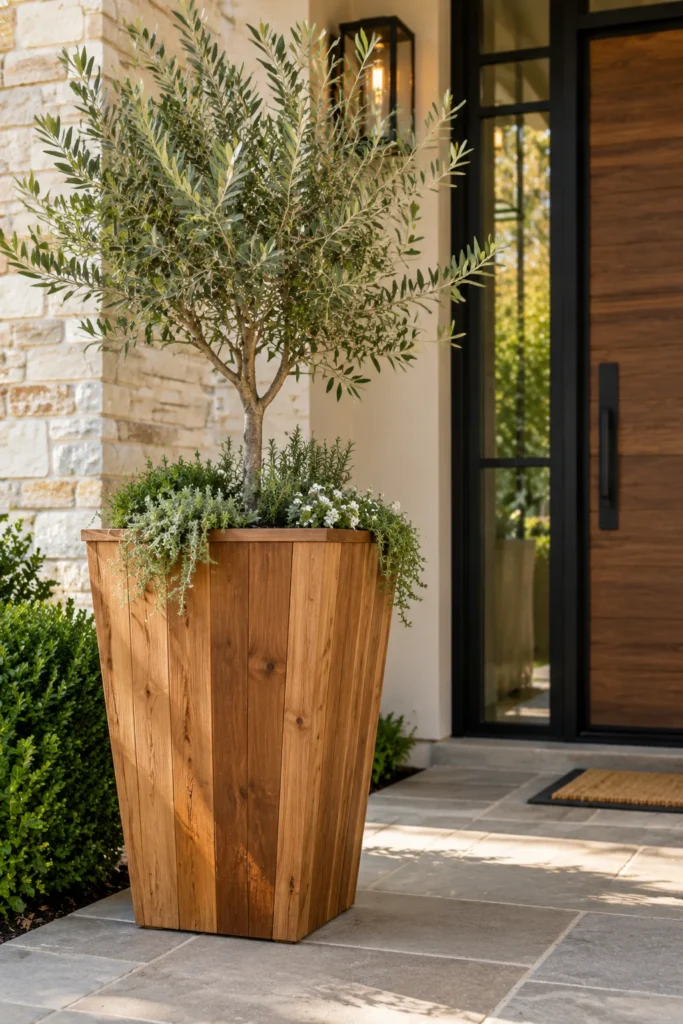
Because it pulls the eye upward, a tall tapered wood planter makes a low entryway feel taller than it is. You also save on floor space thanks to the narrow footprint.
Both teak and cedar resist rot far better than pine—both an olive tree and clumping bamboo pair nicely with that slim, upright profile.
My tip: Put down some gravel at the bottom before you add the soil. The extra weight stops strong gusts from knocking the planter over.
Big Outdoor Planters for Trees and Shrubs
6. Half Whiskey Barrel Tree Planter

Sawing a barrel in two gives you twice as many planters while leaving ample spread for a tree. Few methods let you grow an actual tree above ground for less money.
Either a dwarf citrus or a Japanese maple has plenty of room inside a half barrel. This arrangement makes the most sense if you cannot plant right in the dirt.
My tip: Do not rely solely on the bung hole; drill several more drainage points. A single hole will not cope once all that dirt is packed inside.
7. Large Wood Box Tree Planter

Compared to an off-the-shelf planter, a custom-built wood box with reinforced corners holds far more soil. You can also tailor the planter to fit your exact space.
Both crepe myrtle and magnolia rely on the extra root space this kind of box offers.
This is an option worth considering for anyone planning to keep a tree long term.
My tip: Make the box wider than you think it needs. Roots consistently spread out into more space than the visible tree suggests.
8. Rolling Caster Tree Planter
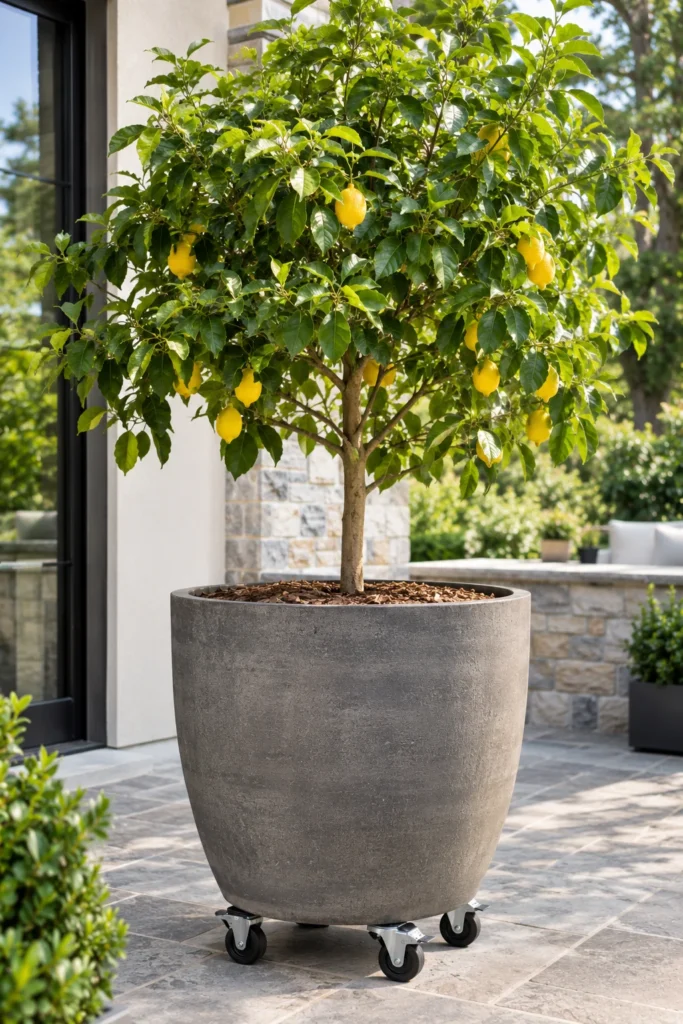
With heavy-duty locking wheels, a single person can actually move a big tree planter on their own.
This is especially useful in colder areas where fig and citrus trees must be brought inside before frost.
Make sure to choose industrial-grade casters rated to support the planter once it is full.
Fig and citrus trees are the most typical choices here.
My tip: Roll the wheels through your actual doorways beforehand to check the fit. I checked the planter dimensions, but totally neglected to measure the hallway itself.
9. Galvanized Stock Tank Tree Planter
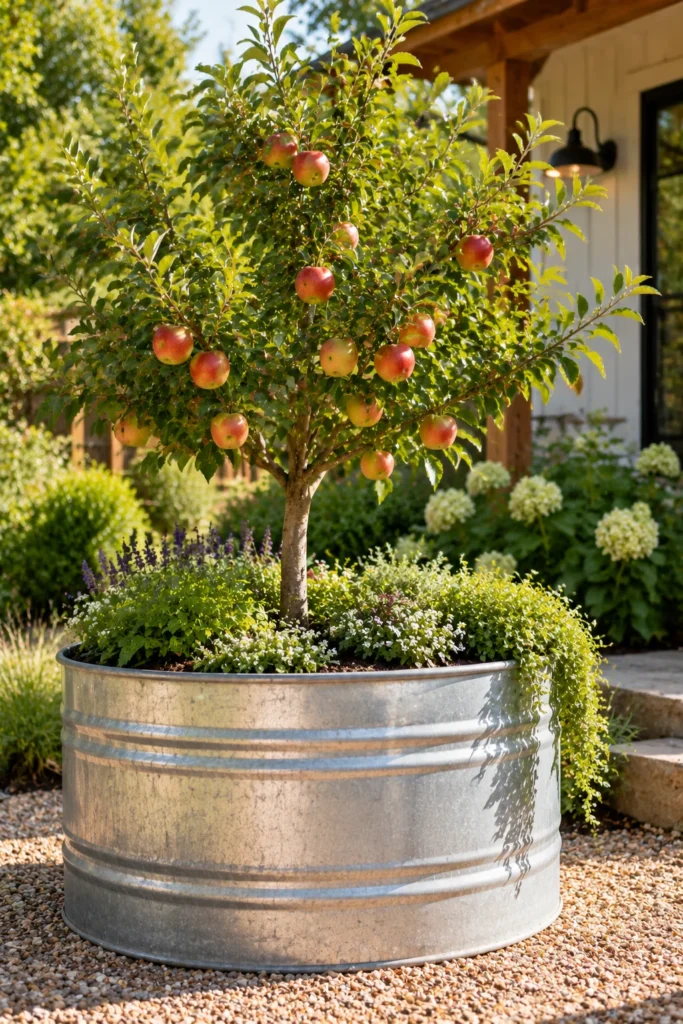
With virtually no assembly required, a large galvanized tank gives a small tree plenty of root depth.
The metal heats up faster in spring, and trees benefit from that early warmth just like vegetables.
Both dwarf apple and dwarf peach trees thrive with this kind of depth and heat.
They fit right into farmhouse-style yards and hold up well in hot climates.
My tip: Drill drainage holes before adding any soil. Stock tanks come completely watertight from the store, which I only realized after I had already shoveled one full.
10. Big Terracotta Tree Pot

A frost-rated, heavy terracotta pot delivers an authentic Mediterranean feel that lightweight substitutes never quite pull off. Clay also allows the soil to aerate far better than plastic or glazed pots do.
Olive trees look right at home here, as does rosemary trained into a standard tree shape.
Stick to this planter style if you live somewhere mild where deep freezes seldom happen.
My tip: Look for the pot with the heaviest, thickest walls you can find. Once loaded with wet soil, thin terracotta breaks down and splits much faster than most gardeners realize.
Big Planters for Privacy and Screening
11. Long Trough Privacy Planter

Planting a low, elongated trough gives you an immediate hedge right where it matters, skipping the years needed for ground plantings to grow in.
It serves especially well set along a property boundary or facing an open street.
You can quickly create a thick, solid wall with either boxwood or arborvitae. It is a great fit for anyone after some seclusion without the commitment of in-ground planting.
My tip: Put the plants closer together than the nursery tag recommends. Crowding them slightly helps the green wall close up that much sooner.
12. Modular Big Box Hedge Planter

Big interlocking timber boxes allow you to assemble a hedge piece by piece, which suits renters or anyone planning a future move.
Each box works on its own, but together they look like a single run.
Both laurel and podocarpus take cleanly to hedge trimming and keep their shape. It is an ideal setup if you want hedge cover without digging up the dirt.
My tip: Write numbers on the boxes while you are building them. Putting them back together in the right sequence after moving is much simpler if you marked the original order.
13. Cedar Privacy Planter Wall

Deep cedar boxes tied into a single screen alongside a simple trellis deliver immediate height to any yard short on privacy.
The look is that of a deliberate garden structure, not a substitute fence.
Vigorous climbers like jasmine or clematis will quickly cover the trellis.
Tight spaces that need vertical cover without giving up lawn or patio room gain the most here.
My tip: Apply your stain or sealer to the cedar well before you add any soil. Treating the wood is much simpler while the boxes are still empty and light.
14. Big Woven Willow Planter

Natural woven willow gives a privacy planting a softness that solid wood or metal cannot match.
It lends a relaxed cottage-garden touch to what would otherwise be a purely practical barrier.
Put a plastic liner in before adding soil, because the willow itself is not watertight. Clumping bamboo and ornamental grasses both pair naturally with the loose, casual texture.
My tip: Do not let them sit in standing water. Normal rain will not hurt a willow planter for years, but sitting in a puddle rots it fast.
15. XL Weathering Steel Planter

Raw corten steel forms a protective rust-colored patina and then stabilizes, leaving you with an industrial finish that needs no upkeep. Its sheer heft means wind will rarely knock it over.
Architectural succulents and tall ornamental grasses both look right against that stark, modern steel. A planter like this belongs in a modern space, not a classic garden setting.
My tip: Expect rusty runoff during the first few months. I put mine on top of pale patio pavers and wound up having to reseal the stone.
Big Planters for Patios and Pools
16. Large Poolside Fiberglass Planter

Because fiberglass is light, you can set a truly huge pot right along the pool edge without stressing over deck weight limits. Chlorinated water can degrade other materials over time, but this holds up well.
Both bird of paradise and palms give you that instant poolside resort atmosphere. If you want a major visual statement without heavy lifting, this is the container for you.
My advice: Hose off splashed chlorine regularly. I let that go for one season, and the surface lost its shine sooner than I expected.
17. Big Self Watering Patio Planter
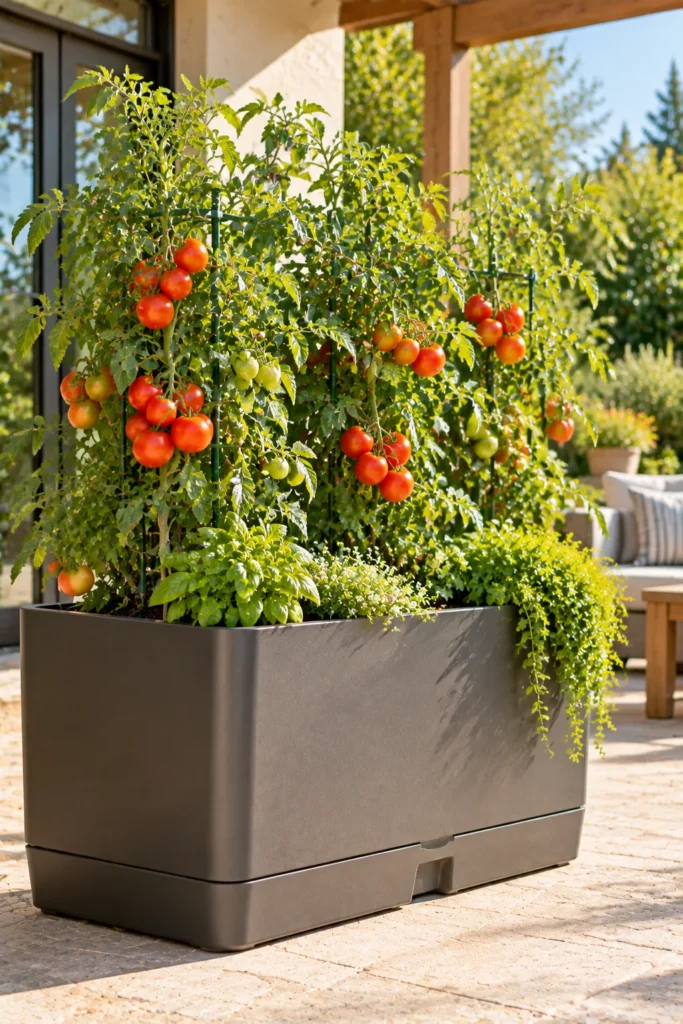
Because of the integrated reservoir, a large container can sit for days untouched, a real perk for second homes or crowded schedules. Roots draw moisture up from the base whenever the plant needs a drink.
Peppers and tomatoes thrive on the steady moisture supply this design offers. If you take a lot of trips, start here.
My tip: Check the water level every week once real summer heat sets in. Even with a self-watering setup, the water disappears faster than the product label suggests.
18. Extra Large Resin Planter Set

Setting out a matching pair of big resin pots gives an entryway balanced symmetry that you cannot get by mixing odd containers.
You also get the look of metal or stone in resin, but without the heavy lifting.
Planted with clipped boxwood spirals or paired topiaries, the formal, balanced effect is complete.
It is a great fit if you want an upscale front entry without paying for genuine stone.
My tip: Buy both pots together from the same batch. Resin color can shift slightly from one batch to the next.
19. Big Stone Look Planter

Using a light composite material lets you capture the look of cut stone without the weight or high cost.
This works right into dry, xeriscape layouts that lean toward an earthy, weathered texture.
Architectural succulents and spiky agaves sit comfortably against that rough, rocky surface—hot, arid regions where dry-loving plants are already established suit this pot best.
My tip: Feel an in-store sample before ordering online. Faux-stone textures differ wildly in whether they pass inspection from a few inches away.
20. Large Wheeled Deck Planter

Putting a substantial planter on casters saves you from having to muscle serious bulk across deck boards.
That mobility really pays off when you need to follow the sunlight through the year or open up floor space for the colder months.
A dense show of seasonal flowers or a compact dwarf tree will flourish in this setup.
This setup helps most on decks where an adaptable space matters more than a fixed setup.
My tip: Set the wheel locks as soon as you have the planter where you want it. One windy week I let it slip my mind, only to spot it halfway across the deck boards.
Big Planters for Driveways and Entrances
21. Giant Concrete Sphere Planter
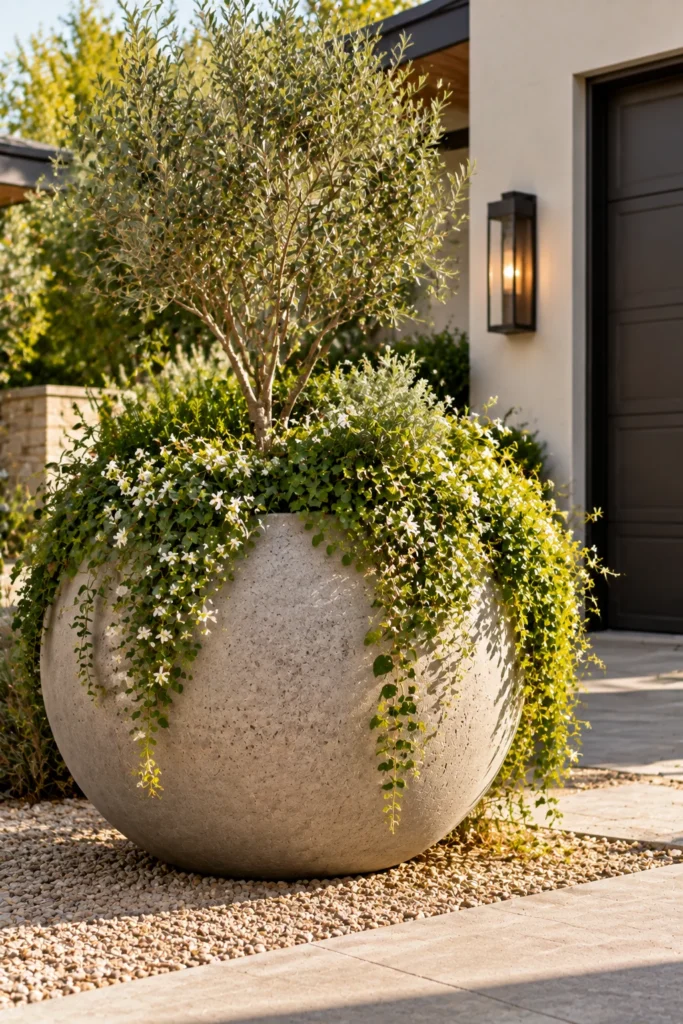
A huge concrete sphere creates a striking, sculptural presence that flat-sided pots can’t match.
Setting one on either side of a gated boundary or driveway opening looks particularly sharp.
Sweet potato vine or trailing vinca tumble over the curving surface with real visual punch.
If you want a single stand-out focal point instead of a symmetrical set, this is the right pot.
My tip: Have the delivery crew set it right where it belongs. Moving a concrete globe after it has dirt in it is not a chore you will want to face down the road.
Frequently Asked Questions
How do I move a big planter without hurting myself?
Empty it partway before moving, then refill once it’s in place. A plant dolly with locking wheels makes it even easier.
What is the best big planter for a tree?
Half whiskey barrels and thick walled wood boxes both give roots enough room. Anything under 20 inches deep is too shallow for a real tree.
Do large planters need drainage holes?
Yes, every one does. Standing water rots roots faster in a large planter, since more soil holds more moisture.
How much soil does a large planter need?
A planter around 24 inches wide and deep needs close to five cubic feet of soil. Pot fillers in the bottom third cut that cost.
Final Thoughts
Big planters do more work than people expect. One good one can change how an entire patio feels.
Start with the spot that bothers you most, whether that is a bare driveway or an empty pool deck.
Pick one big planter from this list and build your space around it this season.