Last spring, my neighbor stopped mid-stride to ask where I had bought my planters. I laughed and gave her the honest answer.
A good half of them were once headed for the garbage.
Tracking down creative planters in front of my house yard doesn’t look like everyone else’s has taken me three summers.
Some cost nothing. Others needed only an afternoon’s work and one can of spray paint.
I’ve actually built and used everything here; none of it is just saved to a board and forgotten. Put on your gardening gloves, and let’s jump in.
Quick Comparison: Popular Planter Materials
| Material | Cost | Durability | Best for |
| Terracotta | Low | Moderate | Herbs, succulents |
| Wood | Medium | Moderate | Vegetables, mixed beds |
| Metal | Low to free | High | Trailing plants, statement pieces |
| Ceramic | Medium to high | High | Focal point displays |
| Repurposed items | Free to low | Varies | Casual, personality-driven yards |
Upcycled and Repurposed Planters
I genuinely enjoy giving old, discarded things another run. Each project here began as an item I was about to put out on the curb myself.
1. Old Wheelbarrow Planter

Drop a rusty wheelbarrow into a garden bed, and it brings instant personality.
You can fit an unexpected volume of potting soil inside that curved metal tub.
Trailing varieties such as sweet potato vine, petunias, or nasturtiums work best here. If you have a dead corner by a garage or a garden shed, this fits right in.
My advice: Punch several more drainage holes in the bottom before you add any dirt. Rust adds plenty of charm until standing water rots your roots.
2. Vintage Teapot Planter
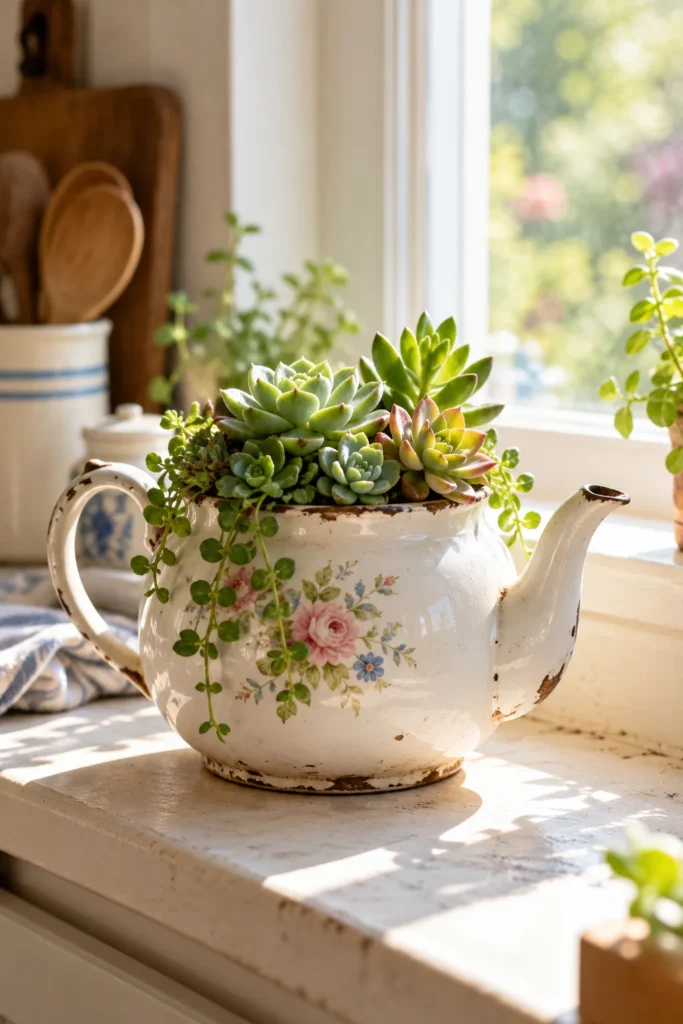
Once a chipped teapot can no longer hold tea, it still makes a wonderful little planter. Small herbs and succulents fit neatly into the main belly of the pot.
For the prettiest result, go with moss, thyme, or succulents.
They sit nicely on a compact patio table or along a kitchen windowsill.
My tip: Put down a base layer of pebbles before you add anything else. That improves drainage, so you don’t have to risk drilling into fragile ceramic.
3. Wine Barrel Planter
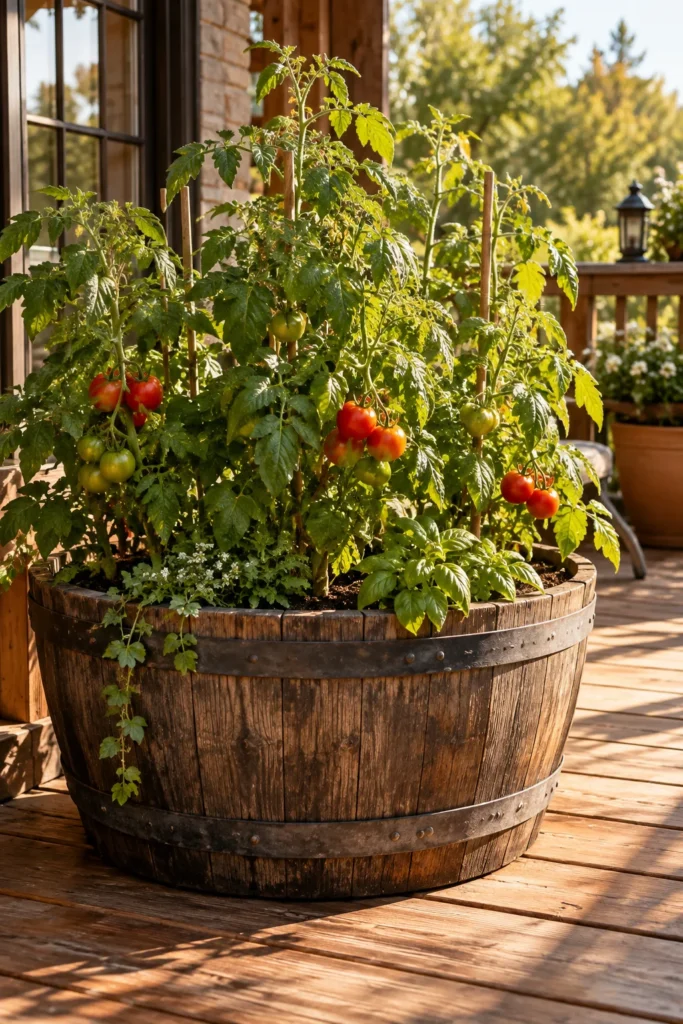
A halved wine barrel gives you a sturdy, eye-catching rustic planter. Moisture stays in the soil longer thanks to those heavy timber staves.
Pack it with dwarf fruit trees, peppers, or tomatoes for a solid harvest. It gives you the feel of an entire garden patch on a fraction of the ground.
My tip: Put in a food-safe plastic liner before planting anything you plan to eat. Untreated timber rots away much quicker than people think.
4. Rubber Boot Planter
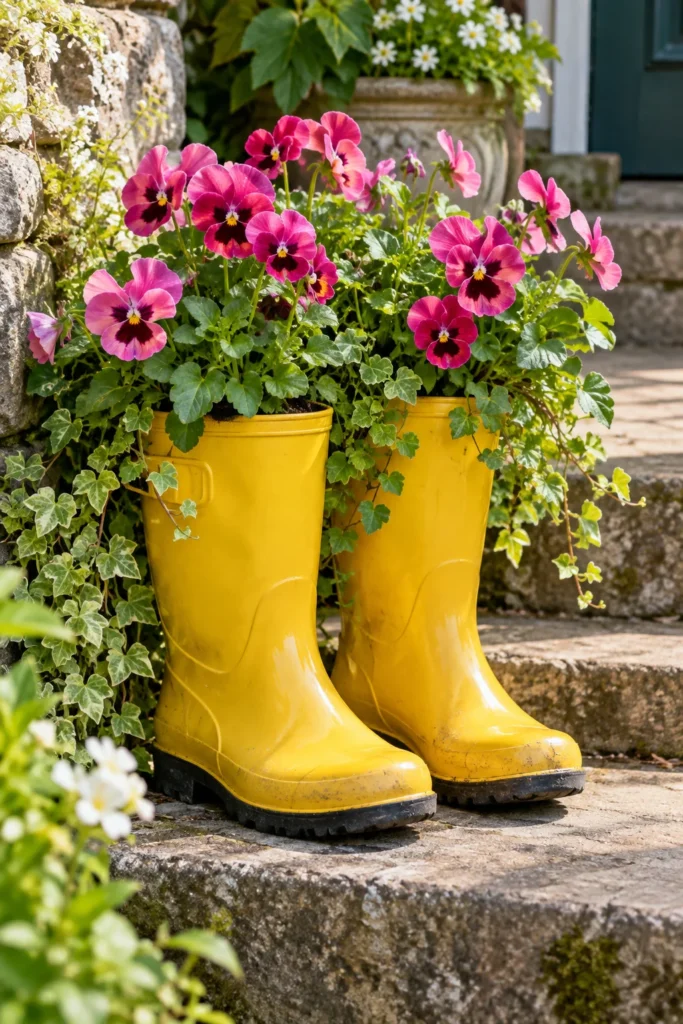
You can turn an old pair of wellies into quirky garden containers for next to nothing. Rubber stands up to all kinds of weather when left outside year-round.
Small annuals, violas, and pansies fit nicely inside the boot shape and look great. It makes a great starter project, especially with children helping out.
My advice: Heat a nail and use that to melt holes through the sole. Drilling through rubber is surprisingly difficult.
5. Dresser Drawer Planter

A salvaged dresser drawer gives you a wide, shallow base that suits mixed plantings. Its wooden edges give the piece an easy cottage-garden style.
Fill it with shallow-rooted picks such as alyssum, marigolds, or lobelia.
It is a solid option if you want a low, spreading flower arrangement right by the porch.
My advice: Set the drawer up on feet or a few bricks. Leaving the wood right against the soil will rot it out in a season or two.
DIY and Budget-Friendly Creative Planters
I put together nearly every piece in this section on my weekends using scrap material. Not a single one cost me more than twenty dollars in the end.
6. Concrete Block Planter
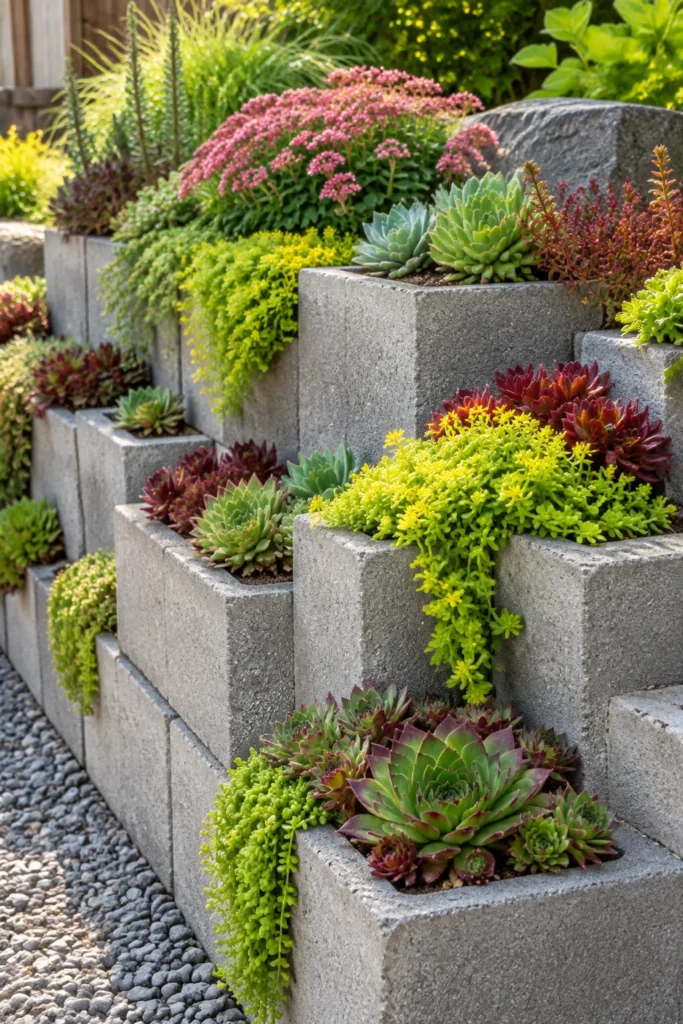
You can stack cinder blocks into an instant, modern-looking planter without any building experience. Each opening in the block becomes a small, individual planting spot.
Fill the holes with sedum, hens and chicks, or trailing thyme.
If you want a low border for your garden that feels clean and industrial, this is a great fit.
My tip: Overlap the blocks brick-style so the whole thing stays steady. A single straight row tends to shift over time.
7. Painted Tin Can Planter
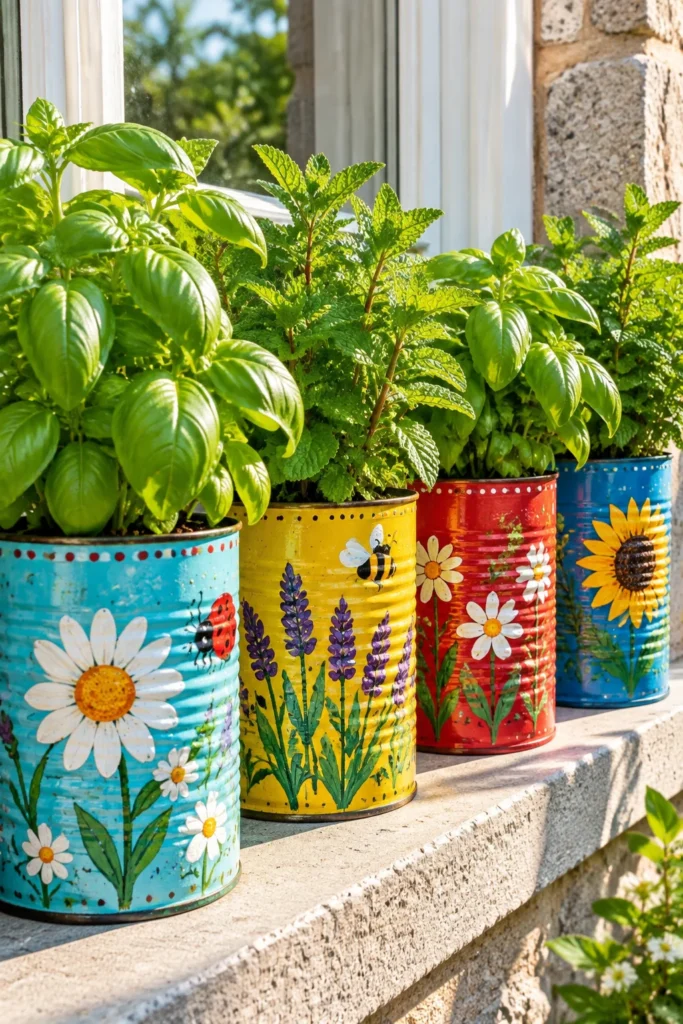
With nothing more than a layer of paint, empty food cans turn into cheerful small planters. Cluster a few on a windowsill to make a colorful display.
Basil, mint, and chives, among other herbs, do really well in quarters this tight. Renters, or really anyone with limited outdoor area, will find this ideal.
My tip: Give the rim a quick sanding beforehand so the paint adheres properly and nobody cuts themselves on any rough spots.
8. Pallet Wood Planter Box

Tear down one wooden pallet, and you have enough material to construct an entire rectangular planter box.
Friends ask me how to build this more than almost any other DIY garden piece I talk about.
Pack it with spinach, lettuce, or flowers grown for cutting. Anyone hoping for a raised garden bed on a modest budget will appreciate this option.
My advice. That stamp shows the timber was heat-treated, not chemically treated.
9. Mason Jar Wall Planter

Fixing mason jars to a simple board gives you an upright planter that leaves your floor space practically untouched. I count it among my absolute favorite setups for tight spots.
Tuck small herbs, pothos cuttings, or air plants into each jar. Narrow side yards and apartment balconies are ideal spots for this.
My tip: Angle the jars slightly forward when you attach them. That keeps water from sitting right where the hardware meets the wall.
10. Terracotta Stack Planter
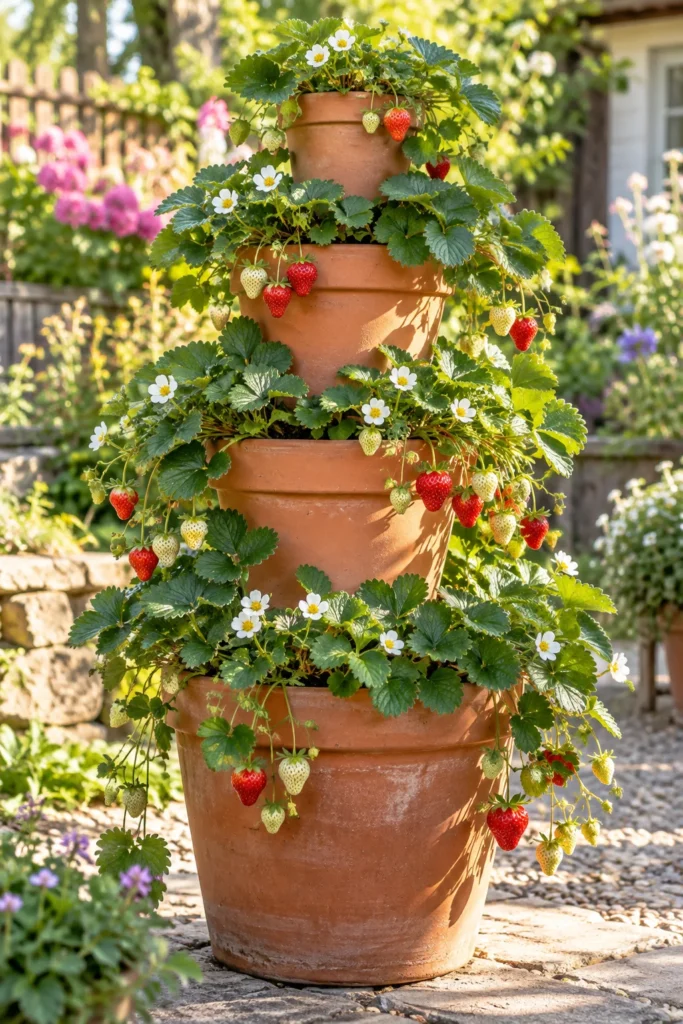
Nest terracotta pots from largest to smallest to create a tiered planter tower. The finished piece looks deliberate, even though it calls for practically zero skill.
Fill the different tiers with annual flowers, trailing herbs, or strawberry plants.
Gardeners who need vertical reach on a small footprint will find this ideal.
My tip: Stagger the pots just enough that light still reaches the lower foliage.
Hanging and Vertical Planters
When friends have small patios or fences instead of actual garden beds, this is the setup I point them toward first. Hardly anyone takes proper advantage of vertical space.
11. Macrame Hanging Planter
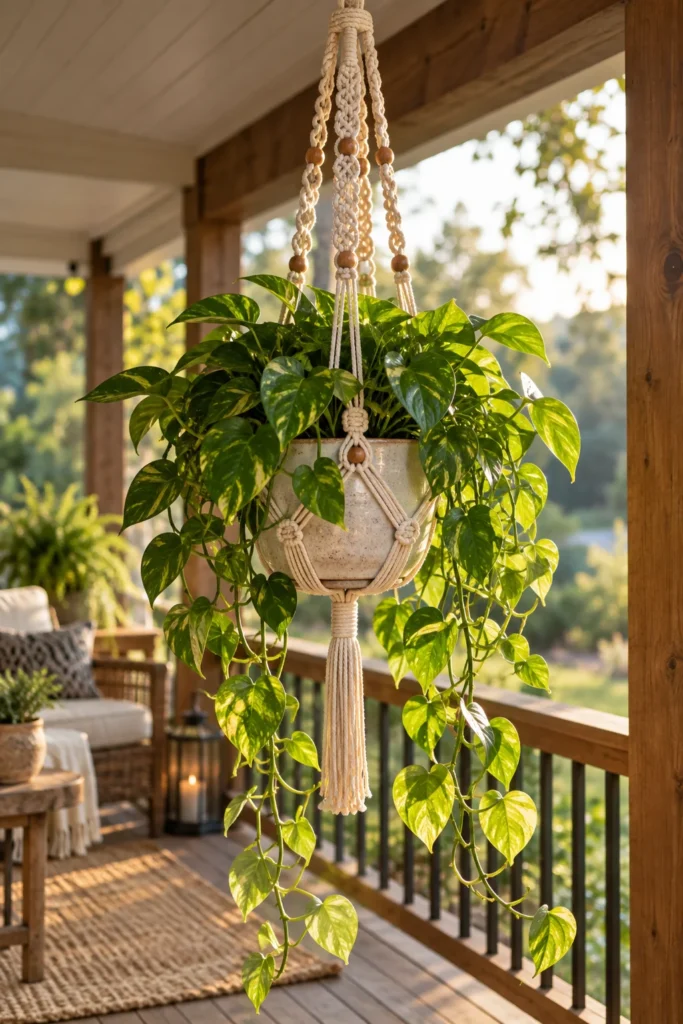
A hand-knotted macrame hanger makes an ordinary pot look like a centerpiece. Plastic hangers can never match the texture you get from natural rope.
They work best with spider plants, pothos, or string of pearls. They work well for anyone who wants a bit of boho style on a covered patio or porch.
My tip: Slide a plastic pot into the macrame holder instead. If the pot knocks into a post or a wall in the breeze, ceramic can easily crack.
12. Gutter Vertical Planter
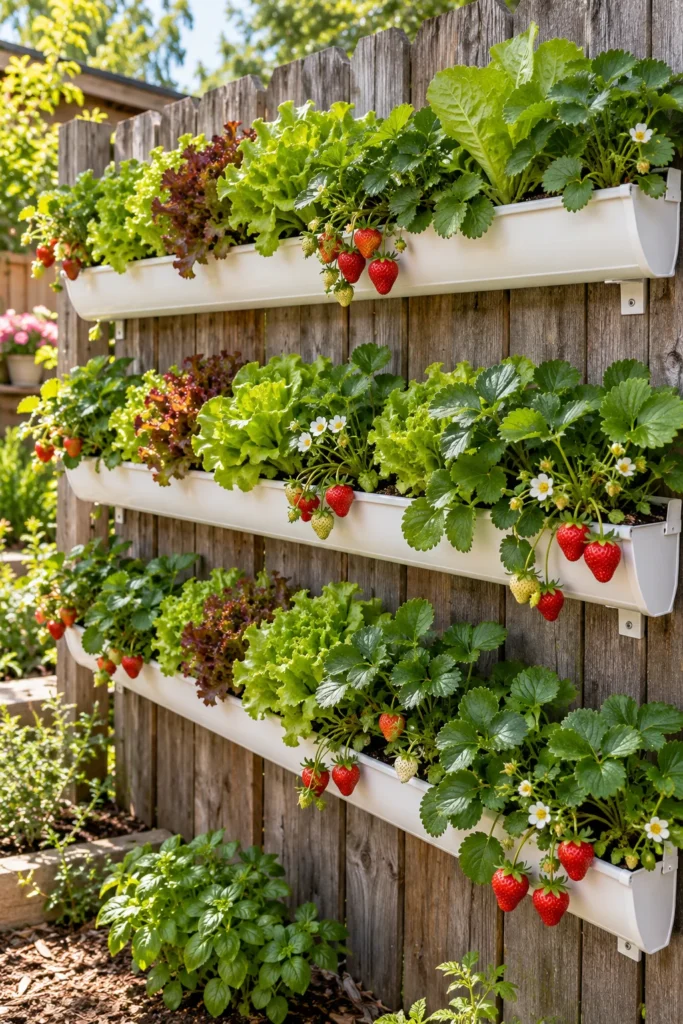
Lengths of vinyl guttering hung in rows give you a compact planter that sits neatly on a bare fence. The hollowed-out shape lets water run off on its own.
Use each row for shallow herbs, strawberries, or heads of lettuce.
For anyone planting against a fence rather than in the dirt, it’s one of the most striking and unusual options.
My tip: Drill drainage holes every six inches. Left alone, gutters stay wet much longer than you would think.
13. Pallet Vertical Garden
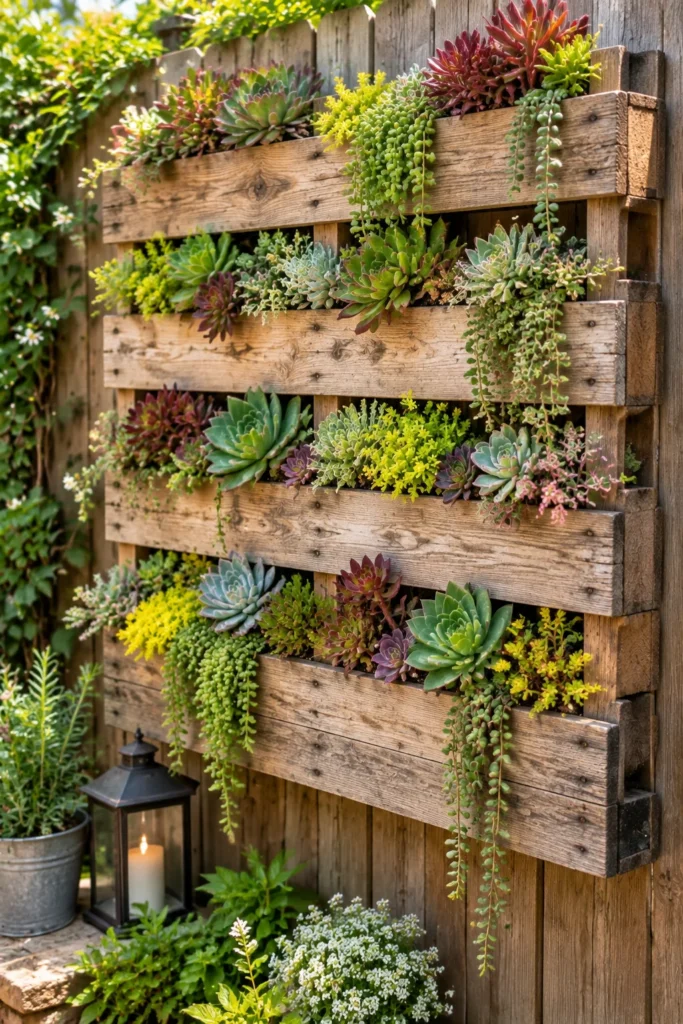
If you stand a pallet on end and staple landscape fabric behind the wood, you get a living wall full of small pockets. It makes a striking screen for a boring fence.
Pack the pockets with shallow-rooted annuals or succulents.
Use this along a sunny stretch of fence that looks a bit dull.
My advice: Leave the pallet flat on the ground for a week or two after planting. Roots need that window to anchor themselves before you tilt the wood upright.
14. Shoe Organizer Planter

Those hanging cloth shoe racks meant for wardrobes turn into remarkably effective vertical herb gardens. Each compartment holds just enough dirt for a single small plant.
This setup suits compact herbs like thyme, parsley, and basil best.
It works particularly well for tenants wanting an installation they can take down instantly.
My tip: Buy a canvas organizer, never plastic. Canvas allows much better drainage and airflow when left in the garden.
Statement and Decorative Planters
These are your standout pieces, the items that catch visitors’ eyes the moment they pull into the drive.
15. Painted Ceramic Urn
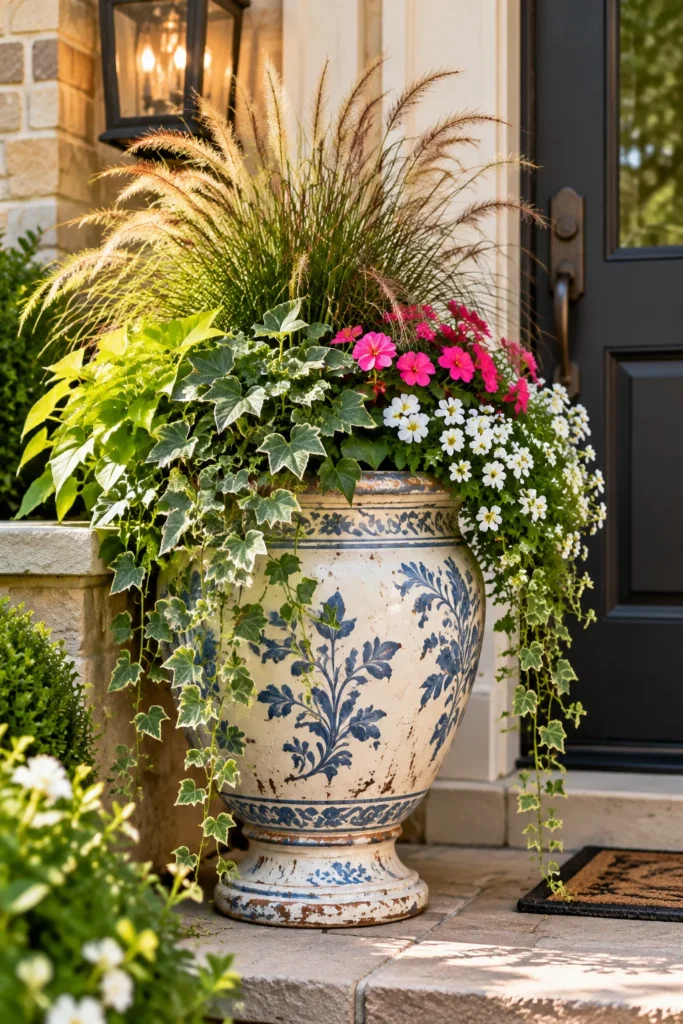
An oversized ceramic urn, whether hand-painted or finished in a contemporary shade, commands attention at any entrance.
The profile provides an elegant touch without demanding much work.
Plant it with tall grasses, trailing ivy, or a little ornamental tree. Front doors or the very end of a walkway are the best spots for this.
My tip: Put broken foam or a layer of packing peanuts in the bottom. That saves you money on soil and keeps the whole thing lighter.
16. Woven Basket Planter

Lined with plastic, a solid woven basket offers a warm, textured look that neither metal nor ceramic can pull off. Right away, it takes the harsh edge off a stone patio or deck.
Choose ferns, begonias, or annuals that prefer shade. It works well on a covered porch shielded from direct rain.
My tip: Put a trash bag inside the basket first, then pierce drainage holes straight through both layers at once.
17. Birdcage Planter
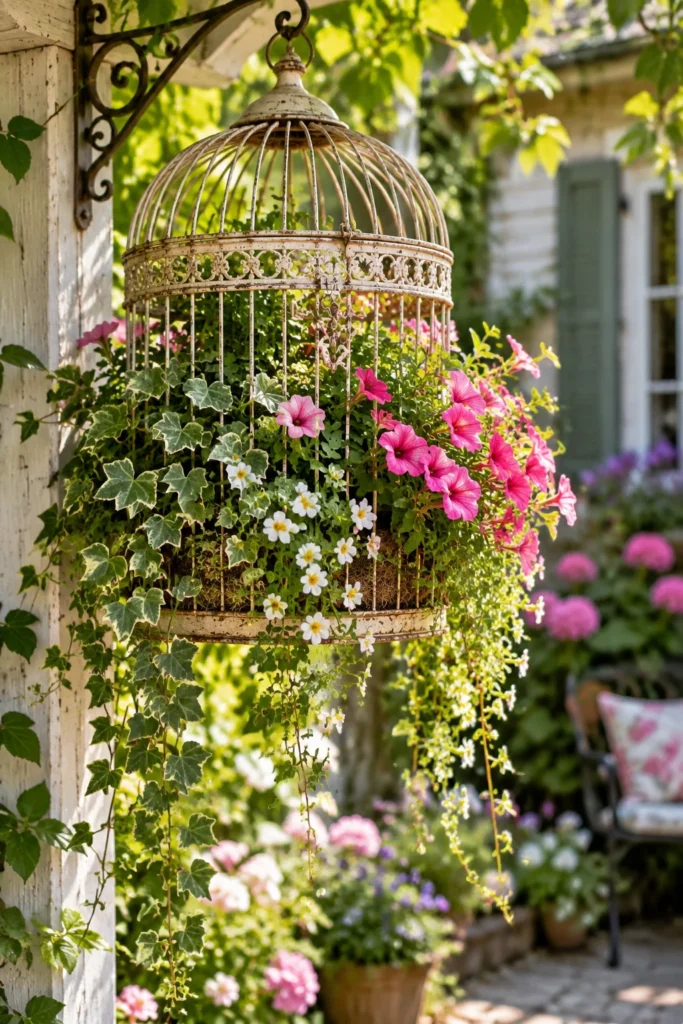
A potted plant tucked inside an old decorative birdcage instead of a bird gives the garden an unusual, memorable feature. It really gets people talking.
This works best with trailing vines, small ferns, or flowering annuals.
It fits right into cottage gardens or any space where you want guests to see something memorable.
My tip: Hang it a little higher than you think you need to. Trailing varieties shoot downward quickly and can drag along the ground within weeks.
Frequently Asked Questions
What is the cheapest way to make a planter?
Repurposing something you already own, like a can, boot, or drawer, costs almost nothing. Just add drainage holes and potting soil.
Can I use any container as a planter?
Almost any container works as long as it can drain and wasn’t treated with harmful chemicals. Avoid anything that once held toxic substances.
How do I add drainage without a drill?
A hammer and a large nail can punch holes through thinner materials like tin or plastic. For thicker wood or ceramic, a drill is safer and faster.
Do repurposed planters need a liner?
Porous materials like wood or wicker last longer with a plastic liner inside. It slows down rot and keeps soil from spilling through gaps.
Do I need to seal wood planters?
Untreated wood lasts much longer with a coat of exterior sealant or paint. Skip this step and expect the wood to break down within a season or two.
How do I stop metal or rubber planters from breaking down outdoors?
A light coat of outdoor sealant or clear spray paint slows down rust and cracking from sun exposure. Bringing metal planters under cover during heavy winter weather also helps them last years longer.
Final Thoughts
I never expected an old wheelbarrow to become my favorite corner of the yard.
But that’s what happens when you stop buying pots and start looking around your garage instead.
Not every project on this list will fit your space, and that’s completely fine. Pick the one that excites you most and start there.
Grab one item from your garage this weekend and turn it into your next planter.