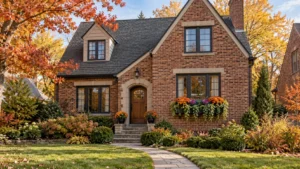
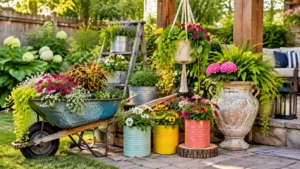
The woman who delivers my mail once told me mine was the only house on the street she actually looked forward to stopping at.
The paint color had nothing to do with it. She meant the planters right next to my door.
Over the years, I tore down and rebuilt those front yard planters three times before I landed on the look that made neighbors pause on the sidewalk.
Here is what finally did the job.
I didn’t have to hire a crew for the weekend or blow through a proper front yard landscaping budget. Here are the fifteen ideas that moved the needle most.
Quick Comparison: Front Yard Planters Placement Guide
| Placement | Sun Level | Best Plant Type | Maintenance |
| Front Door | Partial shade | Boxwood, ferns | Low |
| Walkway | Full sun | Marigolds, petunias | Medium |
| Driveway Edge | Full sun | Ornamental grass | Low |
| Window | Varies | Trailing annuals | Medium |
Planters for Small Front Yards
You don’t need deep pockets just because your yard is small.
Setting out two or three planters in the right spots delivers more impact than a whole garden bed, and you can do it with very little effort.
1. Matching Pair by the Door
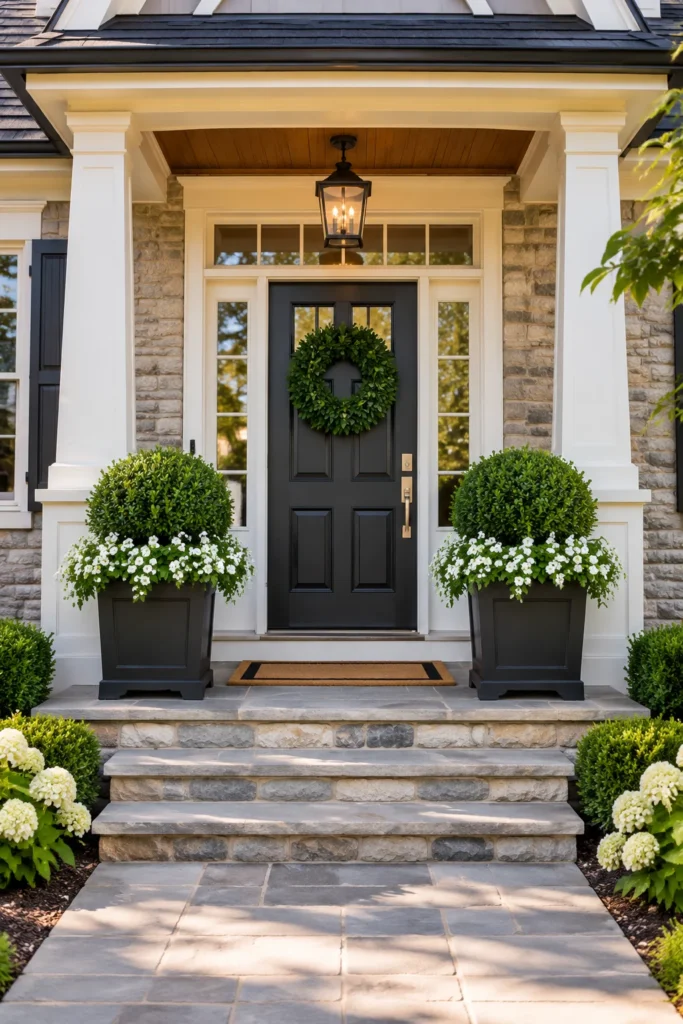
Setting identical planters on both sides of the door gives you immediate visual balance.
This easy move turns an ordinary entryway into something that looks deliberately styled.
Pack them with boxwoods, dwarf evergreens, or seasonal flowers so they hold their shape through all four seasons.
If your front entry is level and simple, this setup is ideal.
My tip: Pick up matching pots, and get the biggest ones you can comfortably afford.
Mismatched little pots feel accidental, while an identical pair stays tidy even if you change out just one plant down the road.
2. Window Box Planters
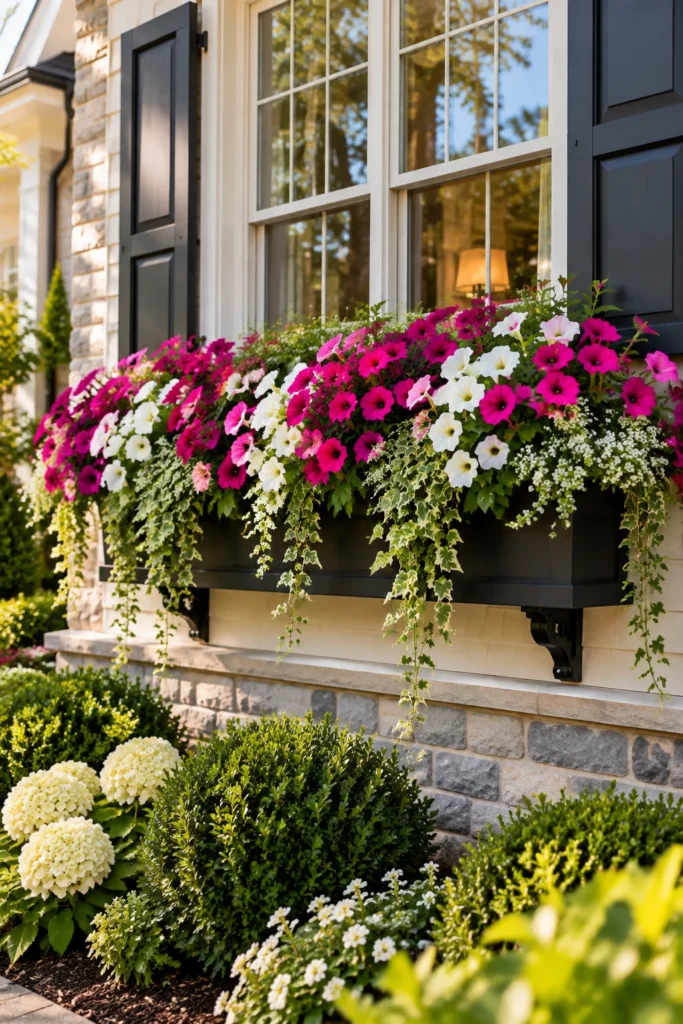
Window boxes bring color straight to the spot guests tend to notice right away. Few things will lift your house’s curb appeal quite as quickly without having to dig up the yard.
Go with trailing petunias, lobelia, or ivy if you want that full, spilling-over effect.
This is a great match for any house with broad sills facing the road.
My tip: Water window boxes more frequently than you would your in-ground pots. Between direct sunlight and the breeze, they lose moisture quickly.
3. Stacked Terracotta Trio

Stacking three terracotta pots of descending sizes gives you vertical height without building a raised bed. The arrangement is plain, but it looks terrific in pictures.
Try mixing herbs, geraniums, or dwarf marigolds throughout the different tiers. It sits neatly right by a mailbox or beside the front steps.
My tip: Always stick to an uneven number of pots. A set of three or five always feels more natural to the eye than two or four.
4. Narrow Rail Planters

Because they clip straight to the railing, rail planters let you bring in plants without losing an inch of deck space. If your porch is tight and narrow, they are an ideal fit.
Pack them with trailing vinca or smaller, compact annuals. They fit right in on houses with a railing stretching across the front porch.
My tip: Verify the weight capacity before you pack rail planters full. Once wet, soil weighs a lot more than you would expect hanging from a railing.
Planters That Boost Curb Appeal
These planters actually draw praise from visitors. I tried out every single one myself before including it, and two of them earned a permanent spot at my place.
5. Large Urn Planters
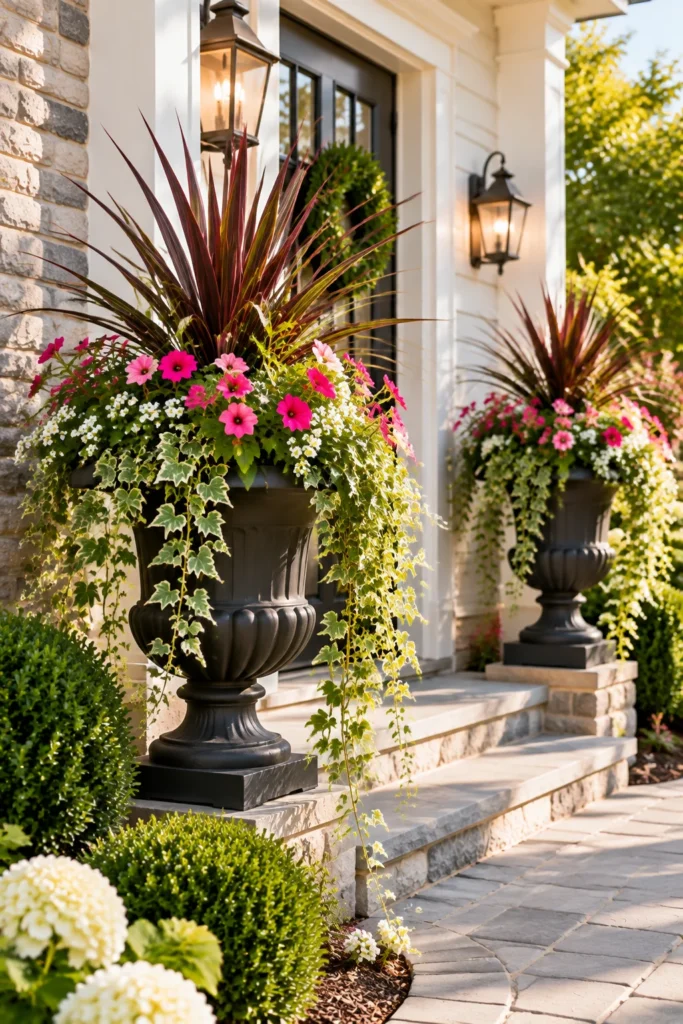
Setting out a tall urn planter pulls the eye up and instantly dresses up an ordinary walkway. That classic profile fits in with practically any architectural style.
To build up a dense, layered look, combine spiky dracaena with trailing ivy and colorful annuals.
Houses with an extended front walkway that need an anchor piece will benefit most.
My tip: Set urns around eye level or just below. If you set oversized urns by a low step, they can swallow up the whole entrance.
6. Symmetrical Boxwood Planters
Matching square planters with boxwoods keep a front yard looking sharp and orderly all year. They don’t date.
Choose dwarf boxwood or a comparable evergreen shrub for dependable structure. Colonial-style and traditional homes are the natural fit for this.
My tip: Prune the boxwoods into soft, rounded forms. Crisp geometric edges take far more maintenance than most people realize.
7. Painted Whiskey Barrel Planters

Painting a whiskey barrel adds a splash of bright color alongside classic rustic character. It catches the eye while still fitting right in.
Add sunflowers, zinnias, or tall ornamental grasses to build up height and impact. This look belongs on cottage-style or farmhouse properties.
My tip: Put in the drainage holes before you break out the paint. If you paint first, the holes get tough to spot, and you can easily overlook them.
8. Raised Planter Bed Border
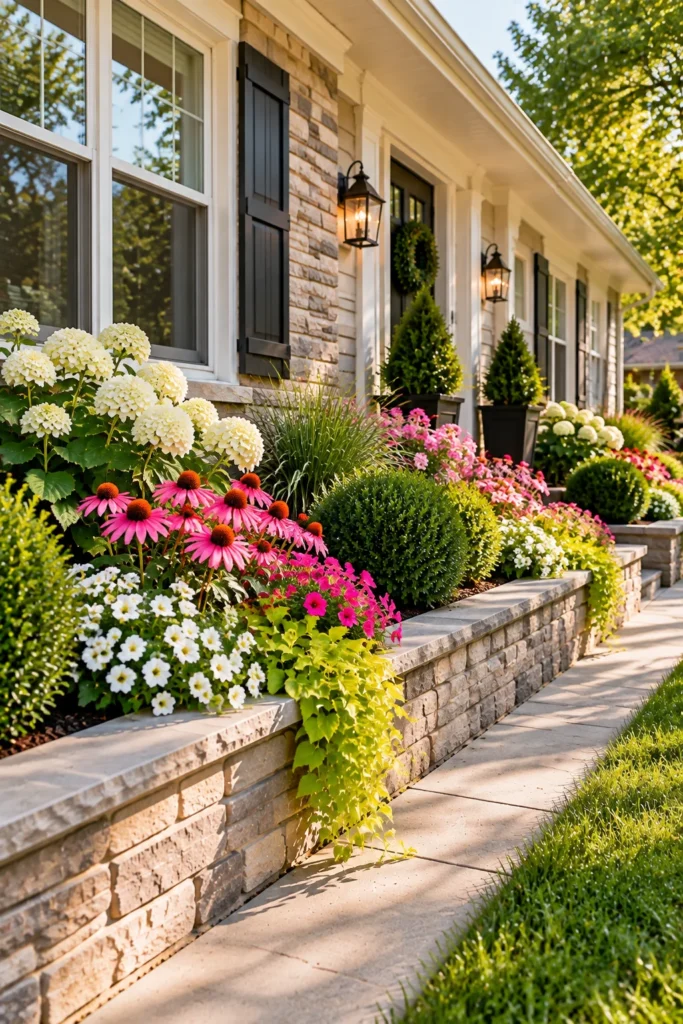
Running a low raised bed along the front wall sits right on the line between a built-in garden and a standalone planter.
You get added structure without committing to a major yard overhaul.
Pack it with low-growing shrubs, seasonal flowers, or a mix of both. Ranch homes with long, unbroken front walls are an especially good match.
My tip: Make sure the bed is at least twelve inches deep. Shallow soil dries out quickly and narrows down the plants that can actually do well.
9. Modern Concrete Planters

Crisp concrete pots lend a sharp, contemporary feel to the front yard that softer materials can’t match.
They look particularly natural alongside contemporary architecture.
Stick to plants with strong forms, such as yucca, agave, or ornamental grasses. This looks right at home with simple landscaping and crisp architecture.
My tip: Pick lightweight planters with a concrete finish if there is any chance you will relocate them. Once you add soil, concrete gets heavy fast.
Low Maintenance Front Yard Options
Fussing over containers weekly just isn’t realistic for everybody. All three of these made it through my most chaotic, neglected summers, including one July when I rarely picked up the hose.
10. Self-Watering Planters

A built-in reservoir lets plants drink moisture on their own schedule. If you are out of town a lot or running around with a packed schedule, they save the day.
Pack them with herbs, annual flowers, or compact veggies that prefer steadily damp roots.
Frequent travelers and chronic under-waterers will get the most mileage out of this setup.
My tip: Peek at the water level once a month, no matter how much it rains. A covered porch cuts off surprisingly large amounts of rain, so never bank on passing showers doing the job.
11. Succulent Planter Bowls

A shallow succulent bowl demands hardly any attention and barely any water after it settles in. Full direct sun and neglect bother them just as little.
Stick to sedum, echeveria, or petite aloes to get an easy arrangement with plenty of texture. Hot front steps that bake in the sun are the perfect spot for this.
My tip: Pick up a cactus blend that drains quickly. Standard potting soil stays far too wet for succulents.
12. Ornamental Grass Planters
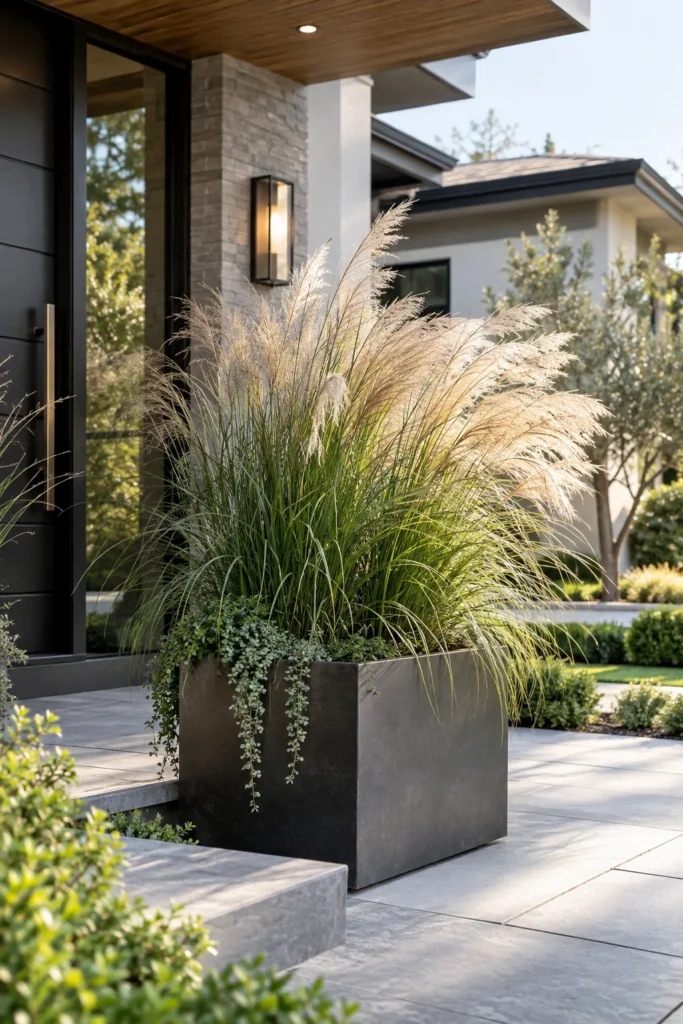
You get height, movement, and texture from tall ornamental grasses without constantly feeding or deadheading them.
Even a gentle breeze gives them plenty of life throughout the season.
Go with blue fescue, fountain grass, or feather reed grass. It is an ideal choice for any home that wants a soft, natural aesthetic paired with low maintenance.
My tip: Give the grasses a hard prune in early spring. Fresh growth returns greener and fuller when you prune aggressively instead of lightly.
Seasonal Planters for Every Season
Changing out your pots with the seasons is easily the simplest way to refresh your front yard without a full redesign. Swapping mine out four times a year never feels like a chore.
13. Fall Mum Planters
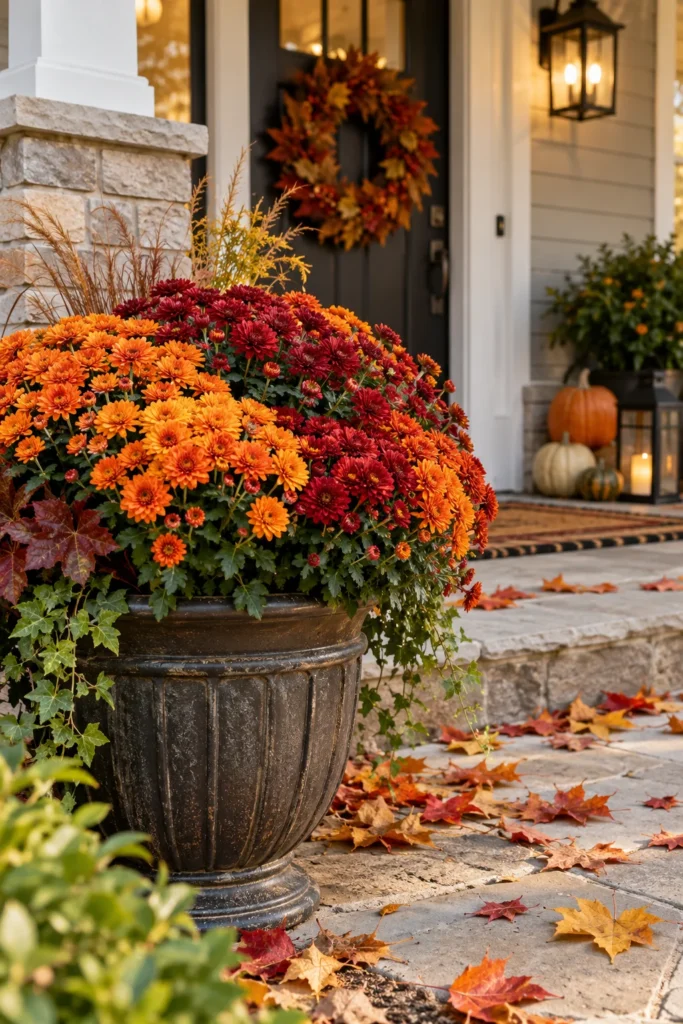
Putting warm-toned chrysanthemums by your fall front porch announces the shift in seasons right away.
They are easy to find anywhere and deliver dependable color.
Stick to burgundy, deep red, or orange mums for that classic autumn punch.
They’re a great fit for anyone who wants an effortless seasonal update that requires little thought.
My tip: Pick mums with most buds still closed. You will get several extra weeks out of them compared to pots already wide open.
14. Spring Bulb Planters
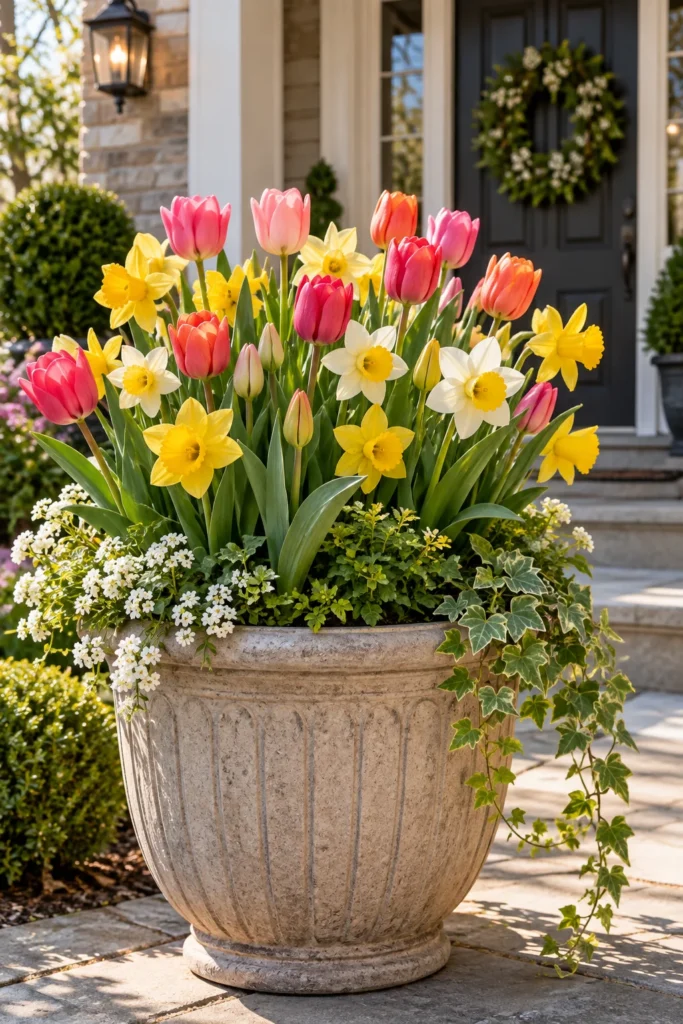
Spring bulb containers deliver the season’s first real splash of color once winter ends. Tulips and daffodils make their presence known right away.
Plant tulips, daffodils, or hyacinths in the autumn so they show up come spring.
This option makes sense if you don’t mind planning a season.
My tip: Squeeze the bulbs in tighter than the packet instructions say to. Packing them together makes the flowers look richer and deliberate once they open.
15. Evergreen Winter Planters
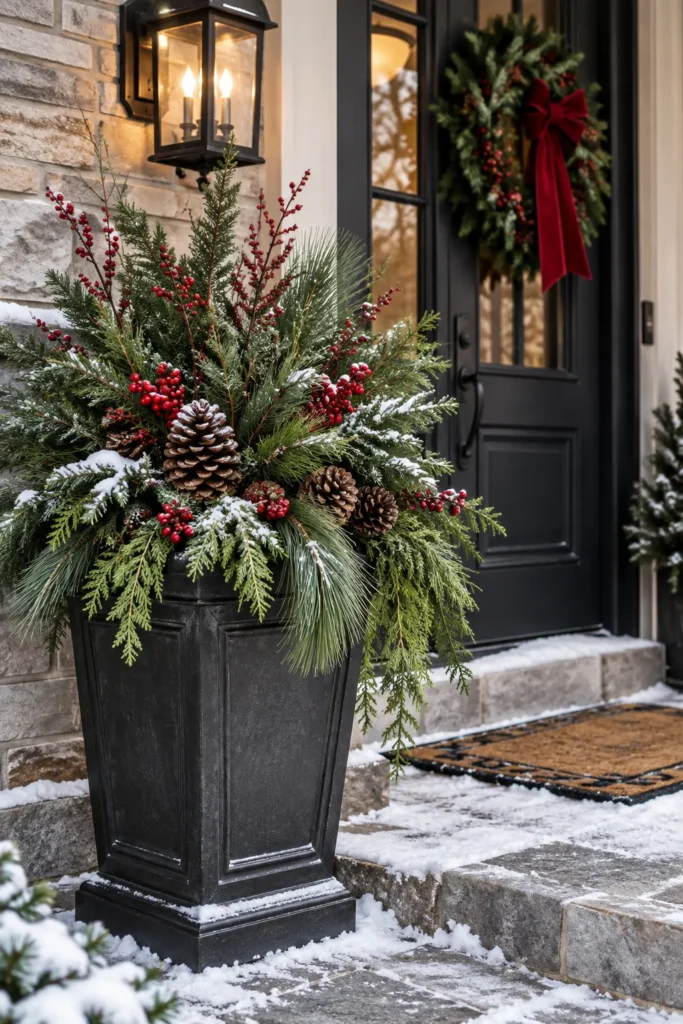
Small conifers and evergreen boughs stop pots from sitting empty right through the dead of winter.
They give you height and form while every other plant is gone for the season.
Choose pruned spruce, pine boughs, or holly snips. It is an easy route for anyone who wants a winter display without maintaining living roots.
My tip: Tuck in some red berries or pinecones to break up the tone. Sticking entirely to green boughs tends to look dull once January rolls around.
Frequently Asked Questions
How many planters should I put by my front door?
A matching pair usually looks best and creates natural symmetry. Odd numbers work well too if you’re grouping three or more smaller pots together.
What size planter works best for curb appeal?
Bigger is almost always better near an entryway, since small pots tend to disappear visually. Aim for at least sixteen inches wide for a noticeable impact.
Do outdoor planters need drainage holes?
Yes, drainage holes are essential to prevent root rot, especially with heavy rain. Add a layer of gravel at the bottom if your planter lacks holes.
What are the easiest plants for entryway planters?
Boxwood, succulents, and ornamental grasses need the least maintenance while still looking polished. They tolerate missed watering better than most flowering annuals.
How often should planters near a front door be replanted?
Most people refresh planters seasonally, about four times a year, to match spring, summer, fall, and winter. Evergreen or shrub-based planters can stay put for several years instead.
Should front door planters match each other exactly?
Matching planters generally look more polished and intentional than mismatched ones. A little variation in the plants themselves is fine as long as the containers stay consistent.
Can I plant directly in the ground instead of using planters?
Ground planting works fine, but planters give you more control over soil quality, drainage, and placement. Planters also make it far easier to change your layout each season without digging anything up.
What color planters work best for curb appeal?
Neutral colors like black, white, charcoal, and terracotta tend to age well and match almost any home exterior. Save bold colors for the plants themselves so the containers don’t compete for attention.
Final Thoughts
My front yard used to blend into every other house on the street. A few well-placed front yard planters changed that faster than any landscaping project I’ve tried.
You don’t need all fifteen of these at once. Start with the entryway, since that’s the spot everyone actually notices first, and build outward from there.
Pick one planter from this list and get it planted before the weekend ends.