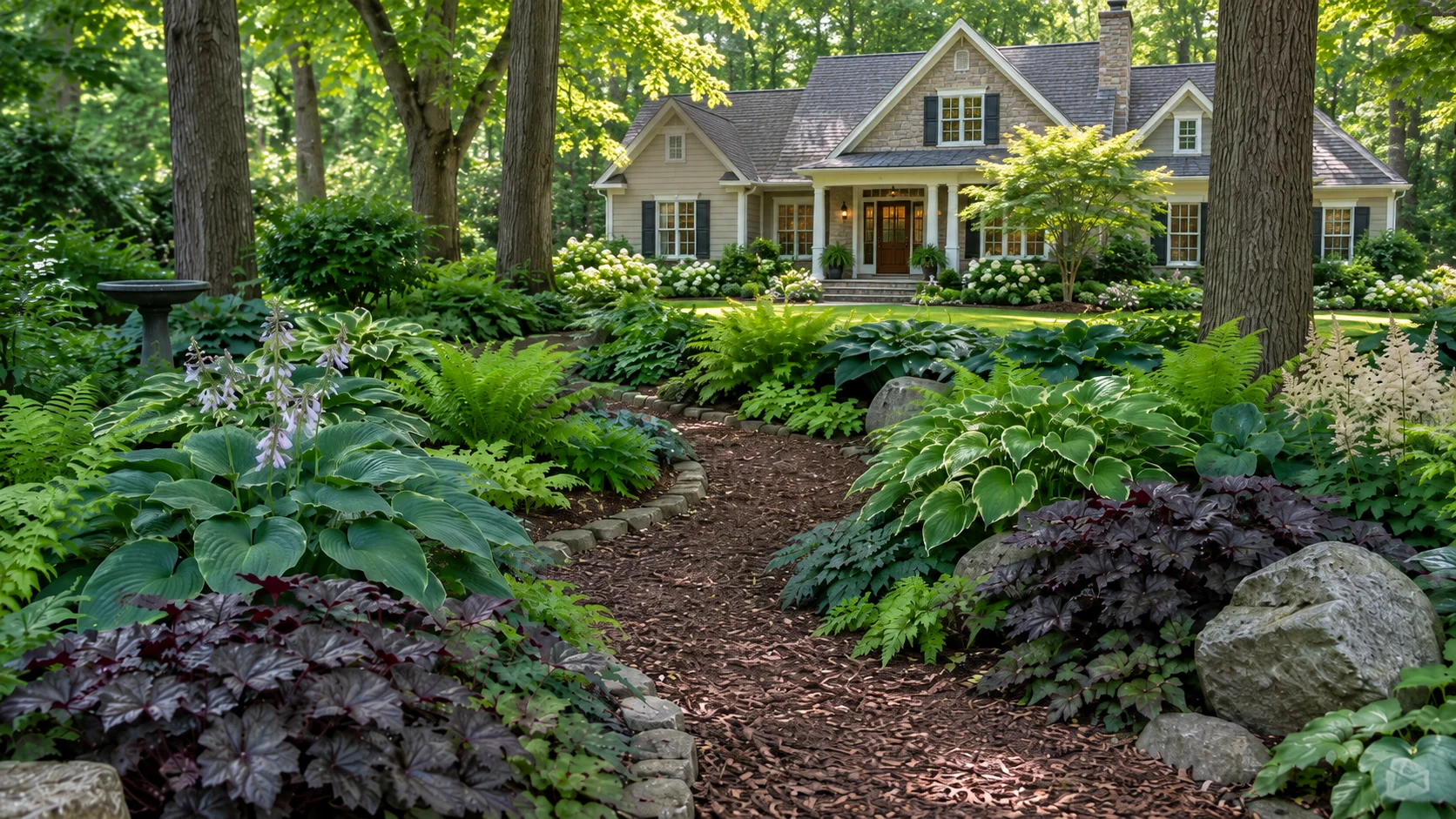
In my backyard, one corner had no direct sunlight at all. It was nothing more than dirt, weeds and a dismal area of dead grass for years.
Then I finally learned how to do full shade landscaping instead of battling it. This corner is now my prettiest yard corner.
I’m going to share 25 plants and design fixes that made my darkest space the one guests ask about.
Groundcovers for Full Shade
The first plants that I put in a new shade bed are groundcovers. They fill in quickly and smother weeds.
1. Hosta
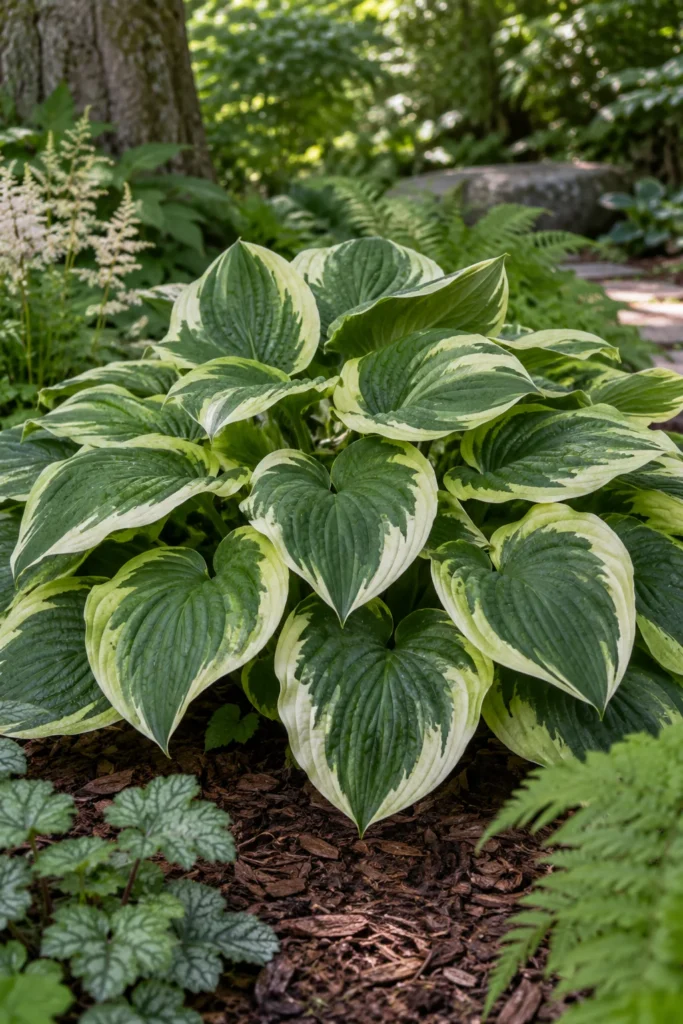
It’s no surprise that hosta is the most popular shade groundcover. The leaves range from mini to 3-foot clumps, and they come in dozens of colors.
Ideal for: Novices who want something almost impossible to destroy.
My suggestion: Plant a variety of hosta plants, rather than a single variety.
2. Pachysandra

Pachysandra grows into a dense, shiny green carpet and is one of the most shade-tolerant plants. It also remains evergreen in most areas.
Ideal for: Tree trunks with large areas of bare bark.
My advice: Wait until the end of the growing season to assess how well it filled in.
3. Vinca Minor (Periwinkle)

Periwinkle (Vinca minor) is a fast-growing plant with small purple flowers in the Spring. It will grow in dry or wet shade.
Best on: Slopes or areas where grass can’t grow.
My suggestion: Hard-prune in early Spring to prevent it from becoming leggy.
4. Sweet Woodruff
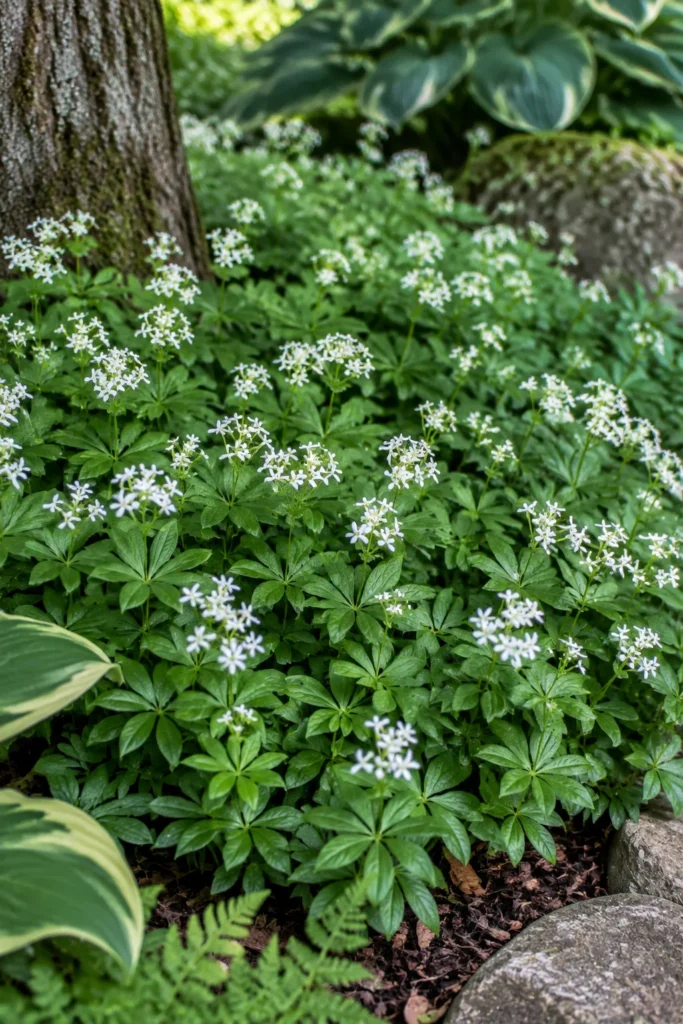
Sweet woodruff creates a fine, low layer of tiny white spring flowers, and has a mild vanilla aroma. Does not spread aggressively, but rather courteously.
Ideal for: Cottage landscaping gardens in shady locations.
My suggestion: Place it close to a walkway or a seat so you can smell the aroma.
5. Wild Ginger
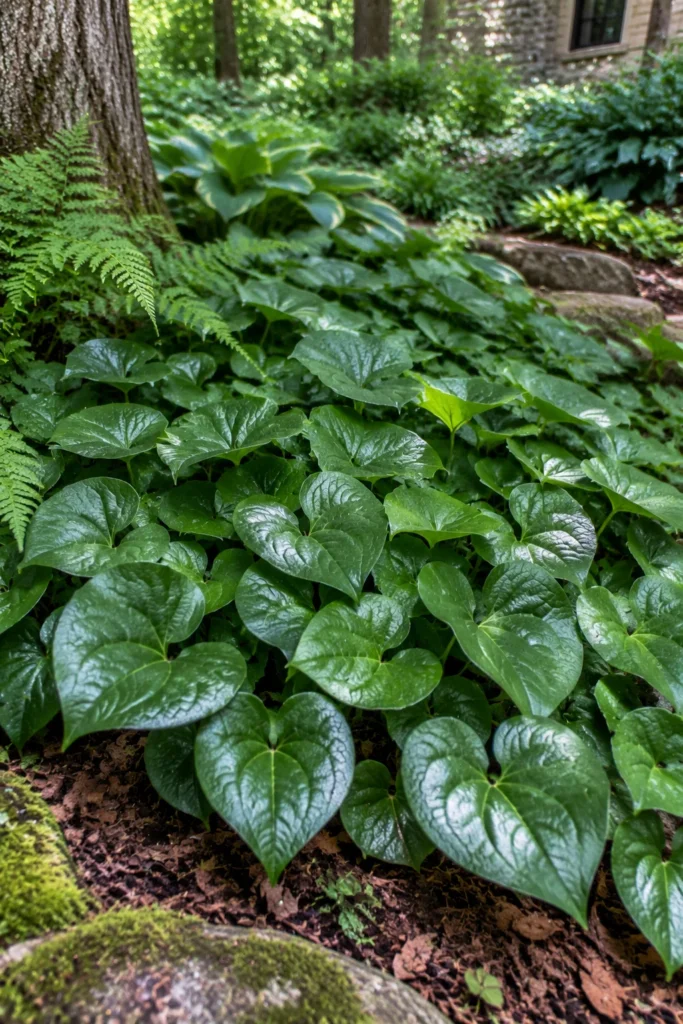
Wild ginger has attractive, heart-shaped leaves that stay that way all season, even in deep shade. This native plant grows throughout much of the USA.
Ideal for: Woodland-type gardens and for adding a native element.
My suggestion: Combine with ferns for a height-layered, natural look.
Ferns and Foliage for Deep Shade
This type of yard work is most fun with ferns. The texture options can fill a whole bed.
6. Japanese Painted Fern

The fronds of Japanese painted fern are silvery, with a hint of burgundy. It’s one of the few ferns that adds real colour, rather than green.
Ideal for: Adding softness and a glow effect to dark green plants.
My advice: Keep the soil consistently moist. It doesn’t like to dry out and sulks quickly.
7. Autumn Fern
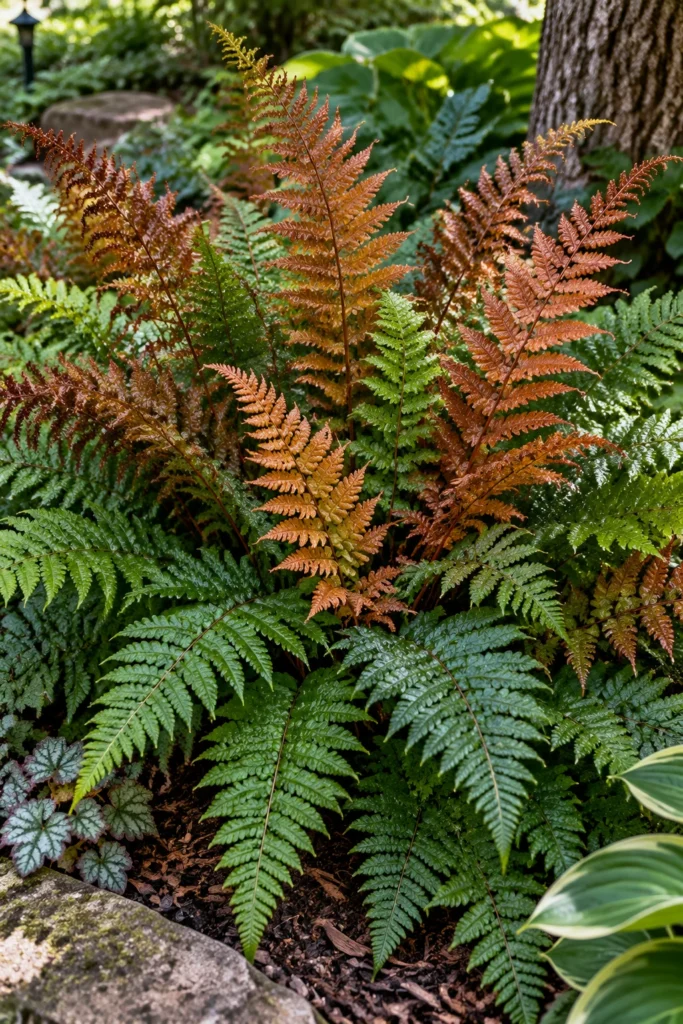
Autumn fern unfurls with copper-coloured new growth before changing to deep green. It is more wind-resistant than most ferns.
Ideal for: Foundation plantings along a shaded house.
My suggestion: keep the old fronds on over winter for additional interest before springtime pruning.
8. Christmas Fern
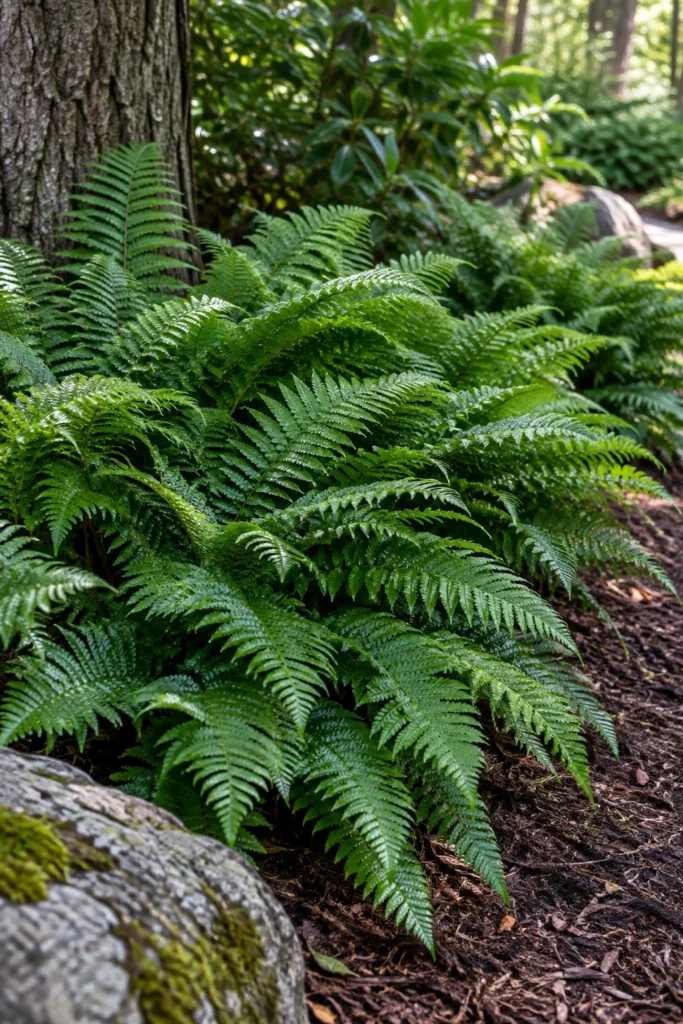
Compared to other ferns, Christmas fern is evergreen in most areas during the winter. It’s called this because it stays green at Christmas time.
Ideal plant for: All-year-round structure in a shade bed.
My suggestion: It is one of the few ferns that will tolerate dry shade under trees.
9. Heuchera (Coral Bells)
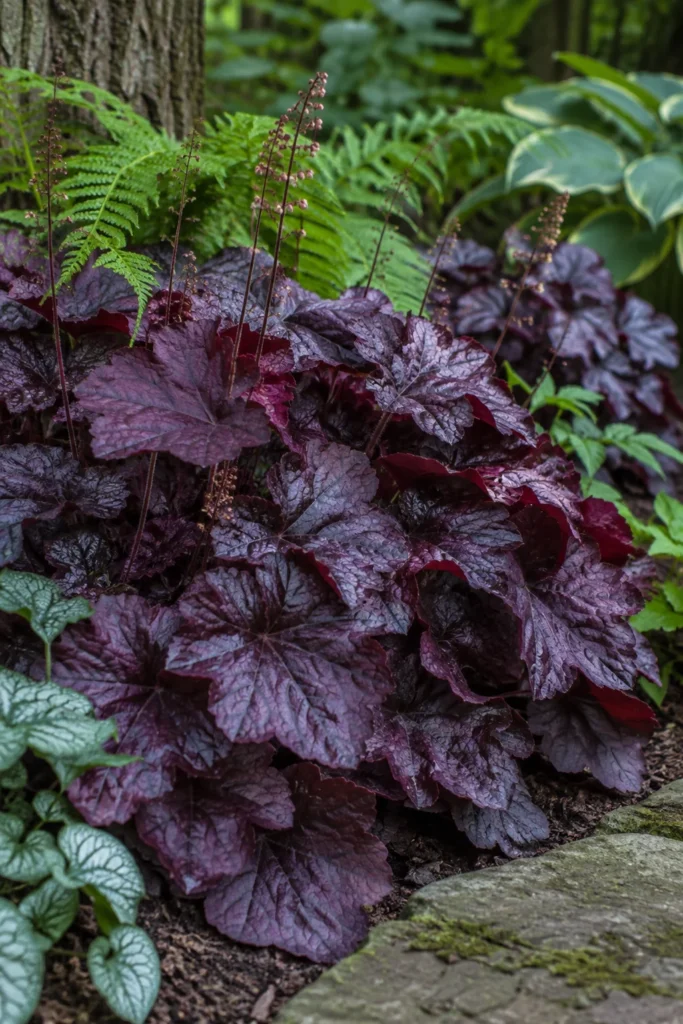
Heuchera, or coral bells, come in a variety of colours, including lime green, deep purple, and nearly black. The small flowers aren’t the main attraction; the foliage is.
Ideal for: When you want to add colour but don’t want to worry about bloom timing.
My advice: Don’t mix too many colours at a time; group three of the same colour together.
10. Lungwort (Pulmonaria)
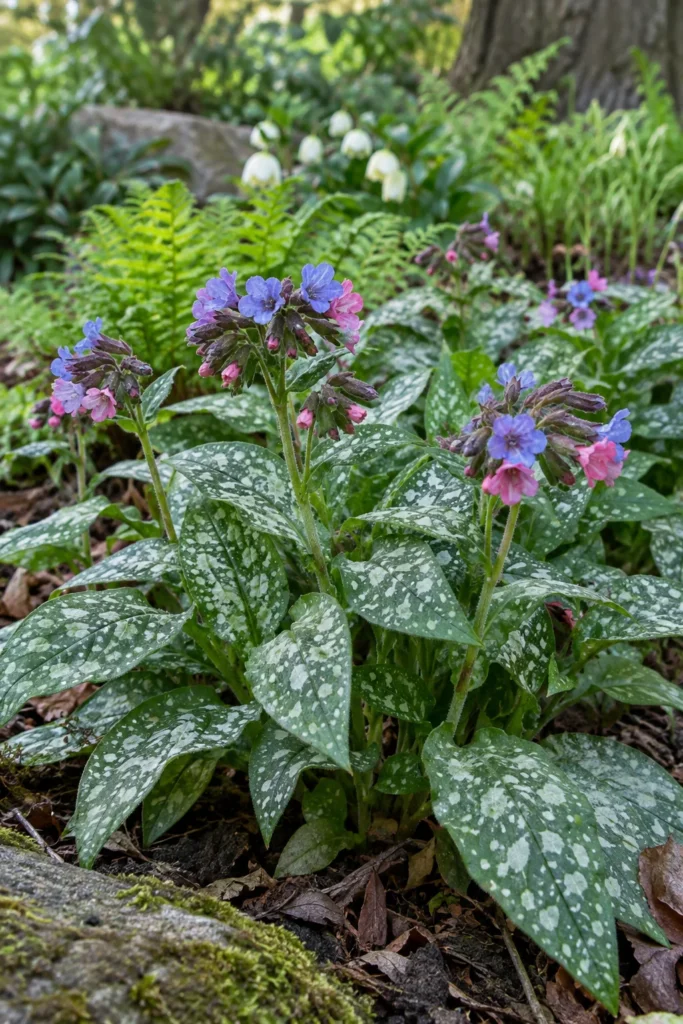
Lungwort has spotted, silvery foliage and early spring flowers which change colour from pink to blue on the same plant. It’s a classic shade that is underutilised.
Ideal for: Early-season colour before most shade plants come out of dormancy.
My suggestion: Trim it back after blooming, and it’ll grow new, fresh and clean leaves.
Shade-Loving Shrubs
Shrubs provide the bones of a shade garden. Always plant these before the smaller perennials.
11. Oakleaf Hydrangea
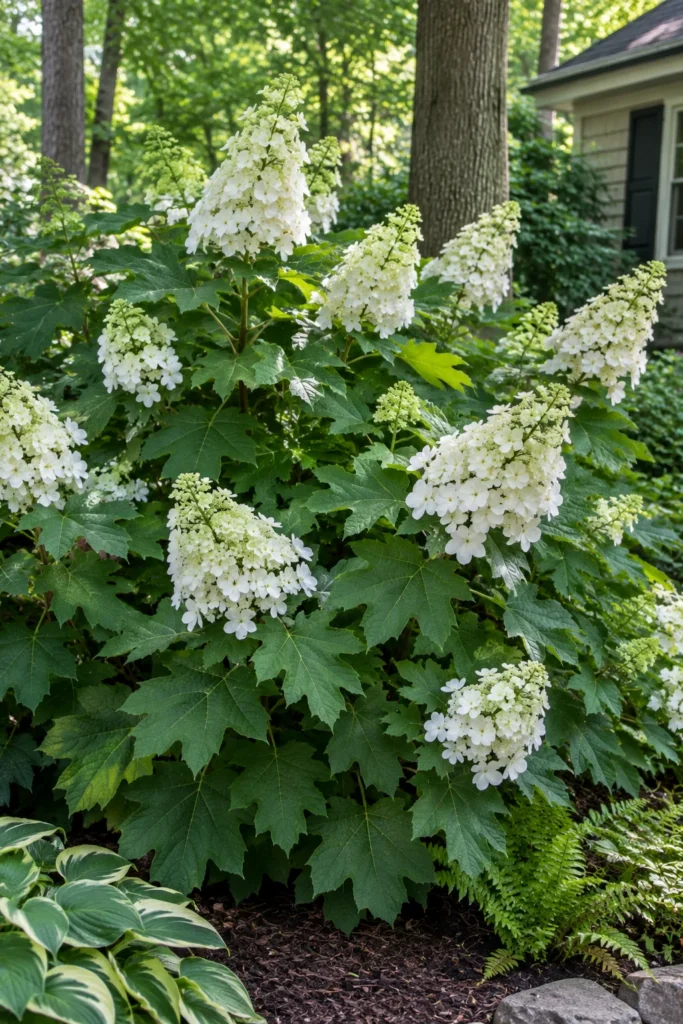
Oakleaf hydrangea grows in more shade than most hydrangea varieties and has lovely fall colour in addition to summer flowers. The bark also peels in the winter.
Ideal for: A shrub that adds interest year-round.
My suggestion: Don’t prune in the fall, as it will remove next year’s flower buds.
12. Azalea

Azaleas flower profusely in an explosion of colour in Spring, even in fairly deep shade. They come in almost every colour. Ideal for: Traditional shade gardens in the South.
My advice: Plant them just above the ground as they don’t like wet feet.
13. Fothergilla

Fragrant white bottlebrush blooms in Spring, and Fothergilla offers some of the finest fall colour of any shade shrub. It’s one of the plants that is not as well known and deserves more attention.
Ideal for: Anyone who wants fall colour comparable to a maple tree.
My suggestion: Plant it where you will pass it in October to enjoy the colour fully.
14. Japanese Holly

Japanese Holly is similar to boxwood but grows smaller and more compact without pruning, and it tolerates shade. It is evergreen all year round.
Ideal for: A short and neat hedge along a shady path.
suggestion: Shearing it lightly twice a year, rather than once a year.
15. Mountain Laurel

Mountain laurel is a clump of cup-shaped blooms in late Spring and is evergreen for the rest of the year. A native shrub over most of the eastern United States.
Ideal for: Woodland gardens where you want a native flowering shrub.
My suggestion: Don’t plant near a house foundation, as it likes cooler root areas.
Shade Perennials for Color
These perennials will give a shade bed some life, but shrubs and groundcovers do the heavy lifting.
16. Astilbe

Astilbe blooms with feathery plumes of pink, red or white, and is one of the few flowers that will grow and flower in moist shade. It’s a favourite shade flower of mine.
Ideal for: Areas near downspouts or low-lying areas.
My advice: Water it well during dry periods, or the blooms will fade rapidly.
17. Bleeding Heart
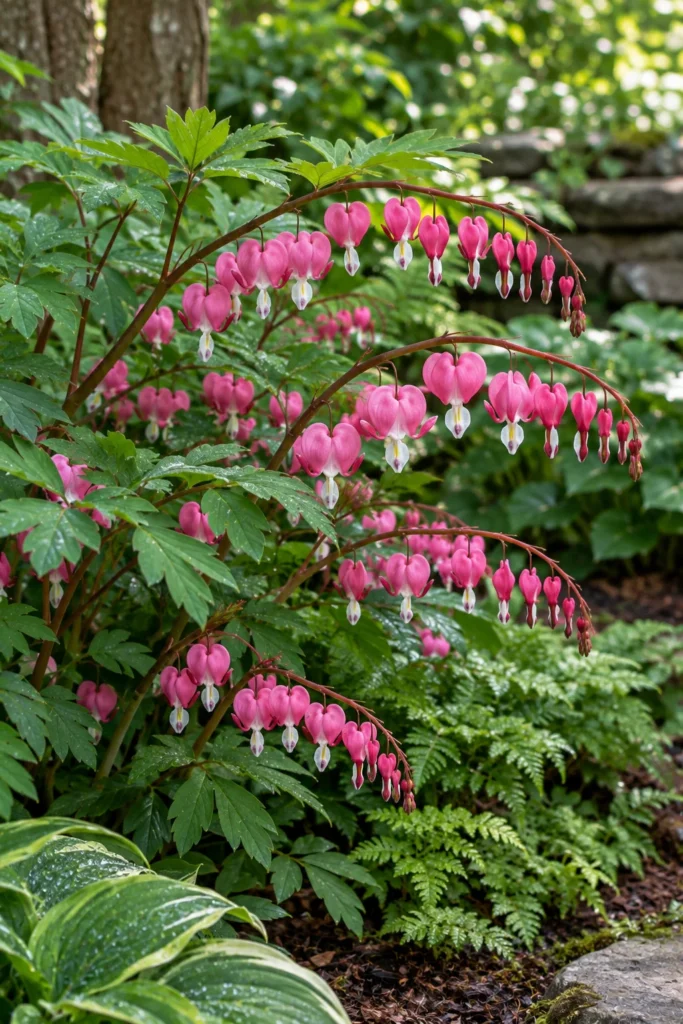
Bleeding Heart produces pink or white hanging heart-shaped flowers in Spring. It’s a bit retro in the right manner.
Ideal for: Cottage and/or grandmother’s garden styles.
My advice: Don’t fret when it goes away in the summer heat. It’s simply resting; it’s not dead.
18. Toad Lily
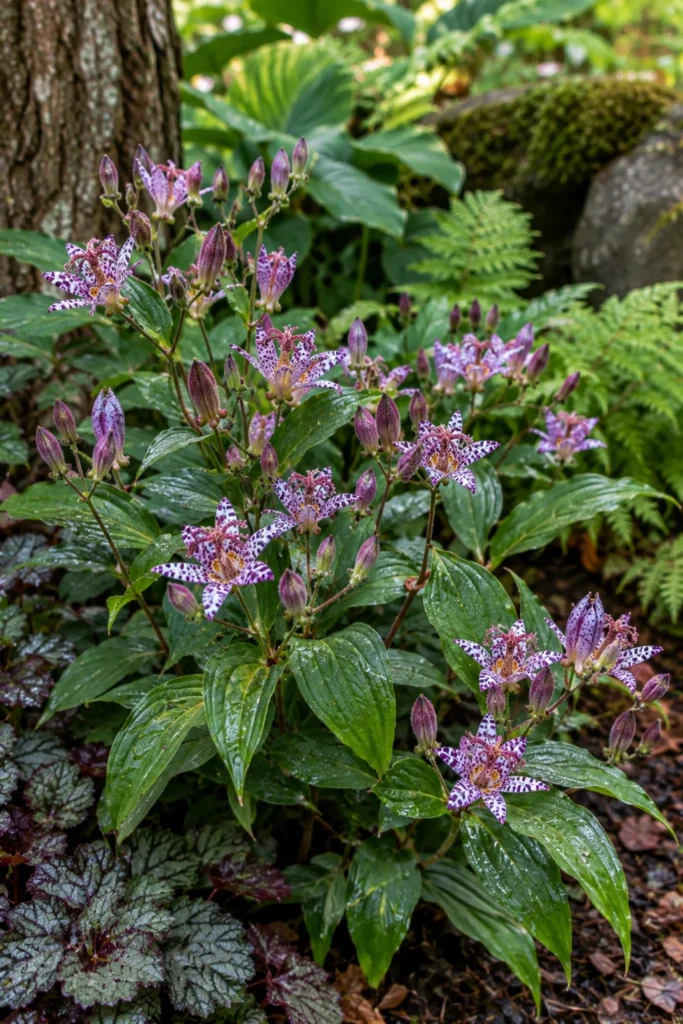
Toad lily has tiny orchid-like spotted flowers that appear in late summer to fall. It can fill in during the late bloom time of most shade plants.
Ideal for: Prolonging colour in the season.
My tip: Plant it somewhere you can see it up close, as the flowers are small and detailed.
19. Foxglove

Tall spikes of bell-shaped flowers emerge from foxglove, and it will tolerate more shade than you’d think. It also self-sows in the right spot.
Ideal for: To heighten the back of a shade border.
suggestion: let some seed pods develop if you want it to grow on its own the following year.
20. Lenten Rose
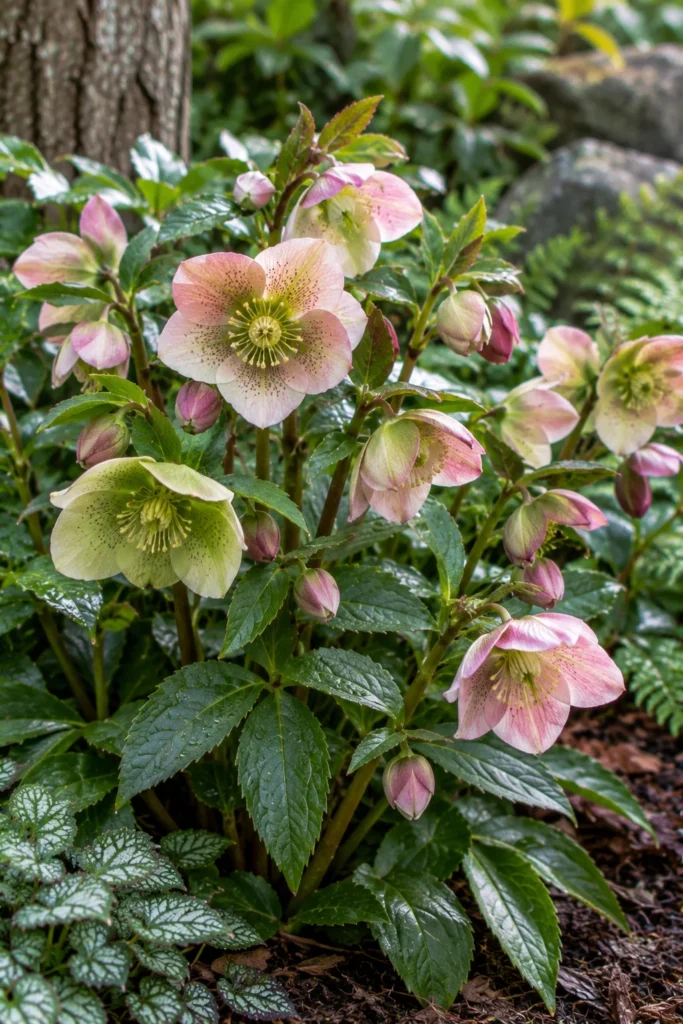
Lenten rose is a hellebore that flowers in late winter/early spring, when little else is in bloom in the shade garden. The leaves are evergreen.
Ideal for: All-year-round structure and for the first colour in your bed.
My suggestion: Plant it near an entrance so that you will see those first flowers on your way out the door!
Hardscape and Structural Solutions for Shade
Sometimes the solution isn’t a plant, but something else. These structural adjustments addressed issues plants couldn’t.
21. Mulched Woodland Pathway
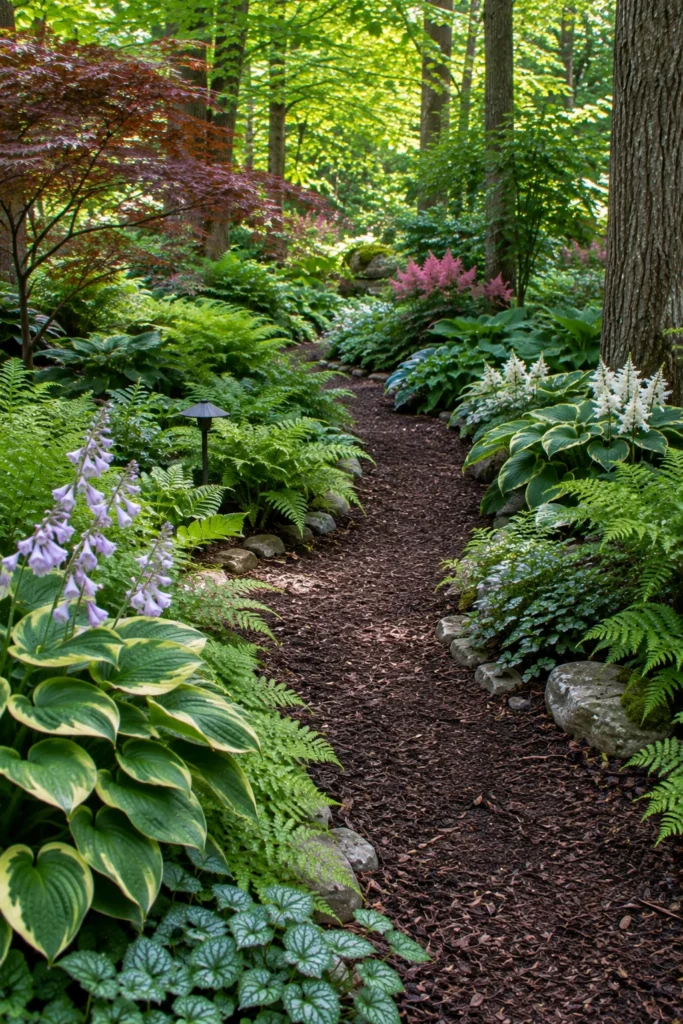
A simple mulched path through a shade bed makes it look like it was meant to be. It also addresses issues of grass not growing.
Ideal for: Linking a shadowy side garden with the rest of the garden.
My suggestion: Bend the track a little bit, rather than run it straight. It seems more natural to read.
22. Gravel Seating Nook
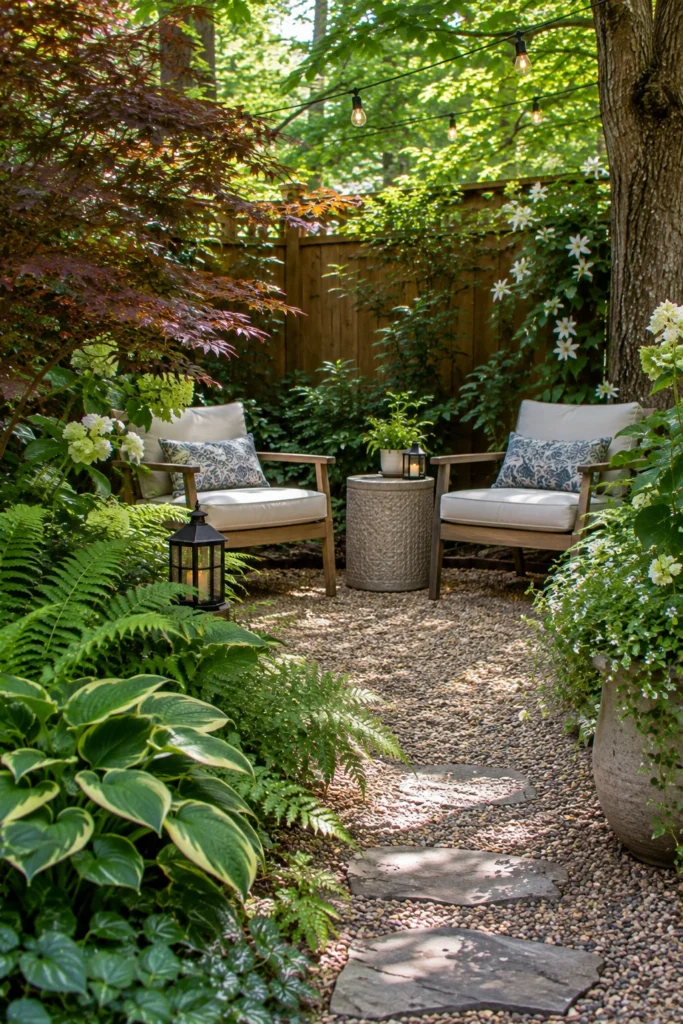
When it’s too hot to sit outside in the summer, a small gravel patio in a shady corner will provide a cool place to sit. It does not require any mowing.
Ideal for: Converting an unusable dark corner into usable space.
My suggestion: Add a basic bench or a couple of chairs to make the area feel complete, not just a plain gravel patch.
23. Shade Garden Water Feature
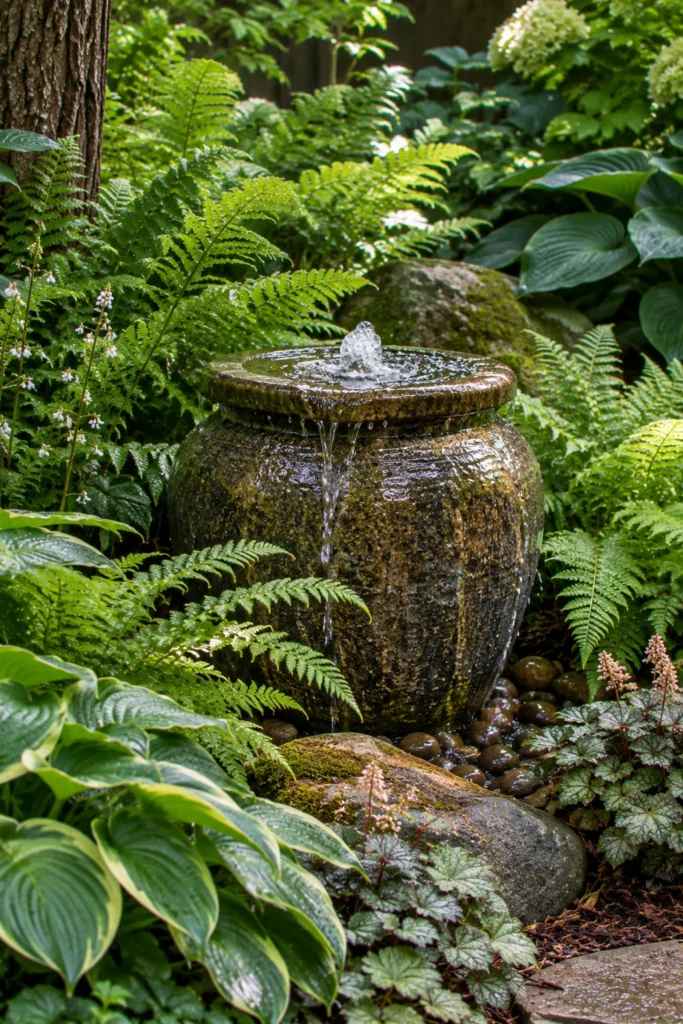
A quiet shade bed comes alive with the sound and movement of a small water feature, even a simple bubbling urn. It is also an attractive source for birds to drink from.
Best use: To block street noise in a shade garden in the front yard.
My advice: Avoid areas with a lot of leaf drop, or you will have to clean it out regularly.
24. Raised Planters for Better Drainage
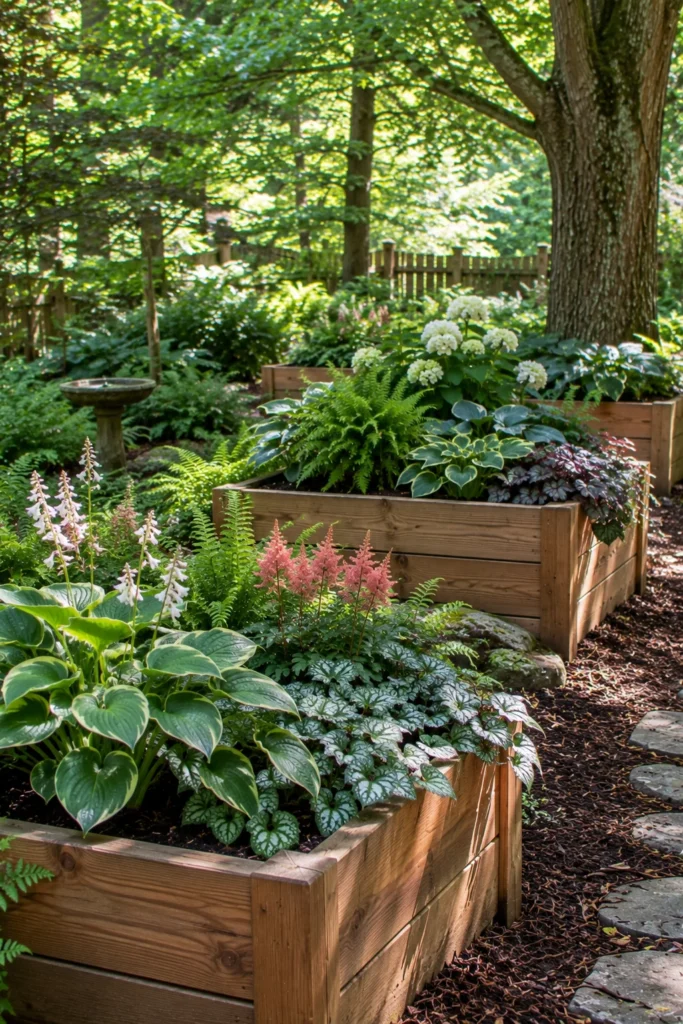
Raised planters can overcome the difficulties of planting in the ground with existing trees and tree roots, as well as poor drainage. Don’t battle existing soil conditions; fill with fresh soil.
Best suited for: Heavily shaded areas with many large tree roots.
My suggestion: Line the bottom with landscape fabric to prevent roots from growing up from the bottom.
25. Vertical Shade Garden Wall

Planting a wall vertically, or stacking plants on a tiered wall or shelving unit, doesn’t require ground space. It is particularly effective if used on a blank fence.
Ideal for: Small yards and shade gardens with limited ground cover.
My suggestion: Use trailing plants at the top levels to fall over, such as vinca.
Comparison at a Glance
| Plant | Light Needs | Height | Bloom Season | Deer Resistant |
| Hosta | Full shade | 1 to 3 ft | Folige plant | No |
| Astilbe | Full to part shade | 1 to 4 ft | Early summer | Yes |
| Japanese Painted Fern | Full shade | 1 to 1.5 ft | Foliage only | Yes |
| Oakleaf Hydrangea | Part to full shade | 4 to 8 ft | Summer | Somewhat |
| Heuchera | Full to part shade | 0.5 to 1.5 ft | Late spring | Yes |
Frequently Asked Questions
What grows best in full shade?
Hostas, ferns, and heuchera are some of the most reliable options for true full shade. They handle low light without stretching toward the sun or fading out.
Can a full shade yard still have flowers?
Yes. Astilbe, bleeding heart, and toad lily all bloom well without any direct sun. You just get a shorter window of color than a sunny bed would.
How much light actually counts as full shade?
Less than two hours of direct sun a day counts as true full shade. Bright, indirect light for most of the day is technically part shade, not full shade.
What’s the fastest way to fill in a bare shade area?
Pachysandra and vinca minor both spread quickly once established. Give either one a full growing season before deciding it isn’t working.
Final Thoughts
I used to think my shady corner was a lost cause. It turns out it just needed the right plants instead of the wrong ones.
This isn’t about giving up on color or texture. It’s about picking plants that actually want to live where you’re putting them.
Start with three or four picks from this list and build out from there once you see what thrives.
Walk your yard this week, find your darkest corner, and plant just one thing from this list to start.
