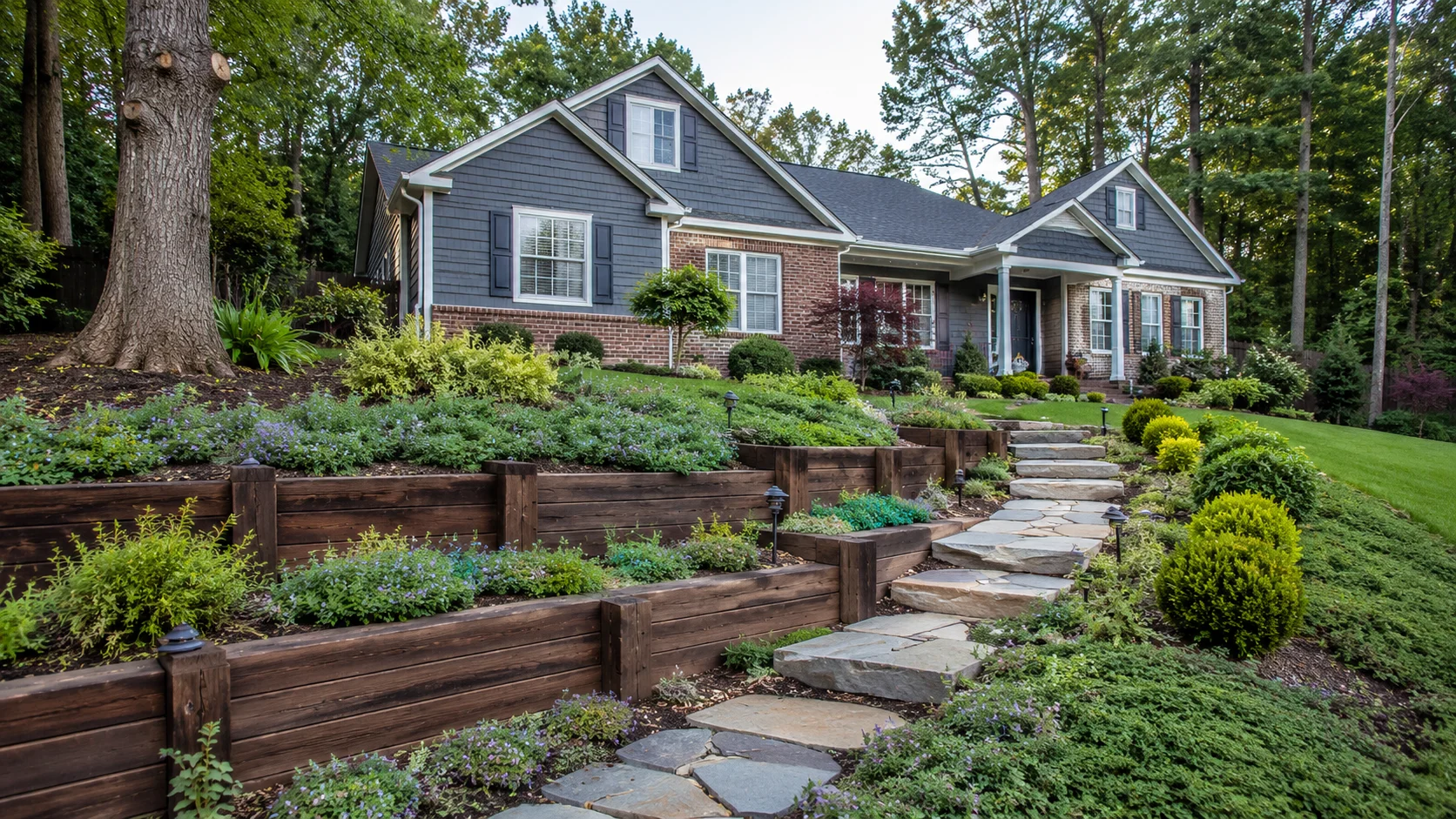
In my front yard, every time it rained, it used to slide downhill.
I’m not exaggerating. After a storm, mulch, topsoil, and even a few unlucky petunias would be strewn on the sidewalk.
That’s when I really began to take front yard landscaping seriously, and it made all the difference.
I made a couple of mistakes. It doesn’t matter how often you reseed a lawn; if it is flat on a hill, it just doesn’t work.
I finally got the right combination of walls, plants, and drainage, and the slope gave up. It began to seem as if it should be there.
I had to try and try and try for two seasons to get there. I’m giving you the fixes for sloped front yard landscaping so you don’t have to read the whole thing and find out what works.
Let’s take a look at the 17 fixes that did indeed slow down, season after season.
Retaining Wall Solutions for a Steep Slope
1. Timber Retaining Wall Terraces
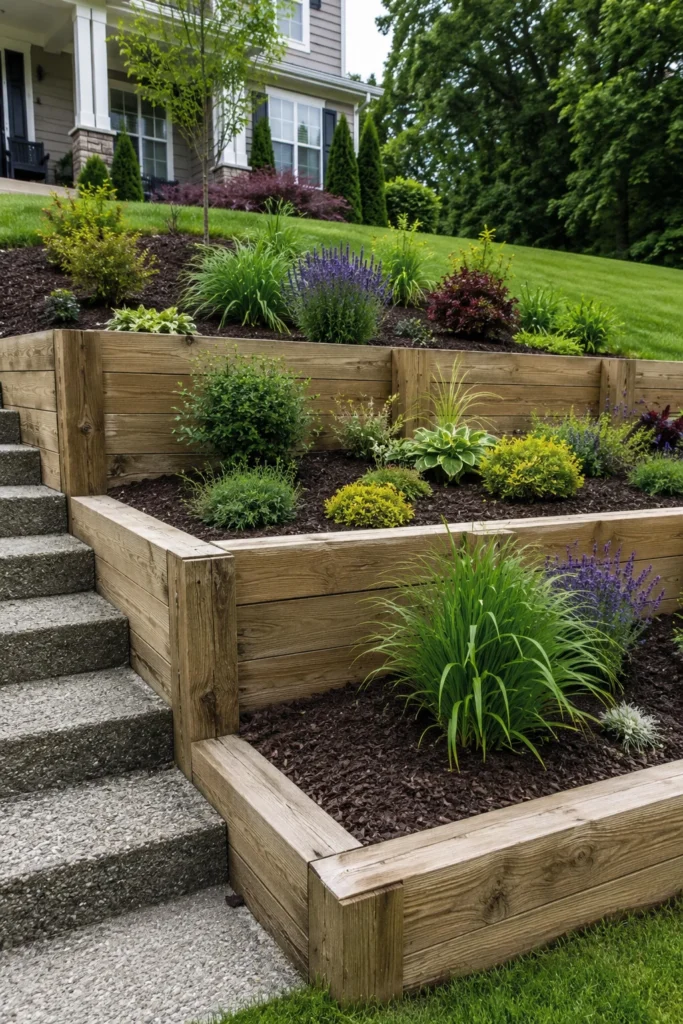
Timber walls divide a long slope into flat terraces that can be used. That flat ground prevents soil from washing downhill.
They’re also the quickest solution to construct without having to hire anybody. I got the first terrace done in one Saturday.
Pressure-treated pine, cedar, or landscape timbers are the best materials for ground contact.
Best for: It’s best suited for a homeowner who wants to do their own project on a budget, and on a weekend.
My suggestion: Lay the timbers staggered like bricks at the corners. It’s more resistant to stacking up vertically.
2. Natural Stone Retaining Wall

Stone walls retain a slope for decades and age well, like nearly any other material.
Best materials: Dry-stacked fieldstone, or mortared limestone for higher walls.
This is the best choice for people looking to live in the house long term, as stone has a higher initial cost.
My suggestion: Ask your supplier for stone with a flat surface on one side or more. It makes hours of chiseling later a thing of the past.
3. Boulder Retaining Border

Gentle slopes with large boulders are less formal than a built wall and retain soil.
Best material: Fieldstone or granite boulders, 18-36 inches wide, partially buried for stability, are the best materials.
This is ideal for a more natural, woodland-style ranch home landscaping.
My suggestion: Set each boulder at least 1/3 of the way down. In a year, a boulder on the soil surface will move.
Plants That Stop Slope Erosion
4. Creeping Ground Cover Beds

The roots of ground cover hold the top layer of soil together – a bare slope lacks this.
Best plants: Creeping juniper, creeping phlox or sedum, depending on the amount of sun.
Works well for slopes too steep to mow safely.
My suggestion: Don’t plant in straight rows; plant in a diagonal grid. It fills in more quickly and looks more natural.
5. Ornamental Grass Bands

The deep, fibrous root system holds soil in place much better than turf grass.
Best plants: Little bluestem, switchgrass or feather reed grass.
Ideal for a sunny site with limited irrigation.
My suggestion: line grasses up in bands that run along the contour of the hill. It slows water, rather than letting it run straight down.
6. Native Deep-Root Shrubs
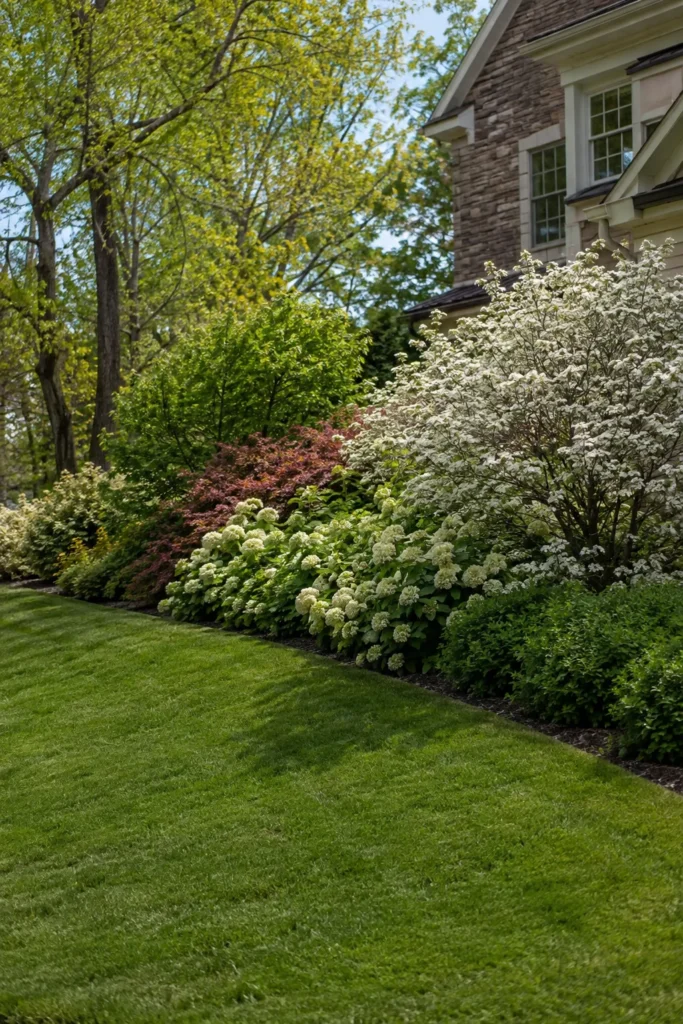
Shrubs with deep roots hold the subsoil, not just the surface soil. That’s what keeps a slope from slumping after a heavy rain.
Best plants: Dogwood, viburnum, or ninebark (depending on your location).
This is ideal for homeowners looking for privacy and structure, in addition to erosion control.
My advice: Place shrubs upslope from any drainage. Their roots can help slow water runoff before it reaches your walkway.
7. Creeping Thyme Lawn Alternative
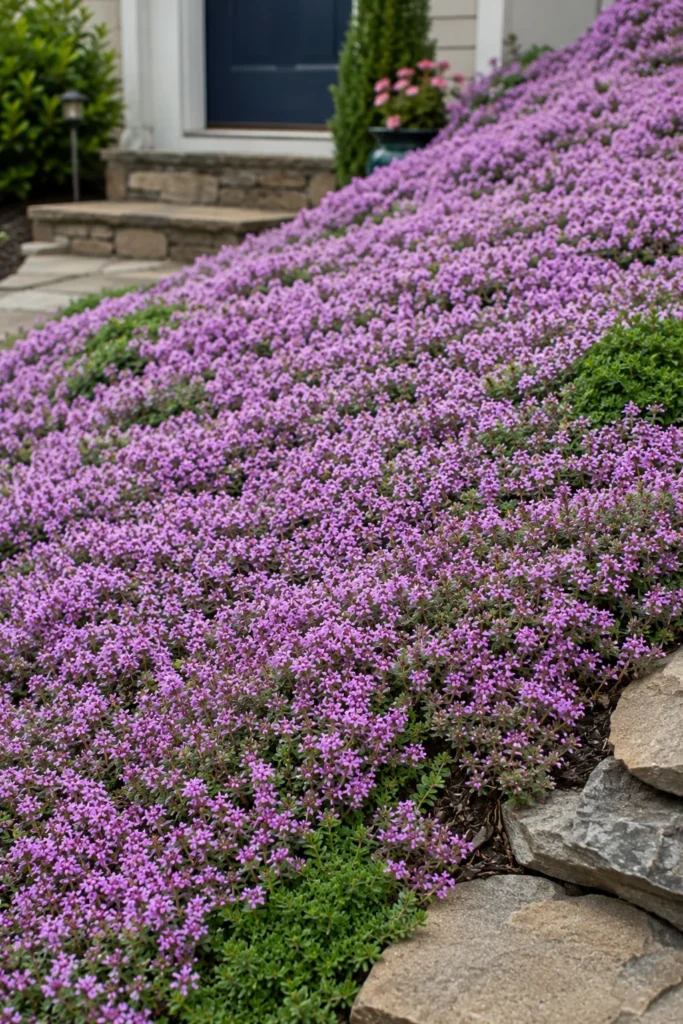
Thyme forms a dense mat, requires no mowing, and looks like a lawn from a distance.
Ideal plants: Creeping thyme, or Irish moss (in shady areas).
Best for a small, sunny front yard slope.
My advice: Avoid walking on new thyme plantings the first month. Let roots develop before foot traffic. Pathways and Paces for a Pedestrian Friendly Hill
Here’s how the most common ground covers stack up against each other.
| Plant | Sun need | Mature Height | Erosion Control | Best for |
| Creeping Thyme | Full sun | 2 to 4 inches | Good on gentle slopes | Walkways and small banks |
| Creeping Juniper | Full sun | 6 to 12 inches | Excellent on steep slopes | Large open hillsides |
| Sedum | Full sun to part shade | 3 to 6 inches | Good, very drought tough | Rock gardens and dry slopes |
| Creeping Phlox | Full sun | 4 to 6 inches | Moderate | Spring color on banks |
Paths and Steps for a Walkable Hill
8. Stepped Stone Pathway

Best materials: Like concrete slabs, asphalt, or other impervious surfaces.
This is best suited for the primary walkway from driveway to front door.
My advice: Avoid steps more than 7 inches high. It’s hard to find something that’s taller on a walk every day.
9. Switchback Gravel Path

A path that winds on the slope is much easier to walk than a straight path up the slope.
Best materials: Compacted gravel or decomposed granite; edged with steel or timber.
This is suitable for an alternate route in a planting area.
My suggestion: Make each switchback slightly downhill. It helps move water away from the path and keep it from collecting there.
10. Solar Step Lighting

There’s no such thing as lighting on a sloped path that isn’t decoration. It’s a precautionary measure.
Best products: Solar-powered path lights or low-voltage LED step lights.
A must for users of the steps after dark.
My suggestion: Not every few feet, but put a light at every direction change. This is where people get tripped up.
Water Management for a Sloped Front Yard Landscaping
11. French Drain at the Base

A French drain collects water at the bottom of the slope before it reaches the foundation or sidewalk. It can transport water from the side to a safe place without stagnation.
Best materials: Perforated pipe (with landscape fabric) and backfilled with gravel.
This is necessary for any slope draining directly toward the house.
My advice: Slope the pipe at least 1″ for every 8′! If it’s too flat, it will simply fill with silt.
12. Dry Creek Bed
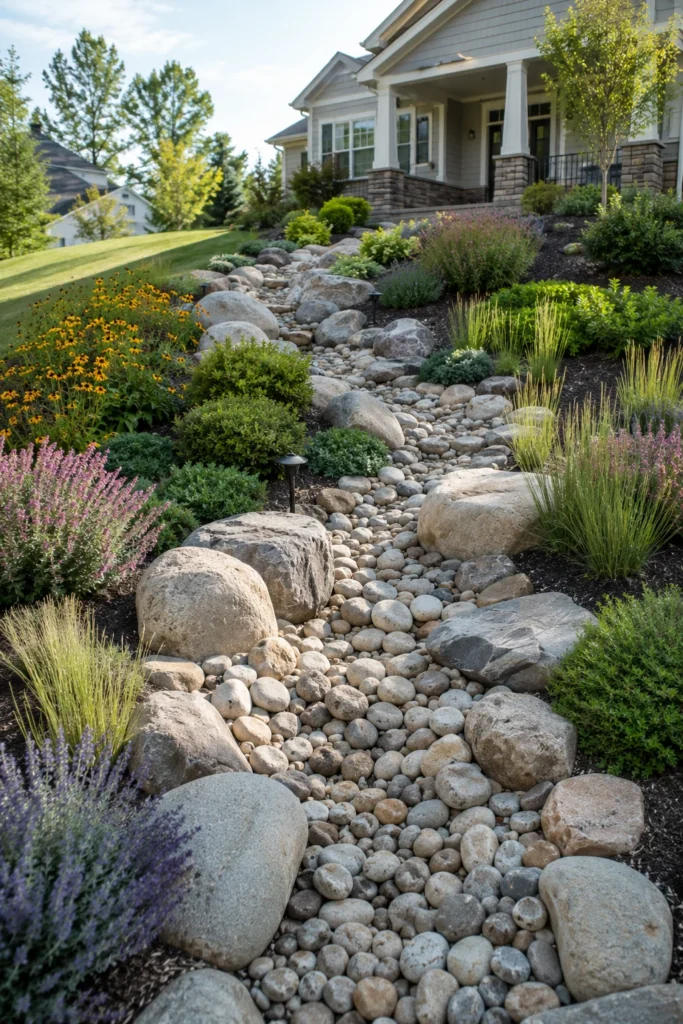
Even on dry days, a dry creek bed will direct water flow as if it were intentional.
Ideal materials: Mixed-size river rock with accents of larger boulders.
This is appropriate for a slope with a distinct, visible stormwater flow path.
My suggestion: Make the ditch in the creek deeper than you think. Water goes to the lowest point; shallow beds overflow.
13. Rain Garden Catch Basin
A rain garden at the end of a slope will catch rainwater and allow it to absorb slowly.
Best plants: Black-eyed Susan, switchgrass or blue flag iris – all are tolerant of wet and dry.
This is effective at the street or driveway where there is a slope.
My suggestion: Make the basin size to accommodate a 24-hour drain time. If water remains after 24 hours, add more gravel below.
Finishing Touches That Tie a Sloped Yard Together
14. Erosion Control Blanket Under New Plantings
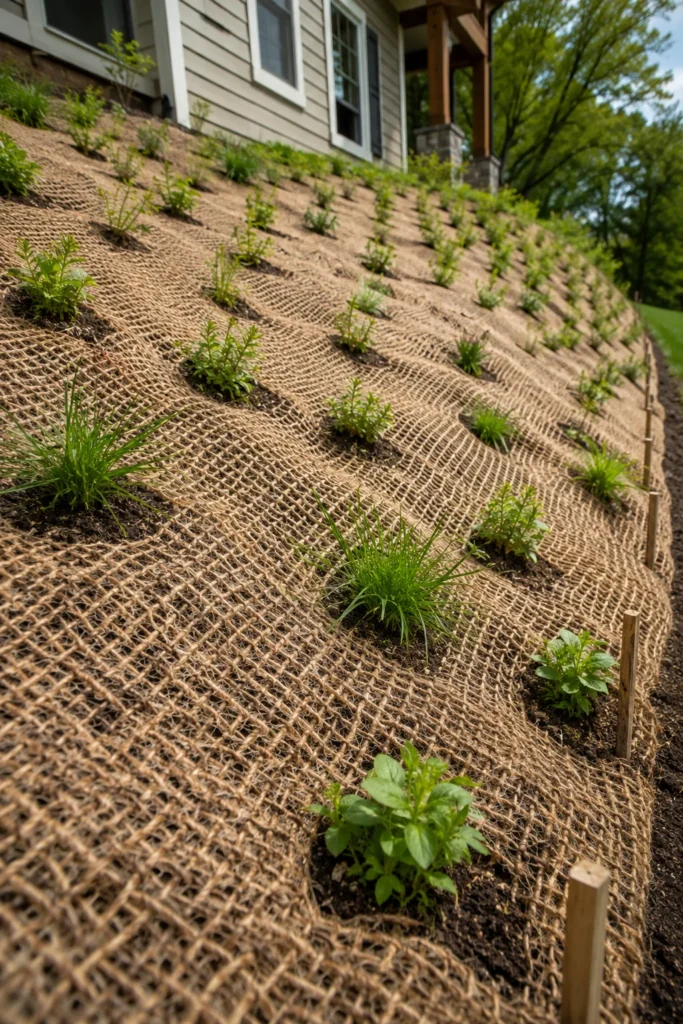
A biodegradable blanket to help retain soil and establish new roots.
Best materials: Jute or straw erosion blankets, 3′ staked apart.
Critical for the first season after planting on any bare slope.
My suggestion: Is to place the blanket down before planting, then make small slits for each plant. It’s much more difficult to install after.
15. Boulder Cluster Focal Point
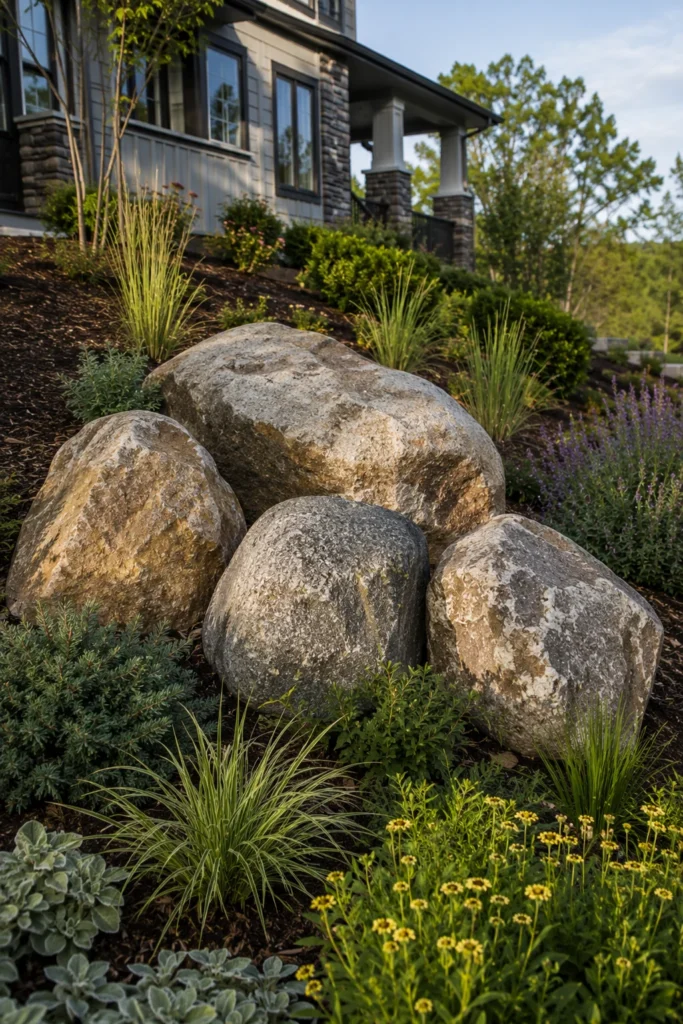
A group of boulders provides a natural focal point for a slope and helps to bring attention to it.
Best Materials: 3-5 boulders of different sizes, in odd numbers.
This is ideal for the junction of two slopes, or a corner in a walk.
My suggestion: Place the smallest rock slightly behind the largest rock. It sounds more natural than when the boulders are in a row.
16. Tiered Flower Bed
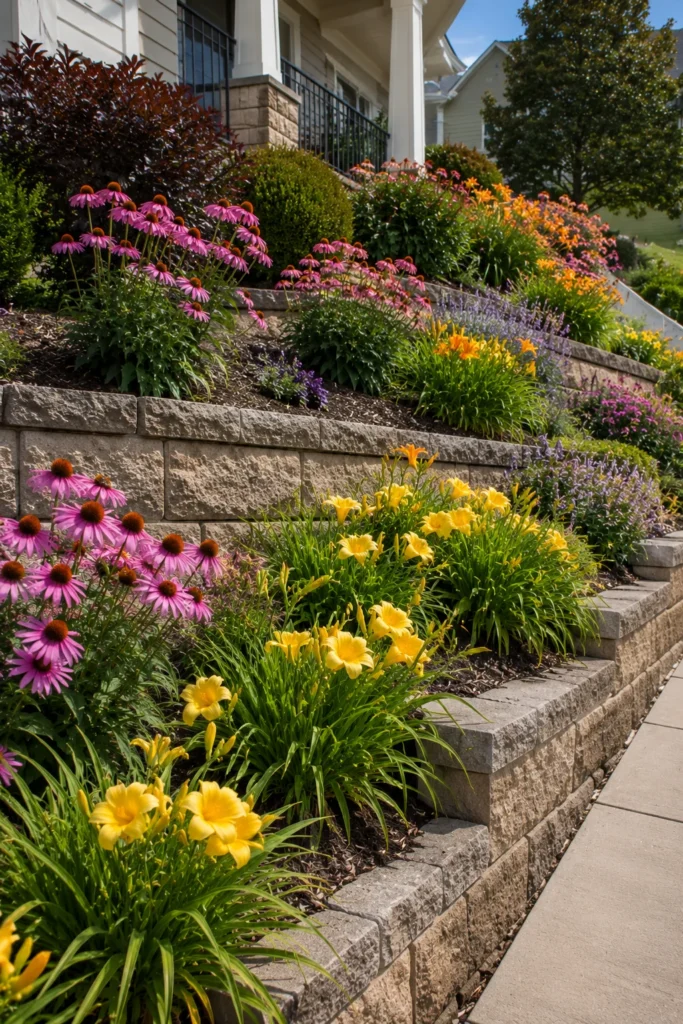
Add color without compromising the hill’s grade, using small tiered beds.
Best plants: Coneflower, salvia, or daylily.
Ideal for an area next to a retaining wall.
My suggestion: The tallest flowers in the back of each tier. Helps to prevent shading out of shorter plants.
17. Mulched Bed With Root Barrier Edging
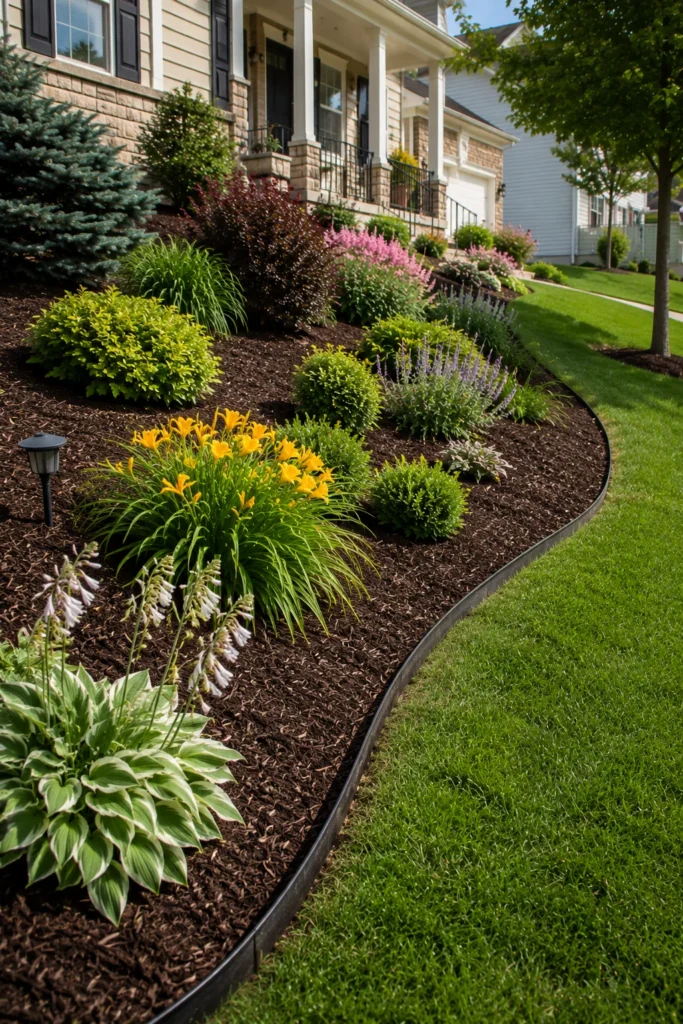
Solid edging and a mulched bed prevent soil and mulch from running down the sidewalk.
Ideal materials: Either steel or aluminum landscape edging and shredded hardwood mulch.
This is suitable for use as a footpath along the base of any slope.
My suggestion: keep the edging just above the mulch line. Prevents mulch from blowing around during heavy rains.
Frequently Asked Questions
What is the cheapest way to landscape a sloped front yard?
Ground cover plants and mulch are the cheapest fix for erosion. Skip built retaining walls until your budget allows for them. A few flats of creeping thyme or juniper cost far less than a single course of stone.
How do you stop erosion on a sloped yard without a wall?
Deep-rooted plants, erosion blankets, and a dry creek bed can control runoff on gentle to moderate slopes. Steeper slopes usually still need some kind of structure.
What plants work best on a steep slope?
Creeping juniper, ornamental grasses, and native shrubs all have root systems built for holding soil. Avoid shallow-rooted annuals on anything steeper than a 15 percent grade.
Do I need a retaining wall for a small slope?
Not always. A slope under about a 10 percent grade can often be handled with plants and grading alone.
How do you mow a sloped front yard safely?
Mow across the slope, not straight up and down, to keep the mower stable. On anything steeper than a 20 percent grade, it’s often safer to replace turf with ground cover.
Final Thoughts
My hillside used to embarrass me every spring.
Now it’s the part of the yard neighbors actually stop and ask about.
None of these fixes are complicated on their own. The trick is picking the right combination for your specific slope.
Start with the drainage, then the structure, then the plants. Do it in that order and the rest of the yard falls into place a lot easier.
Go pick one fix from this list and get it done this weekend.