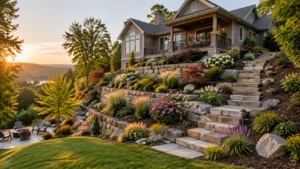
My backyard used to go down into my neighbor’s yard every time it rained.
Two summers of steep hillside landscaping by the hard way. The biggest lesson I learned was from one of the fallen retaining walls.
So my slope is now solid. It looks good and is very low maintenance.
Below are the 17 fixes I found effective, in order of preference for redoing them in front of my bungalow landscaping .
Structural Slope Solutions
Early in my experience, I realized that plants will not stop a true steep slope. Structure comes first; everything else is secondary.
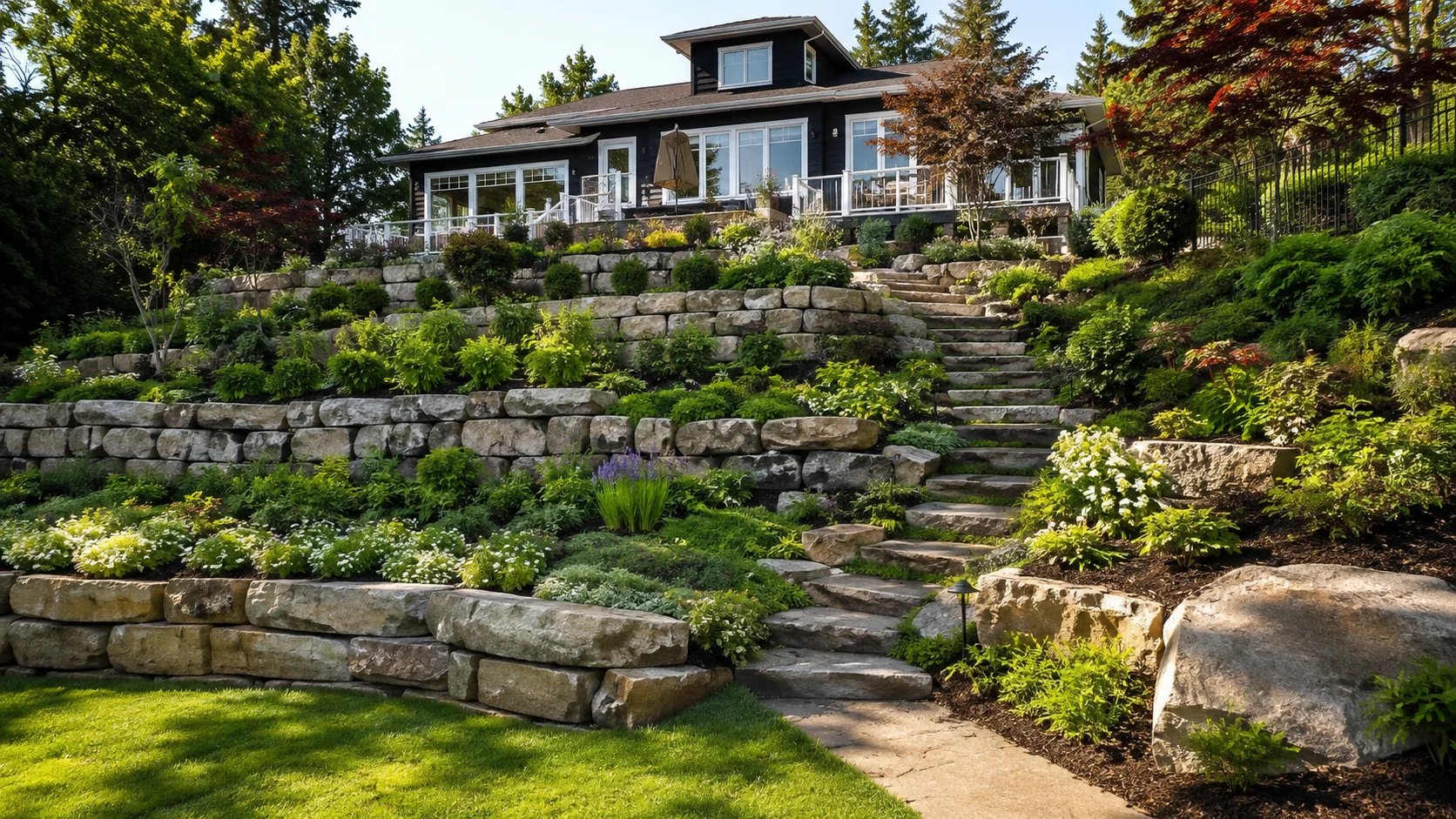
1. Terraced Retaining Walls

Why it works: It breaks a steep slope into flat sections with short walls. Soil is prevented from running downhill on each wall.
Best material: I like to use pressure-treated timber. Natural stone: I like to use natural stone, which will last decades without rotting.
Ideal for: Slopes of 20-40 percent grade, width of two or more terraces.
My secret: Build the bottom wall first. It holds everything up that you place above it, and if you don’t do it in that order, it’s how mine went wrong the first time.
2. Gabion Walls

How it works: Gabion walls are filled with rock and are made from wire cages. They allow water to flow through them and won’t cause pressure to build up behind them as a solid wall would.
Best materials: Galvanized wire baskets with local fieldstone for low cost and blending in with the surrounding landscape.
Ideal for: Areas with wet weather and where walls are prone to buckling due to trapped water.
My suggestion: Hand-fill the cages near the visible face. This will provide a more compact, polished appearance than simply throwing rocks in.
3. Rock Garden Terraces
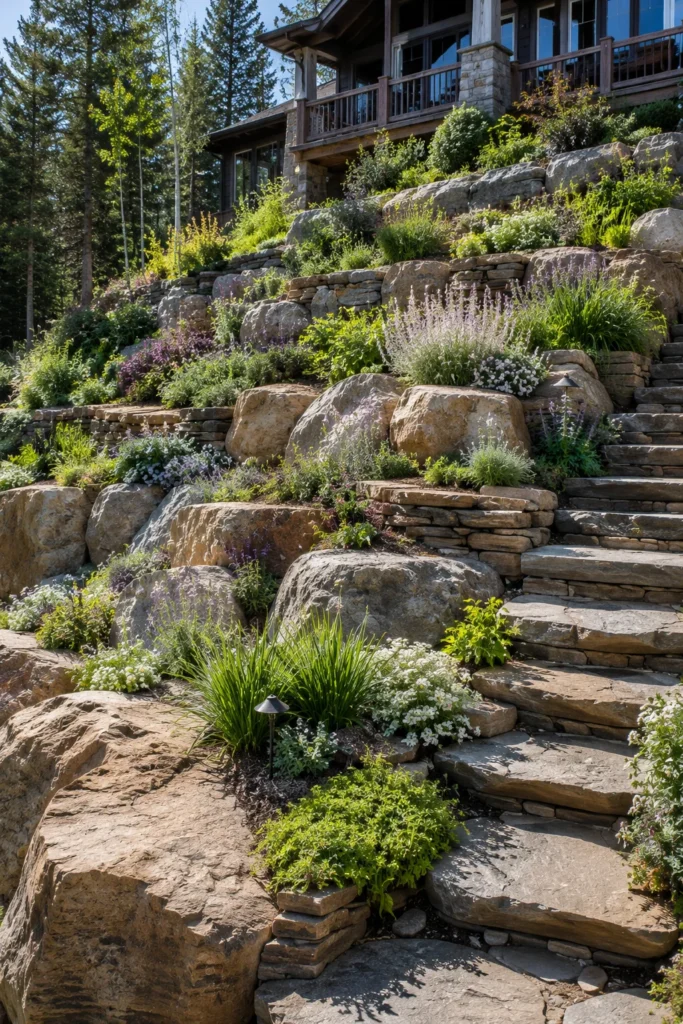
What makes it work: Large boulders and stacked stone provide natural steps that don’t require a built wall, but still hold soil.
Local materials: Fieldstone, river rock, and boulders are much cheaper than stone shipped in from other locations.
Ideal for: House owners that desire a sturdy, all-natural appearance in place of a plainly constructed building.
My suggestion: Place the bottom third of each big rock in the ground. It does not appear to be simply resting on the ground, but rather in place and permanent.
4. Built-In Stone Steps
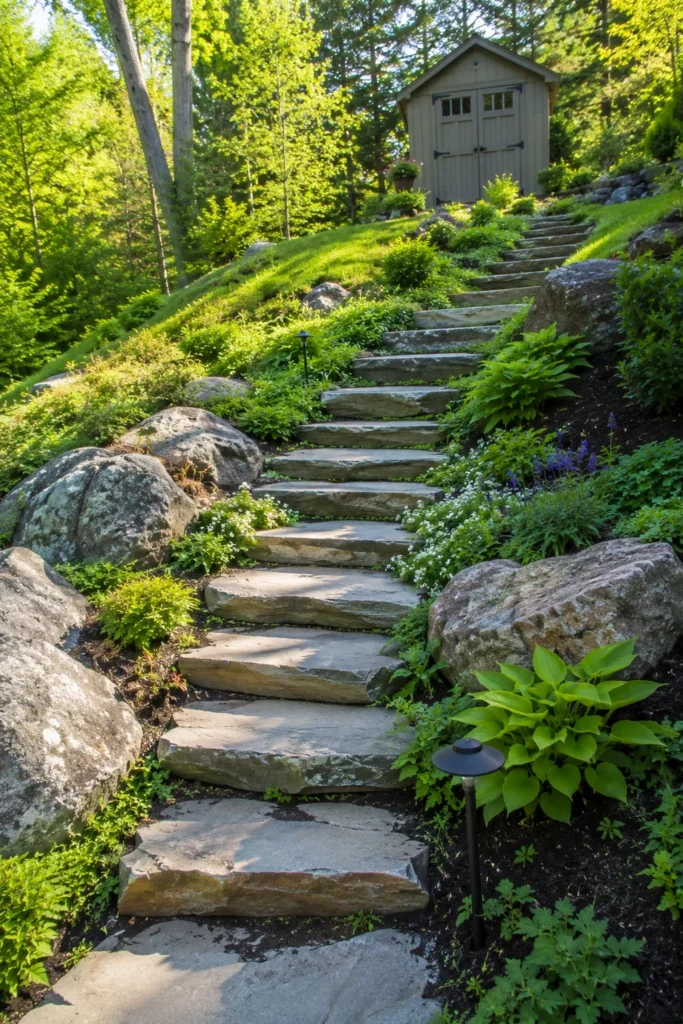
How it works: Steps convert a hillside from a liability to an asset. They also help interrupt water flow as it runs down the hill, which helps reduce erosion.
Best materials: Flagstone or concrete pavers over a compacted gravel base and set into the slope.
Ideal for: Any slope that you will walk across often, such as to a shed or garden bed.
My advice: Make all the step depths the same. The #1 tripping complaint I hear from friends who come to visit is that the steps are uneven.
Erosion-Control Ground Covers
I’m not a fan of this part, but this is the part I enjoy. A wall can’t do the quiet, continual work that plants do.
5. Creeping Juniper

Why it works: This low, spreading evergreen spreads aggressively and creates a dense mat that doesn’t allow the soil to wash away in heavy rains.
Best plants: Blue Rug and Bar Harbor varieties will tolerate full sun and poor soils.
Ideal for: Sunny slopes where you want year-round green with minimal maintenance.
My suggestion: Plant plants closer together than the tag indicates. It fills in almost twice as fast and closes open spaces earlier.
6. Creeping Phlox
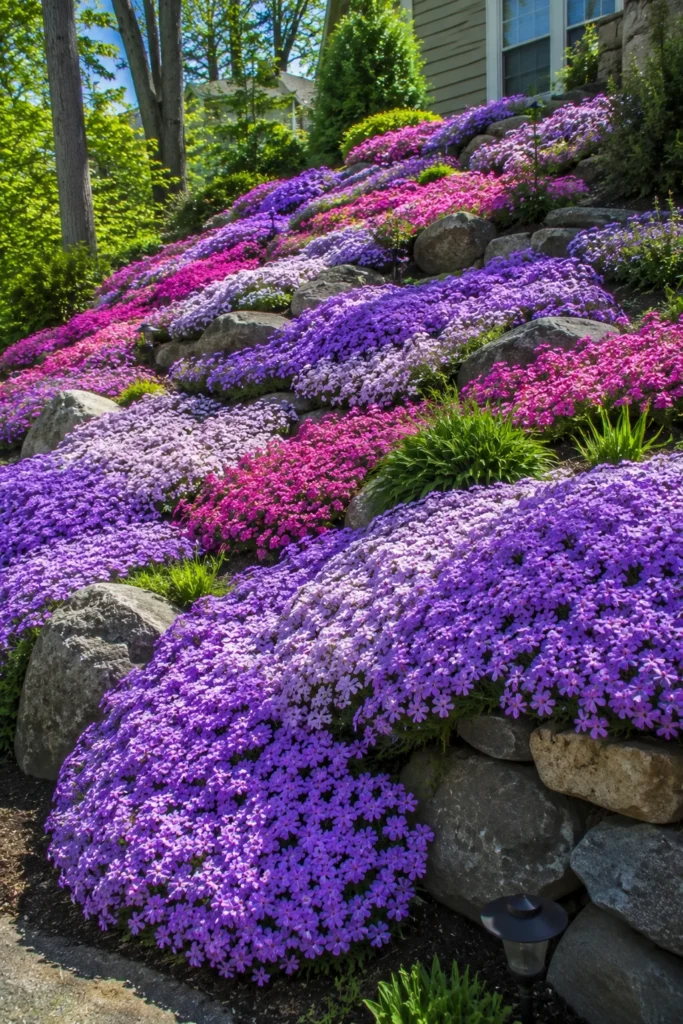
What makes it work: It has shallow spreading roots that hold the topsoil in place and the spring bloom that provides some color to otherwise plain slopes.
Ideal plants: Emerald Blue and Candy Stripe plants are spreading and are rock-tolerant.
Ideal for: Sunny to part-shade slopes where you want a spring color boost.
My suggestion: Hard prune immediately after flowering. It will give you more noticeable growth the next season.
7. Sedum Groundcover

How it works: Sedum has a water storage capacity in its thick leaves, making it drought-resistant and able to withstand drought conditions that would kill most groundcovers on a dry, exposed slope.
Best plants: Dragon’s Blood and Angelina sedum will spread rapidly and require little supplemental water once established.
Suitable for: Hot, dry, south-facing slopes on which it is hard to run irrigation.
My suggestion: Use small pots rather than pots with plants. The roots of Sedum will easily root from almost any fragment that is broken off.
8. Ornamental Grasses
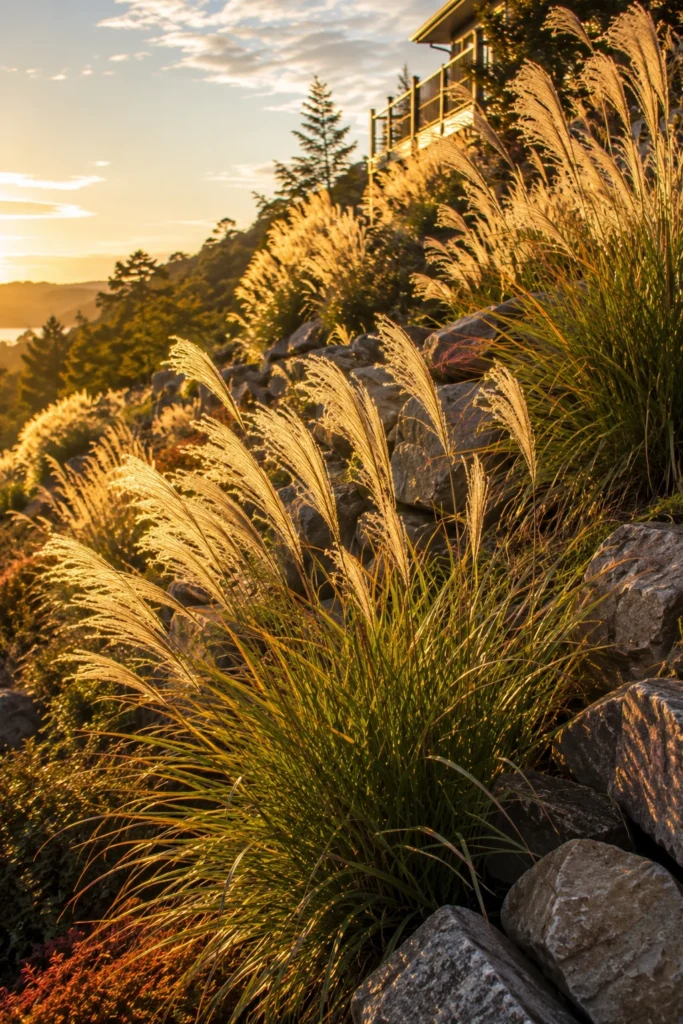
How it works: It has deep roots that can hold soil much better than lawn grass with shallow roots on an incline.
Best plants: Little bluestem and feather reed grass will tolerate wind and will retain a slope over the winter.
Ideal for: Larger hillsides that require more than just flat coverage, movement, and texture.
My suggestion: Leave the dried stalks up in the winter. They collect snow and visibly slow down the runoff.
9. Native Wildflower Meadow
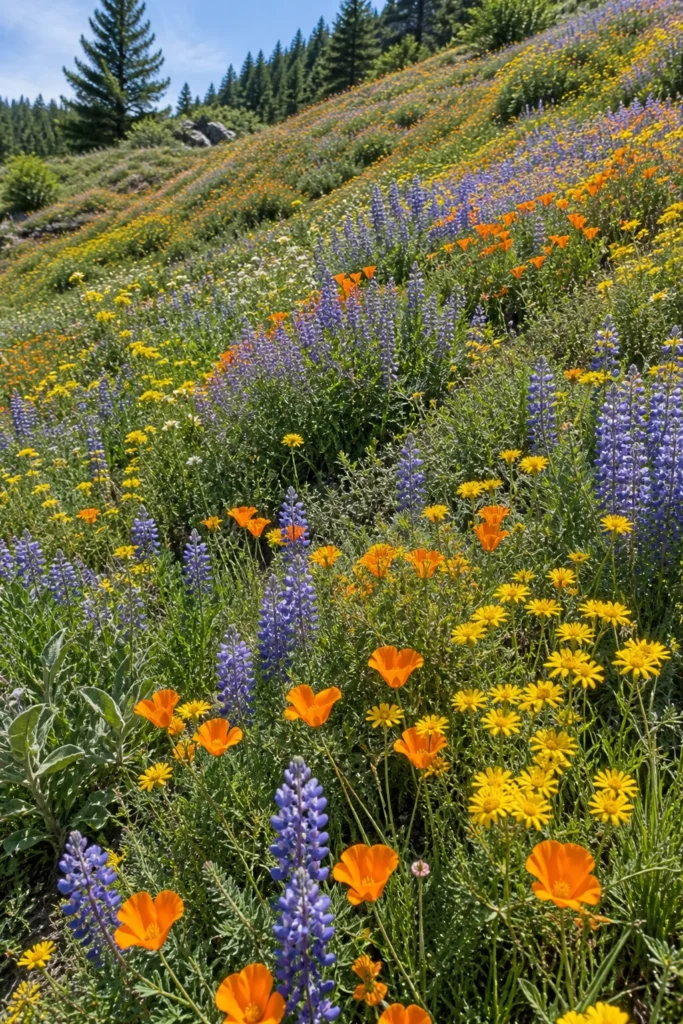
Why it works: A combination of native wildflowers creates a deep, diverse root system that can hold soil better than any one species planted alone.
Best plants: Use a regional native seed mix and not a generic wildflower mix from a large box store.
Ideal for: Slopes that are large and sunny, and were never mown.
My advice: Don’t use any fertilizer. In fact, native wildflowers don’t do so well and become floppy in rich soil.
Water and Drainage Management
All the hillside issues I have encountered have been related to water movement in an undesirable direction.
10. French Drain System

Why it works: A buried perforated pipe, filled with gravel, will help to drain water away from the surface of your slope before it pools.
Best materials: 4″ perforated PVC pipe wrapped in landscape fabric to prevent silt from building up over time and clogging the pipe.
Ideal for: Slopes that have a wet area that doesn’t dry out.
My suggestion: Make the pipe slope slightly steeper than necessary—almost flat —so the French drain doesn’t fill with standing water.
11. Dry Creek Bed
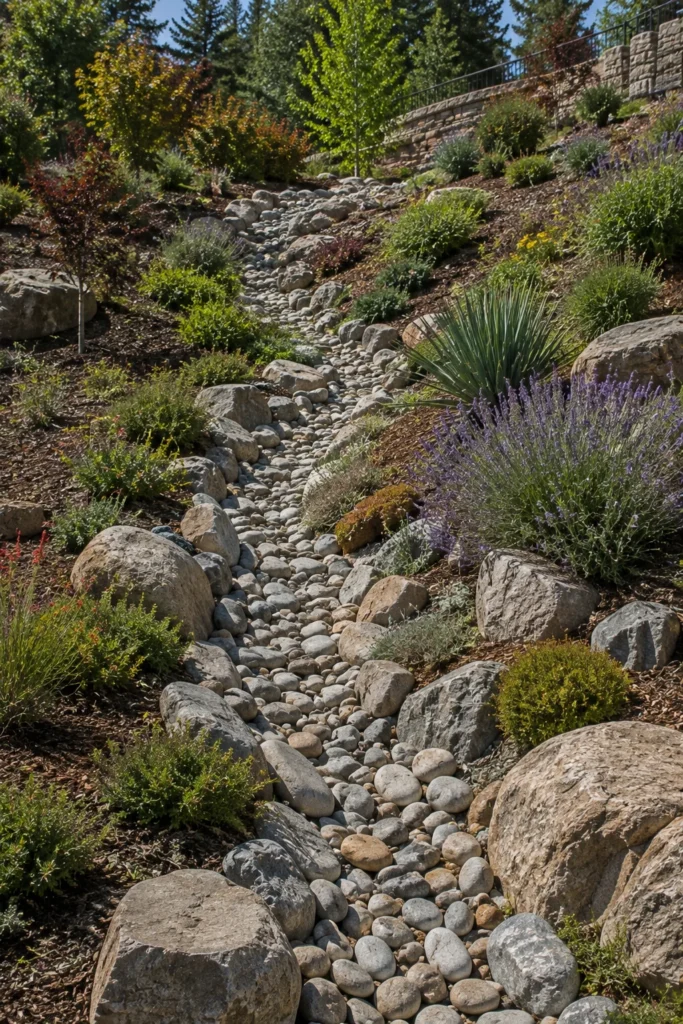
Why it works: A shallow channel that is lined with stone provides a path for runoff to follow, rather than for it to form random gullies in your slope.
Best materials: A mix of river rock sizes looks more natural and helps slow the water down, unlike a single rock size.
Ideal for: Slopes that receive a great deal of water following heavy rains.
My suggestion: Make the bed curve, rather than go straight downhill. Curves reduce flow velocity and further reduce erosion.
12. Rain Garden at the Base

Why it works: A shallow planted basin at the bottom of the slope collects runoff and allows it to slowly absorb into the soil, rather than collecting near your foundation.
Best materials: Switchgrass, black-eyed Susan and swamp milkweed are good choices for plants that will withstand both wet and dry periods.
Ideal for: Any slope that leads to the house, patio or driveway.
My advice: Make it larger than you think you need. Even at double the recommended size, mine still floods once a year.
13. Terraced Swales

How it works: Shallow, level ditches cut across the slope to slow down the water and allow it to percolate in slowly.
Best materials: simple hand-dug channels mulched or lined with small rock check dams every few feet.
Ideal for: Slopes that have formed some visible erosion channels.
My suggestion: Put a small berm at the downhill end of each swale. It approximately doubles the water-holding capacity.
Low-Maintenance Finishing Touches
After the structure and drainage are complete, the hillside begins to look finished and lived in.
14. Drought-Tolerant Shrubs

Why it works: Established shrubs provide height and structure, and their roots help hold soil in the long term.
Best materials: Rosemary, juniper shrubs, and potentilla are the best plants for a dry, poor, hillside soil.
Ideal for: Slopes where you want year-round structure but don’t want to water constantly.
My suggestion: Plant in fall instead of spring. Roots have a chance to establish before the summer heat.
15. Mulch and Erosion Blankets

How it works: A biodegradable erosion blanket keeps new plantings and mulch in place until the plants have established themselves.
Best materials: Straw and coconut fiber blankets are natural materials that do not leave plastic mesh in the soil.
Ideal for: New plantings on any slope, particularly in the first growing season.
My suggestion: Stake every 2 ft. Loose corners are lifted much more quickly than on an open slope with the wind.
16. Boulder Accents
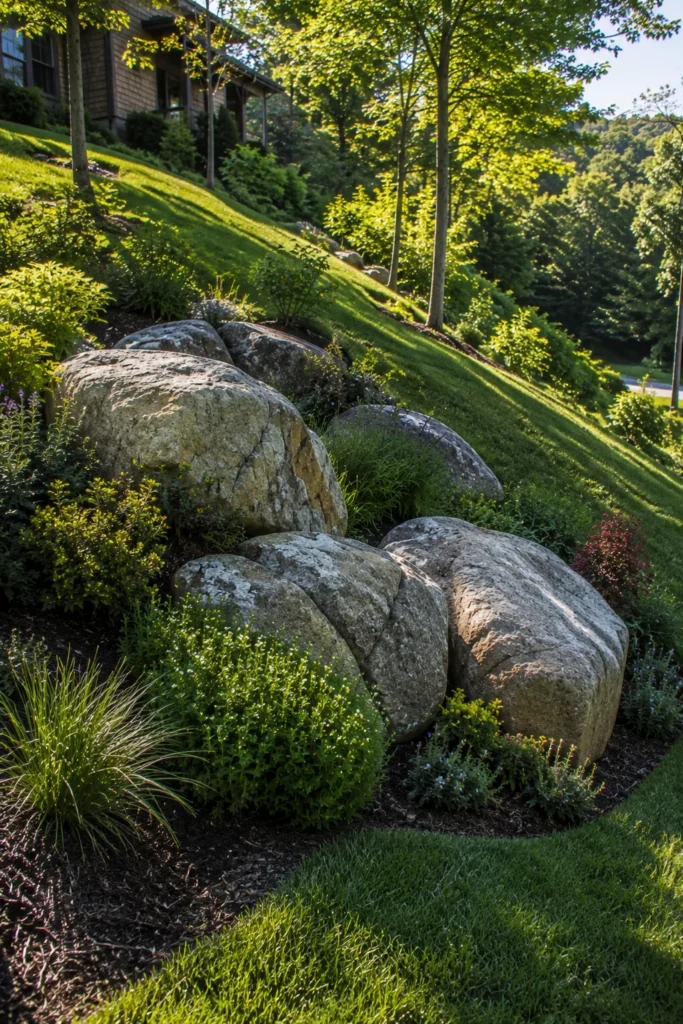
What makes it work: Large rocks are strategically placed to divide long slopes both visually and physically, slowing water flow down the slope.
Best materials: A variety of fieldstone boulder sizes will look more natural than matched, uniform rocks.
Best use: To provide interest on a mostly groundcover or grasses slope.
My advice: Make odd groups of boulders. 3 or 5 is more natural than 2 or 4.
17. Solar Path Lighting
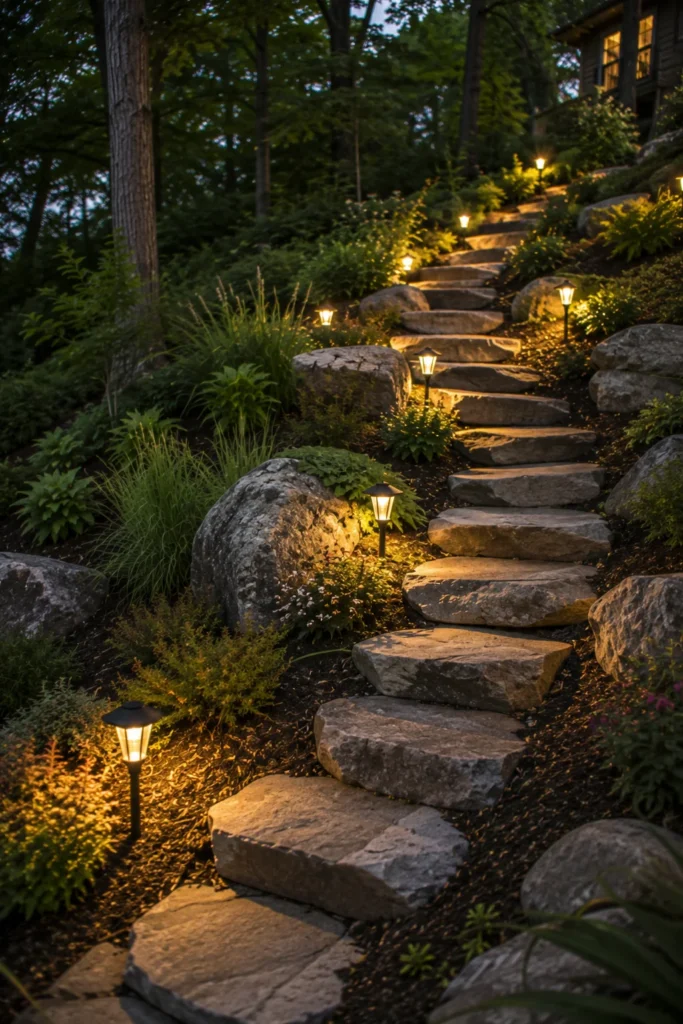
The reason it works: Low-voltage solar lights illuminate steps and paths without electrical wiring up a hill or a path.
Best materials: Solar lights attached to stakes that use warm white LED lights, as opposed to bright blue-white lights.
Ideal for: Any hillside with steps, a path, or a seating area used after dark.
My suggestion: Set the lights off to the side of the path, not directly on the path. It’s not nearly as much like an airport runway.
Comparing Your Hillside Options
| Solution | Best for | Cost Level | Maintenance |
| Terraced Retaining Walls | Slopes 20-40% grade | High | Low |
| Ground Cover Plants | Sunny, gradual slopes | Low | Low to Medium |
| French Drain | Chronic wet spots | Medium | Very low |
| Rock Garden Terraces | Natural, rugged look | Medium | Low |
| Dry Creek Bed | Heavy runoff after storms | Medium | Low |
Frequently Asked Questions
What is the cheapest way to landscape a steep hillside?
Ground cover plants like sedum and creeping juniper cost the least upfront. They also skip the heavy equipment and structural building that walls require.
What plants stop erosion on a steep slope best?
Deep-rooted native grasses and spreading ground covers work best when combined. Relying on just one species almost always leaves bare gaps.
Can I build a retaining wall myself?
Small walls under 4 feet are usually fine for a confident DIYer with the right tools. Anything taller should go through an engineer or licensed contractor first.
How do I stop water runoff on a sloped yard?
Start with a dry creek bed or French drain to redirect water safely. Then add deep-rooted plants to absorb whatever runoff is left.
Do I need professional help for a very steep hillside?
If your slope is over 40 percent grade or shows signs of active sliding, yes. A geotechnical consult is worth the cost before you build anything permanent.
Final Thoughts
That collapsed wall taught me every lesson in this post.
A steep hillside isn’t a problem to hide away. It’s a feature waiting for the right combination of structure, plants, and drainage.
Start small, pick two or three fixes from this list, and build outward from there.
Go test your slope’s grade this weekend and pick your first project.