
Until November, when the mums died, my fall hanging baskets went from cozy to sad.
That’s when I got serious about designing my winter window boxes, and I have never looked back!
I’ve spent 5 winters trying like the out what actually stands up to snow, wind, and freezing nights.
Here are 21 combos I created, killed a few times, and finally got right.
Grab a coffee. Help your window ledges make it through the winter!
Evergreen Foundations That Never Quit
I begin my season with evergreens, as they are a display that lasts until the rest of the season.
1. Boxwood and White Pine Mix Winter Window Box
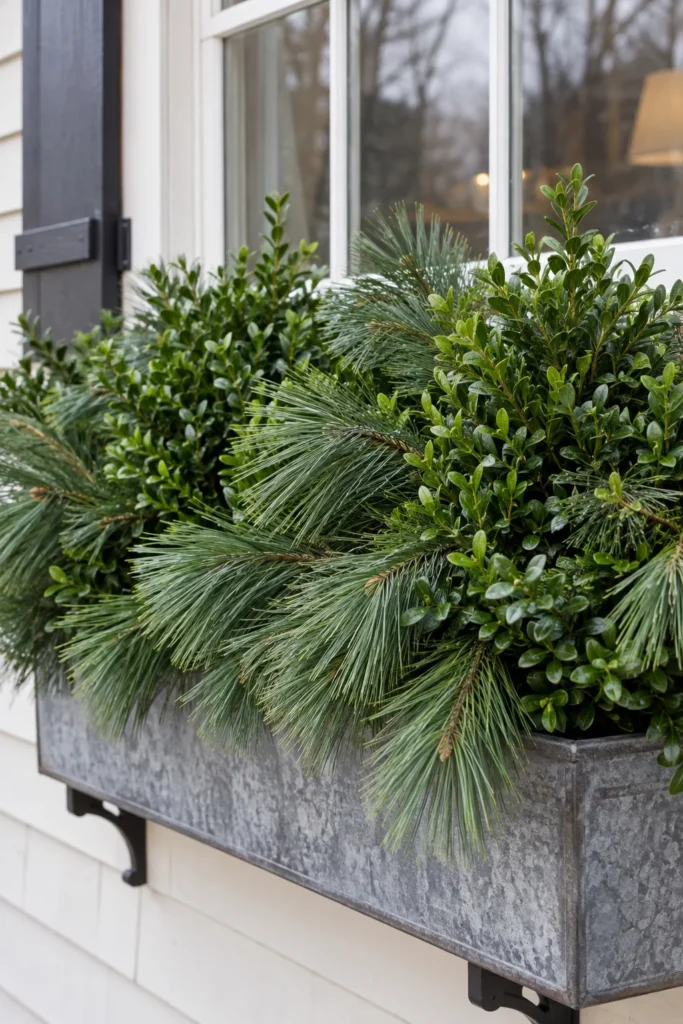
This combination is very dark green and retains its hue even in the coldest of winters.
The best materials: Are fresh-cut boxwood sprigs, white pine branches, floral foam or a damp sand base.
Best for: anyone who wants a tailored, classic look with almost zero fuss.
My advice: Sprinkle the plants once a week if they are in the afternoon sun. It helps to retard browning.
2. Dwarf Alberta Spruce Centerpiece
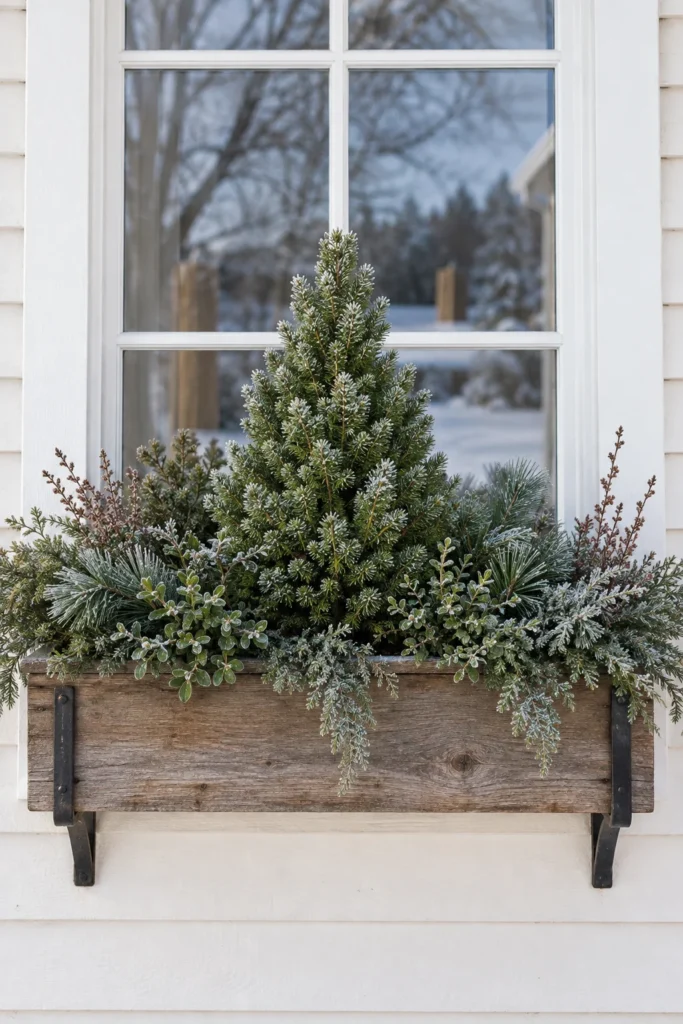
A single small spruce anchors the whole box, adding height and structure.
Best materials: Potted dwarf Alberta spruce, mini pinecones and cedar sprigs for filling.
Ideal for: Boxes with one strong focal point rather than a variety of small points.
My suggestion: Rotate the pot every few weeks so that it grows uniformly around all sides.
3. Trailing Ivy and Cedar Combo
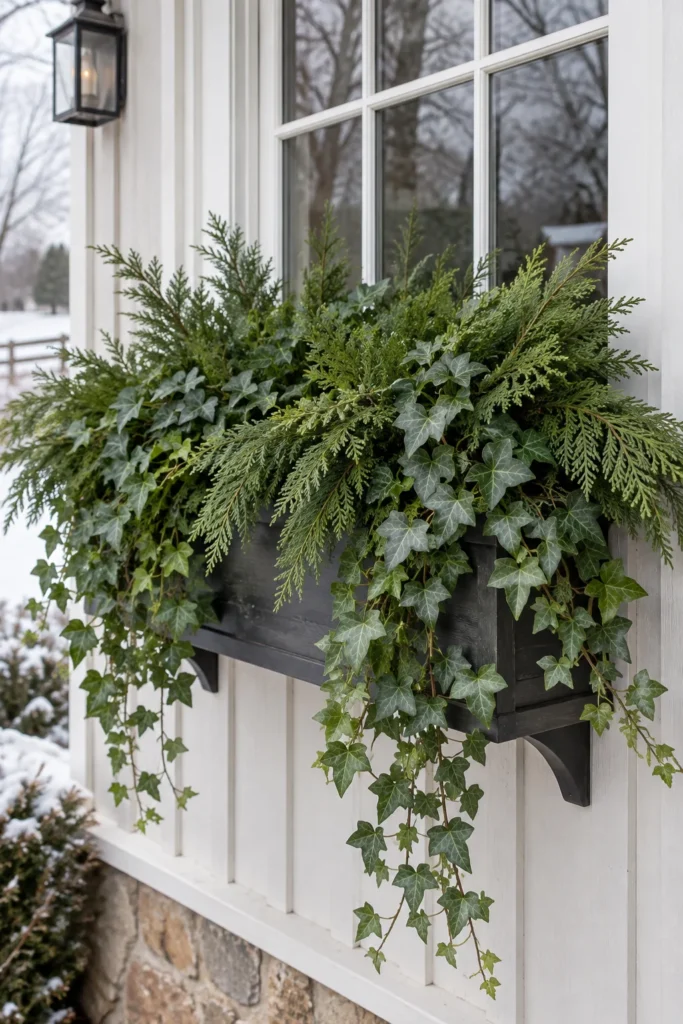
Ivy cascades over the edge, and diffuses the boxy look of most containers.
Materials: English ivy, cedar branches, small twigs for structure.
Best for: Windows in the shade where flowering plants wouldn’t grow.
My tip: Bury the ivy roots so they don’t dry out on windy days.
4. Rosemary and Juniper Herb Box
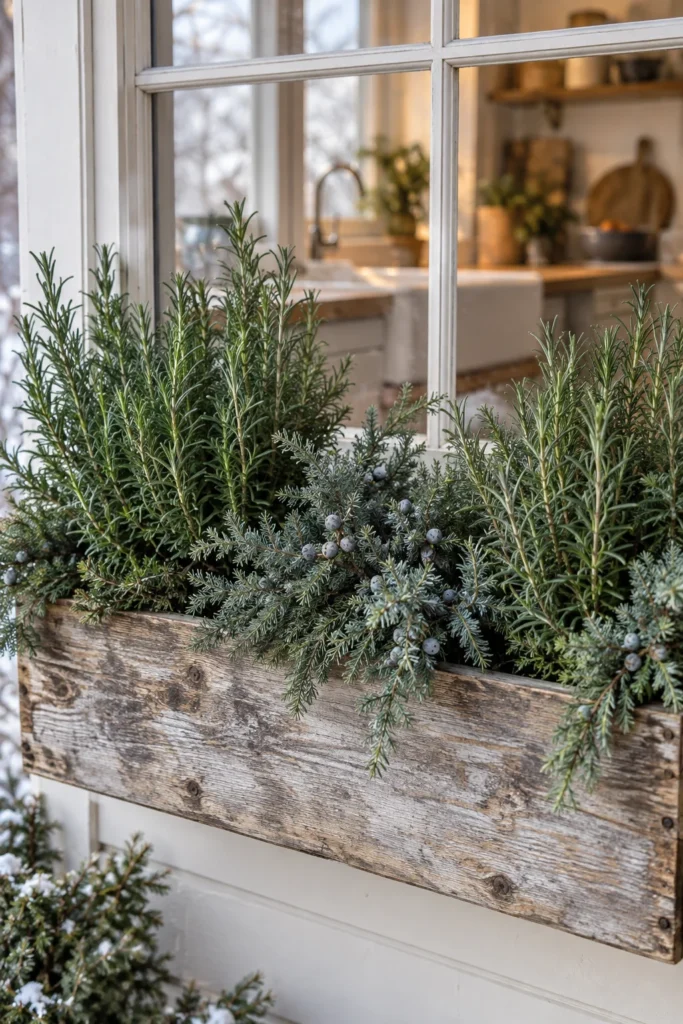
I adore this one as it smells great every time I brush past it.
Best materials: Hardy rosemary, juniper sprigs and a few sprigs of thyme.
Ideal for: kitchen windows or anyone who wants a handy, fragrant display.
My idea: Cut some rosemary for the winter season to use in cooking. Does not die off.
5. Holly and Boxwood Classic
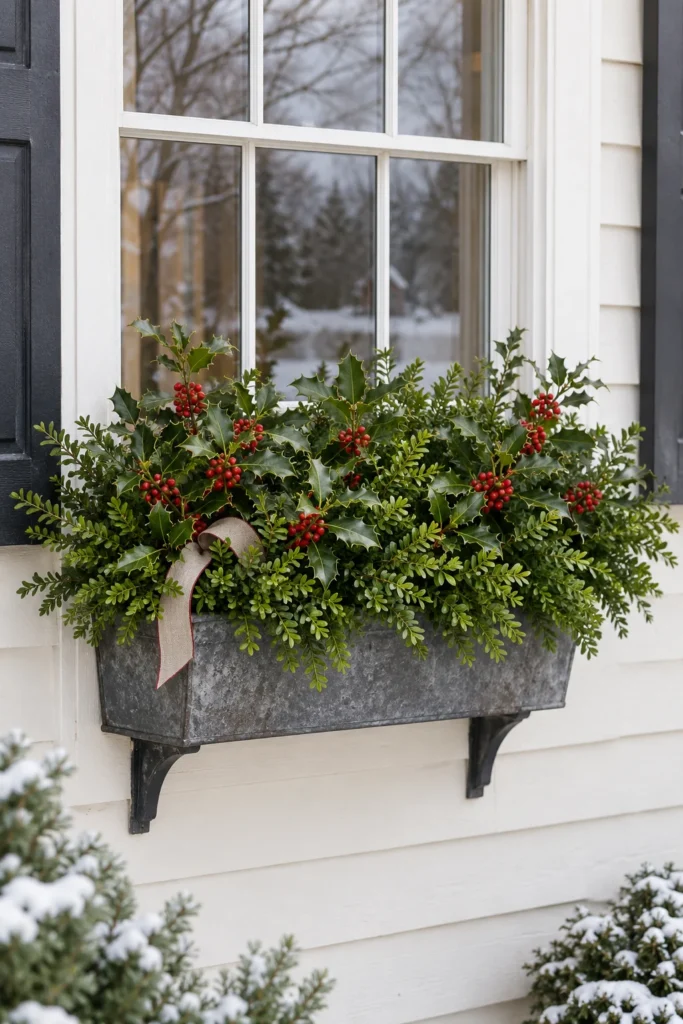
This is the one my grandma used every year.
Best materials: Holly branches with berries, boxwood clippings, simple ribbon accent.
Ideal for: A classic look that will last the entire season and is perfect for the holidays.
My suggestion: Wire the holly into place. Free berries will fall quickly in windy conditions.
Berries and Branches for Winter Color
When I put in evergreens, I always include something with colour and movement.
6. Red Twig Dogwood Branches

Nothing beats bright red stems on a snow-white background.
Ideal materials: Red twig dogwood branches, evergreen fill, floral wire.
Ideal for: Windows that get winter sunlight and need a definite splash of colour.
My suggestion: Cutting branches at an angle will help them last longer in damp sand or foam.
7. Winterberry Holly Clusters
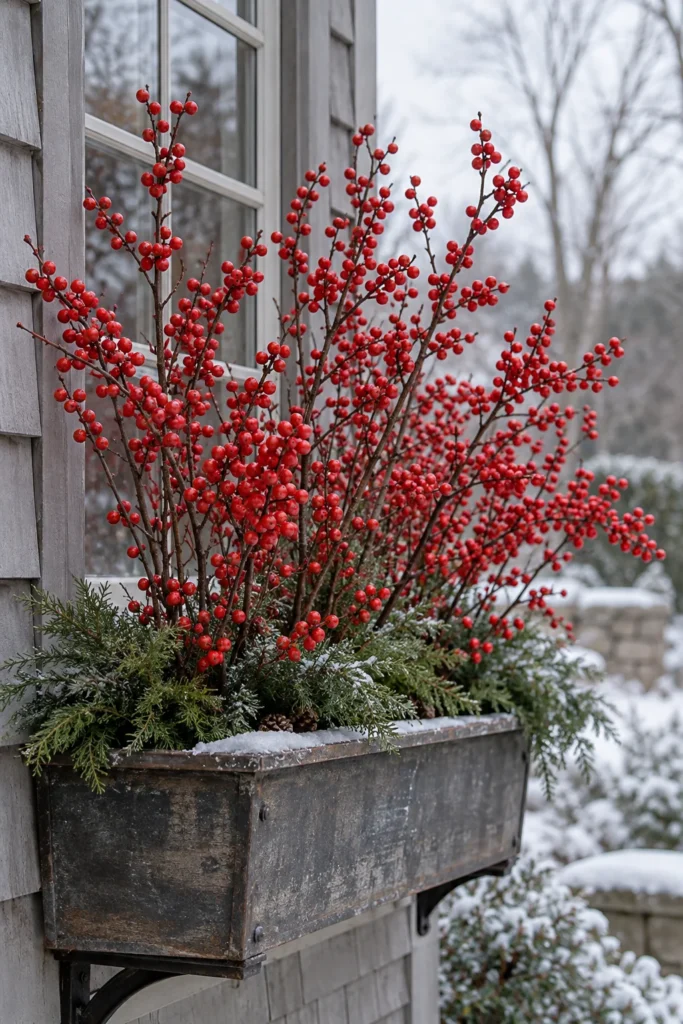
This shrub, native to the area, sheds its foliage but retains its berries year-round.
Materials: Winterberry holly stems, cedar sprigs, and birch twigs.
Ideal for: Those who prefer a more natural and less trimmed appearance.
My suggestion: Purchase additional stems. I love these berries, as do birds.
8. Birch Branch Vertical Accent
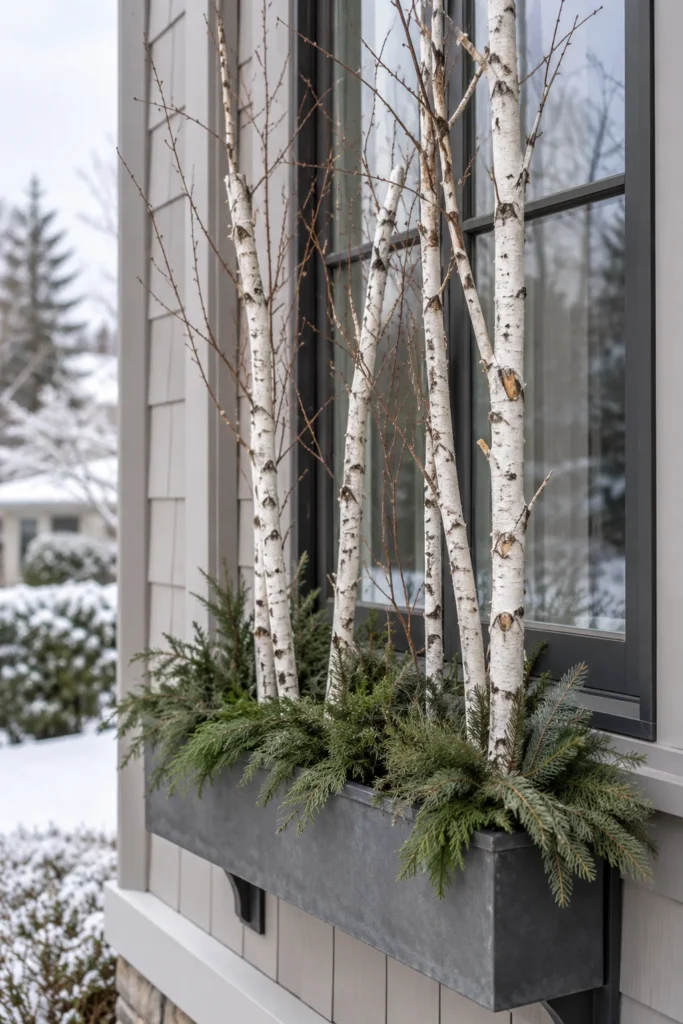
White branches are tall and stand out in the display without obstructing the view from the inside.
Materials: Best are birch branches, a small evergreen base, and twine for bundling.
Ideal for: Tight spaces that need drama without much volume.
My suggestion: Lightly spray to keep the bright white bark from turning grey.
9. Pinecone and Berry Filler
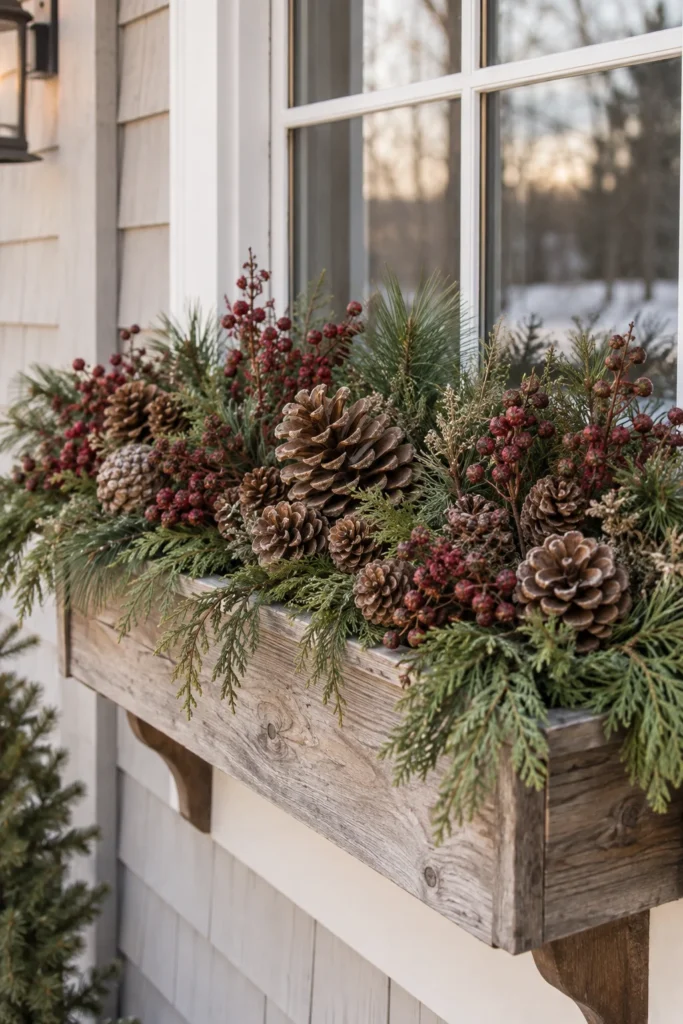
I always use this as a filler when I need something to fill in a display.
Best materials: Mixed pine cones, faux or dried berries, floral pins.
Ideal for: Filling the holes in any of the above combinations at little extra expense.
My idea: Walk in the woods in the fall and pick up pinecones. Free filler beats anything store-bought.
Cold-Hardy Flowers and Foliage
I’m still a sucker for a bit of living colour in January, and these are the ones to consider.
10. Pansies and Violas Layer
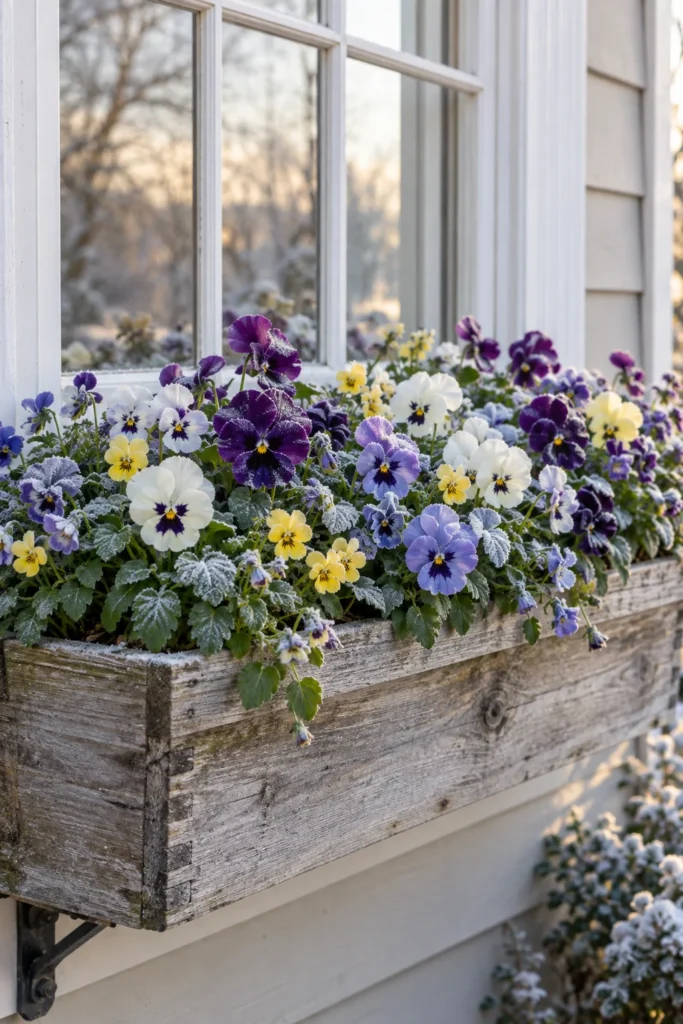
The little flowers are frost-hardy, much more than most of the plants I plant.
Best materials: Pansies, violas, mulch to protect the roots.
Ideal for: Areas with less severe winter frosts.
My suggestion: Plant them densely. A thick mulch keeps roots cooler than a thin mulch.
11. Hellebore Winter Rose
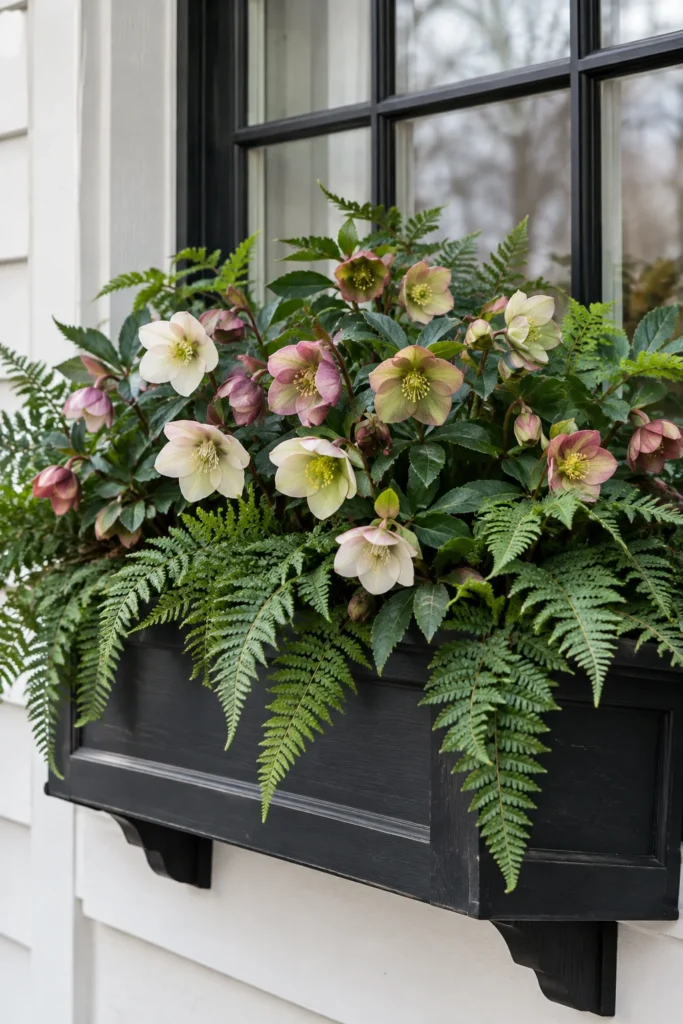
I’m still amazed each year that this plant flowers during the cold.
Materials to use: Hellebore, evergreen fern fronds, moss for the base.
Ideal for: Areas that require flowers, not just foliage, and are in the shade.
My tip: Be patient. Hellebores tend to flower slowly and sometimes don’t until well after the tag date.
12. Ornamental Kale Rosettes
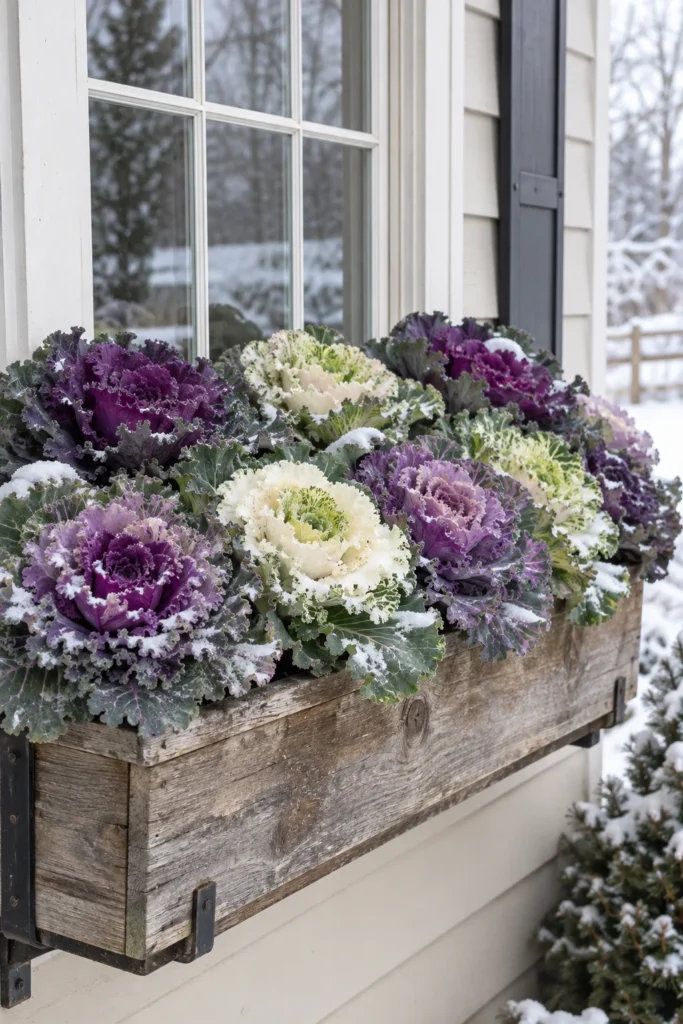
The rosettes are purple and white, and resemble large winter flowers.
Best materials: Ornamental kale, silver dust miller, small evergreen sprigs.
Ideal for: A statement of colour that will not droop in light snow.
My advice: Don’t be afraid of the first frost; the colour will deepen after it.
13. Heather Colour Pop
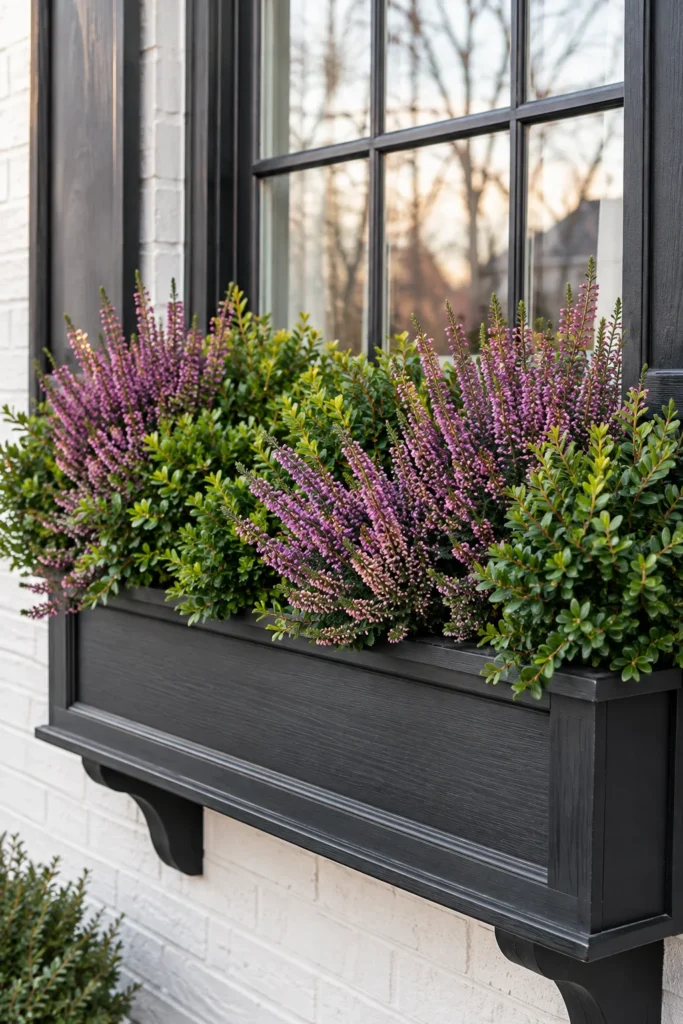
Heather produces a light purple or white flower at a time when few other flowers are in bloom.
Ideal materials: Tough heather, heather clippings, boxwood clippings, small pinecones.
Ideal for: Cottages and those looking for texture with colour.
My suggestion: Provide it with good drainage. Heather’s main cold-weather failures come from soggy roots.
Faux and Low-Maintenance Combos
Sometimes I don’t have time to take care of real plants, and that’s OK.
14. Artificial Greenery Mix
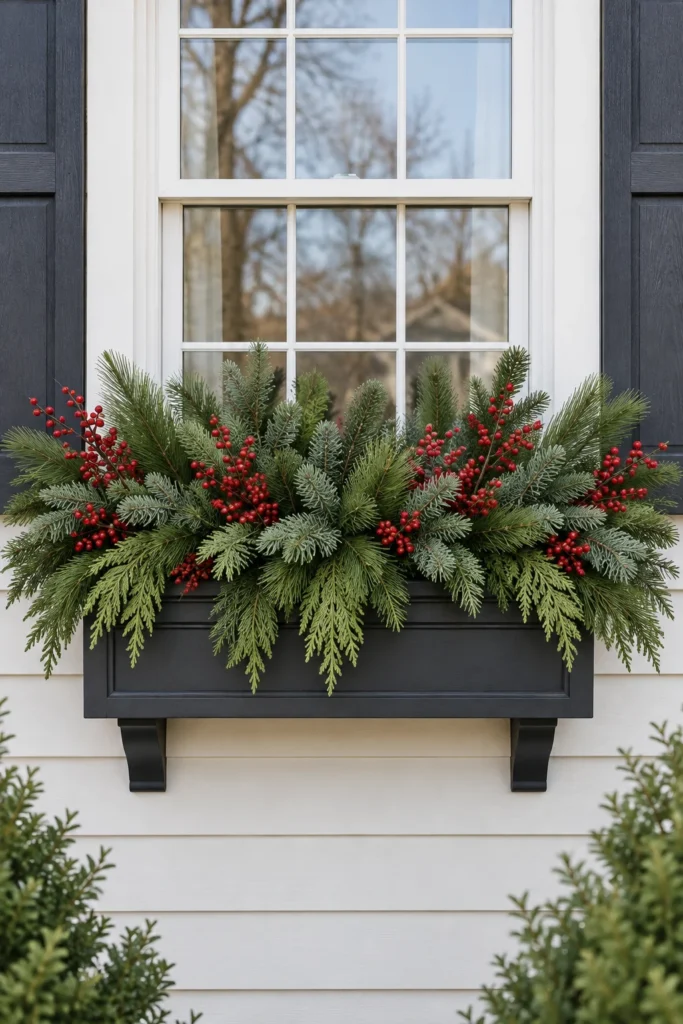
From the street, faux greenery looks like a real plant, and it never wilts.
Best materials: Artificial pine picks, faux berries, weather-resistant floral foam.
Ideal for: Vacation rentals, vacation homes or frequent travellers during the winter.
My suggestion: Coarsen the fake stems by hand. Overly idealised greenery looks suspect up close.
15. Preserved Eucalyptus Bundle
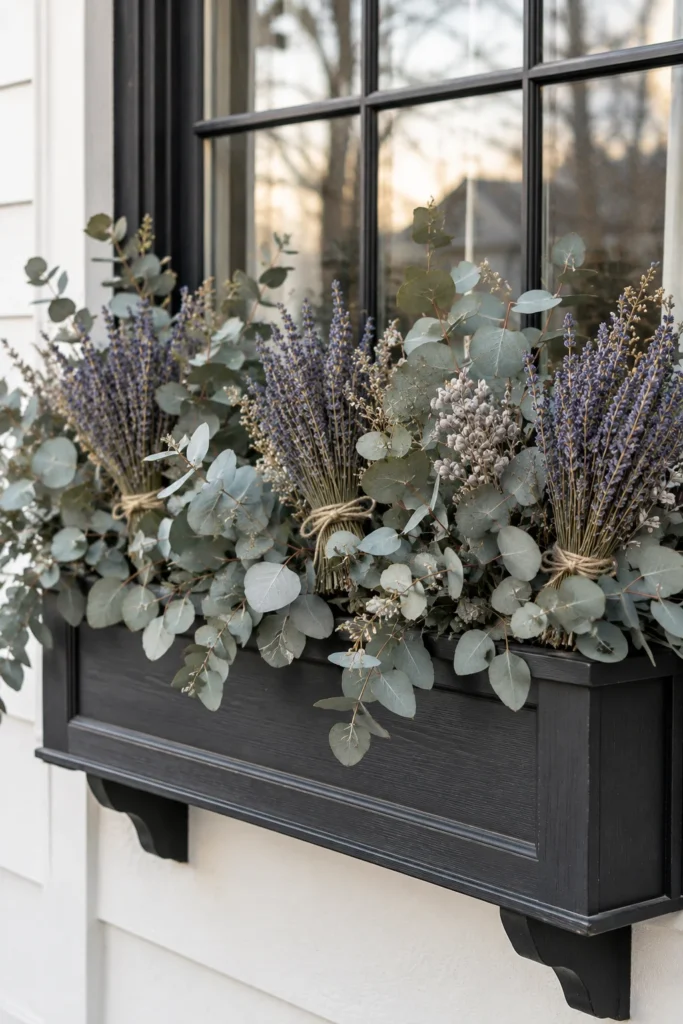
Preserved eucalyptus does not lose its colour and shape when watered once a month.
Best material: Preserved eucalyptus stems, dried lavender, and natural twine are the best materials.
Ideal for: Muted colours, not too bright greens or reds.
My advice: Don’t let preserved stems get wet. They have a short lifespan when they are exposed to moisture.
16. Dried Hydrangea Display
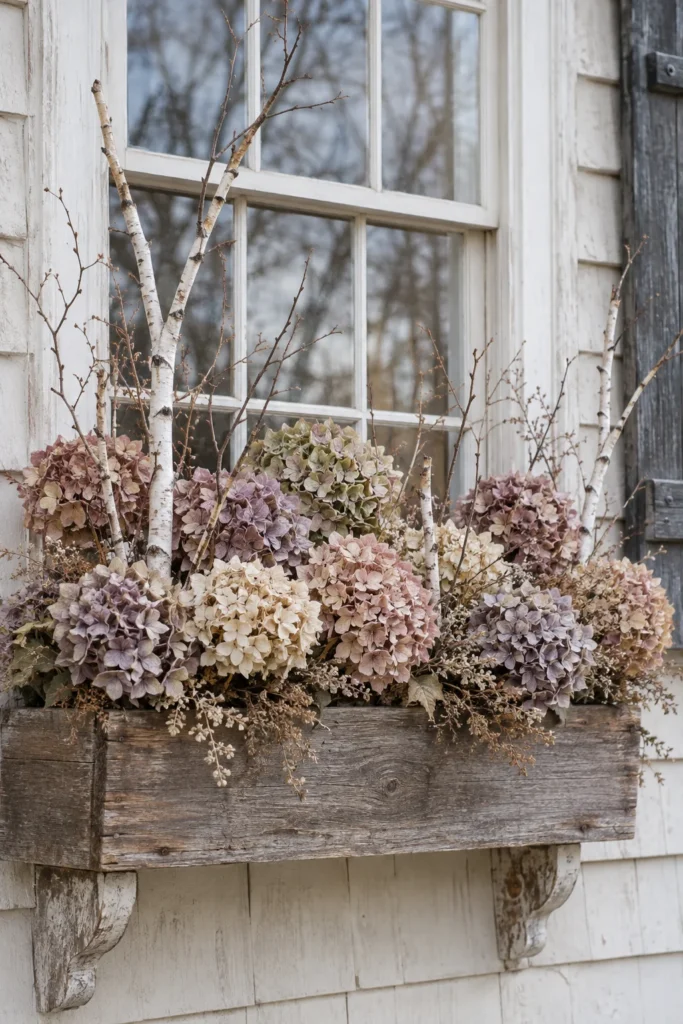
This time of year, dried hydrangea heads create a soft texture that fresh flowers can’t match.
Materials: Dried hydrangea flowers, birch twigs and faux snow spray for added flair.
Ideal for: A romantic, slightly worn look that photographs beautifully.
My suggestion: lightly spray a sealant on the flowers to keep them from dropping off in wet snow.
17. Battery Light Branch Combo
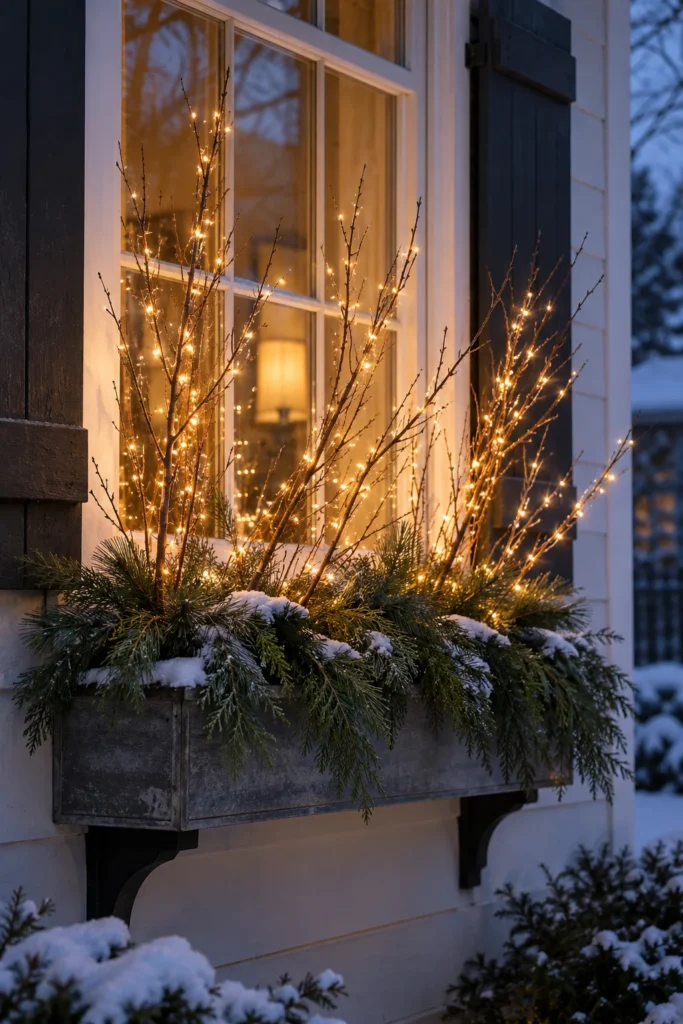
A simple box becomes a nighttime focal point for the entire block with lit branches.
Best materials: Battery-powered lighted branches, evergreen fill, weatherproof timer.
Ideal for: Those who wish their house to be the most eye-catching at night.
My advice: Don’t use a default time; use the time that you actually spend in the evening.
Rustic and Natural Textures.
My favourite combinations are rustic – I like to use things that I have around outside.
18. Birch Log Base with Greens
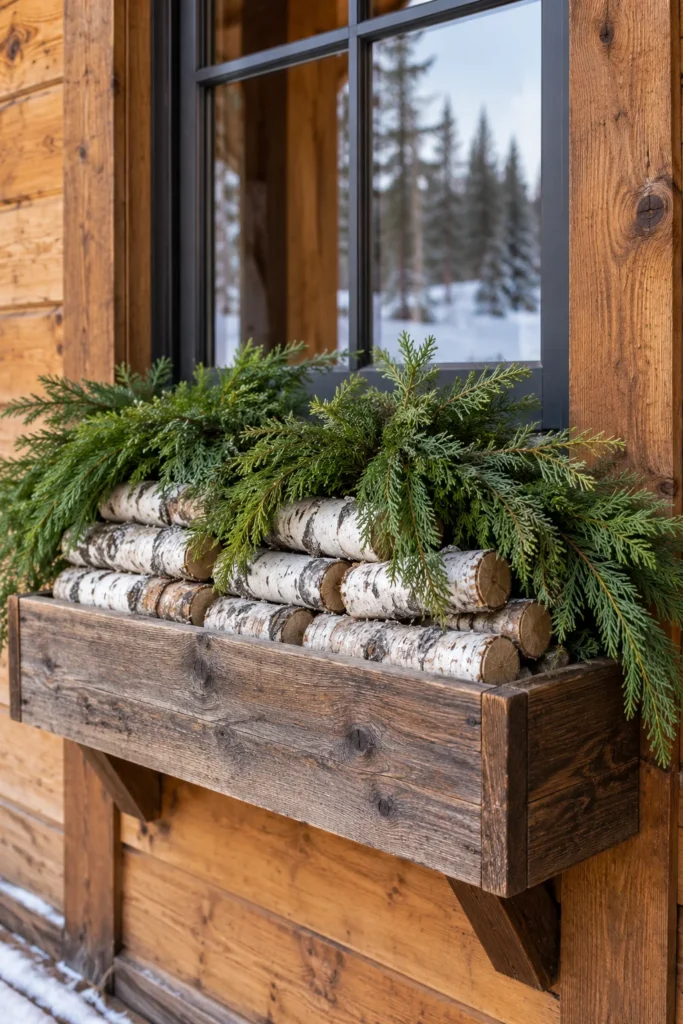
The box sits on a foundation of stacked birch logs, creating a cosy, cabin-like feel.
Best materials: Small birch logs, cedar sprigs, dried moss.
Ideal for: Farmhouse or rustic-style homes that want to maintain a natural, simple appearance.
I suggest: Lightly sealing the ends of the log so they don’t rot from being in wet ground.
19. Pampas Grass Plume Accen
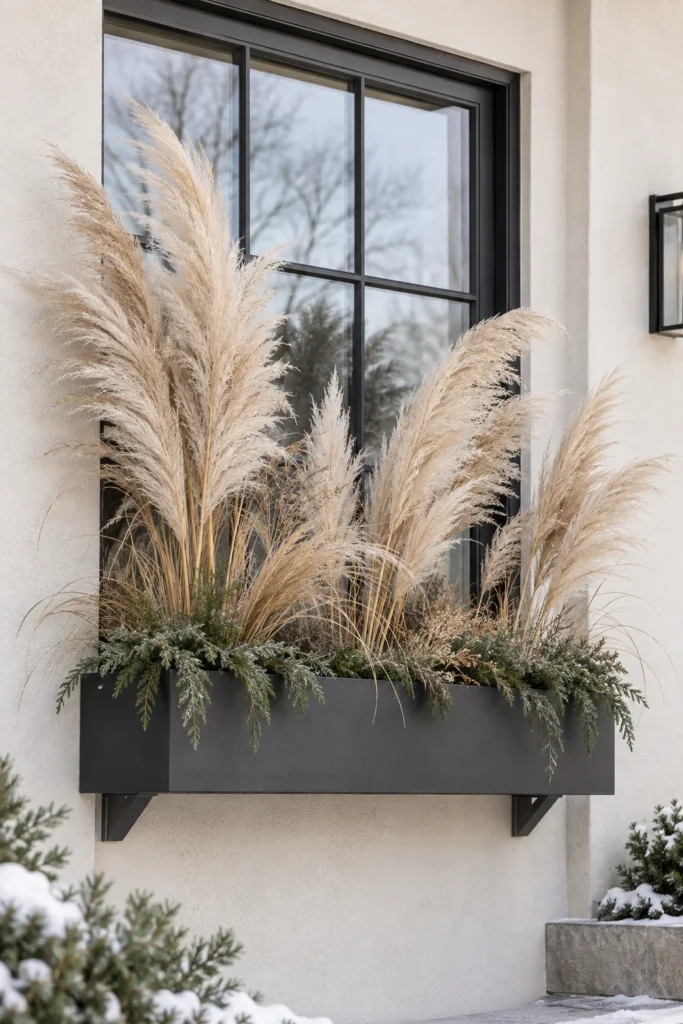
Most combos lack movement that’s provided by pampas plumes.
Best materials: Dried pampas grass, evergreen base, some faux berries.
Ideal for: Contemporary or neutral-coloured houses looking for texture instead of colour.
My suggestion: Take plumes in during severe storms. Pampas grass droops quickly when wet.
20. Magnolia Leaf Garland Drape

Magnolia leaves are shiny and lush, lending a sophisticated look to any arrangement.
Best materials: Magnolia leaf garland, small pinecones, ribbon in neutral colour.
Ideal for: A more sophisticated, Southern feel.
My tip: Clean leaves now and again. They don’t shine as they should over time because of dust.
21. Cinnamon Stick and Pine Bundle
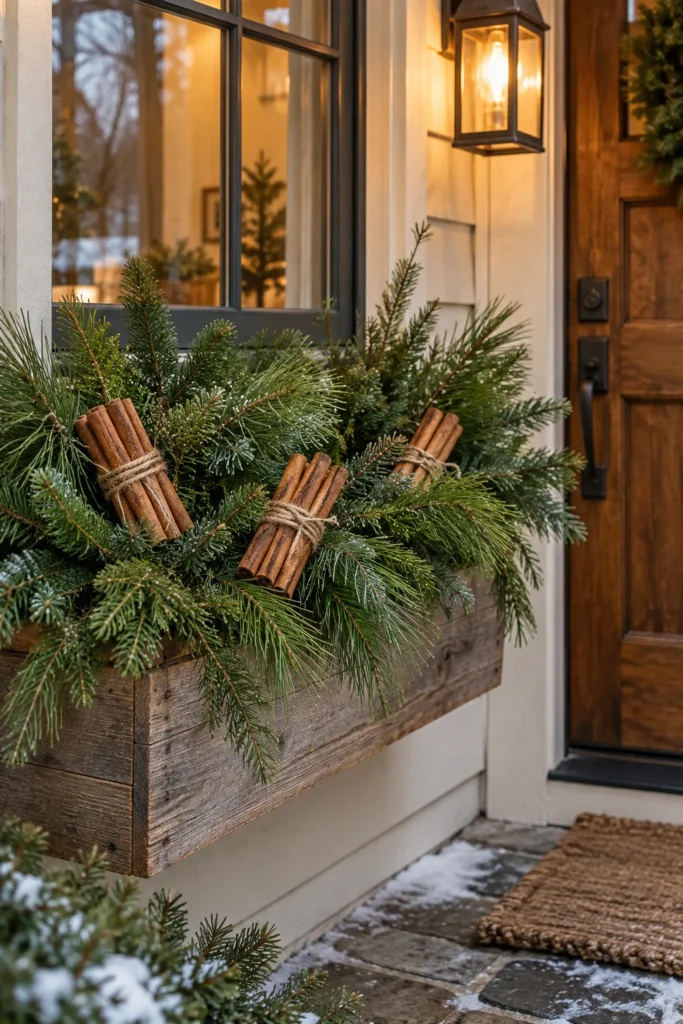
This combination is a perfect scent for a cold morning, and that’s a bonus that is rarely mentioned.
Best materials: Cinnamon sticks, pine branches, jute twine.
Ideal for: Front doors and entryway windows.
My suggestion: Change the cinnamon bundle every month. The smell fades faster than the look.
Real vs Faux: Which Greenery Actually Wins in Winter?
| Feature | Real Greenery | Faux or Preserved Greenery |
| Lifespan | 4 to 8 weeks | Entire cold season |
| Maintenance | Occasional misting, replacing | Almost none |
| Cost | Lower upfront, repeat purchases | Higher upfront, reusable yearly |
| Best for | Traditional, evolving displays | Rentals, travelers, busy schedules |
Frequently Asked Questions
When should I plant my window box for the cold season?
I usually build mine right after the first hard frost kills off my summer flowers. Late November works for most US zones.
Do these boxes need watering in winter?
Yes, but far less than summer. Water lightly whenever the soil is not frozen solid.
Will real greenery actually survive freezing temperatures?
Most evergreens and cut branches handle freezing fine. What kills them is drying out, not the cold itself.
How long does a combo like this last?
Real arrangements usually look great for six to eight weeks before needing a refresh. Faux versions last the whole season.
Can I reuse my summer container for winter?
Absolutely. Just clean it out, check the drainage holes, and swap the soil if it looks depleted.
Final Thoughts
Winter does not have to mean empty, sad-looking windows.
I have killed my share of branches and frozen a few faux berries by accident, and I still do this every single year anyway.
Pick one combo from this list that fits your style and your budget.
Go build it before the next hard freeze hits your area.