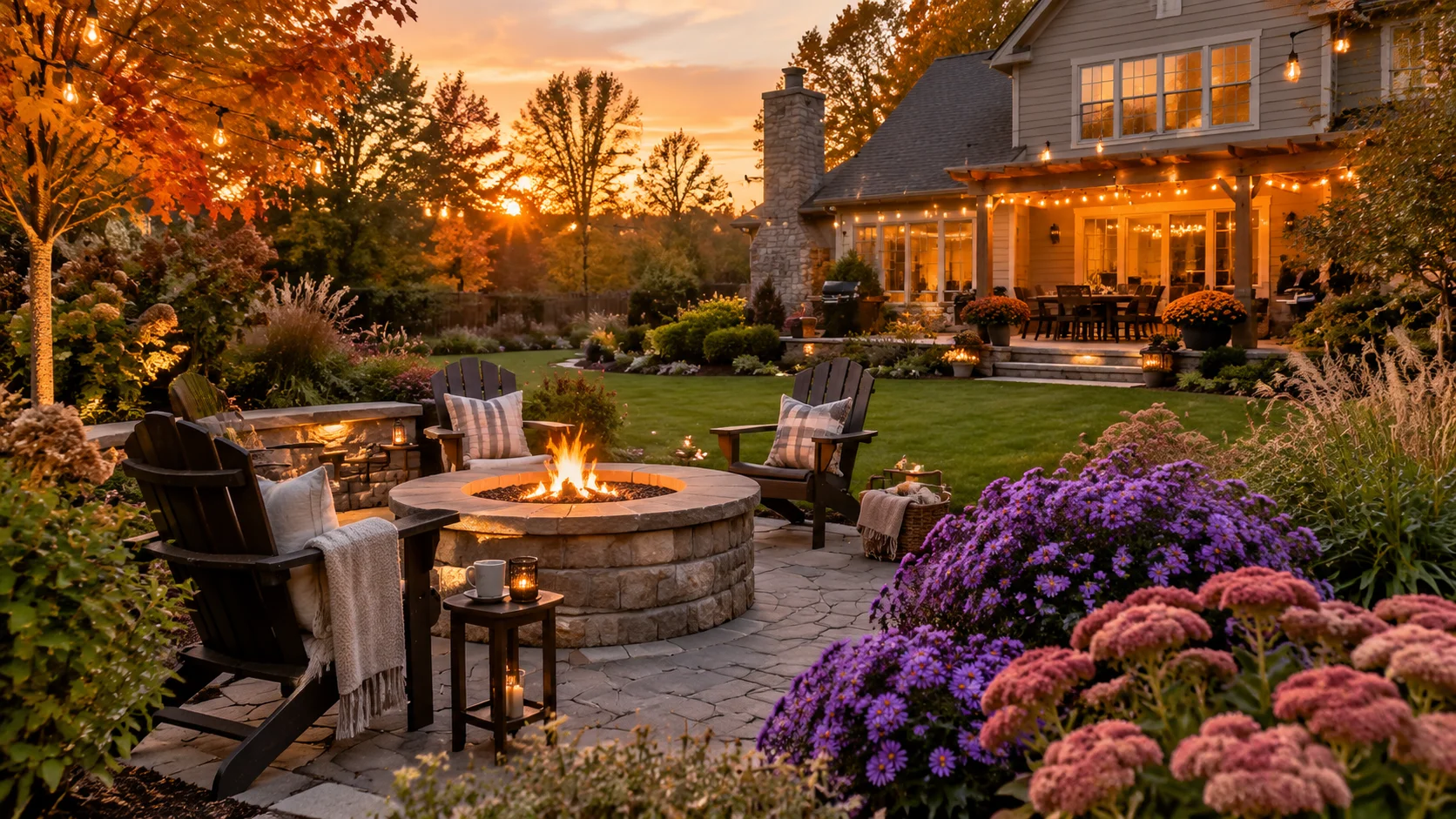
When summer was over, my backyard was silent. Then, I began to consider my fall garden as a season, rather than an extension of summer.
Now it’s full of color, texture and life until November. The 17 autumn garden changes were the most significant, and I’ve incorporated them all into my practice with my house fall window boxes decor.
All this is without a big budget or a full weekend. Most of these are small changes you can do in an hour.
Make your yard as beautiful in October as it was in July!
Plant Swaps for Instant Color
The following five swaps offer the greatest “bang for your buck” with the least effort.
1. Asters and Sedum for Late Color

Asters and sedum will flower as summer’s flowers wind down, providing weeks of extra colour with little work. Both are perennials, which means they will come back each year once planted.
Ideal for: September tired-looking garden beds.
My suggestion: When pruning sedum, take off half the stems in early summer for shorter, sturdier stems and less floppiness by fall.
2. Ornamental Grasses for Movement
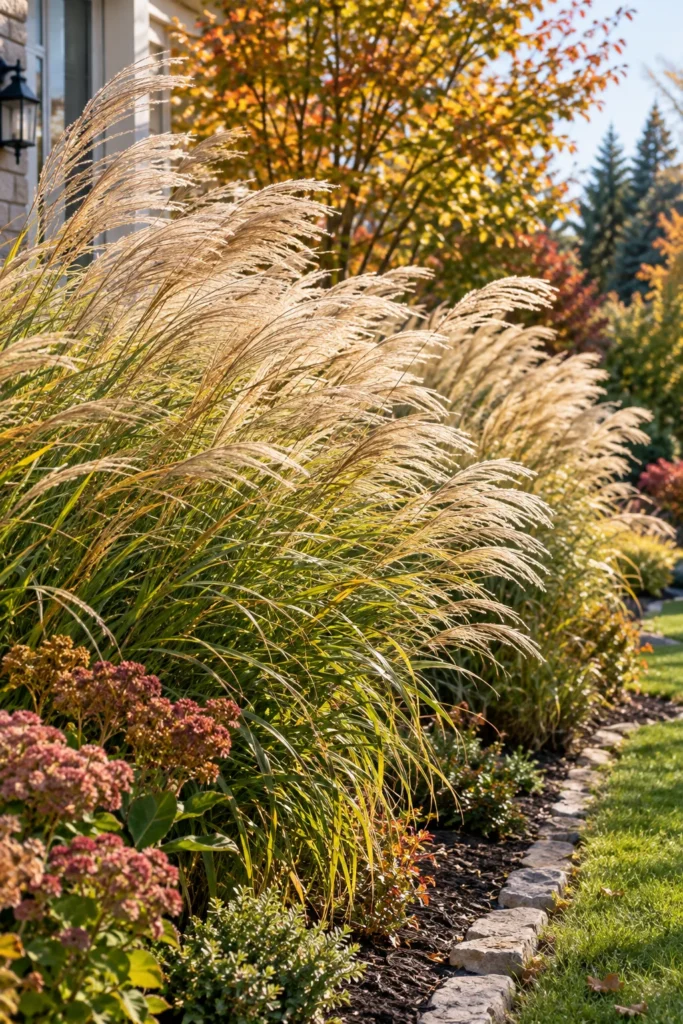
Feather reed grass or little bluestem are ornamental grasses that provide height and movement when everything else in the yard is still. They also look great when left standing in the winter months.
Ideal for: Flat or one-dimensional beds.
My suggestion: Don’t mow back in the fall, but mow in the early spring. This provides birds with a place to hide and looks beautiful in frosty weather.
3. Chrysanthemum Border Refresh

Chrysanthemums are one of the quickest ways to get a colour change in your garden, replacing tired summer annuals with a border of chrysanthemums. Use odd numbers (3 or 5) to create a fuller effect.
Great for: Front beds that need a quick one-afternoon pick-up.
My advice: Don’t purchase florist mums; purchase garden mums. Garden mums are more resilient and will live through the winter in the garden.
4. Japanese Anemone Backdrop

Japanese anemone is a late, tall bloomer, ideal as a backdrop behind shorter fall blooms. It has nice white and pink flowers which sway nicely in the fall breeze.
Ideal for: Gardeners who don’t want to plant a more common flower than mums.
My advice: Leave it to dry out. Japanese anemone is a more-than-expected filler after its first year.
5. Russian Sage Cutback and Rebloom

If you cut back the flower spikes after summer, Russian sage will likely have a second flush. Its silver foliage provides nice contrast with darker fall colours.
Ideal for: Drought-resistant beds in sunny areas.
My advice: Use gloves for trimming! Stems and foliage have a strong odour and will cling to the hands.
Structural and Hardscape Upgrades
These take a bit more work, but will affect how you use your yard.
6. Fire Pit Seating Circle
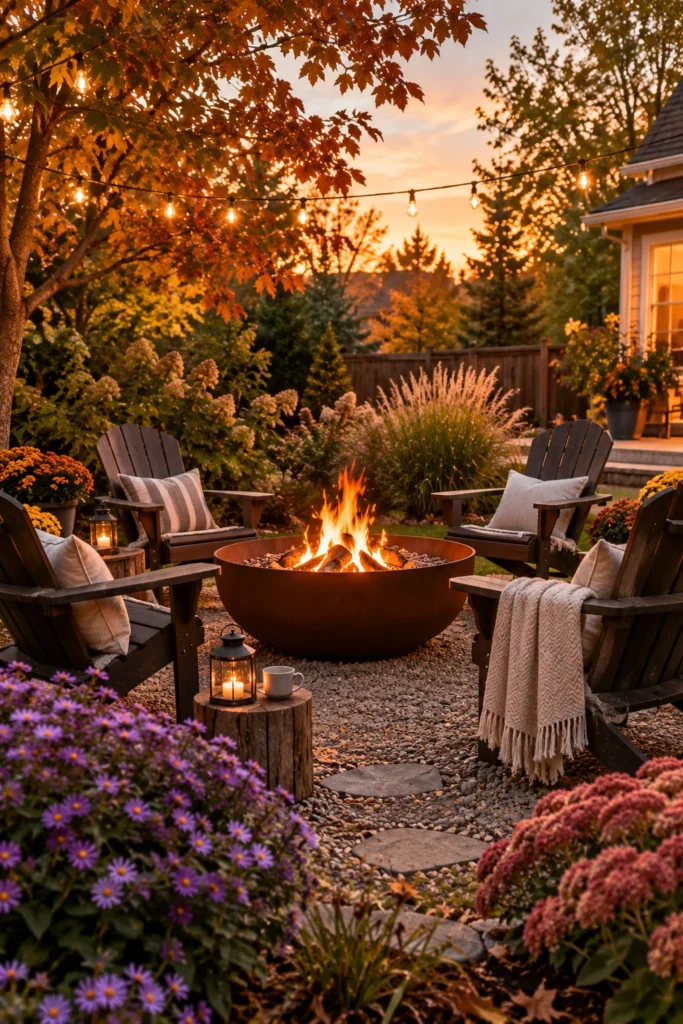
Once the weather cools down, a small fire pit with a couple of chairs makes your yard the spot to be once the sun sets.
You don’t need to buy a fancy steel bowl fire pit; a simple one will do.
Ideal for: Those who want to use their yard through October and November.
My suggestion: Put some gravel down underneath the fire pit area. This helps prevent mud after rain.
7. Gravel Path Edging Refresh

If you have an old path with worn-out gravel, this is a very inexpensive way to refresh it: add new gravel and clean steel edging—one of the most effective, least-work projects on this list.
Ideal for: Paths which have become weedy and uneven during the summer.
My suggestion: Place landscape fabric beneath new gravel to reduce weeds that will grow through it next season.
8. Cold Frame Cover for Raised Beds

A plain cold frame (a box with a clear lid) lets you keep growing vegetables such as lettuce and spinach for weeks after your first frost. You can build it from old windows and scrap wood.
Ideal for: Those who wish to extend their fall crop.
My suggestion: Leave the lid open on warm afternoons to prevent the plants inside the pot from overheating.
9. Trellis with Climbing Clematis

Fall-blooming clematis is a good choice for a trellis that adds vertical interest to a fence or wall. In some areas, some varieties will continue to flower until October.
Ideal for: Small yards where space is at a premium.
My suggestion: Cover the base of the tree with lots of mulch. Clematis roots prefer to remain cool even though the tops of the plants are in full sun.
Wildlife and Pollinator Additions
The little things can make a big difference for the critters that share your yard.
10. Native Wildflower Patch

Just a small area of native wildflowers will provide late-season bees and butterflies with a place to feed before winter. Some of the simplest to begin with are goldenrod and native asters.
Ideal for: Gardeners who wish to encourage pollinators in their garden.
My advice: Don’t over-edit this patch. Just a bit of wildness is what it’s all about.
11. Berry Shrub Planting for Birds
Shrubs that produce berries, such as winterberry holly, are a good source of food for birds at a time when they are in need. They also add a splash of red to your yard in winter.
Ideal for: All birdwatchers who like to observe birds from their windows.
My suggestion: Grow both male and female plants of winterberry holly. They are both required for the female plant to bear berries.
12. Leaf Litter Habitat Corner
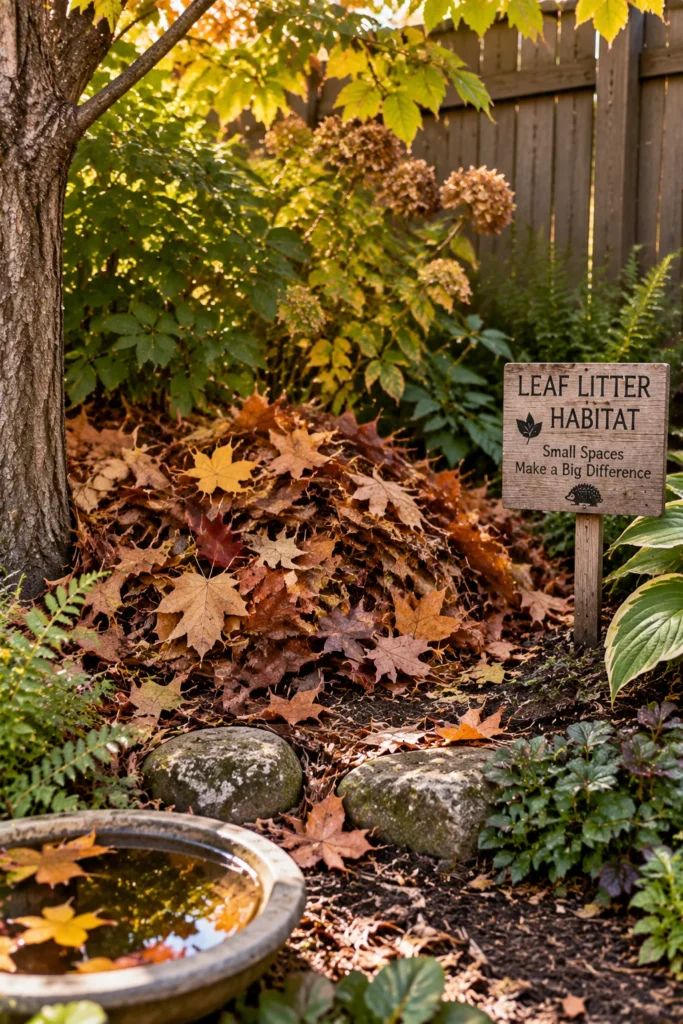
Don’t bag all of the leaves; leave a small pile in an inconspicuous area of your yard. It provides a winter habitat for beneficial insects and little critters.
Ideal for: Gardeners who are looking to garden a little more sustainably.
My tip : If you don’t want the leaves to look untidy, I suggest mowing them first. Shredded leaves also break down faster.
Cozy Garden Features
Here are the final details to help make a yard welcoming as the temperature drops.
13. String Lights Over the Patio
Warm white string lights can extend fall nights over a patio or deck and make them last longer than they otherwise would. An inexpensive, convenient addition that pays for itself every night.
Ideal for: people who want to use their yard at night.
My suggestion: Use LED lights that are designed for outdoor use. They handle cold and damp conditions better than indoor-style lights.
14. Wood Chip Mulch Pathways

Wood chip mulch along garden paths helps prevent mud from accumulating during fall rains and provides a more finished appearance.
It also breaks down slowly and adds nutrients to your soil over time.
Ideal for: Areas with heavy foot traffic between beds.
I suggest: A thickness of 2-3 inches. If it’s thicker, it will take longer to dry out after rain.
15. Pumpkin Display Vignette
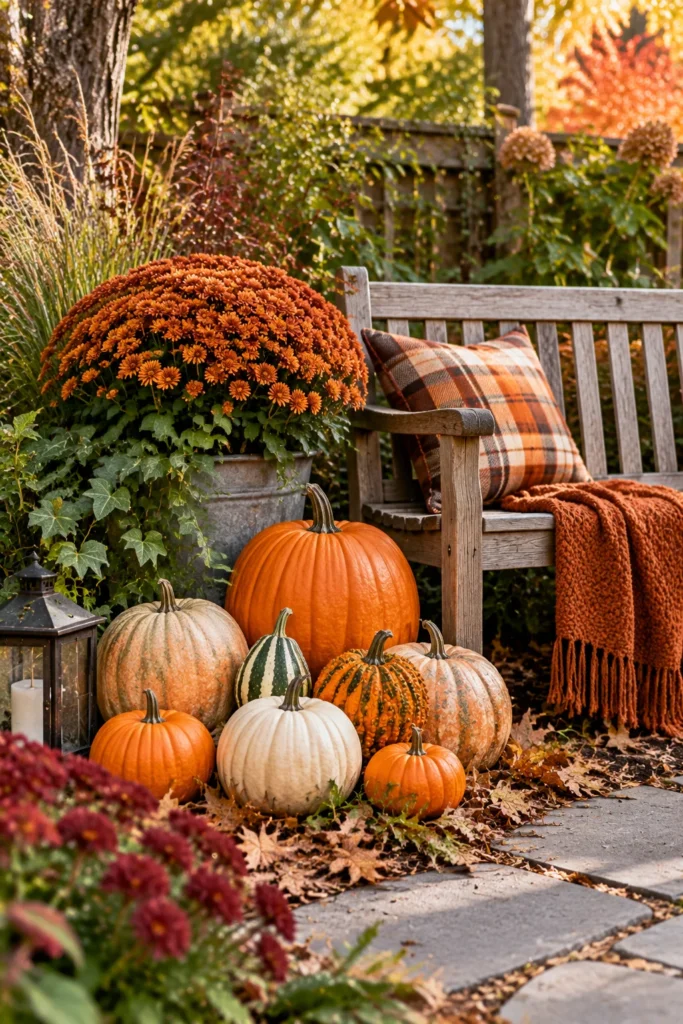
A few pumpkins and gourds near a garden bench or entrance can add fall appeal without the planting! Combine sizes and colours to achieve a desired effect.
Ideal for: Gardeners looking for a fast, easy look with no maintenance.
My suggestion: Place pumpkins on a raised platform (crate or stump) to keep them from rotting as quickly from moisture in the ground.
Prep Work That Pays Off Next Spring
The two final projects are more about preparing to succeed than about looks.
16. Soil Testing and Amending

Fall is the best time to do a soil test and apply amendments such as compost or lime because they have the winter to incorporate into the soil before spring planting. Most local extension offices offer inexpensive testing kits.
Ideal for: All those who had poor plant growth during the summer.
My advice: Do add compost even if your soil test is good. It’s rarely painful and always beneficial.
17. Bulb Planting for Spring Color

The only way to get this early colour next year is to plant spring bulbs (tulips and daffodils) in the fall. The ideal time to plant is about 6 weeks before the ground freezes.
Ideal for: Gardeners who want their garden to get going in the spring.
My advice: Don’t plant bulbs in rows; plant in clusters of at least 7 or 9 bulbs. When in bloom, it is much more natural.
Fall Blooming Perennials at a Glance
Here’s how the main perennials from this list compare side by side.
| Plant | Bloom Time | Light Needs | Height | Pollinator Friendly |
| Asters | September to October | Full sun | 1 to 3 feet | Yes |
| Sedum | September to October | Full sun | 1 to 2 feet | Yes |
| Russian Sage | Late summer into fall | Full sun | 2 to 4 feet | Yes |
| Japanese Anemone | September to October | Part shade | 2 to 4 feet | Yes |
| Ornamental Grass | All season | Full sun to part shade | 2 to 5 feet | Yes |
| Goldenrod | September to October | Full sun | 2 to 4 feet | Yes |
5 FAQs About Autumn Garden Designs
1. What are the best plants for an autumn garden?
Mums, asters, ornamental grasses, pansies, sedum, Japanese maple, and ornamental kale can add beautiful fall color and texture.
2. How can I add autumn color to my garden?
Combine seasonal flowers with plants that have colorful foliage, such as Japanese maple, burning bush, and ornamental grasses. Add pumpkins, gourds, or rustic containers for extra seasonal charm.
3. How do I make my fall garden look more inviting?
Layer plants at different heights, define garden beds with stone or edging, and add a welcoming pathway, planters, lanterns, or warm outdoor lighting.
4. Can I create an autumn garden in a small yard?
Absolutely. Use containers, window boxes, vertical planters, compact shrubs, and layered flower beds to bring fall color into a limited space.
5. How can I keep my autumn garden looking good as temperatures drop?
Choose cool-season plants, remove damaged foliage, add a layer of mulch, and protect sensitive plants from early frost when necessary.
Final Thought
Autumn is the perfect season to give your landscape warmth, color, and seasonal character.
From vibrant mums and ornamental grasses to colorful foliage and cozy garden accents, these 17 autumn garden designs offer plenty of inspiration for creating a beautiful fall landscape that feels welcoming throughout the season.
