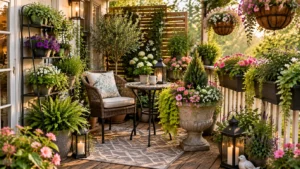
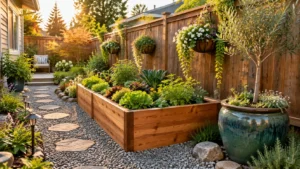
When summer came to a close, my porch used to be pumpkin spice perfect to sad and empty.
I’m not sure how it got to this point, but the part of my house that everyone sees is a mess, which drove me a little crazy.
I continued to pull out dead petunias each September and then sitting and looking at bare dirt for weeks.
That was quickly getting tedious so I began to try out actual fall window box flowers, one variety at a time, right outside my front door.
A few of them perished in a week. Some are still in flower, and have survived two light frosts.
This is a list of all the things that actually worked on my own porch, not all of those that appear nice in a catalog picture.
Fall Window Box Flowers Classic Fall Bloomers
These are the flowers that most people would think of when they think of autumn window boxes and it’s not surprising.
1. Garden Mums
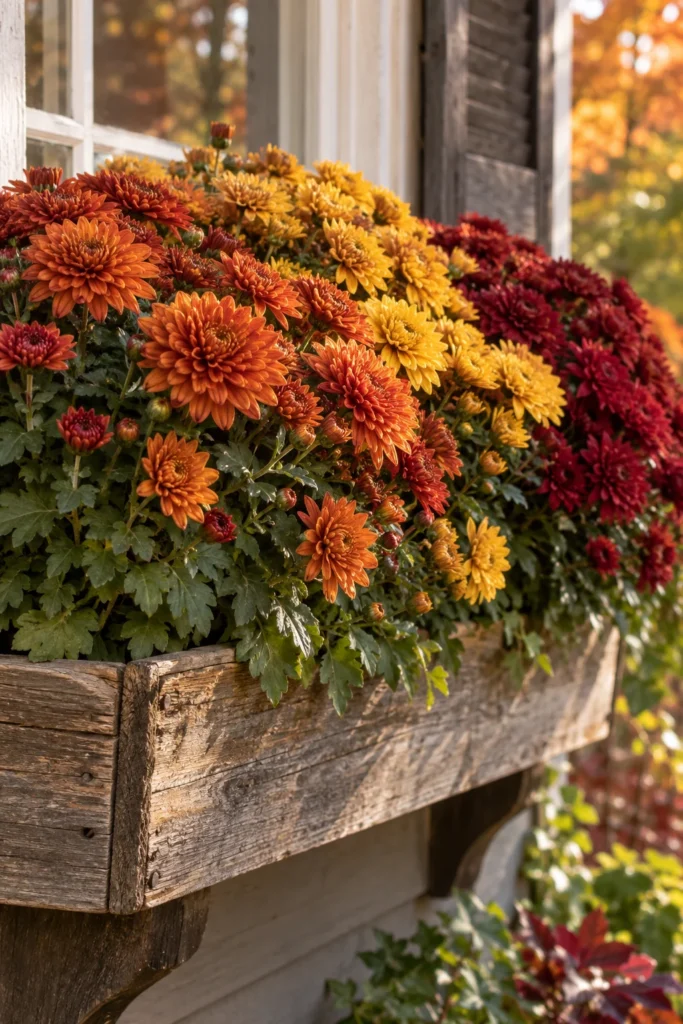
I can’t think of any fall display that doesn’t have mums at the heart of it.
They are available in rust, gold, burgundy and cream, and will complement nearly any house color; they will remain tight and full in full sun rather than leggy and floppy.
Their roots are kept happy, but not waterlogged, in a light, well-drained potting mix. Ideal for those who prefer a quick, dependable and guess free color.
My advice: Purchase budded mums rather than those with blooms to have a longer time of color from each plant.
2. Pansies
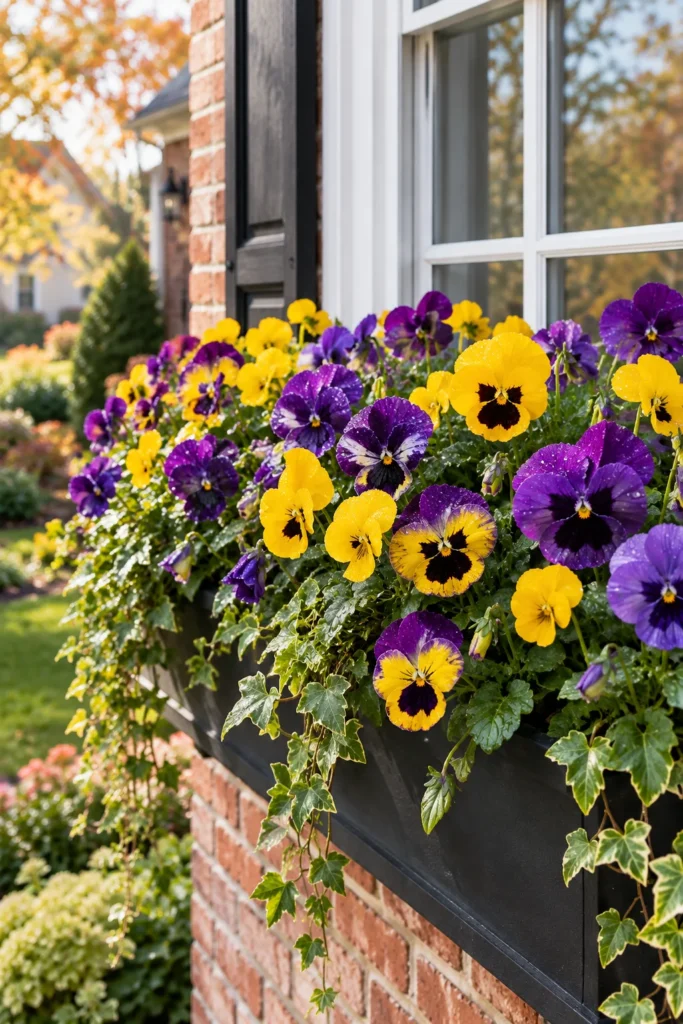
Pansies are cold hardy, you can literally put them in the cold. My plants have bounced back after a bad frost and I haven’t done anything special.
They thrive in rich well-drained potting soil, regular deadheading and light monthly feeding.
Ideal for cooler climates or late fall planting after other flowers have started to bloom.
My suggestion: Remove spent flowers every few days to encourage new buds to continue producing flowers.
3. Violas
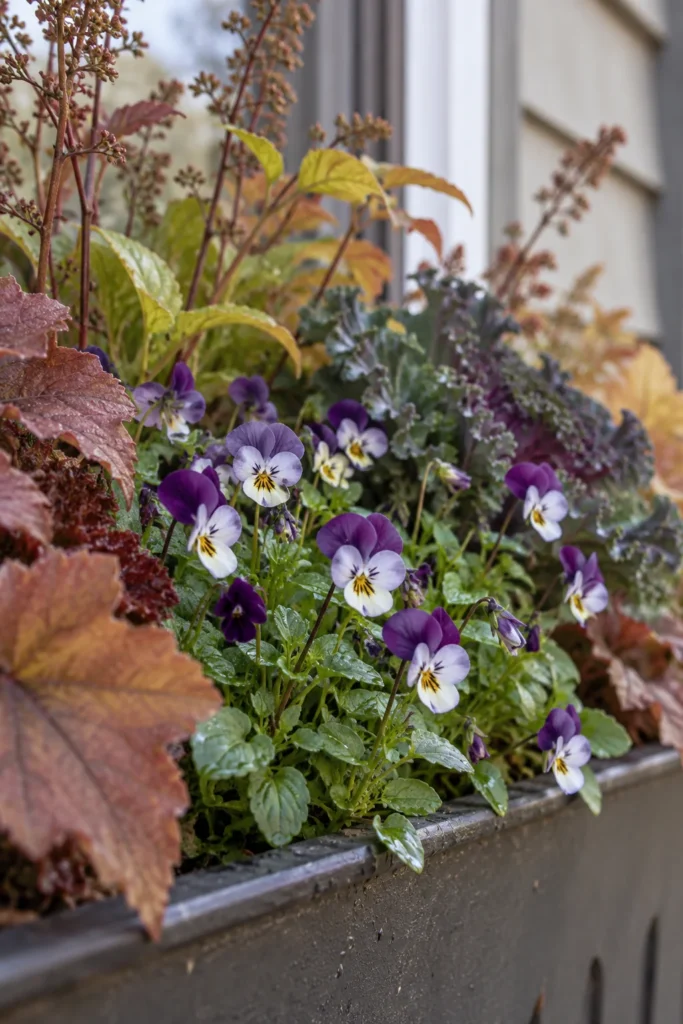
Violas are essentially a smaller version of pansies, but with even greater cold hardiness.
They are small in size, making them ideal for planting in between larger bolder plants.
They look terrific with ornamental kale or dusty miller for contrast and they will grow in the same rich soils that panies prefer.
Best for those who wish for texture, but don’t want one plant dominating the entire box.
My advice: Plant violas at the front edge to not be covered up by taller stems.
4. Asters
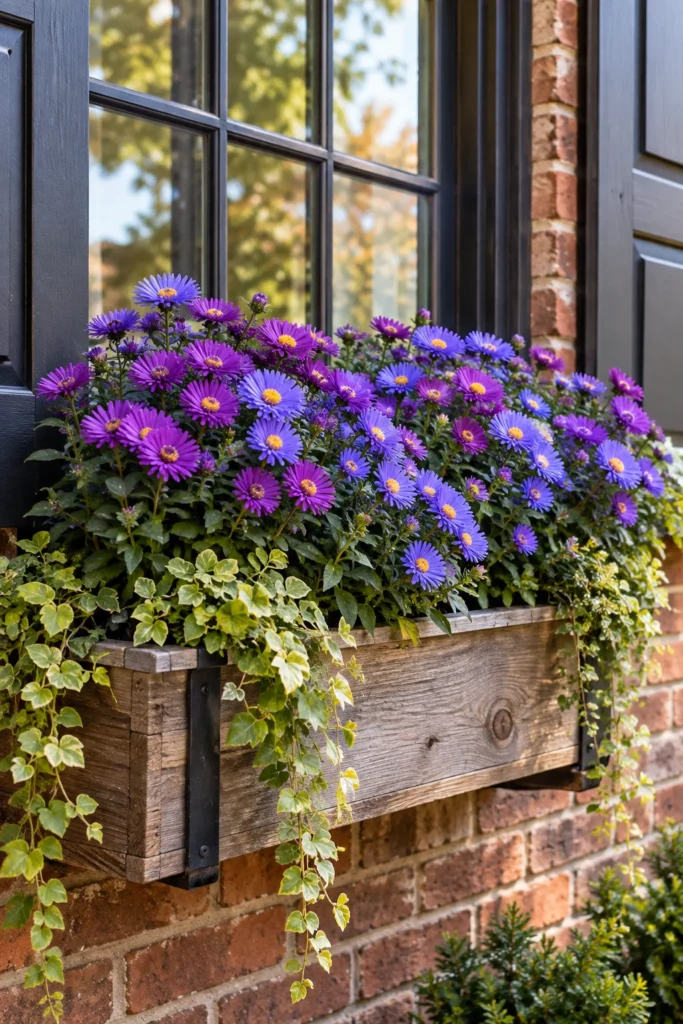
Asters are a more natural and wild appearance than neat and uniform mums could ever be.
Their daisy-like flowers appear in shades of purple, pink and deep blue and seem natural and relaxed. They require regular watering but don’t over water, allowing the soil to dry out between waterings.
Ideal for a cottage-style landscaping and porch, not for a formal and manicured appearance.
My suggestion: Is to cut off the long stems in late summer to make them bushier in the fall.
5. Celosia
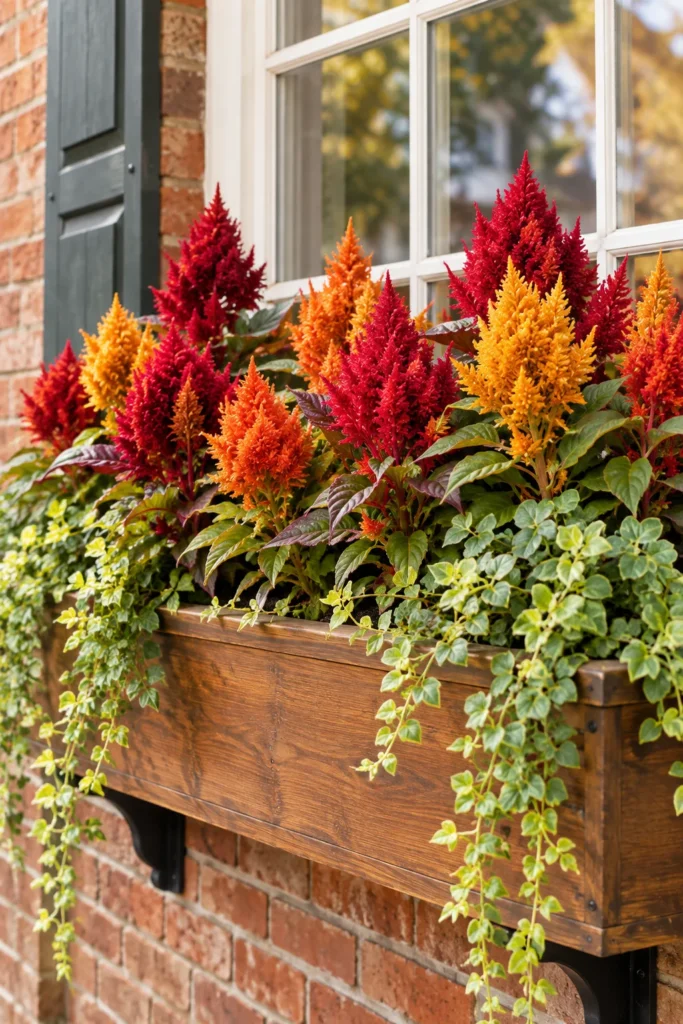
The texture of celosia is weird and almost velvety, it really makes people stop in the middle of the street on my road.
The flowers are plumed or crested, and do not fade in cool conditions.
They are a heat-loving plant, making them a good fall-bridger from late summer.
Great for those who wish to have a conversation starter plant, rather than background color.
My suggestion: Combine celosia with something trailing, to balance out the stiff, upright form.
Foliage and Texture Stars
Flowers are not the only way to achieve true colour and interest in a fall window box and, in all honesty, foliage plants are the most recommended plants for beginners.
6. Ornamental Kale

Ornamental kale resembles a big rose of all ruffled, waxed leaves.
Unlike most plants, it does not get damaged by the cold weather but rather gets deeper in color.
Grows well in soil that is loose and fertile and is watered regularly. Ideal for those wishing a centrepiece that really stands out and will withstand the real frost.
My guess: The darker it gets, the more intense the color of the center of the leaves.
7. Coral Bells (Heuchera)
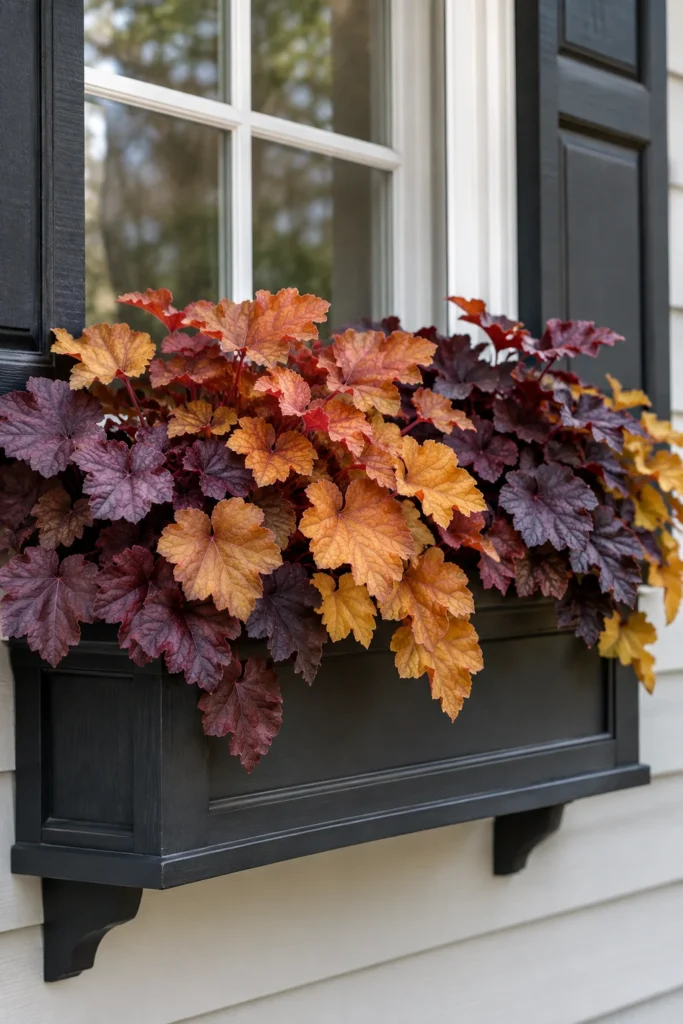
Heuchera, known as coral bells, provides a lot of colour and texture without the need for any real flower.
The shades of the leaves vary from caramel to amber, to deep purple and close to black.
Tolerant of partial shade among all the fall flowers on this list. Best for window boxes that are in the shade and receive little direct sunlight.
My advice: Make the color of your box the anchor color and then create flowers and fillers around it.
8. Dusty Miller
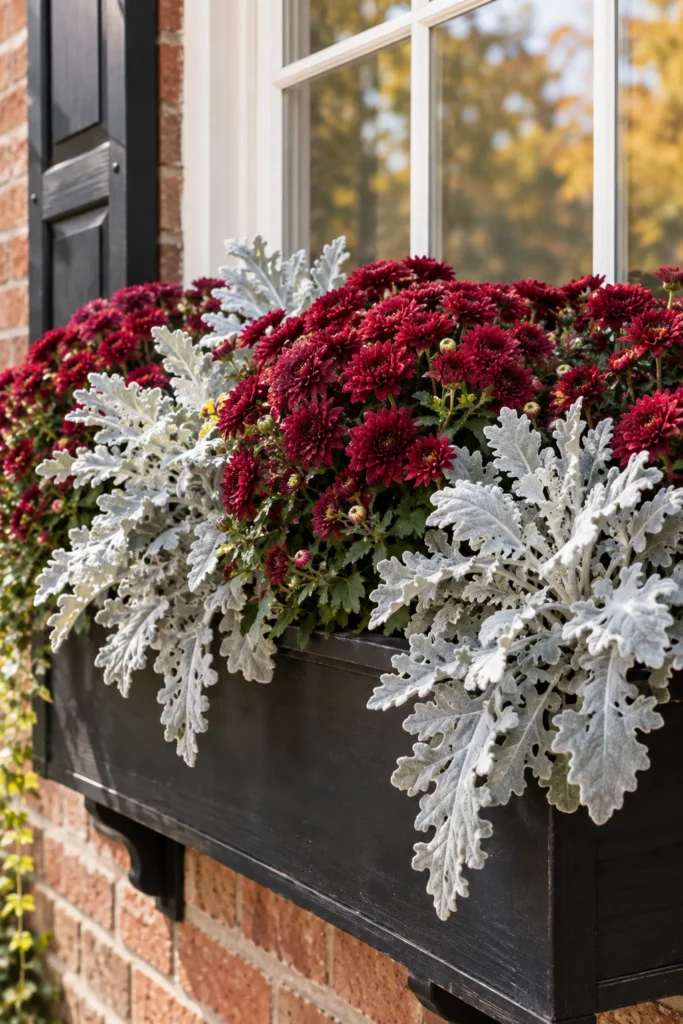
The silvery felted leaves of dusty miller add to the other colors making them pop! It is hardy, tolerant of drought and does not require much maintenance after it is established.
Perfectly contrasted with deep purple or burgundy mums. Ideal for those who are prone to neglecting to water according to schedule.
My tip: To help soften strong, competing colors, place dusty miller in the middle of the box.
9. Swiss Chard
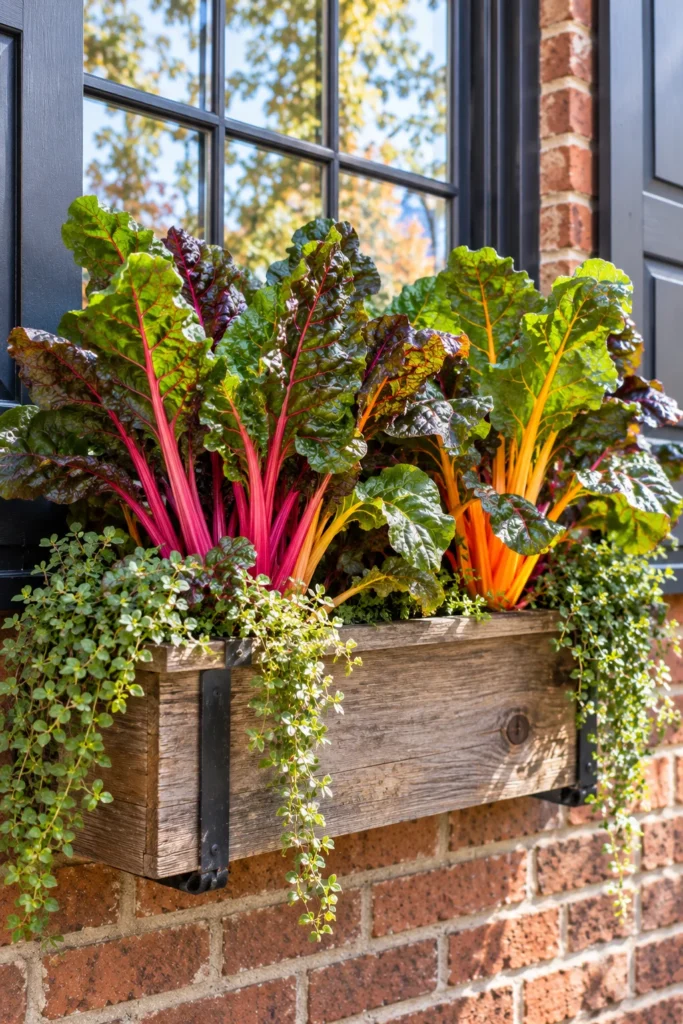
Swiss chard is a vegetable garden plant, but in a box, it’s pretty.
The stems are hot pink, orange and gold, just like little bits of stained glass.
Tolerant of cool weather and continues to grow throughout the fall. For those who are looking for something that’s both edible and ornamental.
My suggestion: Take some of the outer leaves off for dinner without spoiling the display.
10. Autumn Fern
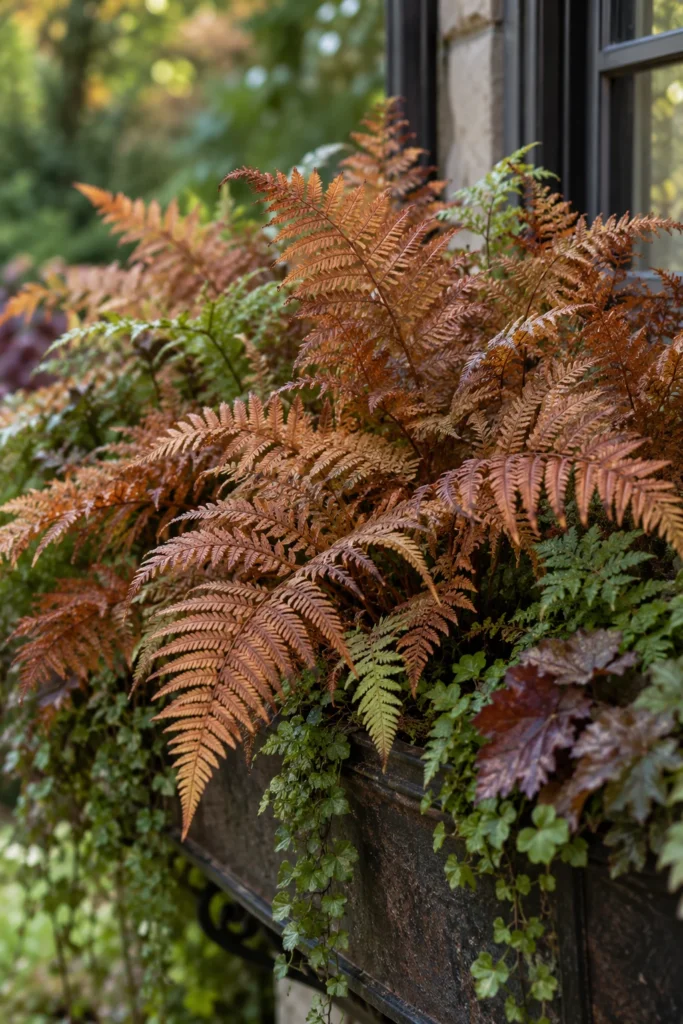
The softness and feathery texture of autumn fern are a window box fall that most fall window boxes are just missing. New growth actually comes out in a coppery, orange-red color, and gradually becomes green.
Likes partial shade and a constantly moist, well-drained soil. Ideal for an outdoor porch that is shaded, and requires texture rather than loud saturated color.
My suggestion: Plant it in the back, so that its arching fronds spill over on other plants.
Trailing Plants for Spillover
All good window boxes require some sort of cascading over the edge.
11. Sweet Potato Vine
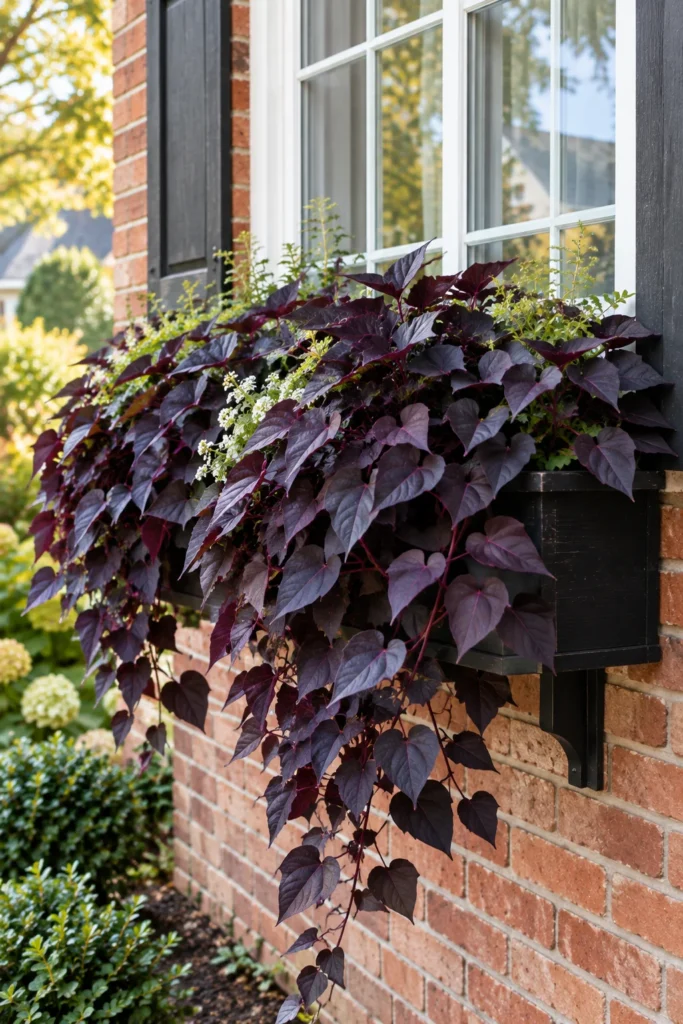
Sweet potato vine will quickly fill in if there are gaps in the planting, filling them in within a couple of weeks.
Its leaves are lime green, deep purple and near black in shape with a heart shape.
It is not a fussy plant, and will grow in both sun and light shade.
Ideal for those who are looking for a dramatic spillover, but don’t want to wait till the end of the season to see it.
My suggestion: Cut it off drastically if it begins to cover your tall blooms with foliage.
12. English Ivy

English ivy will always look classic with a slightly formal trailing effect.
One of the very few plants that will tolerate a true hard freeze here.
It’s best combined with mums or ornamental kale for a classic fall look. Best for those who wish to have a display that will last well into winter.
My suggestion: Hang it in front of a stone or brick house to get the maximum effect.
13. Creeping Jenny

Creeping Jenny dripples over the edge in vivid almost neon green leaves.
Tolerant of shade and sun, making it suitable for more challenging sites. Ideal for those who wish to have a splash of chartreuse in a dark green border.
My suggestion: leave it a little moist as it dries out quicker than it appears.
14. Trailing Rosemary
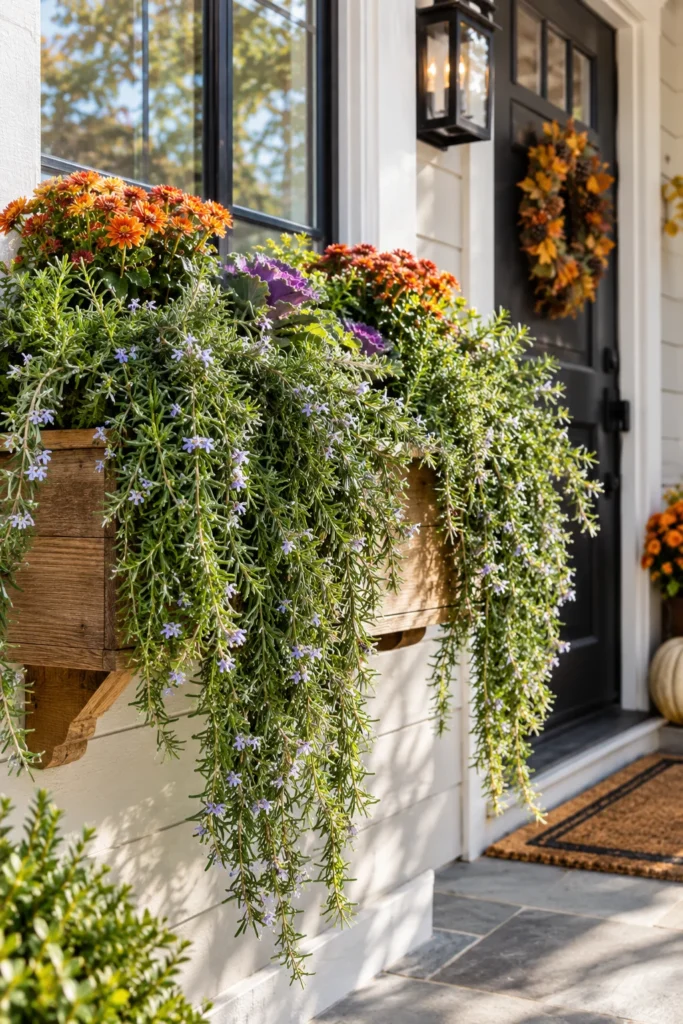
The fragrance rosemary brings is something most fall plants can’t provide and rosemary is a trailing plant.
Just brush past it as you enter and the entire porch is really smelly.
Requires well-drained soil and will not tolerate soggy feet. Ideal for sunny window boxes in front of a door or in a high traffic area.
My suggestion: Plant it where you will use it, NOT just look at it from a distance.
Cold-Hardy Standouts
These selections have been chosen because they have withstood the conditions that have proved fatal to all others in their vicinity.
15. Ornamental Peppers

Ornamental peppers produce small, jewel colored fruit that is purple, red, orange and yellow.
They are a long-lasting colour and shape after most flowers have dropped off. Ideal for anyone who would like something different than the usual mum and kale combination.
My suggestion: The peppers are edible, but have been bred for appearance not taste, so use them as decoration.
16. Black-Eyed Susan

Black-eyed Susan will produce bright yellow flowers with a dark eye. Does better than most other bright yellow flowering plants on cooler nights.
Best in a sunny box that will require warmth and cheer late in the season.
My advice: Cut off the flowers regularly to prevent early seeding and continue to enjoy new flowers.
17. Autumn Sedum (Stonecrop)
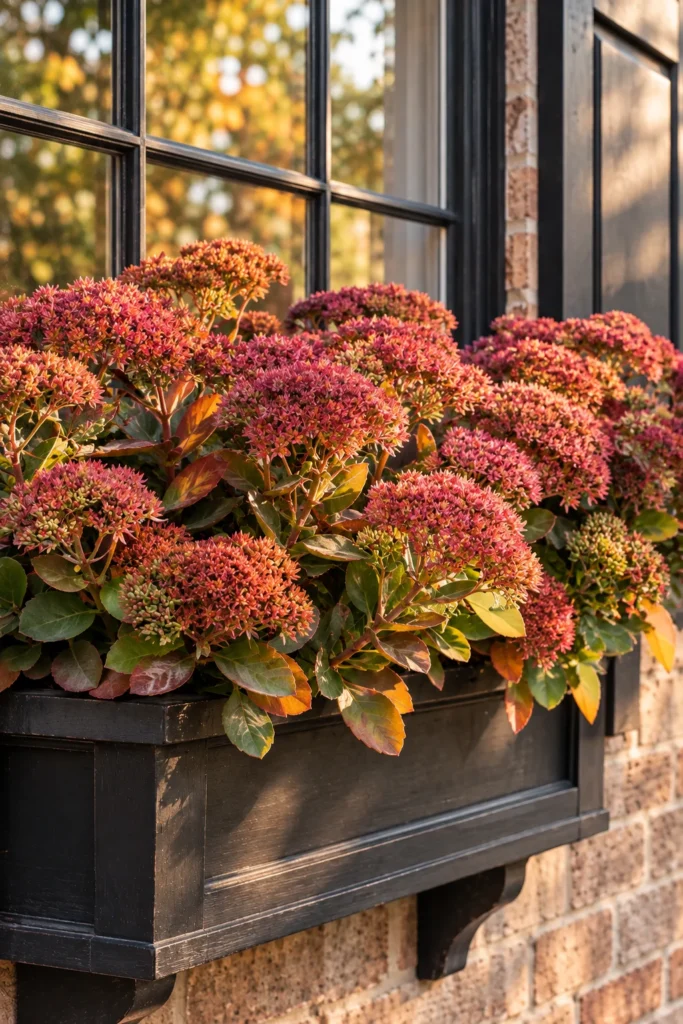
Sedum adds thick succulent-like foliage and rust-pink flowers which get deeper in color during the cold weather.
It’s almost impossible to over-water it properly as it prefers it to be drier.
Best for those who don’t want to be too involved in their boxes or for those who are new to fall gardening.
My advice: Don’t overwater, sedum does not like to rot more quickly than it does from too much water.
How These Fall Picks Compare
Here’s a quick side-by-side look at a few top picks from this list, so you can compare them at a glance before deciding what fits your own porch and your own climate.
| Plant | Sun Needs | Frost Tolerance | Best Role in the Box |
| Garden Mums | Full sun | Moderate | Main color, centerpiece |
| Pansies | Full sun to part shade | High | Filler, cold-season color |
| Ornamental Kale | Full sun to part shade | Low | Bold centerpiece |
| Sweet Potato Vine | Full sun to part shade | High | Trailing spillover |
| Autumn Sedum | Full sun | High | Low-maintenance texture |
Frequently Asked Questions
What flowers last the longest in fall window boxes?
Pansies, violas, and ornamental kale usually outlast everything else on this list. They handle frost well and keep looking good well into late fall, often past the first hard freeze.
Can I leave my summer flowers in through fall?
Most summer annuals fade fast once nights turn cold, so they’ll look tired and thin quickly. Swapping to true fall plants gives you a much longer, fuller display for the same amount of effort.
How often should I water fall window boxes?
Check the soil every few days instead of watering on a fixed schedule. Cooler weather and more frequent rain mean boxes dry out slower than they did back in summer.
Do fall window boxes need full sun?
Some definitely do, but plenty of great options like heuchera and autumn fern handle partial shade just fine. Match the plant to your actual light instead of forcing a sun-lover into a shady spot.
When should I switch to fall window boxes?
I usually switch mine over once nighttime temperatures start dropping into the 50s consistently. Waiting for the first frost is usually too late to enjoy a full season of real color.
Final Thoughts
I used to think fall window boxes were just a smaller, sadder version of summer ones.
Now I genuinely look forward to this switch more than I do the spring planting.
Mums and kale get all the attention online, but heuchera, sedum, and trailing rosemary earned permanent spots in my own yearly rotation.
Pick three or four from this list that match your light and your personal style, and get them into the soil before that first real cold snap hits.
Your porch will thank you every single time you pull into the driveway.