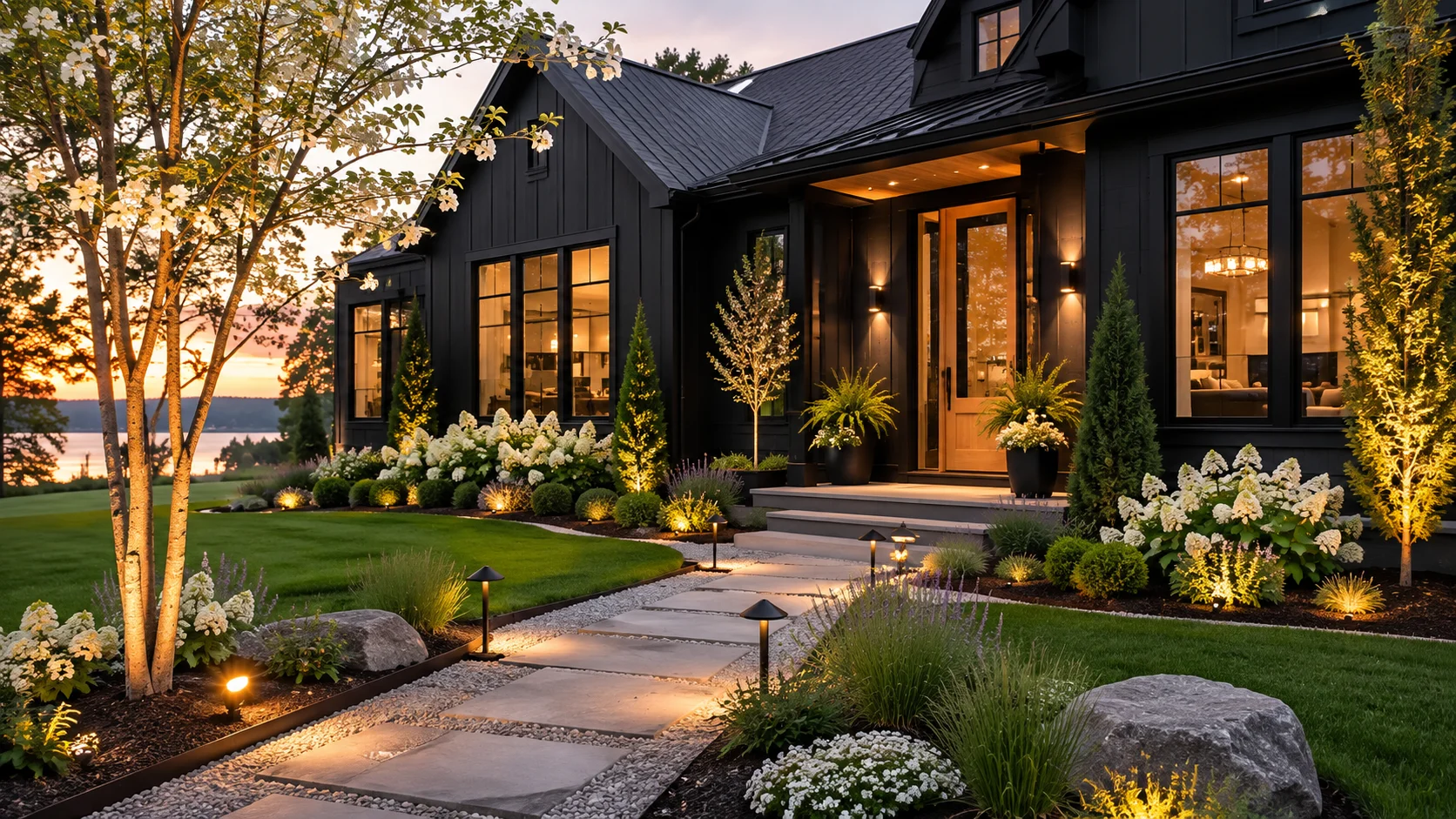
My house is black, and for the first year, my yard was against it, not for it.
After I discovered the ideal black house landscaping mixes, the front of my home just fell into place.
I tried a lot of looks that I can’t remember. These are the 15 that never looked out of place, and never once failed to make it in each of the seasons.
Some are nearly free. Others meant a weekend of shoveling and a trip to the garden center.
Regardless, they all made the cut for this list.
Plant Choices That Pop Against Dark Siding
I quickly found out that not all greens are suitable to paint on black. Some plants look like they’re flat, and others look like they’re glowing!
1. White Flowering Shrubs for Contrast

The quickest way to brighten up a dark exterior is to add bright white flowers.
What makes it work: Crisp white flowers provide good contrast to dark siding without detracting from the architecture.
Best plants:
- Annabelle hydrangea
- Snowmound spirea
- White azalea
Ideal for: Residential properties where you want sharp contrast and crispness.
My suggestion: Plant these where they get full afternoon sun. It is more noticeable when the white pops during golden hour.
2. Ornamental Grasses for Movement
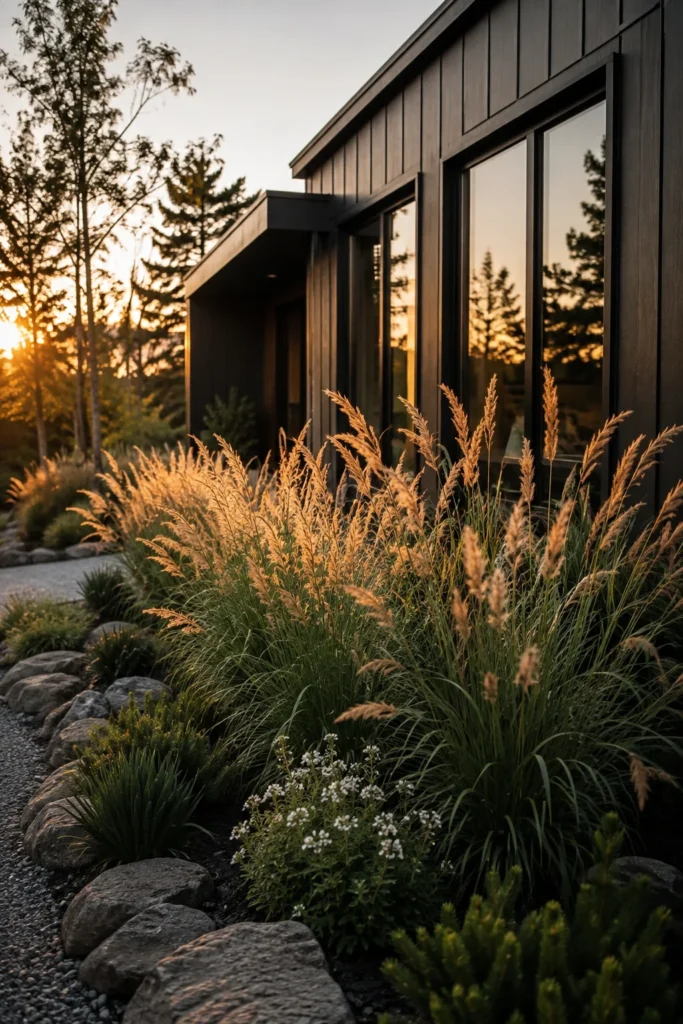
The light and shadows reflect differently on grasses than on solid shrubs, and it makes a difference when the wall is flat and dark.
The elements that make it work: The swaying grasses give the home life and soften the geometric lines of the modern home.
Best plants:
- Feather reed grass, Karl Foerster’s.
- Fountain grass
- Little bluestem
Ideal for: Contemporary or more minimalist styles that have clear lines in their architecture.
My advice: Plant in 3s, 5s, and not in single straight rows.
3. Evergreen Foundation Plants
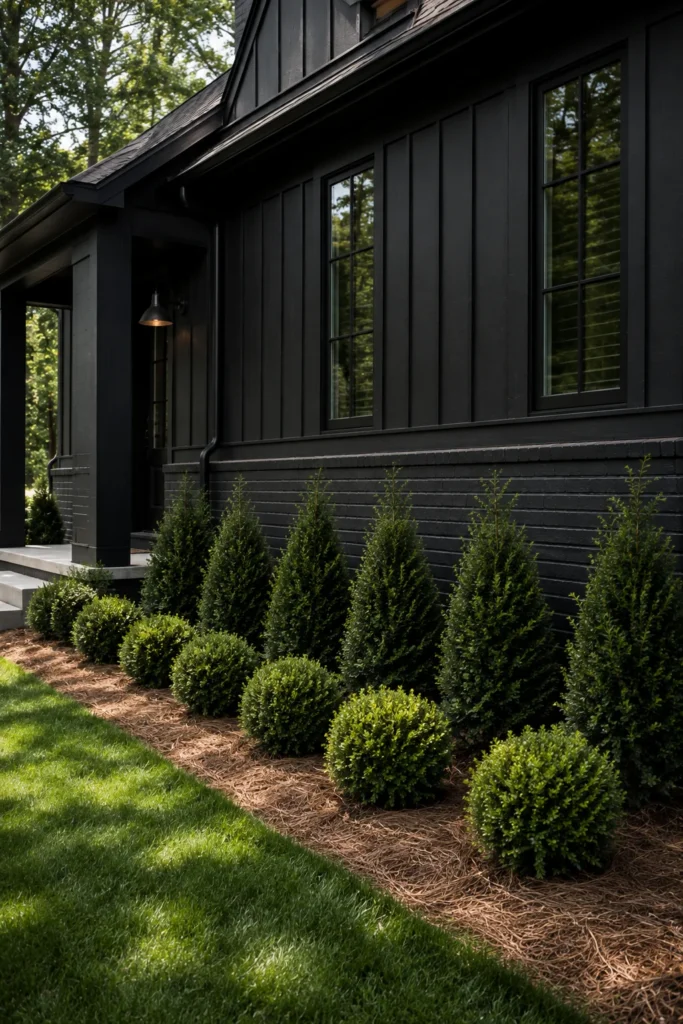
In winter, when all of the trees are bare, evergreens maintain color at the base of the house.
What makes it work: They have year-round green foliage that provides foundation structure even when perennials and grasses die back.
Best plants:
- Dwarf boxwood
- Inkberry holly
- Dwarf Alberta spruce
Ideal for: Homeowners who want year-round structure with minimal hassle.
My suggestion: Keep a distance between the plant and the siding. Dark paint is tightly spaced, which holds moisture.
4. Bold Foliage Plants for Drama

Big-leafed plants add texture and a play of light and shade that works well on a flat, dark background.
Why it works: Big leaves absorb light differently during the day, adding depth that flowers cannot provide.
- Best plants:
- Hosta
- Ligularia
A tropical plant that can be grown as an ornamental in cooler climates.
Ideal for: Front yards with some shade that don’t want to be dominated by full sun flowers.
My suggestion: Vary leaf sizes. One large-leaved plant is placed beside the fine-textured ferns, as if it were not random.
Hardscaping That Complements a Dark Exterior
But that’s not the only element to complete the scene. I am so grateful my yard went from good to photo-ready with the help of hardscaping.
I won’t be able to do this part for almost a year, and I regret it. The plants were in good shape, but the yard lacked the proper surfaces under them.
5. Light colored gravel pathways.
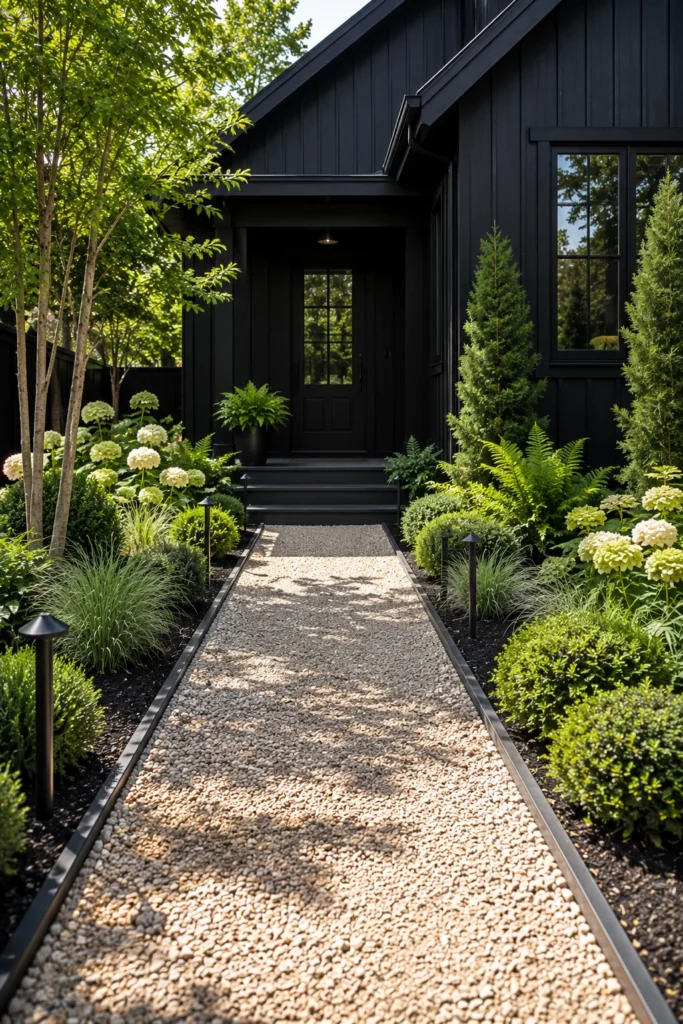
The entrance is not too imposing, thanks to the pale gravel that forms a great visual line.
What makes it work: The light-colored gravel stands out against the dark siding, making the pathway the obvious focal point.
Best materials: Crushed limestone or light tan pea gravel that is contained in steel edging.
Ideal for: Homeowners looking for a fast, dramatic contrast but don’t have a lot of money to spend.
My advice: Edging is always a good idea. Dark mulch beds with gravel without a border are quick to fill in with gravel.
6. Natural Stone Stepping Pads

The oddly shaped stones give dark contemporary homes a more rounded, softer appearance.
What makes it work: The organic stone shapes break up the straight lines of the architecture and make it more inviting underfoot.
Ideal materials: Bluestone, limestone, or Travertine pavers.
Ideal for: Homeowners who want a walkway that looks natural rather than artificial.
My suggestion: 24-26 inches between space pads, center to center.
7. Modern Concrete Planters

Matte concrete is a better choice for a dark exterior than most other materials, thanks to its clean, architectural look.
What makes it work: The muted, industrial finish works with dark siding without being too distracting.
Ideal materials: Cast concrete or lightweight fiber cement planters.
Ideal for: Low-maintenance yards with little plant diversity.
My suggestion: Use planters that have a drainage system. Concrete doesn’t like the freezing winter months when there’s standing water.
8. Wood Accents for Warmth

Wood adds warmth to an all-black and gray color scheme and helps keep the yard from feeling cold or sterile.
What make its successful: Warm wood hues complement the coolness of dark siding and concrete hardscaping.
Ideal materials: Cedar planter boxes, a teak bench, or a wood trellis reclaimed from the wood.
Ideal for: House owners looking for a contemporary farmhouse look.
My suggestion: Seal wood features annually. Untreated wood fades. Lighting and Color Accents are available in a variety of shades.
Quick Comparison: Mulch Colors for Dark Exteriors
| Mulch Color | Visual Contrast | Heat Retention | Maintenance |
| Black mulch | Low, blends into siding | High | Low |
| Dark brown mulch | Medium | Medium | Low |
| Light cedar mulch | High | Low | Low, fades over time |
| Red mulch | High but can clash | Medium | Low |
Lighting and Color Accents Black House Landscaping
Lighting made the single biggest difference once the sun went down. I underestimated it completely at first.
9. Warm Landscape Lighting Along the Path
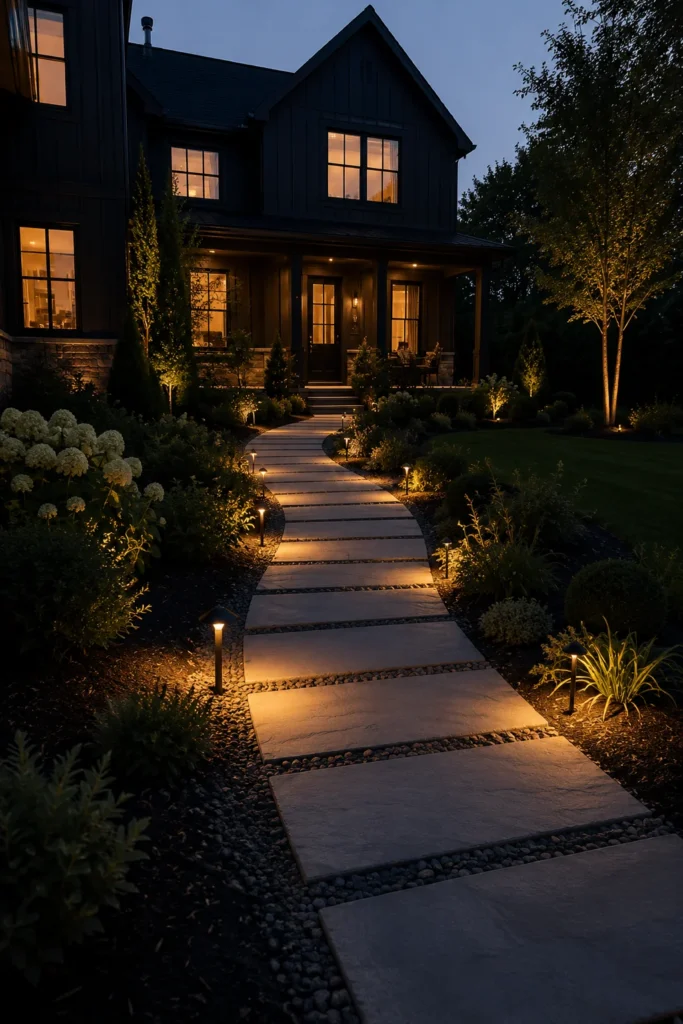
A dark house will not be completely lost after dark if it is lit with warm-toned lights.
What makes it work: Low, warm light illuminates texture and depth that aren’t evident in flat darkness.
Best materials: Low-voltage LED path lights and tree or large shrub uplights.
Ideal for: People who want curb appeal that lasts beyond daylight hours.
My advice: Aim uplights at an angle. The texture is washed out if the pointing is straight up.
10. Metallic or Copper Planters
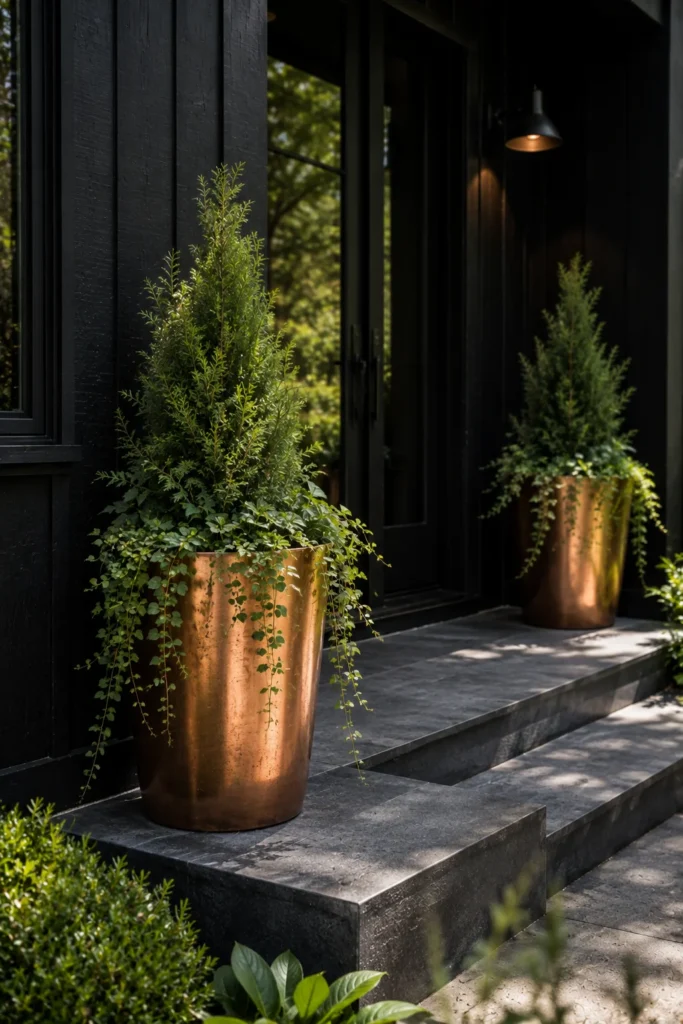
Metallic finishes reflect light and add a bit of shine, but not much color.
What makes it work: Subtle highlights on reflective surfaces, while matte, dark siding absorbs light.
Ideal materials: Copper, brushed steel or aged bronze planters.
Ideal for: People who prefer a contemporary and simple style.
My advice: Do not try to remove the patina from the Copper. Even within a year, a shiny, sealed finish looks out of place.
11. Bright Front Door Color Pairings
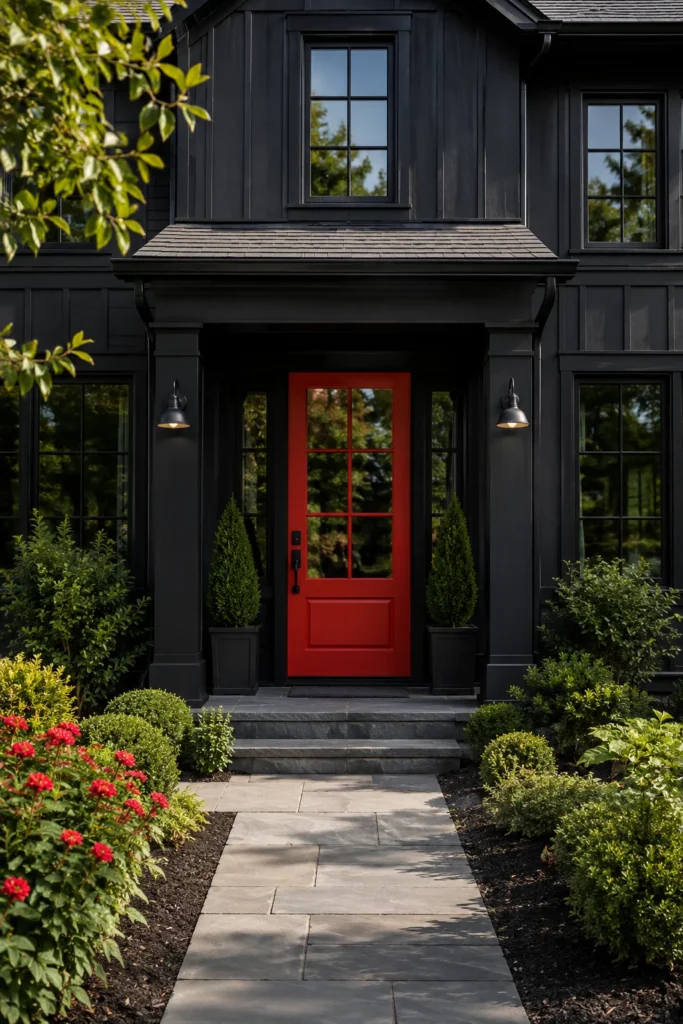
The bold hue of the door is the obvious focal point when the rest of the exterior is dark.
What makes it work: One saturated color pops against a neutral, dark background, catching the eye and leading the viewer to the entrance.
Best colors:
- Cherry red
- Mustard yellow
- Deep emerald green
Ideal for: Homeowners who want one change that makes a statement without any landscaping work.
My advice: Tape a sample of poster board to the door before painting. Dark exteriors alter the true color of surrounding colors.
e door before painting. Dark exteriors shift how nearby colors actually read.
12. String or Lantern Lighting for Evenings
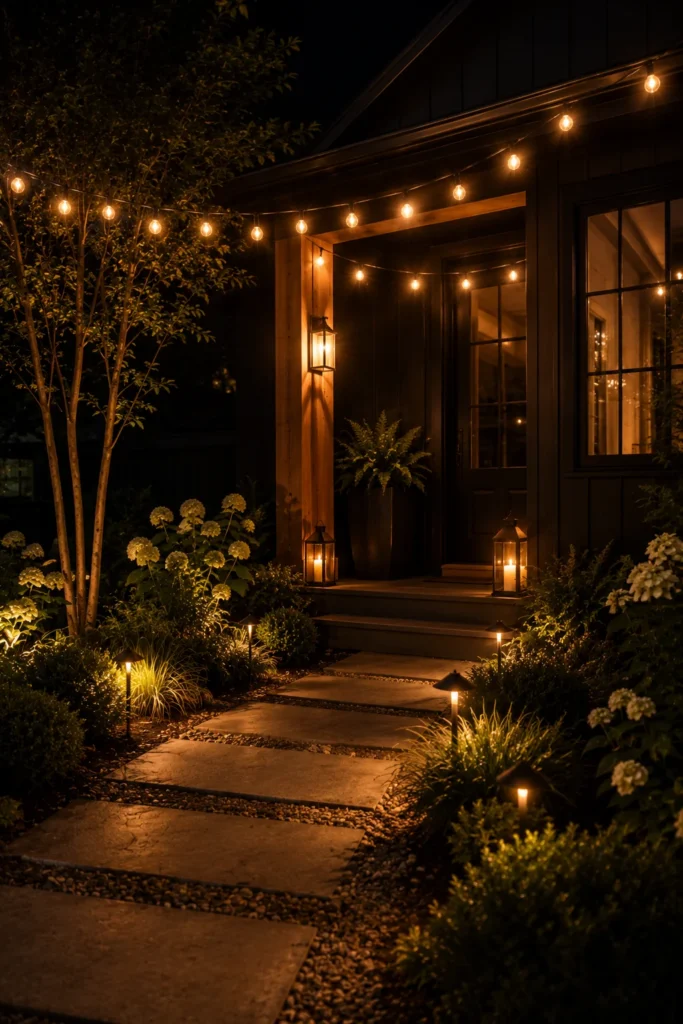
Soft overhead lighting brings warmth to the entry after dark.
The best part: Soft light at night makes a dark house look less intense.
Ideal materials: Walkway string lights (outdoor) or solar lanterns.
Ideal for: Residential use, for outdoor entertaining or a cozy evening ambiance.
My suggestion: Only use warm white bulbs. Dark siding will appear cold and unfinished with cool white lights.
Low Maintenance Options for a Modern Home
Not all of this has to be monitored all the time. With minimal maintenance, these three options yielded the same results in terms of payoff.
I have added all three this season, and I finally stopped being in opposition to my own schedule. I wasn’t working harder; I was working less, and my yard looked better.
13. Drought Tolerant Succulents in Containers
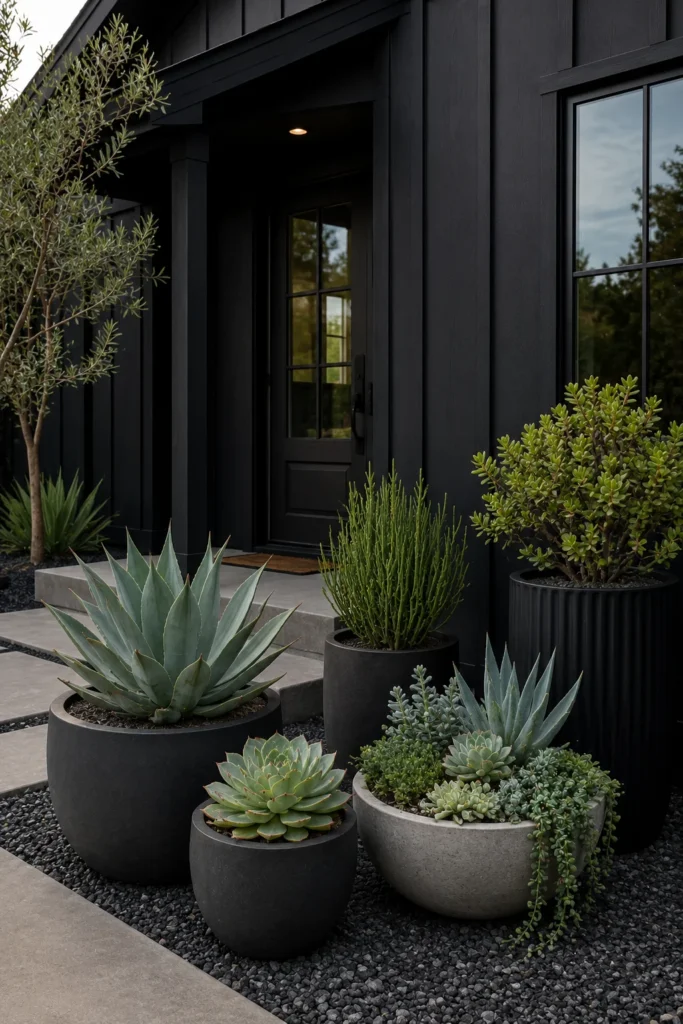
The succulents provide texture, but do not require frequent watering or fertilizing.
Why it works: The sculptural forms stand out against a plain, dark background and require little maintenance.
Best plants:
- Hens and chicks
- Sedum
- Agave warmer zones
Ideal for: Frequent travelers and/or easy maintenance homeowners.
My suggestion: Don’t use plastic containers without proper drainage holes. Succulents will rot much quicker than they will dry out.
14. Mulch Beds in a Lighter Tone

Lighter mulch will provide contrast and heat-reflective properties, rather than heat-accumulating properties near dark siding.
Its effect: A pale mulch color lightens beds and prevents them from blending in with the outside.
Ideal mulches: Light brown or natural cedar mulch.
Ideal for: People who don’t want to deal with a lot of plant work.
My advice: Leave some space between the foundation and mulch. When mulch is applied to siding, moisture issues are likely.
15. Native Perennial Mix for Year Round Color

It provides spring-to-fall color, requires little watering after establishment, and features a rotation of natives.
What makes it work: The front yard doesn’t look the same all year round, with seasonal blooms.
Best plants:
- Coneflower
- Black-eyed Susan
- Catmint
Ideal for: Low-maintenance color for homeowners.
My suggestion: Don’t prune in the fall; prune in early spring. When it is close to dark siding, seed heads nourish birds throughout the winter.
Frequently Asked Questions
What plants look best against dark siding?
White flowering shrubs and evergreens create the strongest contrast against a black exterior. Bold foliage plants also work well in shadier spots.
Does a black house need more landscape lighting?
Yes, dark siding blends into the night without warm landscape lighting. A few well placed path lights make a noticeable difference.
What color mulch works best with this kind of exterior?
Lighter mulch tones like natural brown or light cedar create the best contrast. Black mulch tends to disappear against dark siding instead of standing out.
Is this style of landscaping hard to maintain?
Not if you lean on native plants, mulch, and drought tolerant perennials. The dark siding does most of the visual work, so plantings can stay simple.
What front door colors pair well with a dark exterior like this?
Red, mustard yellow, and emerald green all create strong focal points. Any saturated color with enough contrast against dark siding tends to work.
Final Thoughts
My black house intimidated me at first. It felt too bold to landscape without getting it wrong somehow.
Turns out the dark exterior does most of the heavy lifting on its own. I just needed the right plants, some light colored gravel, and warm lighting to bring it all together.
Pick three looks from this list and try them this weekend.


