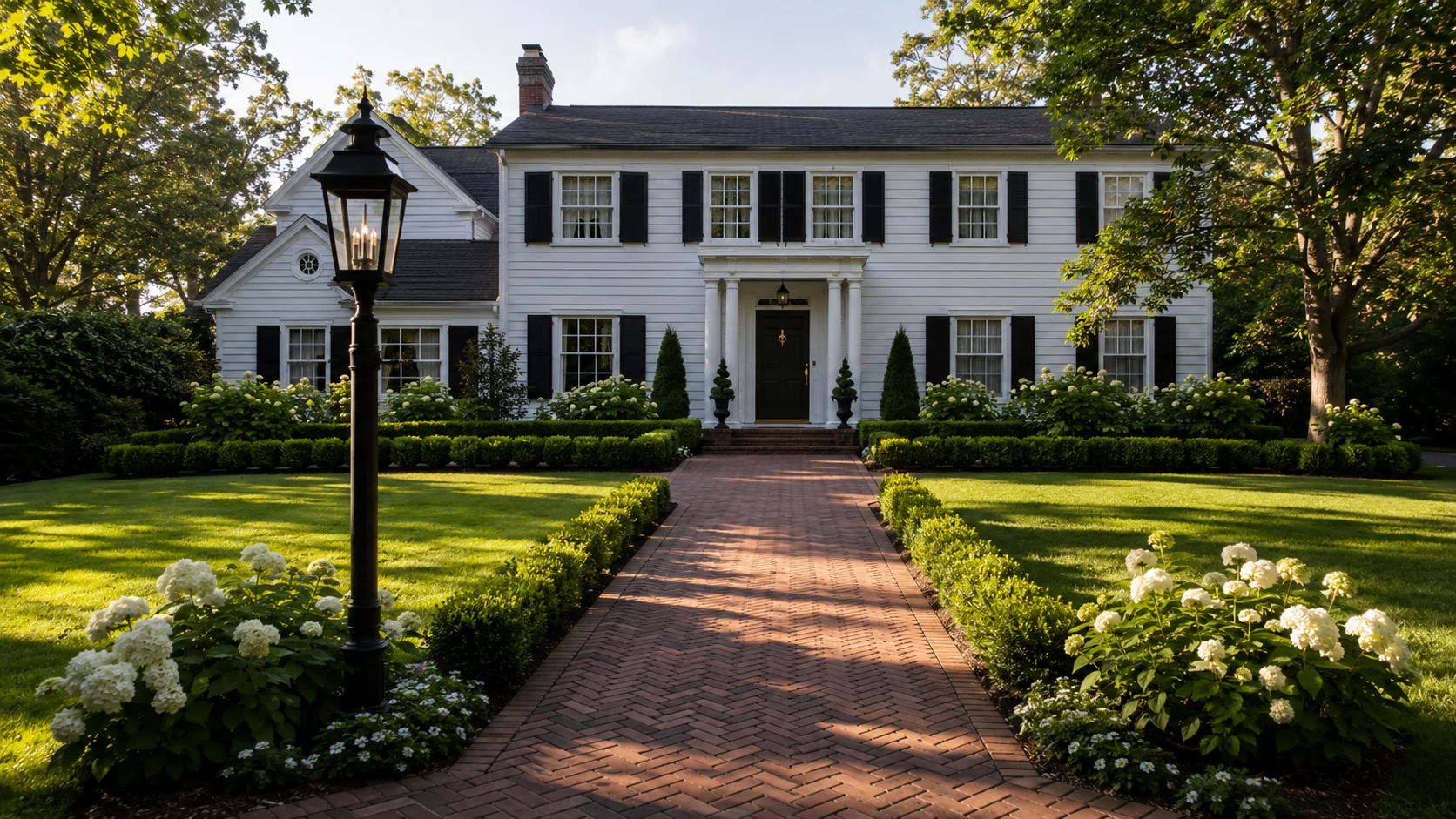
I can still recall the first colonial home that I was able to landscape.
The owner wanted curb appeal without spending much money. We found it in two weekends.
Balancing is the key to colonial house landscaping. Plants, paths, and light fixtures frame the front door.
I’ve tried dozens of layouts, and these 17 have proven to work.
You don’t need a complete renovation. The little things can add up to a big difference. Now on to what works!
Symmetry First: The Colonial Foundation
1. Symmetrical Foundation Beds

The backbone of the colonial curb appeal is symmetrical foundation beds. Matching beds either side by side or on either side of the door provide instant balance. Your eye is drawn directly towards the entrance.
Boxwood, hosta, or dwarf hydrangea are good plants for these beds. Maintain shapes to be clean and rounded. Don’t use too many different textures.
This is ideal for houses that have even window spacing and a front door centered in the house. It’s not ideal for additions that aren’t symmetrical.
My suggestion: Plant shrubs in groups of 3, 5, or another odd number in each bed. It’s full but not crowded.
2. Boxwood Hedge Borders

A low boxwood hedge is perfectly aligned with a colonial front walk. It gives the yard a neat, organized look. A wild garden is neat when framed by boxwood.
For a dense, low hedge, use dwarf boxwood or Korean boxwood. Plant 18″ apart for good coverage in 2 years.
This border suits houses with straight front walks and flat lawns. A more subdued plant is typically required for curved paths.
My suggestion: Do not trim in spring, but in early summer. New growth maintains its form for longer in the summer.
3. Matching Urn Planters at the Door
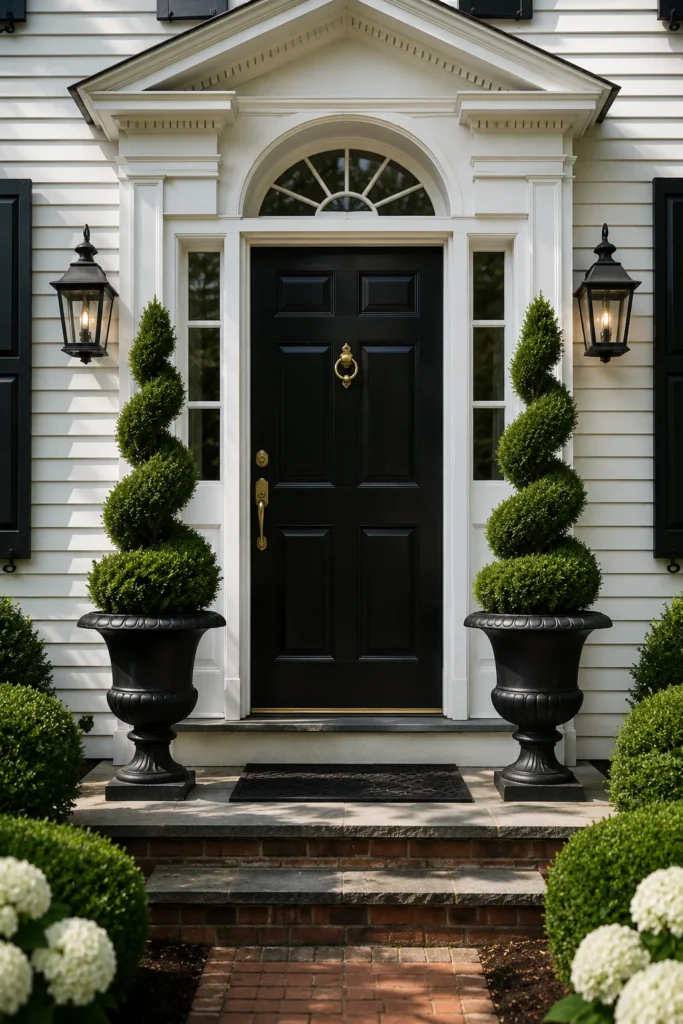
Matching urns on either side of the front door will instantly give it a touch of elegance. No digging needed; they frame the entrance. I really like how quick this update is.
Stuff them with boxwood spirals, seasonal mums, or trailing ivy. For a neater appearance, use only one type of plant in each urn.
This works well on porches with steps or a flat landing. If your entry is quite small, skip it.
My suggestion: Select urns that are matte black or aged stone. Brilliantly colored finishes don’t mix with the traditional colonial style.
4 . Manicured Lawn Panels
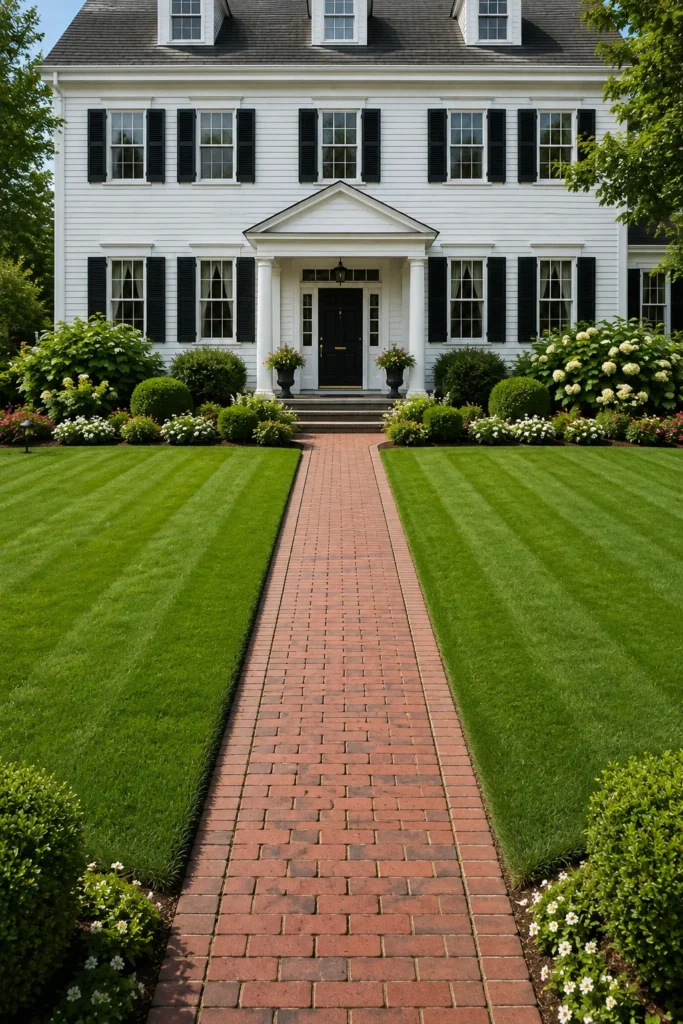
A clean and even front yard is more supportive of a colonial front yard than are flower beds. A pair of mirrored lawn panels on either side of the walk does a lot of visual work.
Easy, but it looks like it’s costly.
In most climates in the USA, fescue or Kentucky bluegrass will have a tight green appearance. For uniform coloring, feed the lawn twice a year.
This is ideal for homeowners who don’t want to deal with a lot of work in their yard. Not for those who don’t like to cut grass.
My suggestion: Cut the edges of the lawn panels into a sharp edge along the walkway. The crisp edge makes it look planned.
Pathways, Fences and Hardscaping
5. Brick Herringbone Pathway
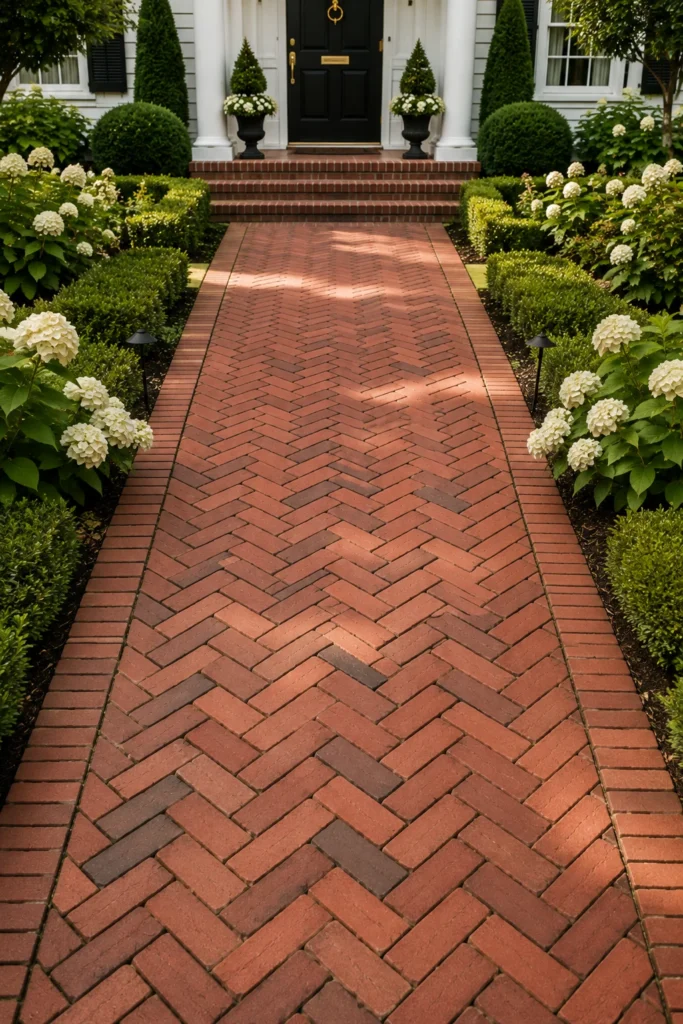
One of the most common colonial features is a herringbone brick path. The pattern isn’t too busy, but it adds texture. In my experience, it can turn a mundane walk into a real feature.
For the most authentic appearance, use a red or brown clay brick paver. Place on a compacted gravel base for stability.
This is suitable for houses where the driveway is straight from the sidewalk to the door. A different pattern might be necessary for curvy lots.
My suggestion: Outline the sides with a soldier course border. It is designed to enclose the pattern and to cover up the irregular cuts.
6. Picket Fence Framing

A white picket fence still looks like a classic colonial fence. It is a yard marking that does not conceal the yard. It also helps to complete a front yard.
Wood picket styles are good for a few years as long as they are painted every couple of years. A lower-maintenance alternative to vinyl picket is available; it is called vinyl picket.
This applies to corner lots or yards near the road. If local rules prohibit front-yard fencing, skip it.
My suggestion: Do not make the fence more than 3 ft tall. Once it rises above the house, it begins to obstruct it rather than accentuate it.
7. Slate Front Walkway
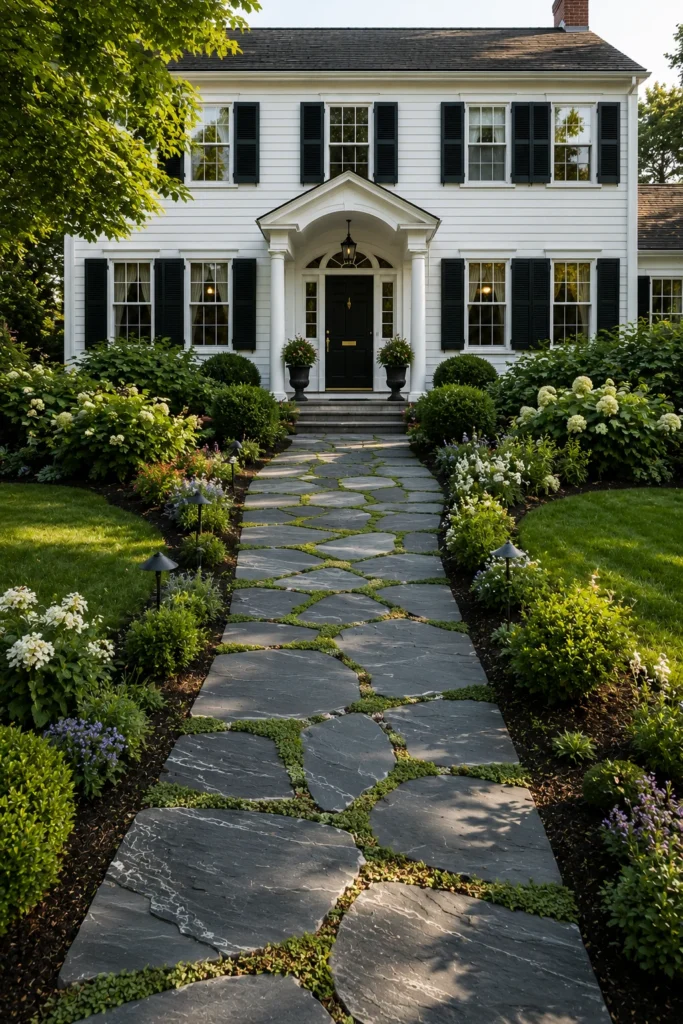
Slate conveys a slightly more sophisticated look than brick for a colonial walkway. The natural color variation provides depth. It’s very good for photos. It’s a great photo-taker.
Either irregular slabs of slate or cut slate tiles will do. Install them with close-fitting joints that are set in to create a more natural look.
This is ideal for those looking for texture without too much pattern. It works well with stone-front colonials.
My advice: Tan is a bit too dull and plain, and gray-blue slate is a bit more interesting. It is more contrasting with white or cream siding.
8. Circular Driveway with Center Garden

A circular driveway is a larger undertaking, but it’s all colonial. It provides a formal outline to the whole front yard. Guests will notice it as soon as they arrive.
Place a boxwood ring, a small tree, or a simple fountain in the center. Plantings should be low enough not to obstruct views.
This will work for larger lots and accommodate a full loop. It’s not feasible for a small city lot.
My suggestion: Use the center feature at night. It makes a daytime detail come alive year-round.
A Quick Materials Comparison
Here is how the three main pathway materials stack up if you are still deciding..
| Material | Cost | Maintenance | Best for |
| Brick | $$ | Low | Classic red-brick colonials |
| Slate | $$$ | Low | Stone-front or gray-toned homes |
| Gravel | $ | Medium | Budget-friendly, casual entries |
Plants That Keep the Colonial Feel
9. White Hydrangea Clusters
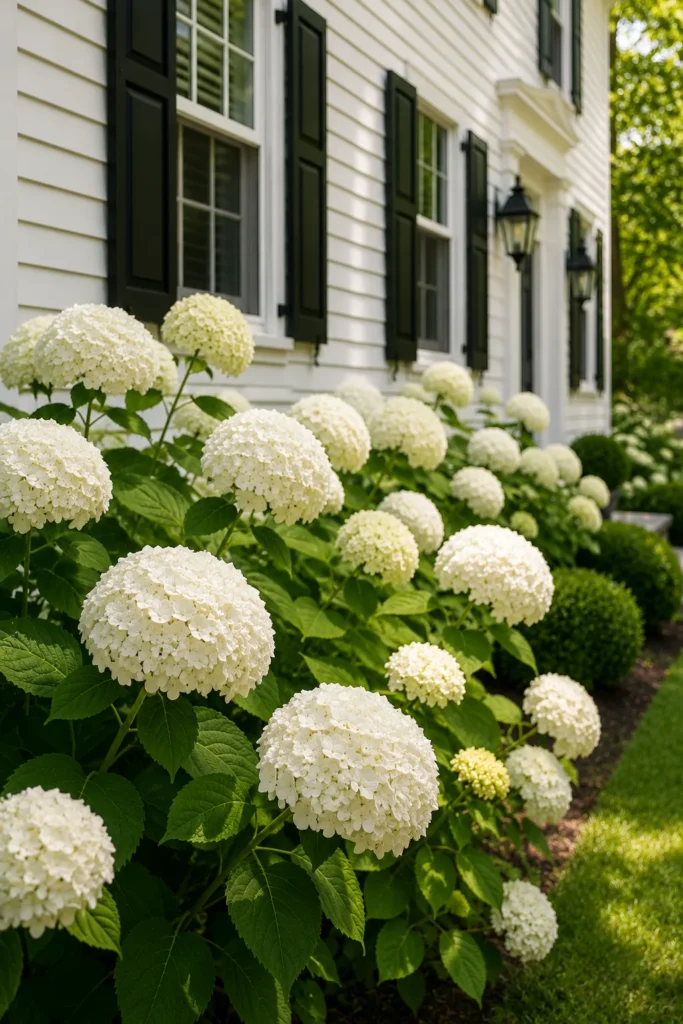
It’s not just that white hydrangeas are a classic; it’s that they’re a colonial classic.
Hard lines of brick and fences are broken with the large flowers. They are planted almost every time that a client requests the traditional look.
Both Annabelle and Limelight varieties are summer hardy in the US. Provide them with space to spread out, at least 4 feet apart.
This will work for partial shade areas close to the house. The flowers may scorch in full sun all day.
My suggestion: Take some stems to make indoor bouquets. Regular pruning will promote re-blooming of hydrangeas.
10. Boxwood Topiary Spirals
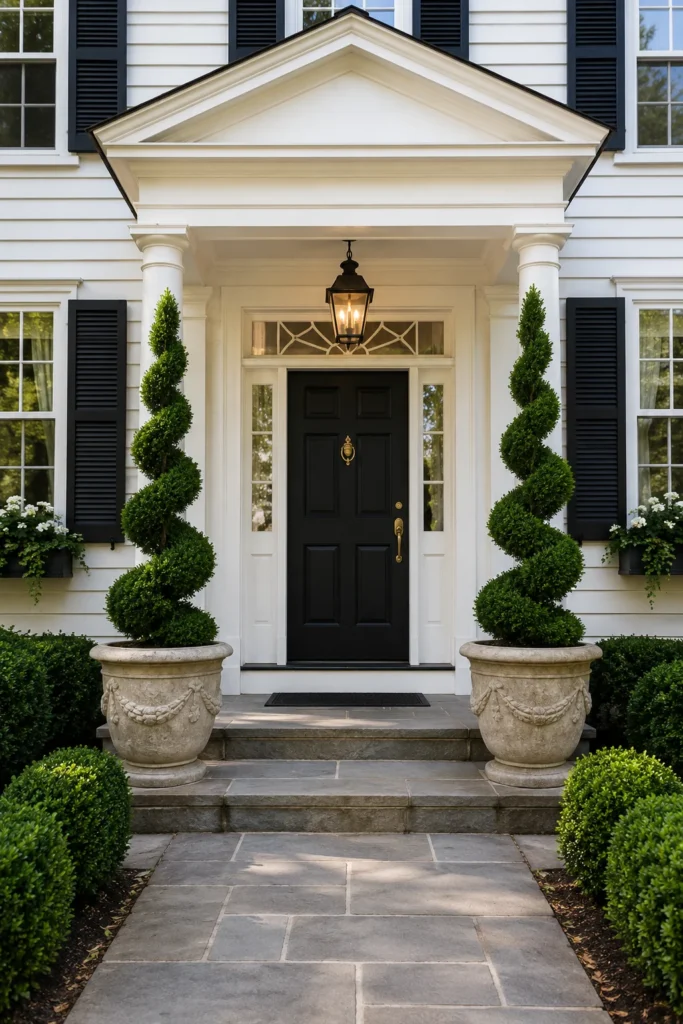
The door frame is graced with a pair of spiral topiaries, which bring an elegant and sculptural element to the scene. It’s a small detail that gets a lot of praise. They are the first things I notice in a colonial front yard.
Boxwood and dwarf Alberta spruce are both good choices for training into spirals. If you don’t want to prune yourself, purchase pre-shaped.
This is ideal for those homeowners who appreciate structure and are willing to trim from time to time. If you want a casual look, skip it.
My advice: Lightly cut every 6 weeks during the growing season. The spiral shape is better maintained if you cut the prune into small pieces.
11. Climbing Rose on a Trellis

A trellis is a great way to add softness to a very structured style when growing climbing roses. They are a lovely addition to a flat wall or porch post—one of my favorite combinations in colonial yards.
New Dawn and Zephirine Drouhin grow well and are hardy in the US zones. Tie them in to a wood or metal trellis as early in the season as possible.
This can be used near a porch, garage wall, or fence. It must have a strong framework to support its growth.
My suggestion: Prune immediately after the first flush of bloom. Encourages a second flowering later in the season.
12. Dogwood Accent Trees
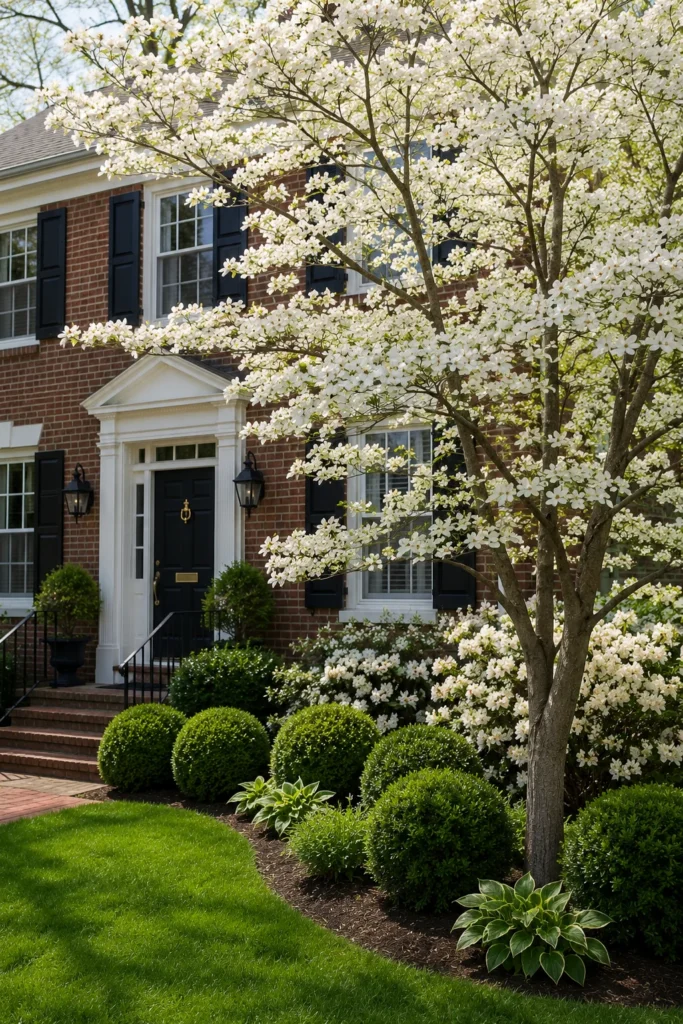
One flowering dogwood tree by the corner of a colonial house breaks up the rest of the house. It is a real showstopper with its spring blooms. Most people overlook a nice bonus: fall color.
White-flowering dogwood suits the colonial color scheme best. Plant at least a distance away from the foundation to allow roots to spread.
This will work in yards that have a little room between the house and the property line. A smaller ornamental tree will be required for small lots, however.
My advice: MULCH around the base of the tree, but not touching the trunk. Over time, piled mulch will be prone to rot.
13. Lavender Border Along the Walk
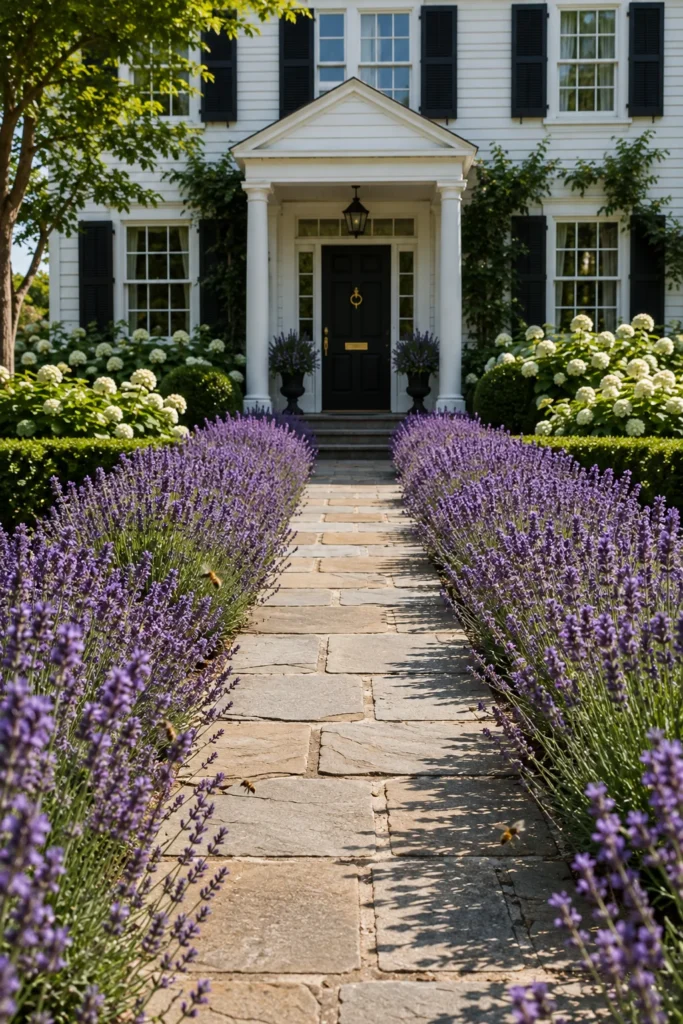
Lavender along a front walk provides color, scent, and some movement. It’s a balm on all that straight brick and boxwood. I’m fond of brushing past it as I’m heading towards the door.
English lavender is more tolerant of US heat, cold, and humidity than French varieties. Plant 18″ apart in well-drained soil.
This is suitable for full sun and well-drained soil. It will be hard to keep alive in wet, clayey soil.
My suggestion: Avoid thick mulches around lavender. It will retain water that the roots don’t like.
Lighting and Final Details For Colonial House Landscaping
14. Black Lantern Post Lighting
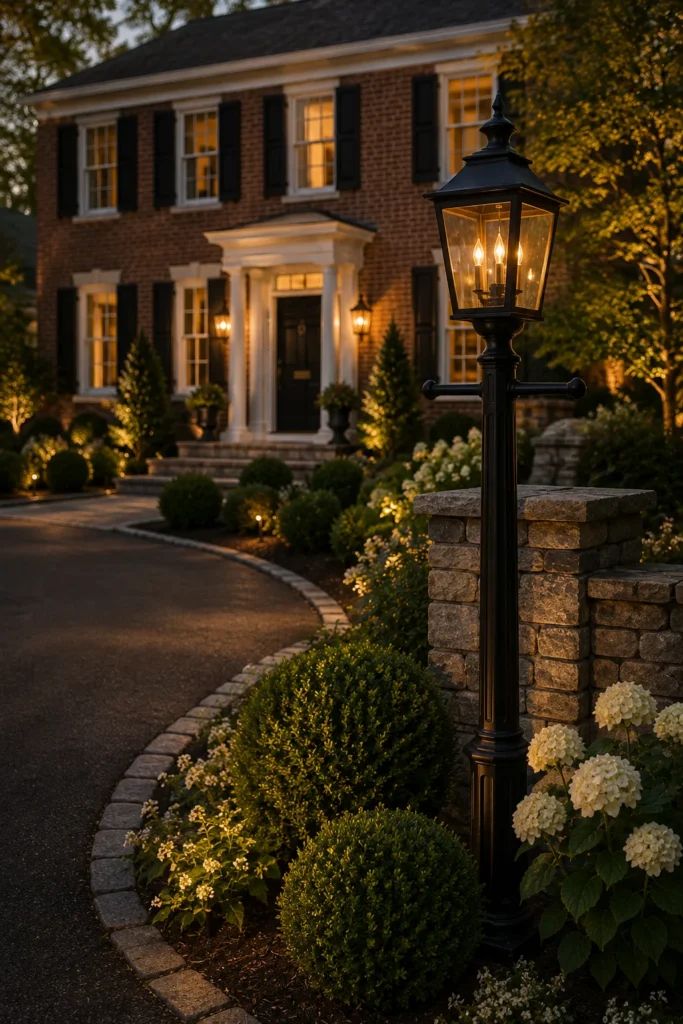
One of the quickest and easiest ways to give a post a colonial look is with a black lantern-style post light. Operates throughout the day and night. It’s one of the best value enhancements on this list.
Avoid shiny or bright colors; opt for matte black or aged bronze. Either solar or hardwired works, depending on your setup.
This is ideal for any front yard that has a walkway or driveway entrance. Most homeowners can easily do it as a weekend project.
My suggestion: Don’t use a sensor; use a timer. Motion-activated lights are more of a haphazard approach than steady lighting.
15. Wrought Iron Window Boxes
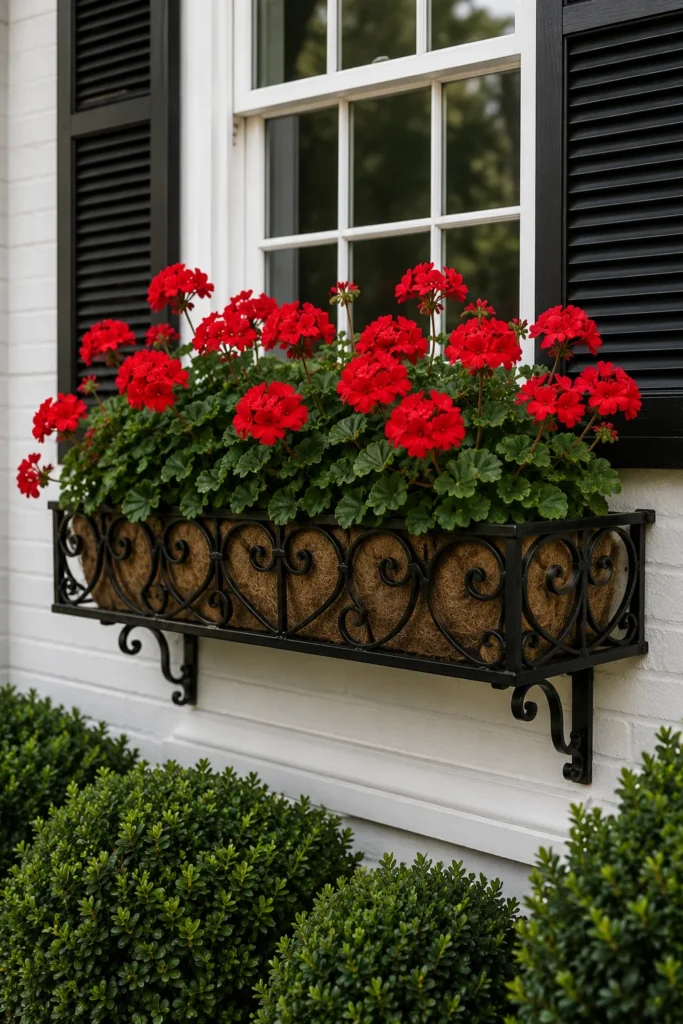
Window boxes add color to the front windows. Wrought iron brackets maintain the colonial look. It’s a minor but significant aspect of photos.
Plant geraniums, petunias, or trailing sweet potato vine in boxes. Rotate plants in the garden for year-round color.
This will work on houses with windows near the ground where the boxes can be seen. They may not be displayed if the first floors are very high.
My suggestion: Line the box with coco liner before filling with soil. It drains more efficiently and looks better than plain plastic.
16. Painted Shutters with Matching Trim
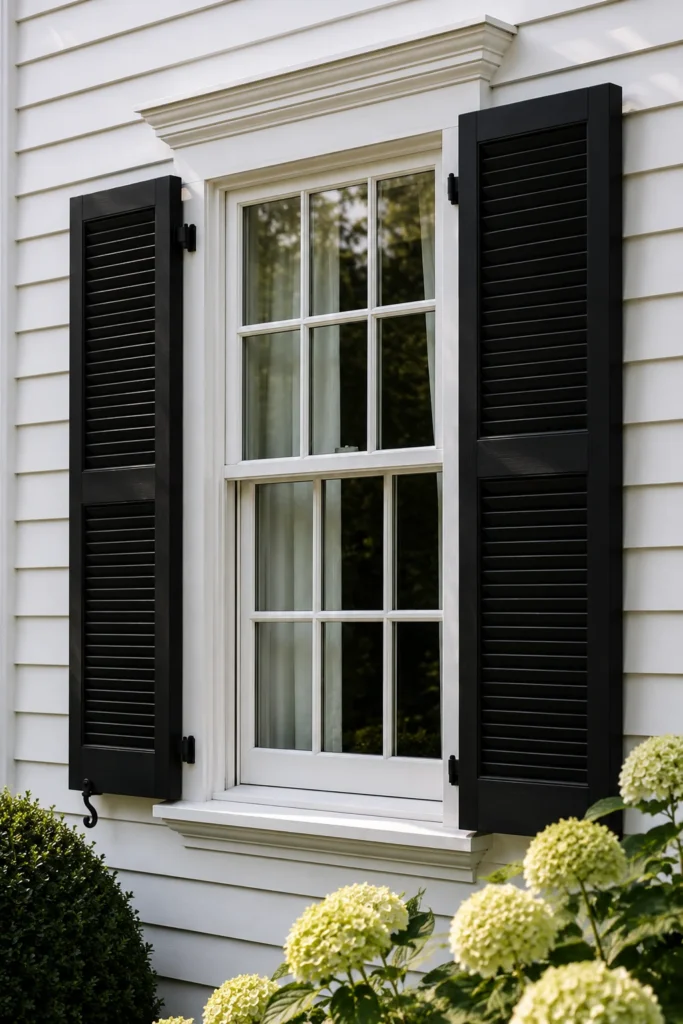
Shutters aren’t strictly speaking landscaping, but they do alter the entire yard’s appearance. They complement your house and garden, especially when your trim matches them.
I always check the shutter color before I choose the plants.
The most common colors for colonial shutters are black, hunter green, and navy. Coordinate the front door with the same family for a unified appearance.
This works for any colonial home that already has shutter hardware. While larger, new shutters are still worthwhile.
My suggestion: Paint shutters before planting new beds. Once the house color is set, it’s easier to select plant colors.
17. Brick Edging Around Flower Beds
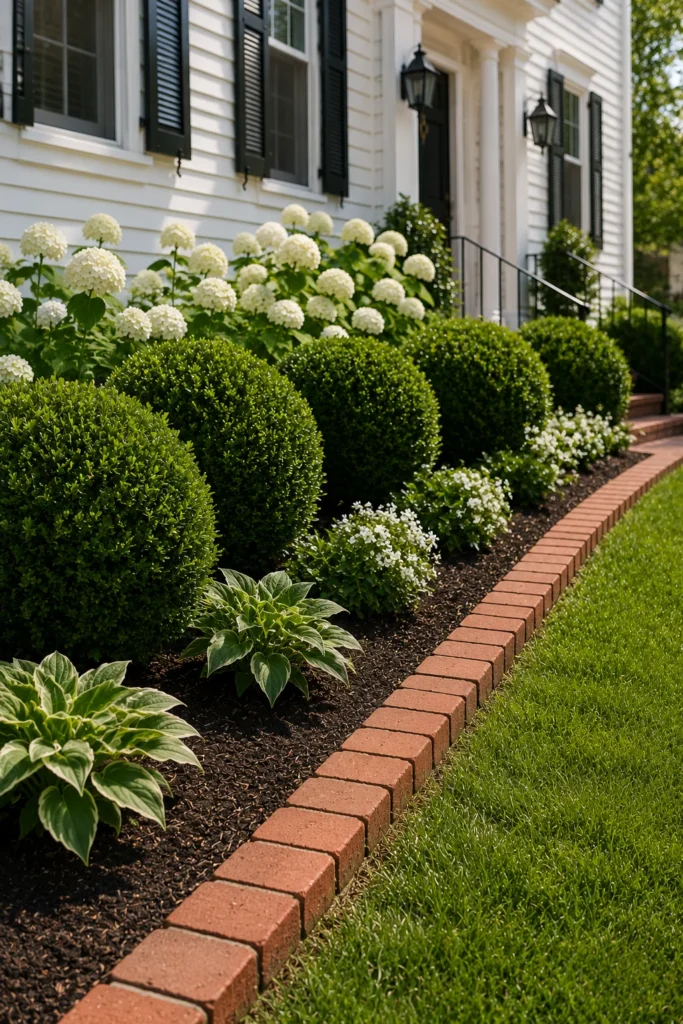
Inexpensive brick edging around each flower bed will keep mulch from washing away, and the edging will look sharp. Connect it to the brick path and driveway.
A small detail, but it helps tie the whole yard together.
For the cleanest line, use clay brick pavers set on their side. If the beds aren’t straight, cut them into curves.
Perfect for a bed adjacent to a brick walk or brick-fronted house.
If you don’t have brick on any of the other sides of your yard, then a stone edge may be a better choice.
My suggestion: Place bricks just under grade level. They will be easy to mow without trimming.
Frequently Asked Questions
What plants work best for a colonial-style front yard?
Boxwood, hydrangea, and lavender are the classic picks. They keep clean shapes and fit the traditional palette. Roses and dogwood add height without breaking the symmetry.
How do I keep colonial front yard landscaping low maintenance?
Choose slow-growing shrubs like boxwood and skip high-fuss annuals. Mulch beds well to cut down on weeding. A simple lawn feeding schedule keeps the grass looking sharp with little effort.
What colors work best for a colonial front yard?
White, black, and green form the backbone of the look. Add one accent color through flowers, like lavender purple or hydrangea white. Too many colors can break the formal feel.
Is symmetry always necessary for colonial landscaping?
Not always, but it helps. Even a few matched elements, like two urns or two shrubs, create the balance colonial style is known for. You do not need a fully mirrored yard to get the effect.
Do colonial homes need a lot of landscaping?
No. Some of the best colonial yards use just a few well-placed elements. A clean lawn, one matched pair of shrubs, and a tidy path can be enough.
Final Thoughts
Colonial landscaping is not about doing everything on this list. Pick a few pieces that fit your house and your time. Even three or four changes can transform the whole front yard.
I started with boxwood and a lantern light on my own porch. It took one weekend and it still holds up years later. Small, classic choices last.
Start with the one item on this list that excites you most, and get it in the ground this week.


