I dropped my first glazed pot onto a tile floor less than a week after buying it. Two clean halves.
And one deeply unhappy pothos.
Cleaning up that mess kicked off a two-year search for indoor planters that look good and hold up to everyday life.
Here are the ceramic planters I genuinely rely on.
I broke them down by style so you can head right to what you like best. Each option includes plants that work well in it, plus a lesson I learned the hard way.
Modern & Minimalist Ceramic Planters Styles
My living room is done mostly in white and natural wood. That is why I started with minimal planters, and they still make up half of what I own.
1. Matte White Stoneware Cylinder

Almost any modern interior has room for a matte white cylinder. It draws the eye straight to the foliage, not the container.
Mine holds a snake plant or a ZZ plant, and those crisp edges always look neat.
Best suited to: Fans of minimalism and bright, neutral spaces.
A quick tip from me: Use a damp microfiber rag to clean away fingerprints. A matte finish picks up finger oils a lot faster than a glossy one.
2. Speckled Cream Pot

Specks running through the clay make it feel gentle and handmade.
It feels right at home in cozy, Scandi-style spaces.
Pothos and heartleaf philodendron trail over the edge beautifully, and to my eye, the dark green leaves really stand out against the flecks.
Best for: Anyone drawn to quiet, earthy tones.
My tip: Match the saucer to the clay’s undertone. That keeps the styling deliberate while guarding the wood underneath.
3. Fluted Ribbed Pot
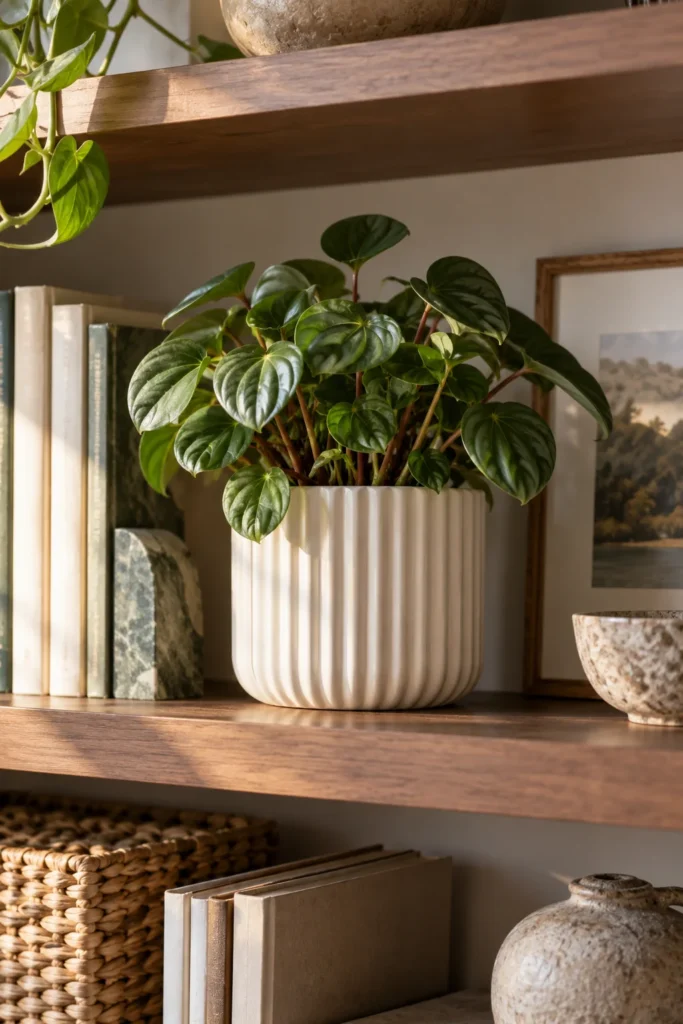
Upright fluting brings tactile interest without introducing another shade. Shifting sunlight plays across the grooves throughout the day.
Compact rubber plants and peperomias match its proportions nicely; I have one sitting on my shelves right now.
Best for: Workspaces, entryway consoles, and open shelving.
My tip: Rotate the base ninety degrees once a week. That stops your foliage from pulling hard toward the window and keeps growth balanced.
4. Two-Tone Dipped Glaze Pot

Leaving one half exposed clay and glazing the other delivers two distinct surfaces in a single vessel. You get a designer look without paying designer prices.
Small cacti and haworthia are a great fit for its small footprint.
Best for: Contemporary spaces calling for a single touch of playfulness.
My tip: Put some felt pads on the bottom of the raw base. Raw clay can scratch wood finishes.
Warm, Earthy Looks
Terracotta was everywhere when I was growing up, so earthy pottery always feels like home to me. These four add an inviting touch to sterile or chilly spaces.
5. Raw Terracotta and Saucer
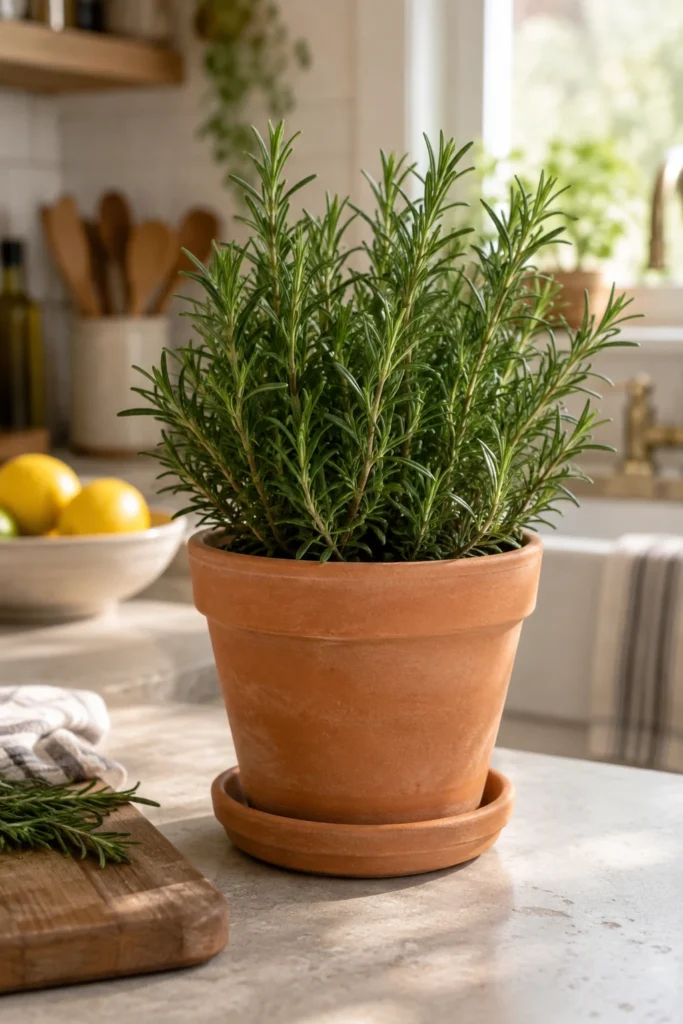
Because unglazed clay breathes, the potting mix dries out quicker and roots have better airflow. This keeps your plants from sitting in waterlogged dirt.
Rosemary, cacti, and succulents do wonderfully in it, and it remains my most-used planter.
Best for: Chronic overwaterers and anyone growing desert varieties.
My tip: Let brand-new terracotta sit in a bucket of water for an hour ahead of planting. If the clay is dry, it will suck the water right out of your new soil.
6. Reactive Glaze Hand-Thrown Pot

Because of how reactive glazes pool and run, each pot turns out slightly different. Since no two are identical, the one you get feels genuinely individual.
The rich blues and greens sit beautifully alongside jade, hoya, or pilea.
Best for: Anyone buying a gift or looking for handmade pottery.
My tip: Try to pick these up from a local maker or craft market whenever possible. Shopping in person lets me test the weight and make sure there is a drainage hole.
7. Wide Shallow Bowl

With a broad, low bowl, you have room to group a few succulents into a miniature desert scene. It sits especially well on a low coffee table.
Small aloe, sedum, and echeveria sit together naturally here.
Best for: Succulent growers with limited floor space.
My tip: Skip regular potting dirt and go with a gritty mix formulated for cacti. Because moisture lingers longer in a shallow dish, quick drainage is essential.
8. Sage Green Glazed Pot

That soft green has a quiet look that goes with practically any foliage. Small water spots don’t show up on it the way they do on white.
Monstera, philodendron, and ZZ plant all look right in it, and no other pot of mine gets as many compliments.
Best for: Anyone after color that doesn’t scream.
My tip: Take it into natural light to see the true glaze before paying. Store lighting often pulls green toward gray or blue.
Statement and Decorative Pieces
I stuck to basic, neutral pots for a long time. One striking planter changed how I thought about them.
9. Oversized Floor Pot
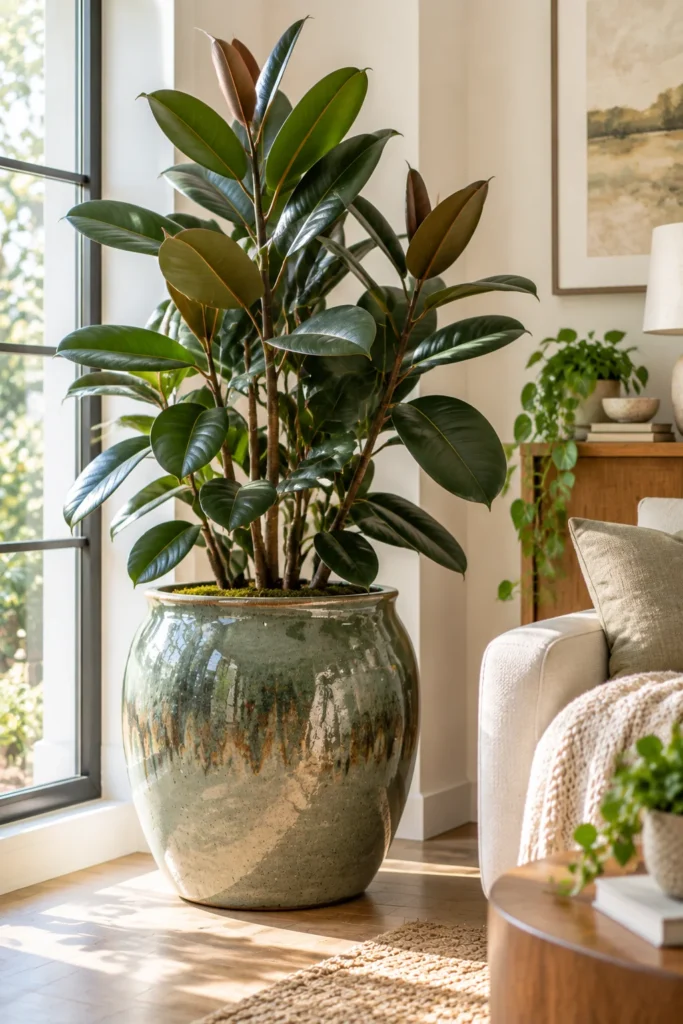
A large glazed container turns a houseplant into a piece of furniture. Substantial growers like fiddle leaf fig, rubber plant, and bird of paradise look natural in it.
The downside is how heavy it gets.
Best for: Open corners and big living areas.
My tip: Leave the plant in its plastic nursery container and put the entire setup on wheels. I have no trouble shifting mine by myself.
10. Pot on a Wooden Stand
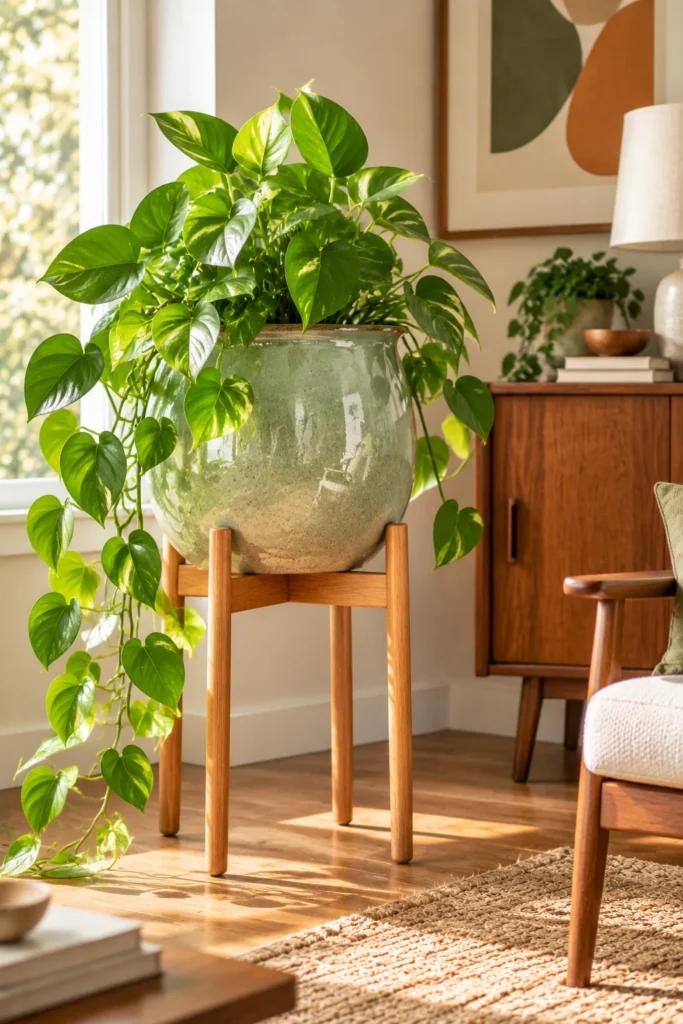
Putting the pot on a stand elevates the plant, lets air move underneath, and delivers an easy mid-century look.
Philodendron brasil and trailing pothos spill over the rim nicely.
I put one in a low corner whenever I need some height there.
Best for: Tighter spaces that could use some vertical presence.
My tip: Pick a wood tone for the stand that echoes nearby furniture. That way, the whole setup looks intentional, not thrown together.
11. Hand-Painted Talavera-Style Pot

Vivid patterns in blue, yellow, and white inject immediate energy. Pair it with a simple plant so the container gets all the attention.
Something like a jade or an aloe fits it well.
Best for: Bright kitchens and outdoor patios styled with plenty of color.
My tip: A few of these imported painted pots are meant purely as decoration. If you are growing edibles, nest them inside in a plastic nursery pot so they don’t contact the glaze.
12. Sculptural Face Planter
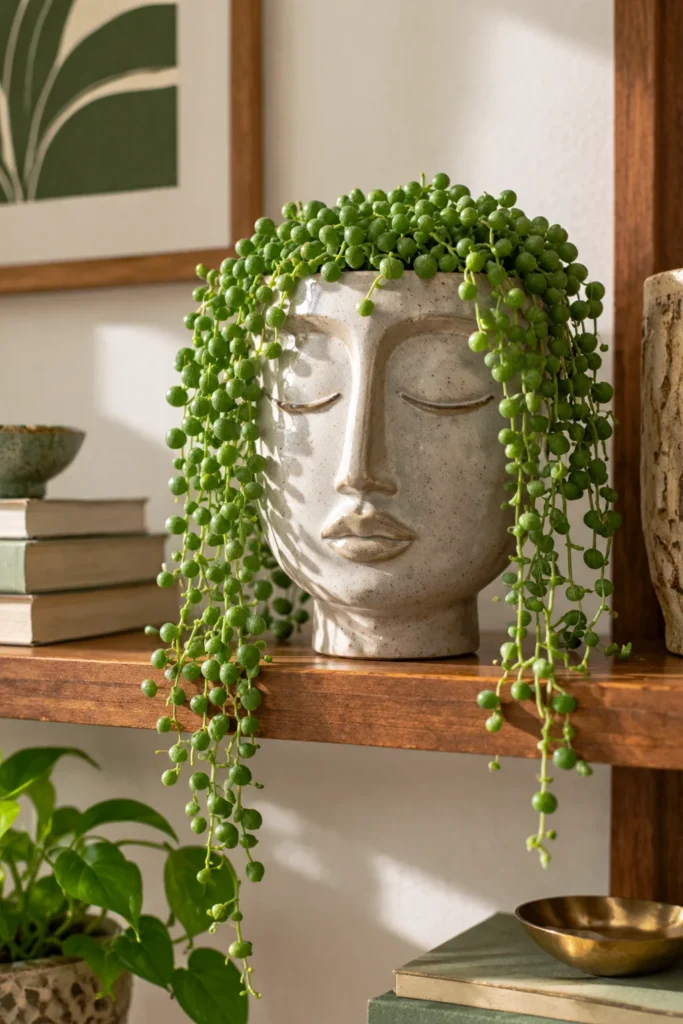
Pots shaped like hands, faces, or animals instantly give you something to talk about. Any trailing foliage doubles as a wild hairstyle or a draped scarf.
Pothos and string of pearls suit the look well, and for the record, I named mine.
Best for: Anyone with playful decor who wants to have fun with their plants.
My tip: Pick a face planter that has a broad, smooth rim. A tight opening turns repotting into a real pain.
Small Space and Smart Function Picks
In my first place, I had no floor space at all and just a single narrow windowsill. I leaned hard on these three options.
13. Mini Trio in Graduated Sizes
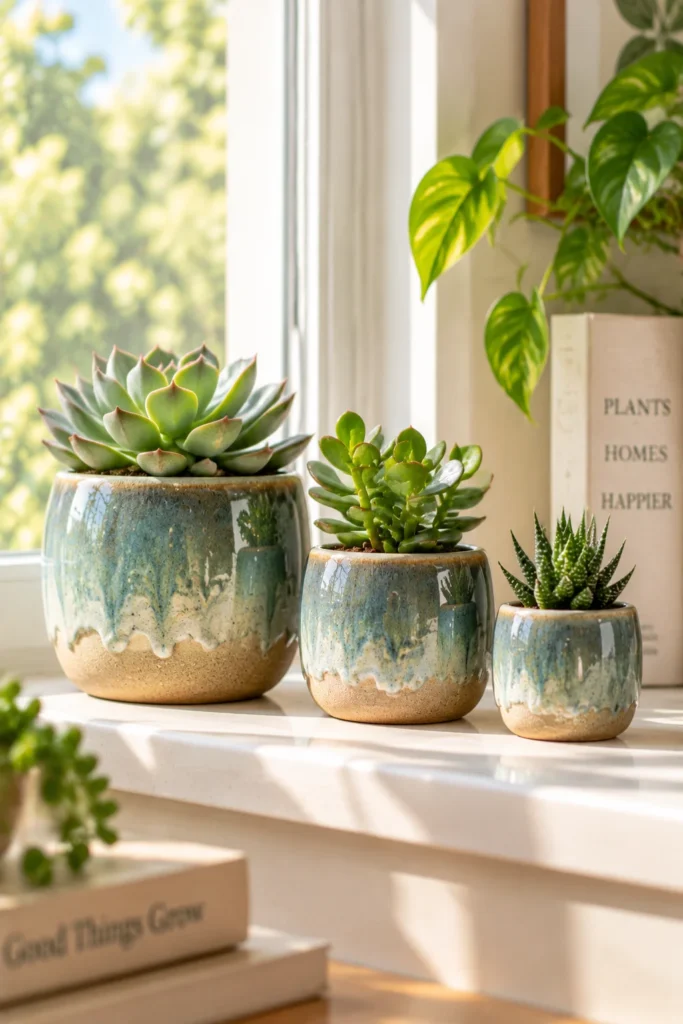
Using the same glaze across three little pots keeps them looking cohesive. You can slide them onto a windowsill, a work desk, or a bathroom shelf.
Young cacti, baby succulents, and new cuttings do really well in tiny containers.
Best for: Cramped apartments and greening up a desk.
My tip: Prop just one of the pots up on a little wooden stand. Staggering the heights gives the group an intentional, designed look.
14. Cache Pot with a Nursery Pot Inside
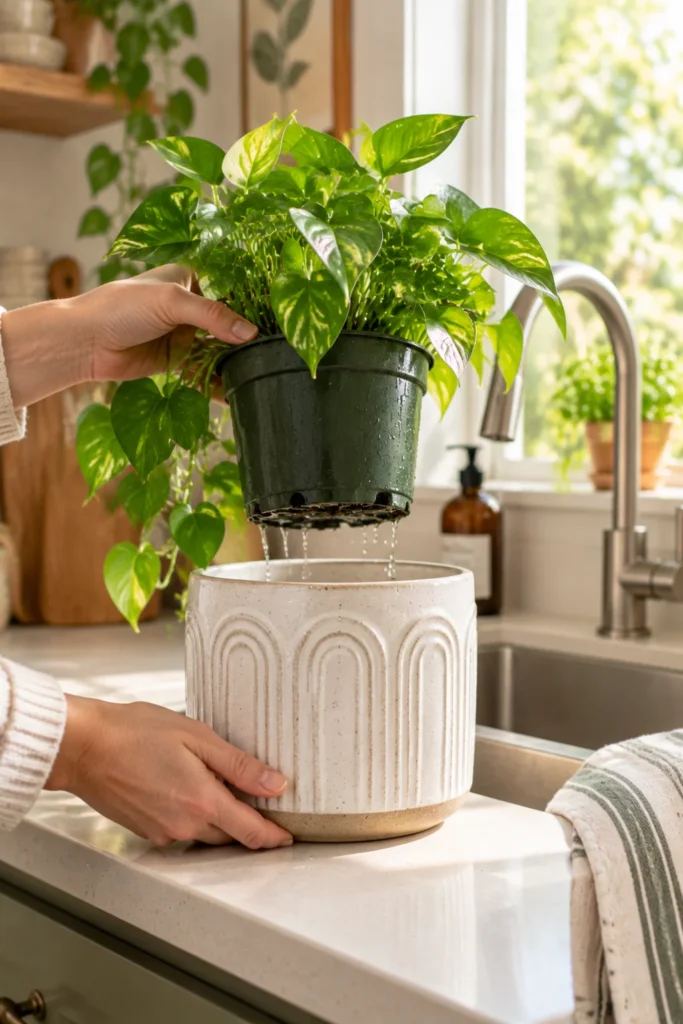
A cache pot is an attractive outer vessel without drainage holes. Keep the plant in its plastic nursery pot with drainage holes, nestled inside.
This is the safest method for any container, and it suits every houseplant from a pothos to a peace lily.
Best for: Beginners, plus anyone picking up pretty pots that lack drainage holes.
My tip: Take the inner pot over to the sink to water it. Wait until all the water drains out before setting it back in.
15. Hanging Glazed Pot

Hanging a pot saves shelf room and gives trailing vines room to drop down. A glazed finish gives the pot a clean, polished appearance.
Spider plant, pothos, and string of hearts are all straightforward choices here.
Best for: Renters with bright windows but limited floor space.
My tip: Pick a ceiling hook that holds considerably more than the pot weighs when soaked. Water makes a pot surprisingly heavy.
Quick Comparison: Which Finish Fits Your Plants?
| Finish | Airflow | Best Plants | Care Level |
| Glazed stoneware | Low | Pothos, philodendron, monstera | Easy |
| Raw terracotta | High | Succulents, cacti, herbs | Medium |
| Reactive hand-thrown glaze | Low | Jade, hoya, pilea | Easy |
| Painted Talavera style | Low | Aloe, jade | Handle with care |
Frequently Asked Questions
Are ceramic pots good for houseplants?
Yes. They are sturdy, stable, and come in endless styles. Choose one with a drainage hole, or use a nursery pot inside for safe watering.
Should I choose glazed or unglazed pots?
Glazed pots hold moisture, so they suit tropical plants like pothos. Unglazed pots dry faster, so they suit succulents and herbs. If you tend to overwater, go unglazed.
How do I pick the right size pot?
Pick a pot 1 to 2 inches wider than the root ball. Too much extra soil stays wet and rots roots. Repot when roots circle the bottom or poke out of the holes.
Can I use a pot without a drainage hole?
Yes, with a nursery pot inside or by drilling a hole. Never plant straight into a sealed pot and hope for the best. I learned that after losing a peace lily.
How do I move a heavy pot safely?
Keep the plant in a lightweight nursery pot inside, and set the whole thing on a rolling caddy. Lift from the base, never the rim. Get help for anything taller than knee height.
Final Thoughts
I used to buy pots on looks alone. Now I check the drainage, the weight, and the glaze first.
The right pot makes a plant look better and grow better. It does not have to cost much either.
I still hunt for new pieces every month. That is half the fun.
Pick one style from this list, and check its drainage hole before you buy.