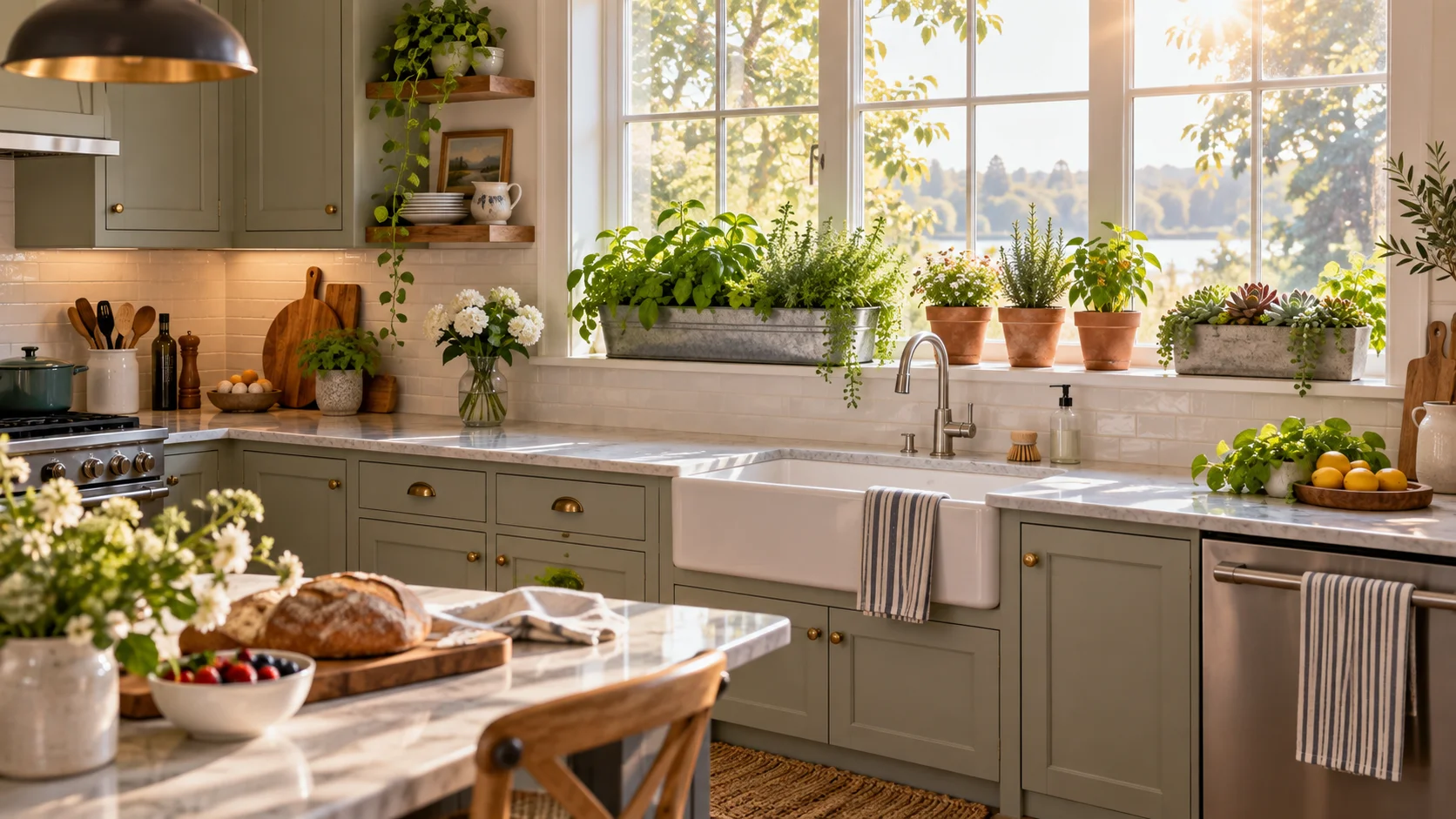
I killed basil on my kitchen sill three times in a row. It took me a while to admit I wasn’t the problem. The fault lay with the planter.
Everything shifted once I started pairing the right indoor window planter with the right amount of light.
Herbs thickened up. The succulents quit reaching toward the glass.
Here are the 15 designs I actually rely on, organized by which way the window faces.
Work out what kind of light you have first, and everything else falls into place.
South-Facing Windows: Sun-Loving Planters
No place in my house gets warmer than my south-facing window. I found out the hard way that thin plastic planters bake plant roots once July hits.
These four options handle the heat and glare.
1. Galvanized Metal Herb Trough

Narrow and sturdy, a galvanized trough sits comfortably on practically any kitchen windowsill. It holds up against intense sun far better than flimsy plastic ever does.
I pack mine with rosemary, thyme, and basil, drilling drainage holes myself if it doesn’t come with them.
Best for: Cooks working with a sunlit kitchen and limited sill depth.
My tip: Water in the morning. Because metal warms up as the day goes on, moist dirt helps keep roots cooler than parched earth would.
2. Cement Succulent Trough
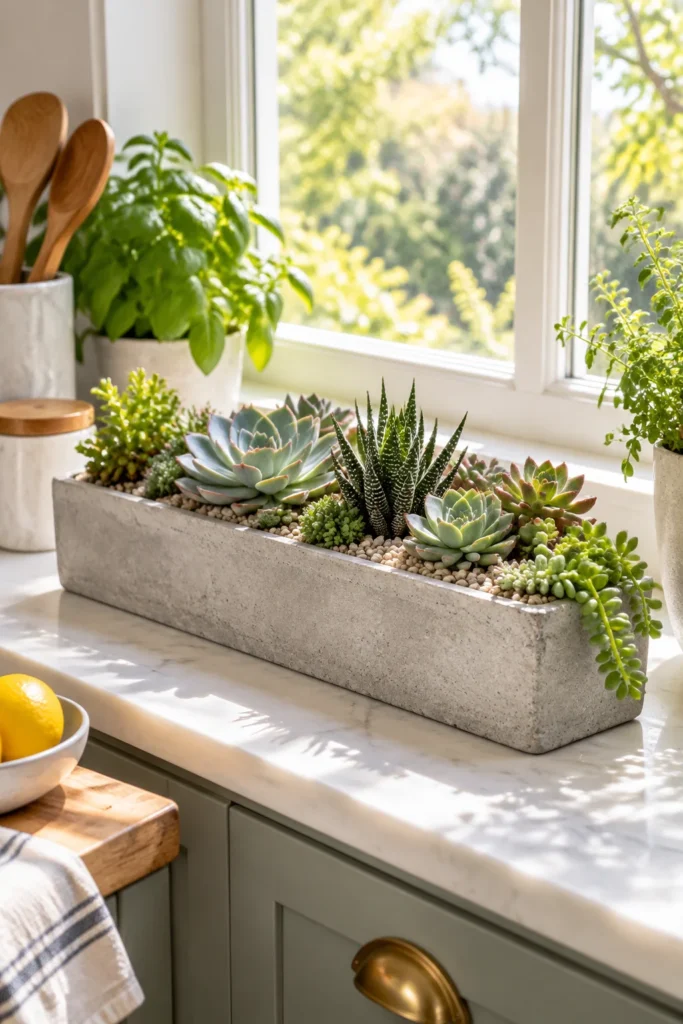
Cement has enough heft that throwing open the window won’t knock it over. It draws out a bit of water through the porous walls, too, which suits succulents perfectly.
Use a sharp, gritty cactus blend to pot up echeveria, haworthia, and sedum.
Best for: People who forget watering days and prefer a clean, mineral aesthetic.
My tip: Spread a thin layer of fine gravel over the dirt. The stones keep bottom foliage off wet dirt and give the whole planter a tidy appearance.
Make sure your window ledge can handle the load before you do anything else.
3. Self-Watering Herb Box

Roots pull what they need from a concealed water tank underneath. You get much more consistent moisture that way, so stems don’t wilt by daybreak.
Whenever I go away, I rely on this setup for my mint, basil, and chives, which all thrive in it.
Best for: Anyone short on time or regularly on the road who still insists on fresh herbs.
My tip: Hold off on topping up the water for twenty-four hours after the tank empties. Roots have to breathe just as much as they need to drink.
4. Shallow Microgreens Tray

You can harvest fresh greens in roughly two weeks with a shallow tray. Scatter radish, pea, or sunflower seeds over a light skim of potting mix.
Because it takes up practically no room and needs strong light, a small windowsill works fine.
Best for: Beginners with no patience who want quick results.
My tip: Set a plate over the seeds for their first three days. Darkness helps them germinate sooner.
East and West Windows: Bright Light Planters
Some of my healthiest, most thriving plants live in my east-facing bedroom. Morning light is bright without being harsh. Afternoon sun hits harder in west-facing windows, so I move delicate plants back a bit from the glass.
5. Terracotta Pot Row on a Tray

Setting separate pots on a long tray keeps things tidy and means you can switch plants out in seconds. Because terracotta breathes, the soil dries evenly.
I started with three pots and an inexpensive boot tray, and hoya, peperomia, and small jade thrive in it.
Best for: Growers who like to shuffle their plants around constantly.
My tip: Pour out whatever collects in the tray each time you water. Letting water sit there ruins the whole benefit of using breathable clay.
Check Out: 15 Bold Large Indoor Planters
6. Wooden Box with a Removable Liner

Wood adds warmth and fits well in Scandinavian or farmhouse interiors. Using a plastic liner stops moisture from rotting the wood.
Small begonias and African violets thrive in the softer light, and their fuzzy foliage sets off the bare wood nicely.
Best for: People who care about decor and want a warm, organic look.
My tip: Carry the liner over to the sink whenever it’s time to water. Let it drain completely before setting it back inside.
7. Glazed Ceramic Trough
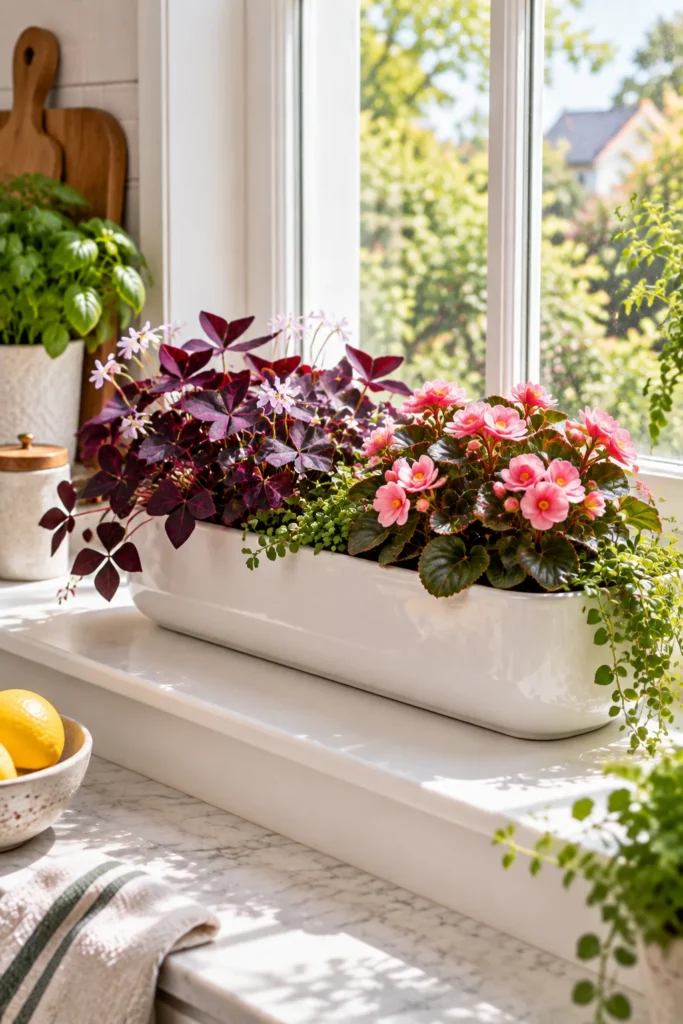
Glazed ceramic troughs stay clean, shrug off stains, and have a neat, tidy finish. Because glaze locks in moisture better than unglazed terracotta, you won’t have to water as often.
Against a white windowsill, the bright tones of oxalis, polka dot plants, and dwarf begonias really pop.
Best for: People who want an intentional, put-together sill without much work.
My tip: Keep an inch or two of clear sill on either end. This way the trough won’t slide off, and you still have room to clean around the edges.
8. Basket-Wrapped Sill Box

Tuck an inexpensive plastic planter into a rattan or seagrass basket to keep it out of sight.
It adds rich texture and a relaxed, boho vibe without the price tag of a high-end trough.
Plants like pothos, tradescantia, and heartleaf philodendron spill over the rim really well.
Best for: Renters on a budget who still want a warm, inviting vibe.
My tip: Drop a small plastic tray or shopping bag into the bottom first. Water won’t soak into the woven material, which keeps the basket in good shape far longer.
North Windows: Low-Light Planters
I learned how to slow down thanks to my north-facing bathroom window. Things take longer to grow without much sun, so I stick to hardy varieties and hold back on watering. Here are three planters built to handle darker corners.
9. Mixed Low-Light Trough

Grouping three resilient plants in a single trough takes care of everything at once.
Combine dwarf snake plant, pothos, and peperomia if you want plenty of volume and contrasting layers.
Each can handle low light and won’t suffer if you skip a watering.
Best for: New plant owners dealing with low-light windows.
My tip: Water only once the first inch of soil feels dry. Soil takes longer to dry in low light, making too much water the main danger.
10. Moss and Fern Terrarium Box

A lidded glass box traps the moist air ferns love. You also get a miniature garden to enjoy year-round. Plant fittonia, moss, and button fern together, then scatter in a few small stones to make it look natural.
Best for: Anyone dealing with dry rooms and central heating.
My tip: Leave the lid slightly ajar for an hour every couple of days. A little air circulation stops mold from settling in.
11. Small Trio for a Bathroom Sill
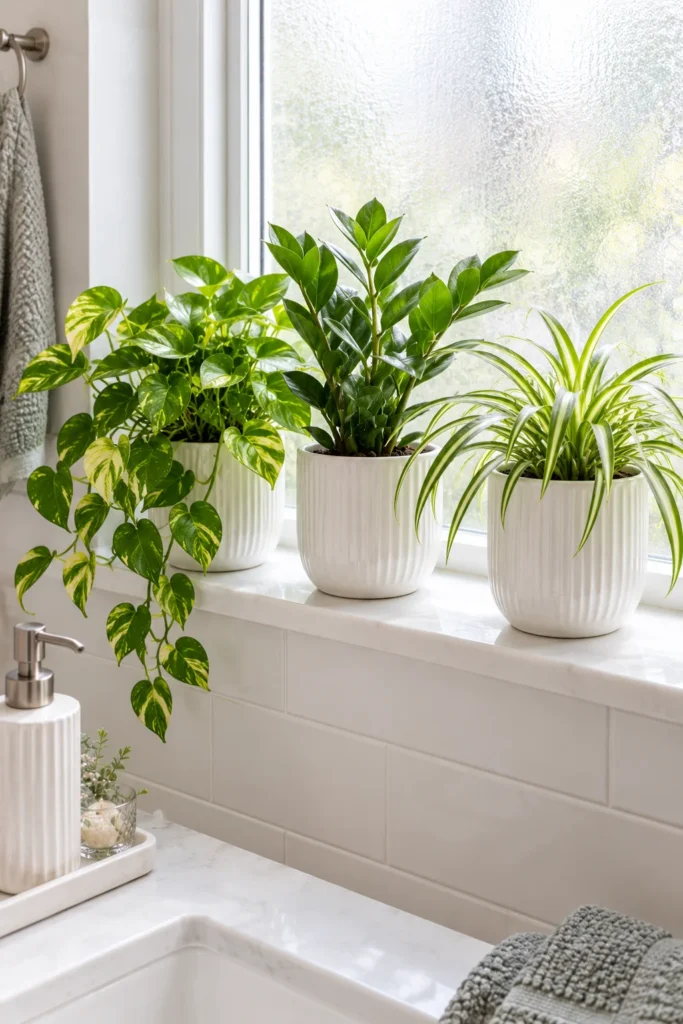
Matching the finish on three small pots keeps the sill looking neat and restful. Shower steam does wonders for tropical foliage, while frosted windowpanes cut the glare.
Pothos, spider plants, and ZZ plants all handle bathroom conditions without complaint.
Best for: Renters whose Bathroom has only a compact window.
My tip: Move the three pots into better light for one week out of every four. Plants tend to wear out eventually if they stay in a dim bathroom.
Space-Saving and Renter-Friendly Planters
Because I rent, I avoid drilling into walls and window frames. None of these four setups requires putting a single hole in the wall. Plus, they won’t block the window.
12. Clamp-On Window Shelf Planter
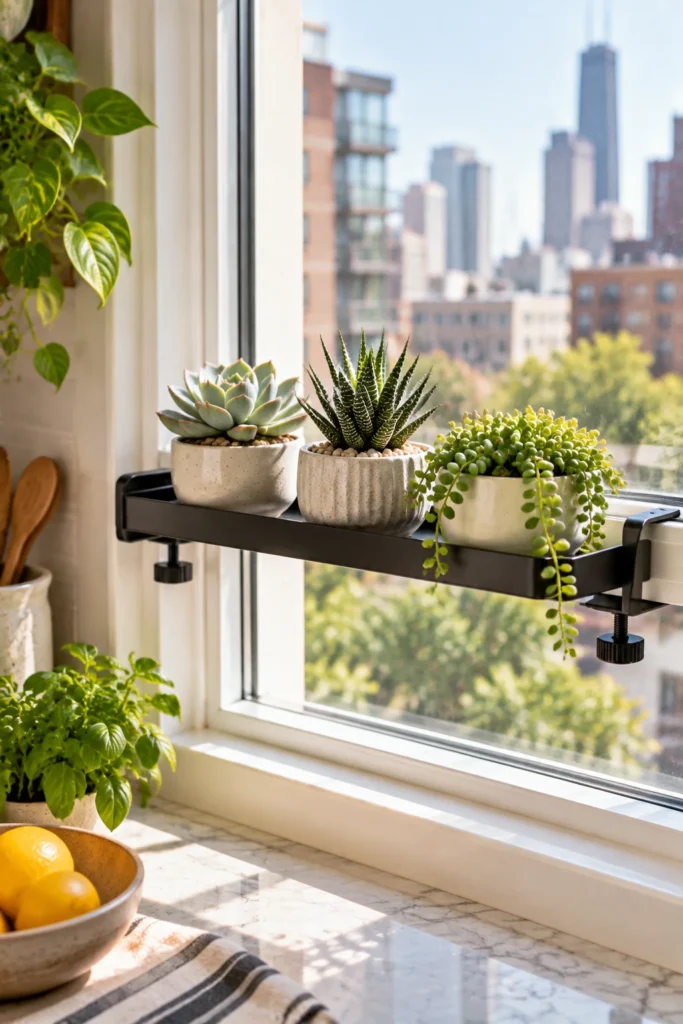
It clamps straight onto the frame or sill to give you an extra shelf right away. You won’t have to drill, and the wall stays untouched. Light pots filled with small herbs or succulents suit it best.
Best for: Renters who want extra room for plants right away.
My tip: Put a few pounds on the clamp for 24 hours before setting your plants on it.
13. Tension Rod Hanging Pots
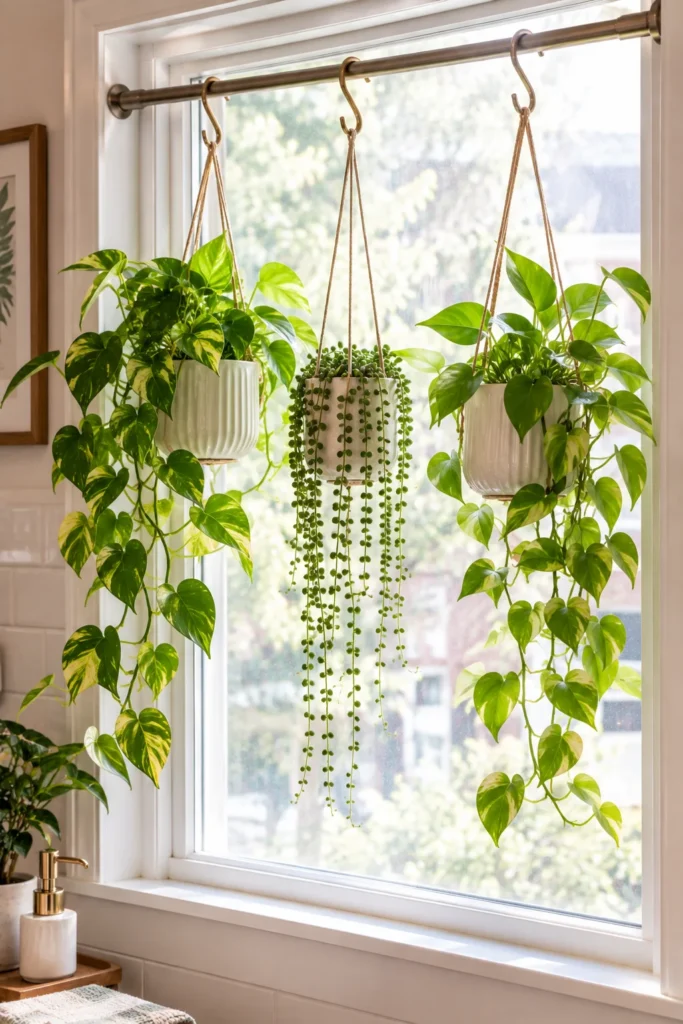
You run a tension rod across the frame and hang small pots from S-hooks. Your plants sit at eye level, leaving the sill completely open underneath.
Choose light containers and fill them with trailing varieties like string of pearls or pothos.
Best for: Narrow sills in compact apartments.
My tip: Buy a rod that can support at least double the total weight. Pots weigh more than you expect once they’re watered.
14. Tiered Stair-Step Stand Indoor Window Planter
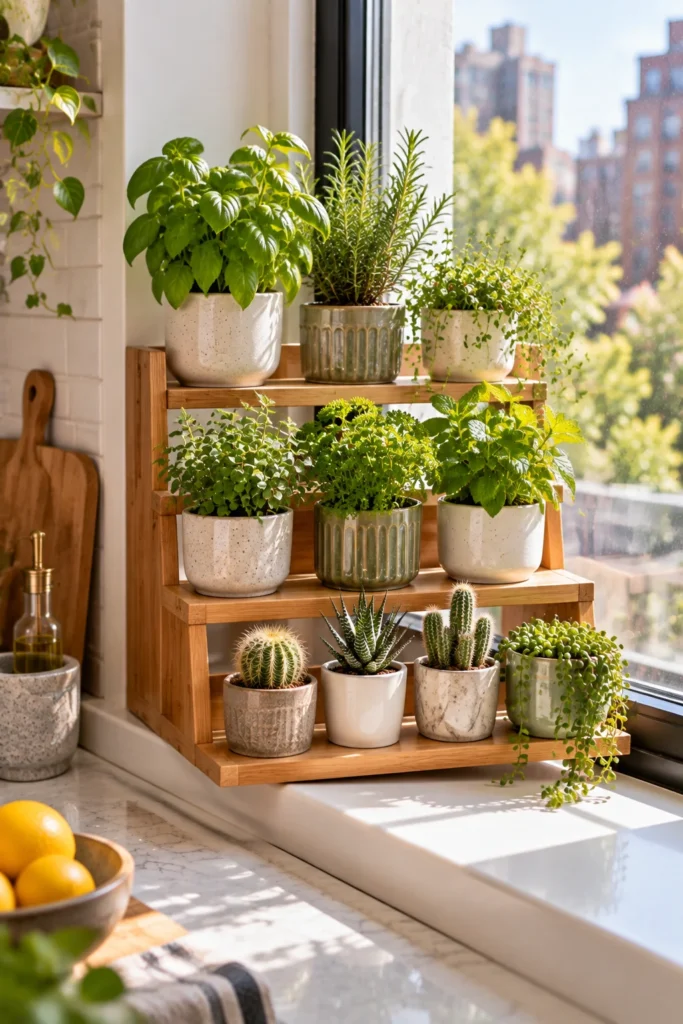
A tiered stand fits three or four pots into the space a single one would take up. The elevated back steps ensure light reaches every single pot.
Small succulents, herbs, and mini cacti are all good choices for these.
Best for: Awkward corners and especially narrow sills.
My tip: Save the lowest tier for whichever plants drink the most. Runoff drains downward, giving those lower pots a bonus drink.
15. Propagation Jar Rack

Cuttings sit in simple glass jars while they put out roots in water. Sunlight cuts through the glass and puts the growing roots on display.
Ask friends for cuttings of philodendron, tradescantia, or pothos to start with.
Best for: Plant swappers and anyone gardening on a tight budget.
My tip: Give them clean water every seven days. Clean water protects root health and prevents the jars from turning murky.
Quick Comparison: Which Planter Fits Your Window?
| Planter Type | Best Window | Watering Effort | Style |
| Galvanized metal | South | Medium | Industrial |
| Cement | South | Low | Modern |
| Terracotta | East or West | Medium | Classic |
| Wood with liner | East or West | Medium | Warm |
| Self-watering box | South or East | Low | Practical |
Frequently Asked Questions
What are the best plants for a sunny windowsill?
Herbs and succulents love strong light, so try basil, rosemary, echeveria, and haworthia. Match every plant to your window direction first. That single step prevents most problems.
How deep should a sill box be?
Aim for at least 4 inches of depth. Herbs and succulents have shallow roots, so 4 to 6 inches works well. Add drainage holes and a tray underneath.
How do I keep water from damaging my sill?
Set a saucer or shallow tray under every planter. Empty it after watering. On wood sills, I add a thin cork mat as well.
How often should I water plants on a sill?
Check the soil, not the calendar. Herbs like water when the top inch is dry, while succulents need far less. Windows get hotter in summer, so I check more often then.
Can I grow vegetables on a sill?
Leafy greens, radishes, and microgreens do well in a bright sill box. Tomatoes and peppers need far more light and space, so I skip them. Try a small grow light if your window is dim.
Final Thoughts
I used to think a planter was just a container. Now I see it as half the plan.
The right box in the right window saves water, plants, and money. It also makes your sill look intentional.
I still tweak my sills every season. That is half the fun.
Check which direction your window faces today, then set up one planter from that section this weekend.