
I would always get sad at the end of January on my porch. Just a few frozen mum stems that I didn’t pull and some dirt.
Then I started making real winter planters for front porch instead of letting my summer pots go belly up. Everything changed.
My porch is in as good a condition in February as it is in June. Here are the 21 combinations that led me to here.
Evergreen Foundations
All my winter plantings start with plants that stay green and don’t die. These are my 4 must-have base layers.
1. Fraser Fir and Pinecone Mix
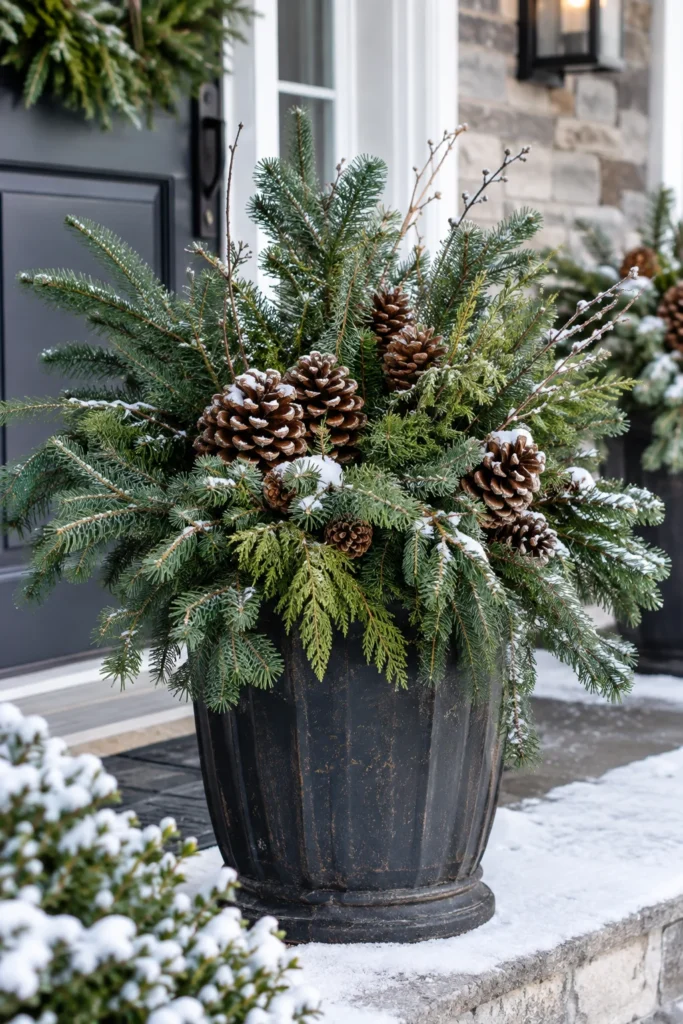
Fraser fir branches retain their colour for months, even during very cold winters. Stick some pinecones in and one tall birch stick for height and texture.
Great for: Those who don’t want to buy a tree but want that fresh-from-the-farm look.
My suggestion: Water the branches before a very cold night. This helps them retain their needles longer.
2. Boxwood Topiary Pair

A matched set of boxwood topiaries is a great addition to a porch, giving it a polished look. They remain green through the winter and require very little maintenance.
Ideal for: Front doors that need a formal, symmetrical look.
I suggest: Covering the pots with burlap before the first frost to avoid shocking the roots.
3. Blue Spruce Branch Bundle

Blue spruce branches add a silvery blue colour to the overall design and complement red brick or a dark front door. For fullness, bundle 5-6 stems together.
Ideal for: Porches that are looking for a splash of colour other than green.
My suggestion: When cutting stems, cut at an angle before you put them in place. They hold water longer that way.
4. Dwarf Alberta Spruce in a Pot
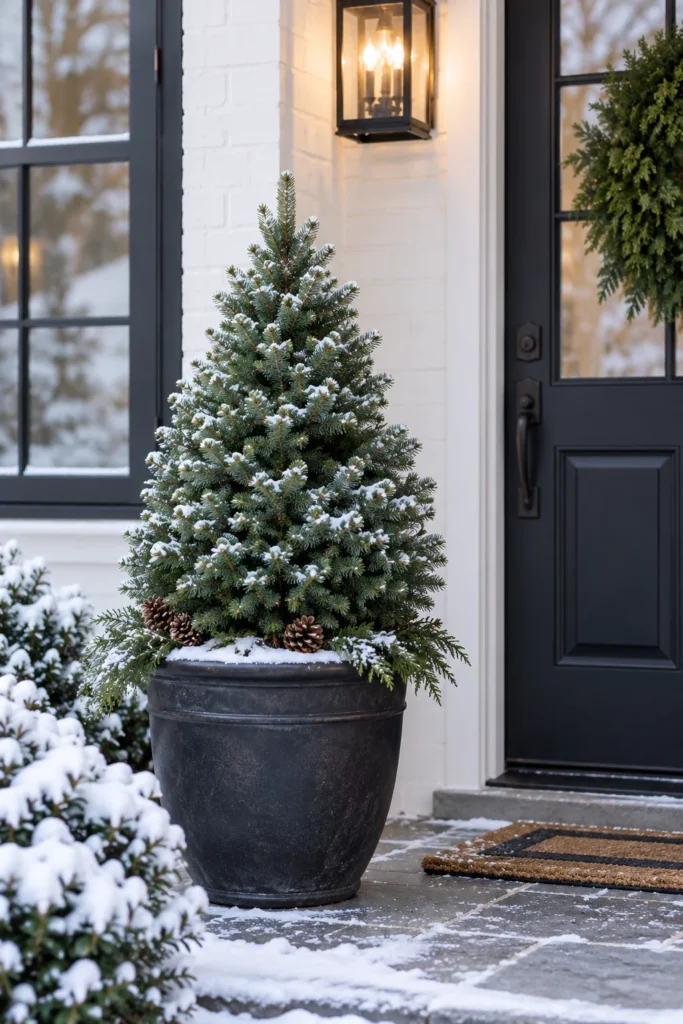
A potted dwarf Alberta spruce is a live-tree alternative for winter. It has a natural cone shape and requires no styling.
Ideal for: limited porches, where only one piece of statement furniture will fit.
My suggestion: rotate the pot about a quarter turn every few weeks to ensure that it grows evenly around all sides.
Berries and Branches for Color
Plain green can be a bit dull. In every planter I make, I add at least one berry or coloured branch.
5. Red Twig Dogwood Stems

Red twig dogwood branches change colour to a bright, almost shocking red in the fall. Some stems amongst the greenery help to awaken a boring planter.
Ideal for: People with grey or white houses beside their porches.
My advice: buy stems slightly longer than you need. You can cut them shorter if needed.
6. Winterberry Holly Branches
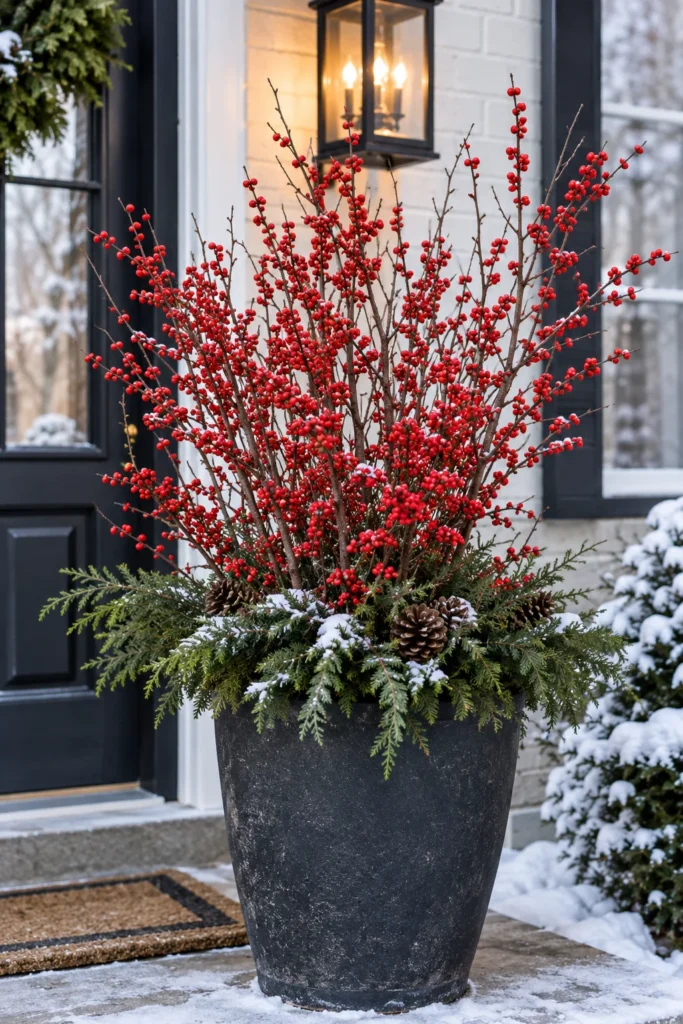
In the fall, winterberry holly will lose its leaves, but will retain bright red berries throughout the winter. It’s one of the few branches that are better with no leaves.
Ideal for: Traditional and classic holiday and winter styles.
My suggestion: The berries will last longer in the cold outside than in your home.
7. Eucalyptus and Silver Dollar Mix
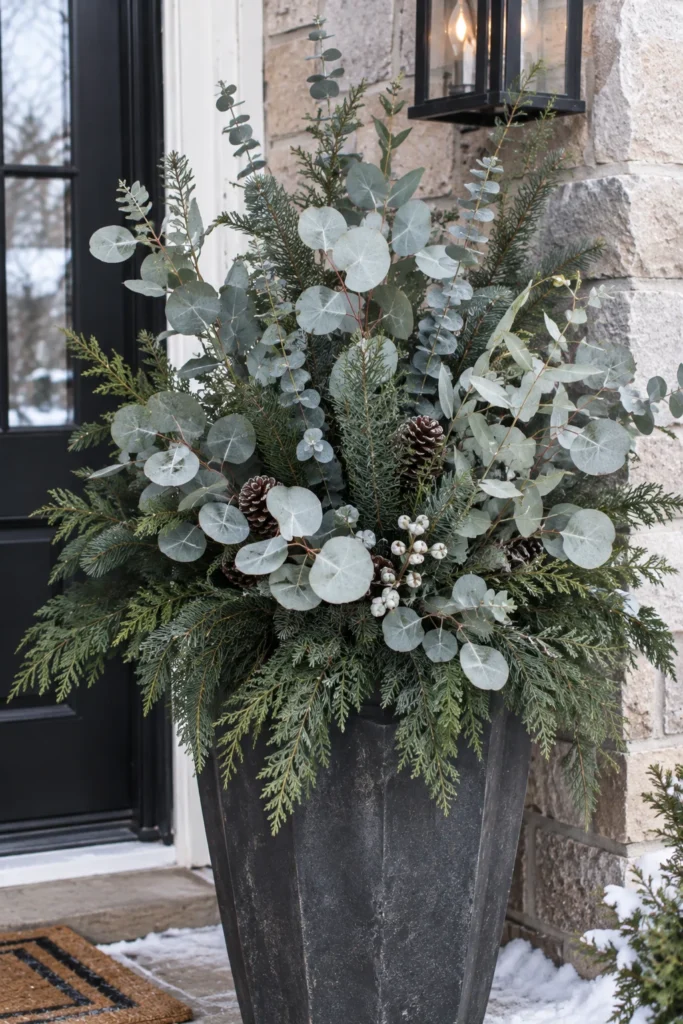
The silver eucalyptus stems make a nice planter and smell wonderful in the morning when it is cold. Pair with darker evergreens for contrast.
Ideal for: More feminine and romantic porches.
My suggestion: Eucalyptus wilts, but dries beautifully; don’t worry about wilting. It’s still looking pretty good.
8. Magnolia Leaf and Berry Combo
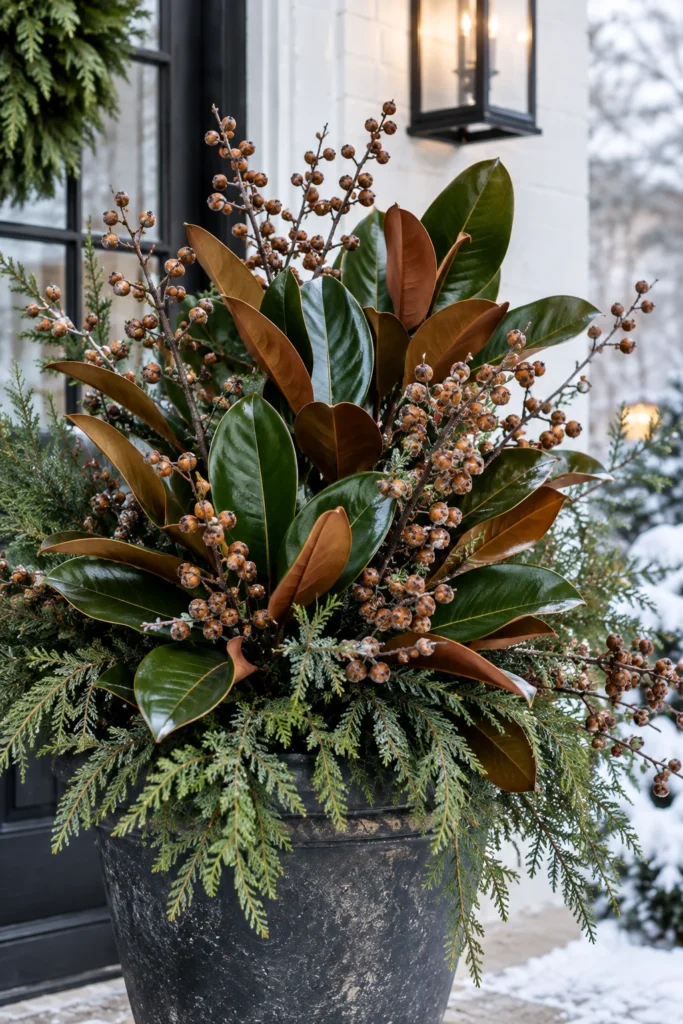
The shiny, fuzzy brown backs of the magnolia leaves add serious texture. Combine with some of the dried berry stems for a southern flair.
Ideal for: Those who want a more refined planter.
My tip: Turn over some of the leaves so that the brown underside is visible. It adds instant depth.
Winter Planters for Front Porch Rustic Farmhouse Containers
As much as the contents matter, the container is important. I’m going to list my favourites of these four for a cosy, lived-in look.
9. Galvanized Metal Bucket Planter

A galvanised bucket adds a rustic touch to any farmhouse and won’t crack during a freeze. Make a couple of holes to drain before planting.
Ideal for: Farm, cottage, or rustic-style homes.
My suggestion: line the inside with plastic to prevent metal rooting, and put ice in the liner.
10. Wooden Crate Planter

That old wooden box, with plants growing in it, seems to have adorned that porch for years. Cover it with plastic before placing it in so that it will not rot.
Ideal for: Old or farmhouse doorways.
My suggestion: Add a simple word to the side to add a bit of character, using a stencil.
11. Birch Log Planter
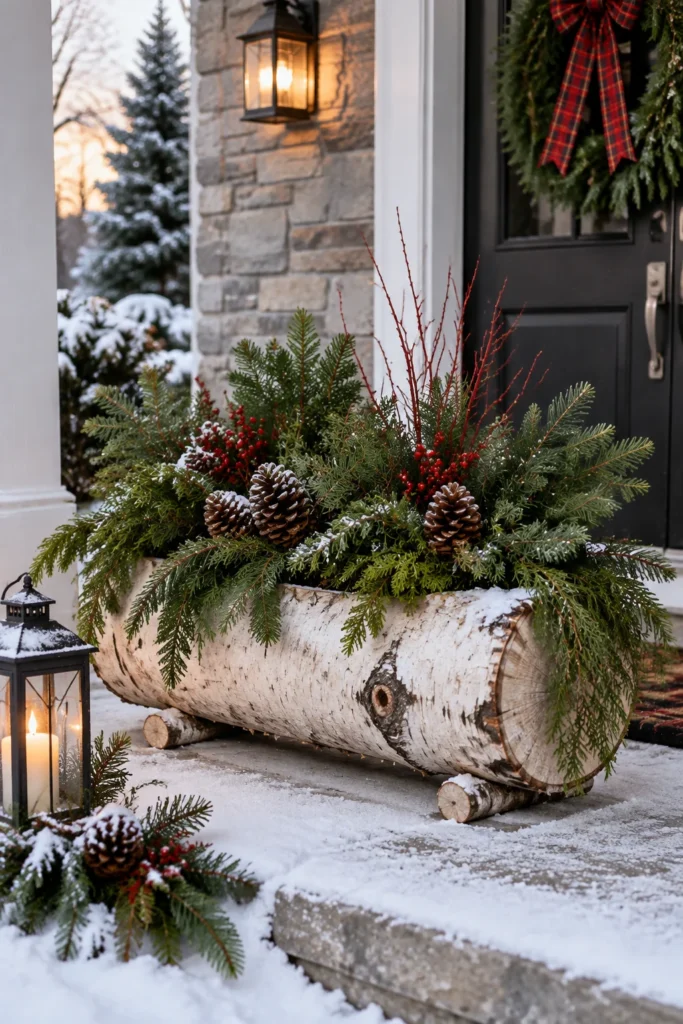
A hollowed birch log planter adds texture without being too much. The white bark contrasts beautifully with dark green branches.
Ideal for: Cabin, Wooden porches.
My suggestion: Use an outdoor clear sealant to seal the bark and prevent it from peeling and flaking throughout the winter.
12. Burlap Wrapped Terra Cotta Pot

Covering a plain terra cotta pot with burlap will hide the cracks and add warmth to the pot for little to no cost. Use twine to tie it off for a finished look.
Ideal for: Those looking for decor on a budget.
My suggestion: Use hot glue to secure the burlap so it doesn’t blow around.
Winter Blooms and Cool Season Color
Green and red aren’t the only colours. A few plants are cold hardy and will actually flower during the coldest months!
13. Pansies and Violas
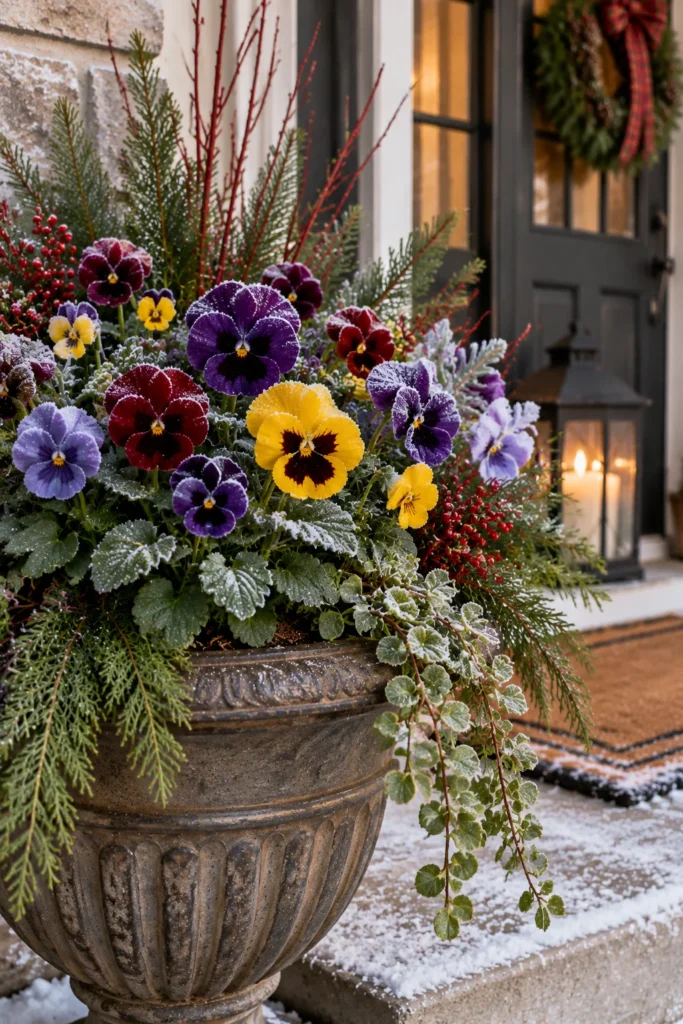
Some of the hardiest cool-season flowers that you can purchase are pansies and violas. They flower in the fall, stop in the extreme cold and then resume flowering in early spring.
Ideal for: less extreme winter climates, but still needing color.
My hint: Plant them a bit deeper than they are in the nursery pot. Helps to prevent root freezing.
14. Ornamental Kale and Cabbage
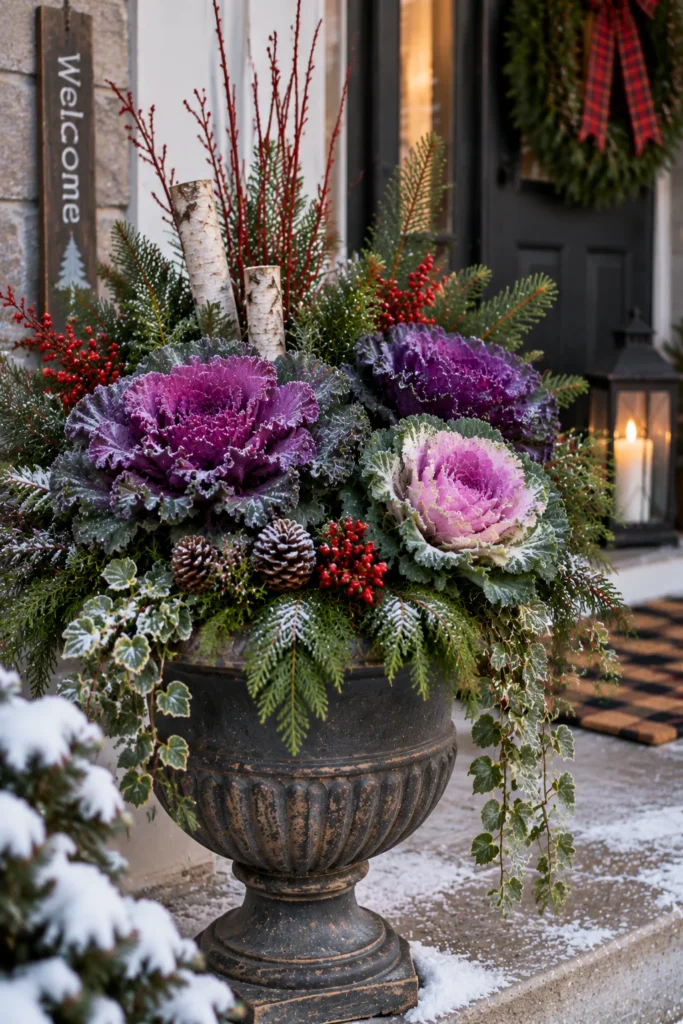
In fact, ornamental kale becomes more colourful as the temperature drops and turns purple and pink. Maintains its form for many months.
Ideal for: Those looking for something different in terms of flowers.
My suggestion: These look great in colder weather, and you don’t have to worry about a cold snap; the colder it gets, the better they look.
15. Hellebore Christmas Rose
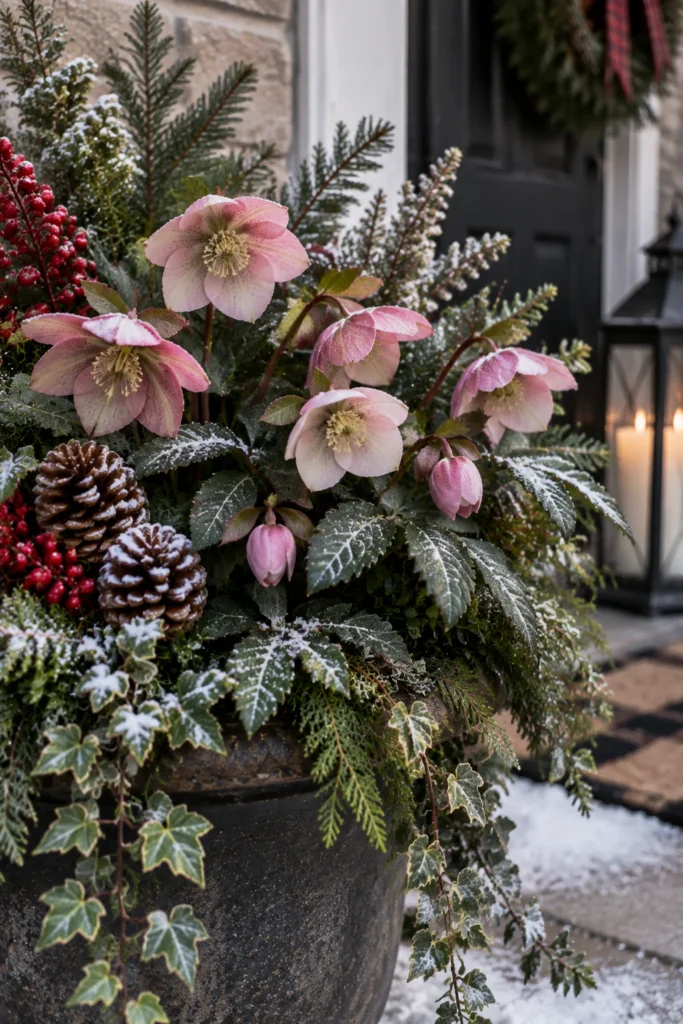
Hellebore is also known as the Christmas rose and blooms in late winter, when few other plants are in bloom. The flowers droop and persist for long periods.
Ideal for: Those porches that need a true winter bloom, but not in the bright sunlight.
My suggestion: Place it in a window so you can see the flowers, since they face downward.
16. Winter Jasmine Branches
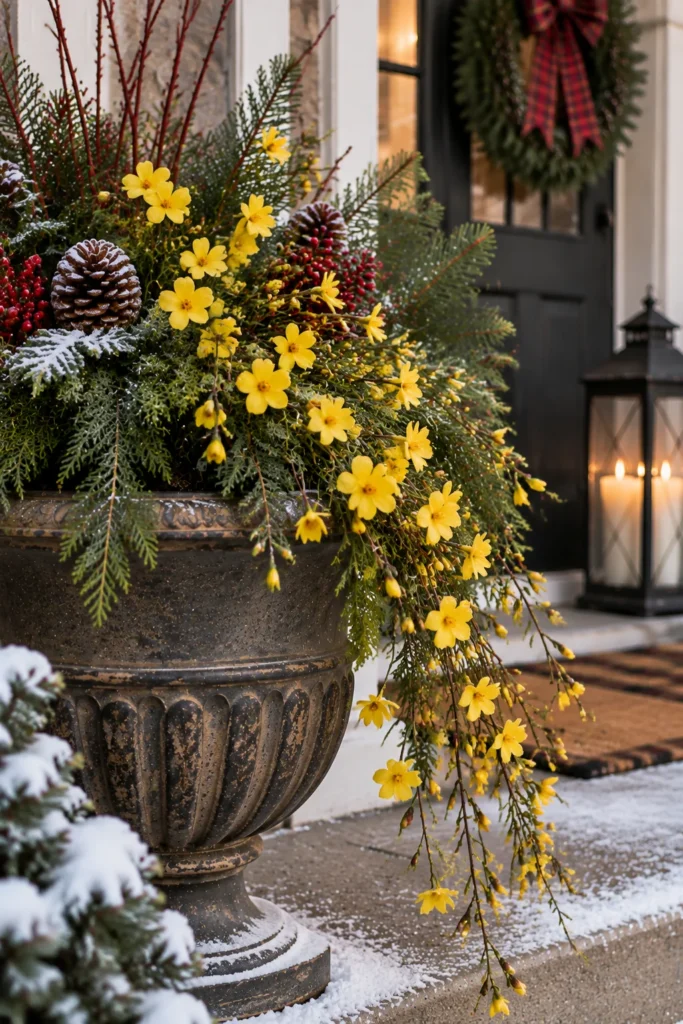
Winter jasmine has small yellow blossoms on green stems, which can start to flower as early as January. One of the first signs of spring.
Ideal for: Anyone who wants some sunshine in the midst of winter.
My suggestion: Have the branches hanging over the pot edge rather than standing up.
Low Maintenance Winter Picks
Now and then I don’t have time to tend to planters. These three are looking pretty good with hardly any work.
17. Faux Greenery No-Water Planter
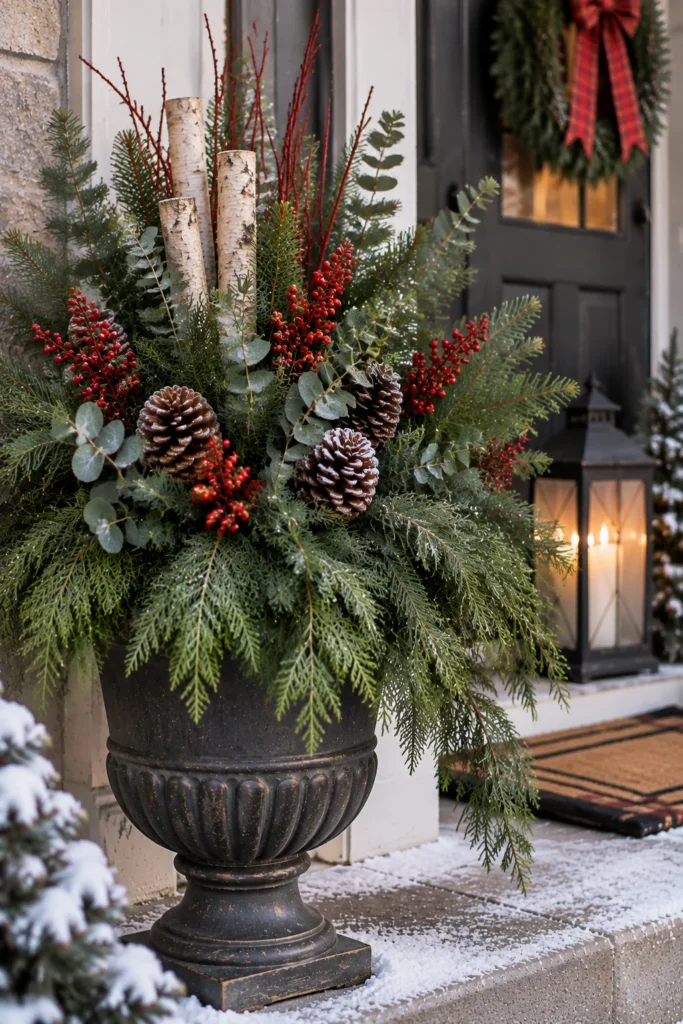
Faux greenery looks amazingly real from a few feet away and requires no water or sun. A good option for a busy season.
Ideal for: Those who are on the road a lot during the holidays.
My suggestion: Add one or two actual branches to make it smell and feel like a natural branch.
18. Dried Ornamental Grasses
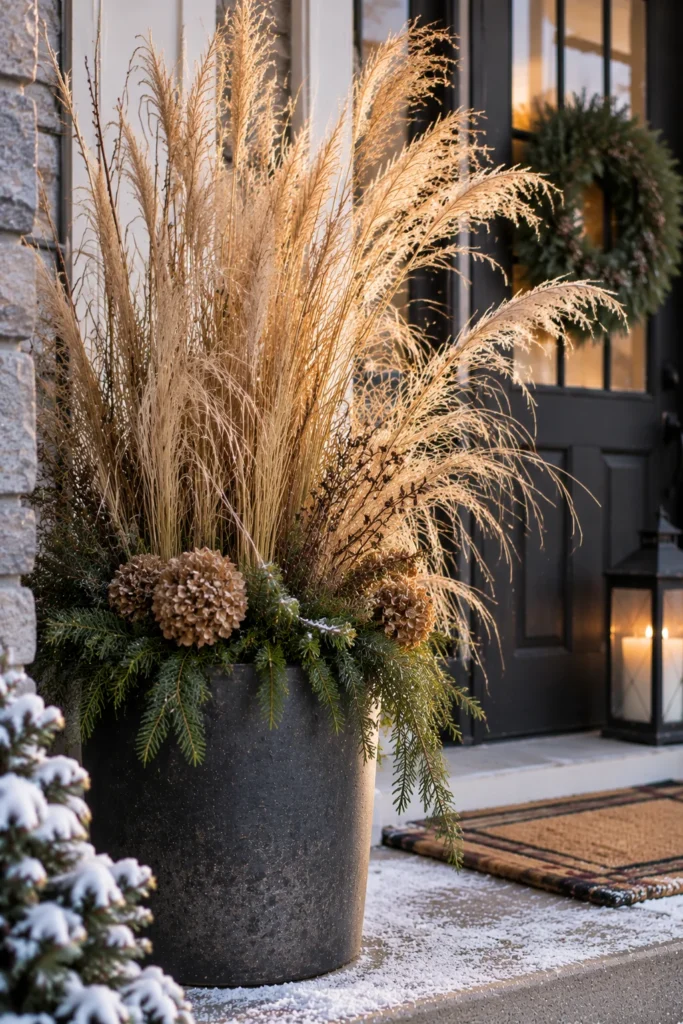
No watering required for tall dried ornamental grasses, which add movement and height. They flap in the wind – I love that!
Ideal for: Contemporary or modern-looking porches.
My advice: Spray them with a light mist of hairspray to keep them from blowing away in the wind and/or snow.
19. Rosemary Topiary
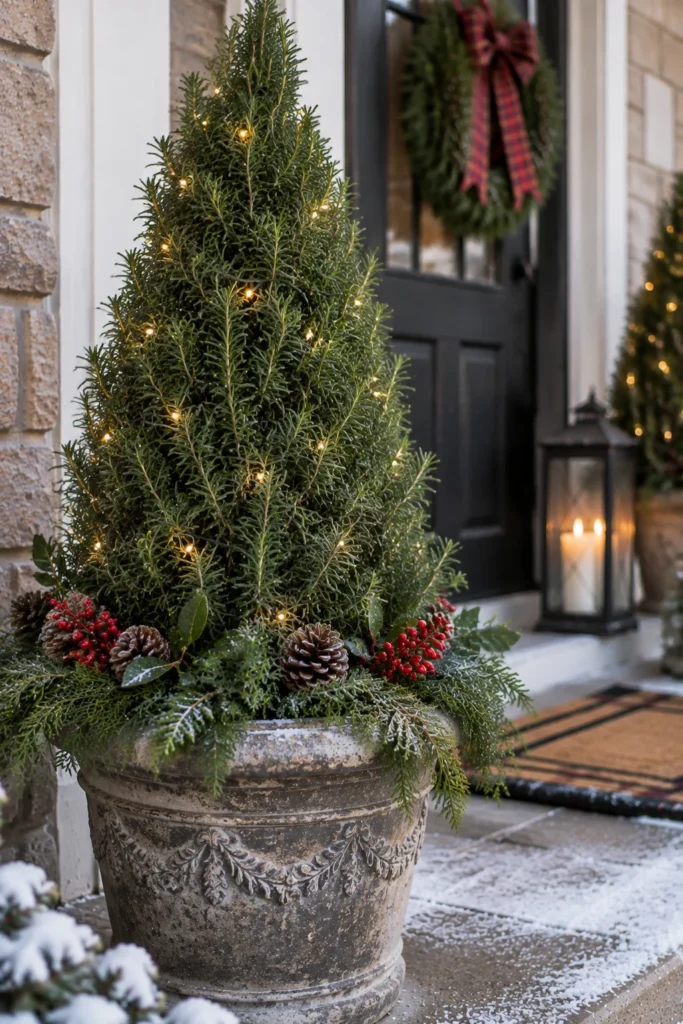
Trimmed into a cone shape, a rosemary topiary is a fragrant edible winter planter in milder climates. Cut off some sprigs to use in cooking whenever.
Ideal for: Those living in zone 7 and above and frequent cooks.
My suggestion: If a hard freeze warning comes out, bring it inside for the night. Unlike true evergreens, Rosemary is not as cold-tolerant.
Extra Special Finishing Touches
The last two are not complete planters, per se. The little things complete the picture.
20. LED Light Branch Accent
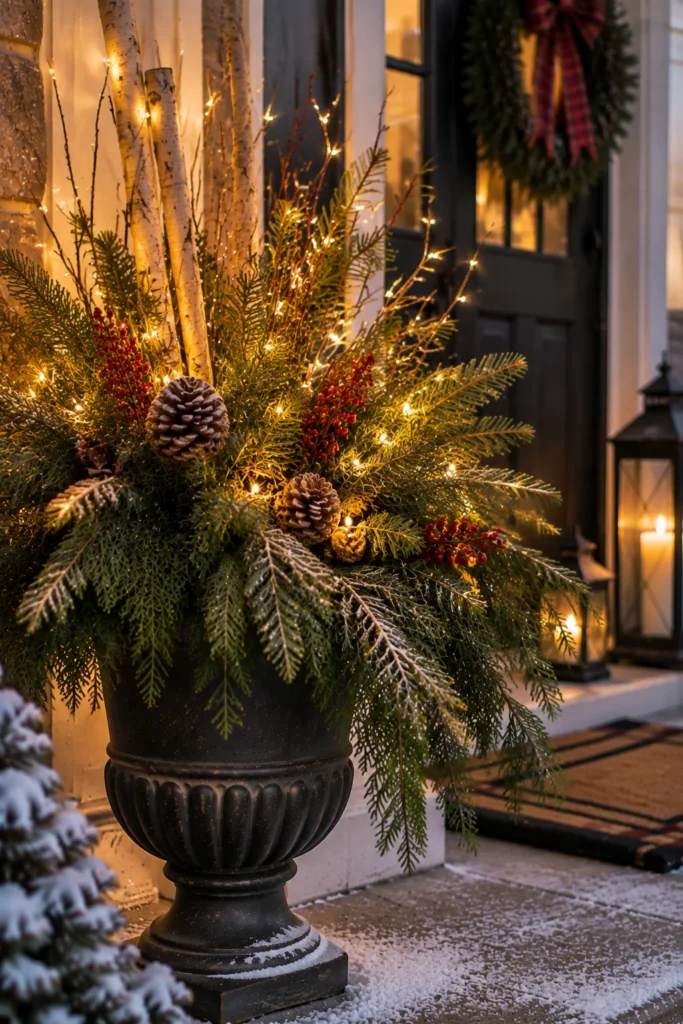
Thin LED lights add warmth to your greenery when the sun sets, woven through the branches. Battery-operated strands eliminate cords from your porches.
Ideal for: Those who want their planters working around the clock.
My suggestion: Don’t use cool white lights; use warm white. It looks cosier when it’s against green branches.
21. Ribbon and Ornament Topper
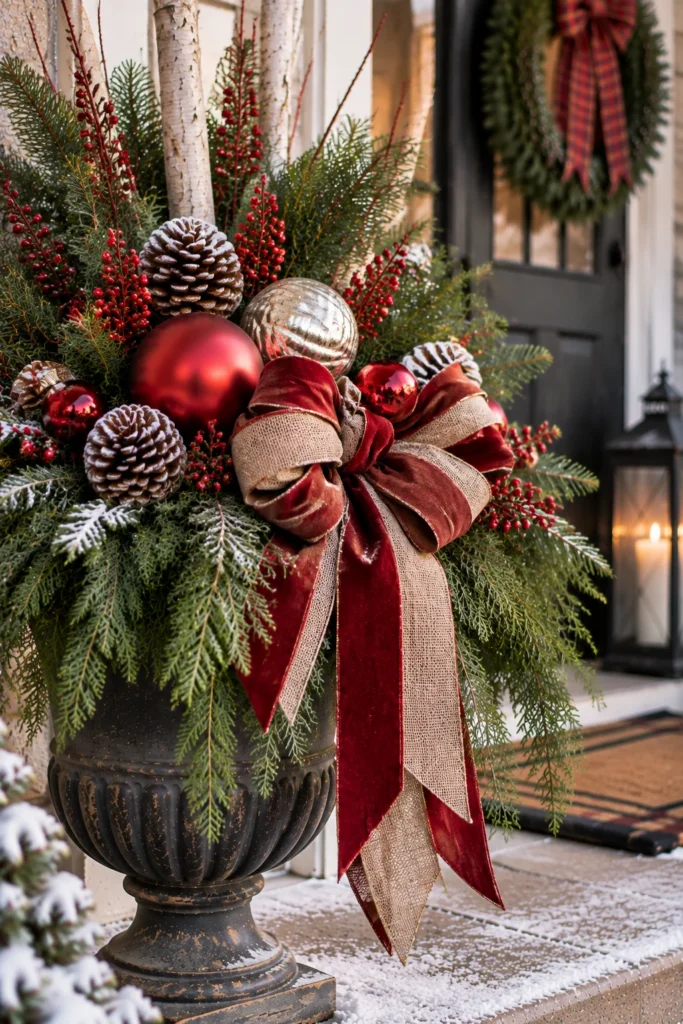
A wide ribbon bow or large, oversized decorations nestled in greenery provide a quick, easy holiday touch. Change the ribbon colour after the holidays to a more muted winter colour.
Ideal for: Anyone looking for a planter to help get them through from Christmas into January.
My suggestion: The ribbon with the wires is more wind-resistant than the less expensive ribbon.
Comparison at a Glance
| Planter Style | Cold Hardiness | Maintenance | Best Season Look | Approx. Cost |
| Evergreen Branch Mix | Excellent | Low | Nov to Feb | $ |
| Faux Greenery | Excellent | Very low | All winter | $$ |
| Ornamental Kale | Good to ~20°F | Medium | Nov to Jan | $ |
| Birch Log Planter | Excellent | Low | All winter | $$ |
| Winterberry Branches | Excellent | Low | Dec to Feb | $ |
Frequently Asked Questions
Do winter planters need water?
Yes, but far less than summer pots. Water on days above freezing when the soil actually thaws, and skip it entirely during a hard freeze.
What plants survive winter in outdoor pots?
Evergreens like boxwood, spruce, and fir handle real cold without any protection. Pansies and ornamental kale also hold up surprisingly well through light frost.
Should I use real or artificial greenery?
Real greenery smells better and looks more natural, but it fades by late February. Faux greenery costs more upfront but lasts for years of reuse.
When should I refresh my planters for spring?
I usually swap mine out in early March, once the hardest freezes are behind me. Always check your last frost date before adding anything tender.
Final Thoughts
Winter porches don’t have to look sad. A few good branches, the right container, and a little wind protection go a long way.
I rebuild mine every single year now, and it’s become one of my favorite parts of the season.
Pick two or three combos from this list and start there. Your porch will thank you.
Grab a sturdy pot and a few evergreen branches, and build your first winter planter this weekend.


