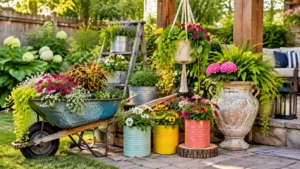
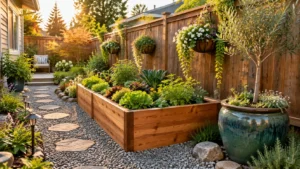
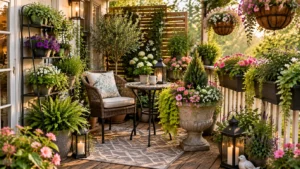
Last spring, an old rubber boot of mine nearly ended up in the trash. Instead, I packed it with soil and planted pansies.
People complimented that one boot more than any store bought planter I brought home from the garden center.
That project turned me on to making planters out of things most folks would throw away.
I have since converted old tires, buckets, and even a dresser into yard planters. Below are 17 of my top junk to outdoor planter ideas, along with notes on what survives the weather.
Repurposed Planters from the Kitchen
I like beginning in the kitchen, since almost everyone has something tucked in a cupboard that can be salvaged.
1. Old Colander Planters
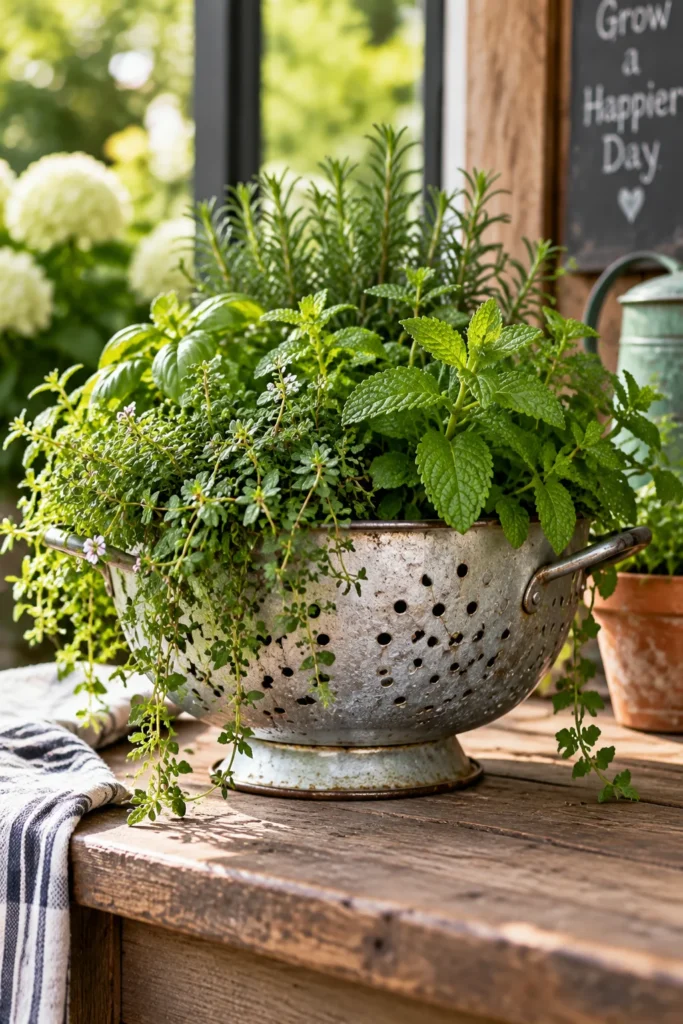
Because the holes are already there, you get drainage without picking up a drill.
Best materials: Metal or enamel colanders, especially the heavily weathered ones.
Best plants: Herbs that trail over the edge, such as oregano or thyme.
Best for: kitchen windowsills or spots where garden space is tight.
My advice: Put coffee filters across the bottom first. That keeps dirt from washing out of the bigger holes.
2. Chipped Teapots and Teacups
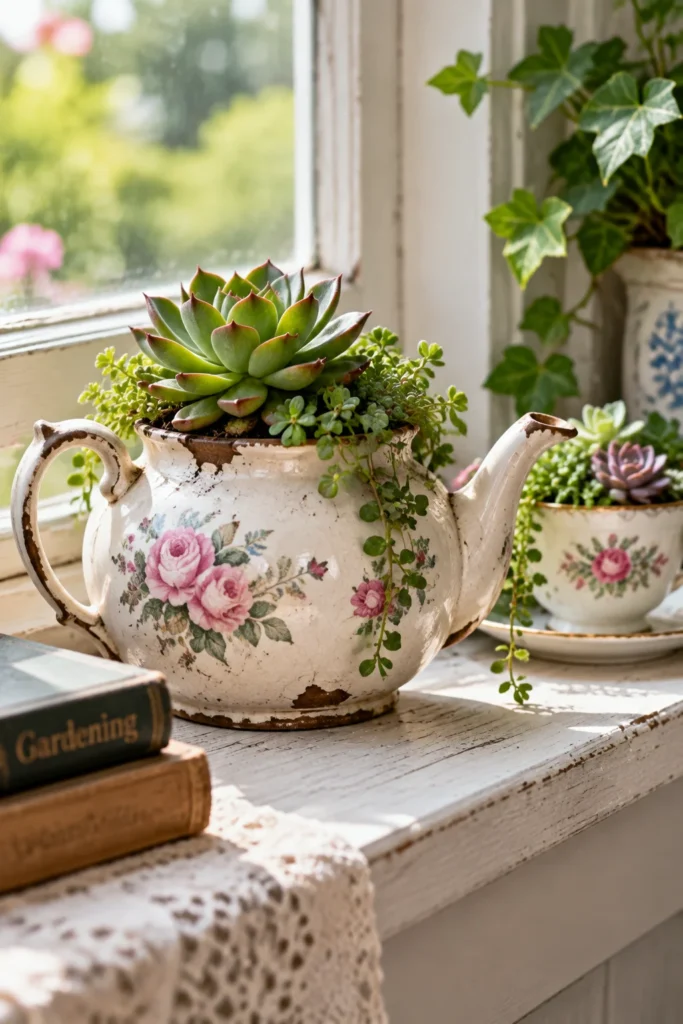
Fill a cracked teapot with dirt instead of tea, and you give it an entirely new use.
Best materials: Porcelain or ceramic, as long as you drill a drainage hole.
Best plants: Mini violets or small succulents.
Best for: Small gifts or windowsill displays.
My tip: Take your time drilling ceramic and stick to a masonry bit. If you hurry, you’ll crack it.
3. Mason Jar Herb Planters

Because glass lets you watch the roots develop, you’ll guess far less about when to water.
Best materials: Wide-mouth mason jars lined with gravel across the base.
Best plants: Chives, mint, or basil.
Best for: Sunny window ledges or the kitchen counter.
My tip: Add a layer of gravel before adding soil. Mason jars have no drainage holes.
4. Wine Crate Planters

Wooden wine crates come with that exact rustic finish buyers pay good money for.
Best materials: Untreated wooden crates with a plastic liner.
Best plants: Mixed flowers or vegetable starts.
Best for: Edging a raised bed or lining porch steps.
My tip: Check with a local wine shop to see if they have empty crates. Most shops hand them out for free.
Repurposed Planters from the Garage or Shed
Some of my favorite planters came straight from the garage, dust and all.
5. Old Tires

Piling up tires gives you an instant raised bed without spending a dime.
Best materials: Tires of any size, painted or left as-is.
Best plants: Tomatoes, potatoes, or anything that trails.
Best for: Backyard projects on a tight budget, or vegetable patches.
My tip: Give the tires a coat of exterior paint before doing anything else. That keeps the smell of hot rubber from hanging around in the sun.
6. Metal Buckets

You can get that industrial farmhouse feel for next to nothing with galvanized buckets.
Best materials: old paint buckets or galvanized steel.
Best plants: zinnias, sunflowers, or tomato plants.
Best for: Clusters on the porch or farmhouse-style yards.
My tip: Don’t stop at one hole; drill several. Water drains out of metal buckets much slower than you’d think.
7. Wheelbarrows Past Their Prime

Turn a rusty wheelbarrow into an entire flower bed that rolls.
Best materials: Whatever wheelbarrow you have, rust and all, for character.
Best plants: Trailing annuals such as lobelia or petunias.
Best for: A centerpiece in the front yard.
My tip: Don’t drill into the sides; aim for the very bottom of the basin where water collects.
8. Rain Boots

Kids love helping turn an old boot into a quirky little planter.
Best materials: Whatever old rain boots or rubber boots you have lying around.
Best plants: Violas, pansies, or compact trailing varieties.
Best for: Lining porch steps or adding charm to fun, informal yards.
My tip: Use an awl to punch drainage holes through the bottom before adding any dirt.
9. Toolboxes

The built-in sections of a metal toolbox work wonderfully for grouping little plants.
Best materials: old metal toolboxes.
Best plants: Put succulents or small culinary herbs into the individual dividers.
Best for: Arrangements that lean rustic or industrial.
My tip: Make sure every section drains independently by drilling individual holes through each tray.
Repurposed Furniture Planters
Most of my favorite planters started as furniture someone left on the curb.
10. Dresser Drawers

If you pull the drawers out to different depths, the entire unit becomes a tiered planter.
Best materials: Drawers made of solid lumber and finished with exterior-grade varnish.
Best plants: Varieties with shallow roots, such as alyssum or marigolds.
Best for: Lovers of reclaimed timber and cottage-style yards.
My tip: Give every surface, inside and outside, a good coat of sealant. Left raw, the wood will turn soft and rot within a single season outside.
11. Old Ladders as Plant Stands
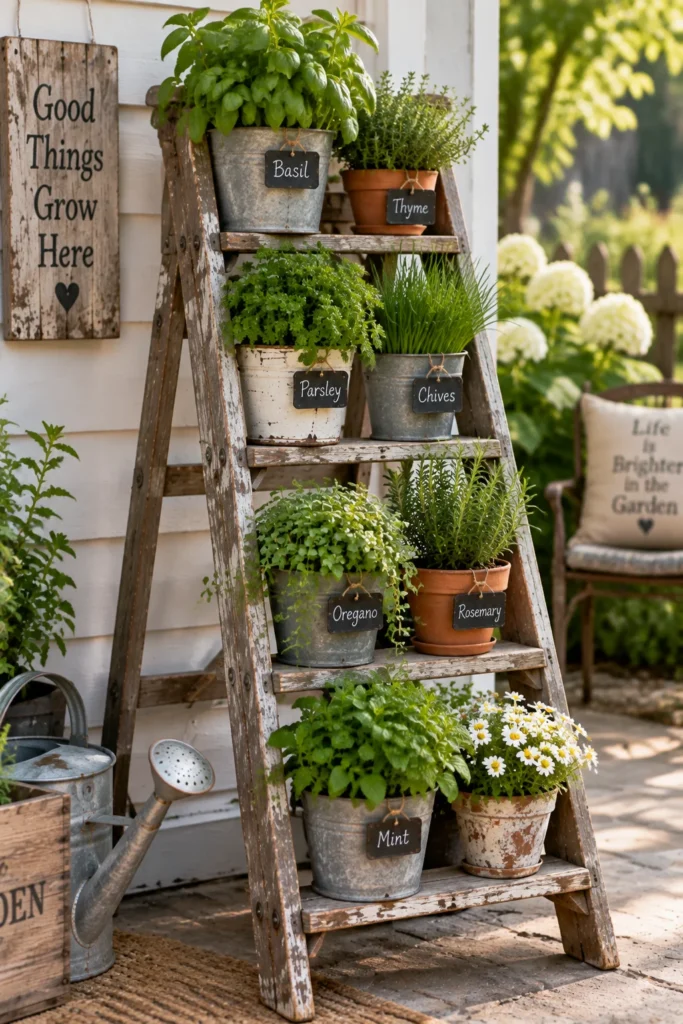
Set a wooden ladder against a blank wall to build an instant tiered plant shelf.
Best materials: Wooden stepladders with rough spots and splinters sanded down.
Best plants: A small potted herb or trailing ivy on every rung.
Best for: Tighter patios where floor space is hard to come by.
My tip: Anchor the ladder right to the wall. Once it’s weighed down with pots, it can pitch forward without much trouble.
12. Wooden Chairs with the Seat Removed

Once you cut out the seat, the remaining frame holds a hanging planter basket neatly.
Best materials: Any wooden chair you can take the seat out of.
Best plants: Spillers and trailing blooms, such as petunias or sweet potato vine.
Best for: Yards built around a cottage look or vintage pieces.
My tip: Paint before anything else. Painting around a planter that’s already sitting in the frame gets messy fast.
13. Bathtub Planters
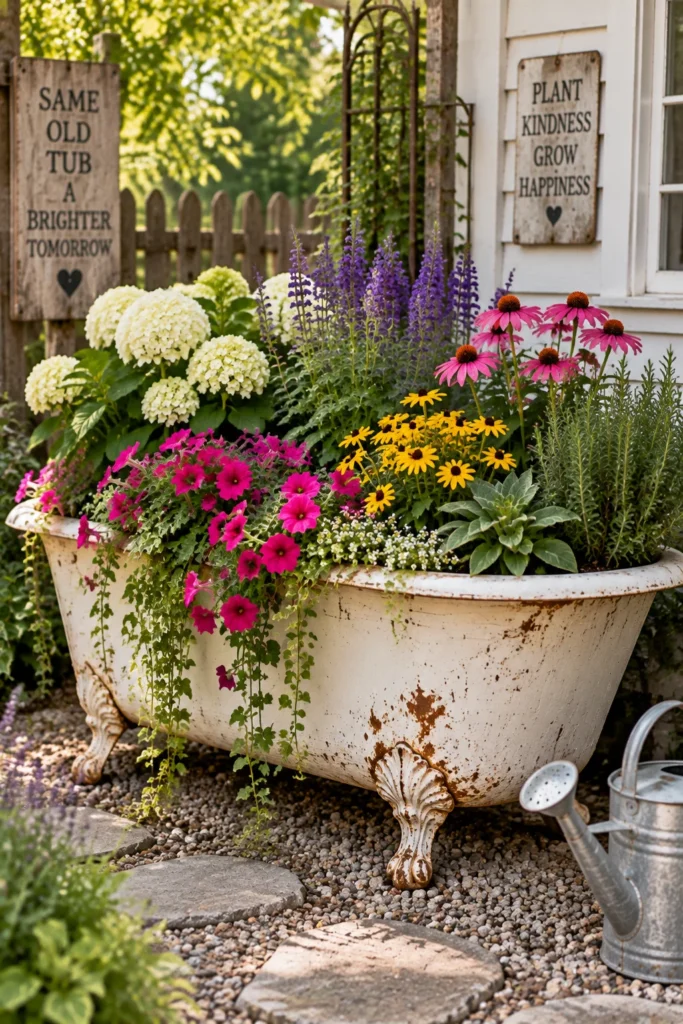
Set an old clawfoot tub in the garden for a dramatic raised bed people will definitely ask about.
Best materials: Tubs made of acrylic or cast iron, keeping the drain unplugged.
Best plants: Vegetables, bigger flowers, or compact shrubs.
Best for: Larger yards that can handle a genuine centerpiece.
My tip: Tilt the tub slightly by raising one end. That lets excess water run out through the built-in drain hole.
Repurposed Household Item Planters
This final batch relies on stuff that is probably tucked away in a closet as we speak.
14. Wicker Baskets

Baskets bring immediate texture and neatly disguise cheap plastic pots.
Best materials: Wicker or seagrass with a tight weave.
Best plants: Any potted plant dropped straight in, pot and all.
Best for: Porches with a cottage or bohemian feel.
My tip: Put down a plastic liner before doing anything else. Direct contact with wet soil rots wicker in no time.
15. Suitcases

Set an old suitcase on its side for a charmingly odd raised planter.
Best materials: Older hard-shell luggage.
Best plants: Succulents or any blooms with shallow roots.
Best for: Yards leaning into an eclectic or antique style.
My tip: Punch a few drainage holes through the bottom before adding dirt.
16. Colored Glass Bottles
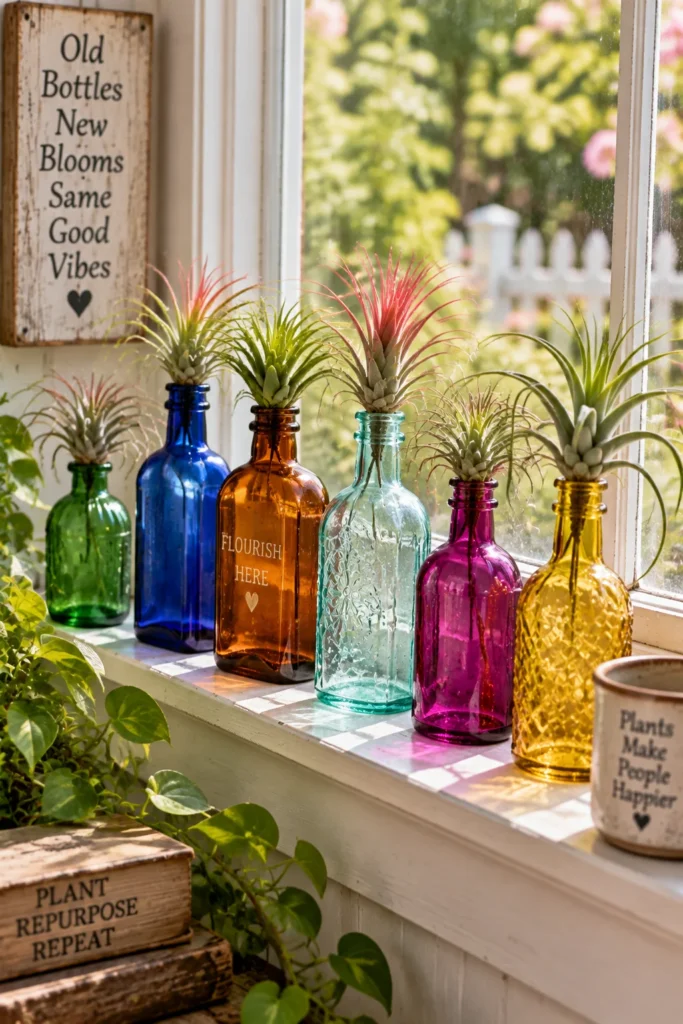
Arranging bottles into a miniature living wall adds bright color while keeping the ground clear.
Best materials: Sturdy glass bottles, cut with care or kept whole to hold air plants.
Best plants: Air plants or tiny cuttings you have propagated.
Best for: Windowsills or tight balcony spaces.
My tip: Do not try cutting the glass yourself at home. For just a few dollars apiece, a local glass shop will make clean, safe cuts.
17. Birdcages

Hanging an old birdcage gives you a lovely, unexpected home for trailing greenery.
Best materials: Metal birdcages, where a little rust actually looks good.
Best plants: Ferns, trailing ivy, or string of pearls.
Best for: Sheltered porches that already have a hanging hook.
My tip: Pack sphagnum moss around the inside of the cage before you add any dirt. This prevents everything from dropping through the open bars.
Repurposed Container Comparison
| Container | Cost | Durability | Best for |
| Tires | Free to low | High | Vegetable beds, raised planting |
| Metal Buckets | Low | Medium | Farmhouse-style groupings |
| Wooden Furniture | Free to low | Low without sealing | Cottage-style displays |
| Ceramic Pieces | Free to low | Medium | Small indoor or windowsill plants |
| Glass Containers | Low | High | Air plants, propagation |
Frequently Asked Questions
Do repurposed containers need drainage holes?
Yes, almost always. Very few household items come with proper drainage, so plan to drill or add a gravel layer.
What’s the easiest item to turn into a planter?
Buckets and old boots are the simplest. They already hold soil well and need only a few drainage holes.
Can wood furniture survive outside as a planter?
It can, but only if sealed with an outdoor-rated varnish or lined with plastic first. Untreated wood breaks down within a season or two.
Are metal containers safe for growing vegetables?
Most metal buckets and tires are safe once painted or lined, but avoid anything that once held chemicals or fuel.
How do I stop containers from rusting or rotting outdoors?
Seal wood, paint metal, and always add drainage. A little prep work before planting adds years to any container.
Final Thoughts
Some of my best planters started as garbage. That boot almost went in the trash.
Turning junk into containers saves money, sure. But it also gives your yard a personality no store-bought pot ever will.
Not everything works on the first try. I’ve cracked ceramic, rotted wood, and rusted through more than one bucket.
Look around your garage or closet before your next trip to the garden center. You probably already own your next favorite planter.