
In the spring, my side yard was just a mud slide waiting to happen.
I worked on sloped side yard landscaping issues that most people don’t consider until it’s too late for a full season.
Narrow spaces make repairs more difficult than a wide-open backyard slope.
Here are the 21 fixes that finally worked for me, from least to most involved.
Structural Fixes for Narrow Slopes
Narrow areas require smaller, smarter structures. Full-size backyard solutions are often not available here without consuming half the walkway.
1. Mini Retaining Walls
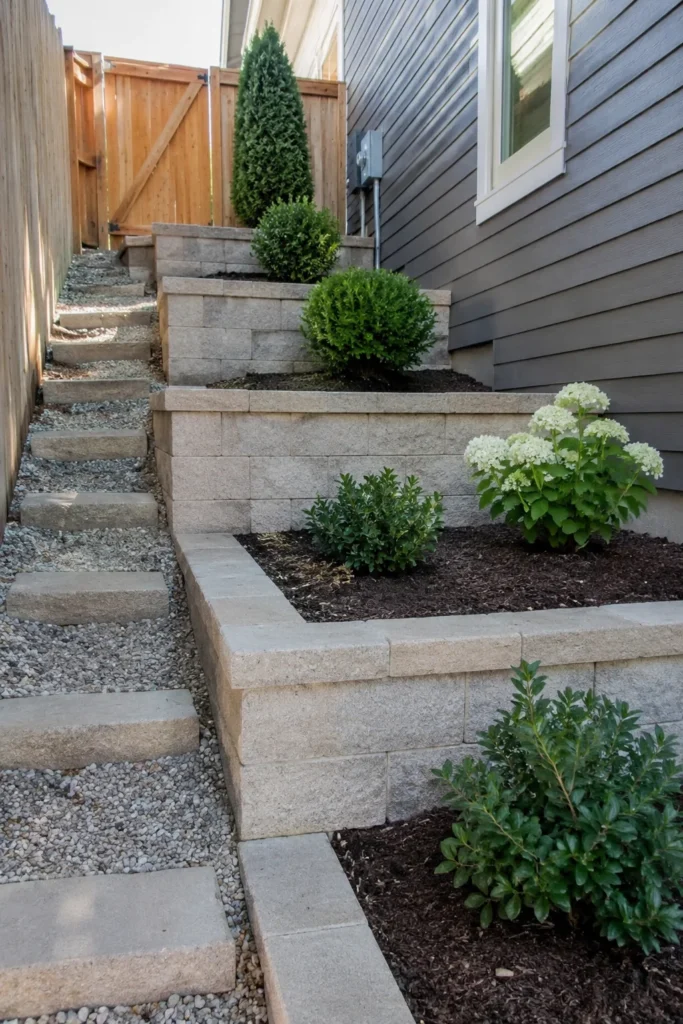
What makes it work: A small slope is divided into two flatter, more usable slopes with a low wall under knee height that doesn’t require much width.
Best materials: Concrete block or stacked stone; both will stand up in a narrow, high-traffic side yard.
Ideal for: Slopes less than 20% grade with a side yard that is 4 feet wide or larger.
My suggestion: Do not make the wall more than 18″ tall. In a small area, anything that’s taller begins to look like a trench.
2. Stepped Stone Path

Why it works: Each step is placed at a slight rise to avoid the need for a full staircase.
Best materials: Flagstone or large concrete pavers with gravel or groundcover between the pavers.
Ideal for: Sloping side yard with gradual slopes and where side yard is used primarily for walking through.
My suggestion: Don’t space the stones evenly; space them in a natural stride. It is actually more comfortable to walk on uneven spacing!
3. Narrow Terraced Beds

Why it works: Shorter, stacked beds let you use a sloped side yard for growing instead of wasted dirt.
Best materials: Cedar boards or corrugated metal edging.
Ideal for: Side yards with adequate sun to plant a small herb or flower bed.
My suggestion: Make the beds only as deep as you can comfortably reach with your arm. If it’s wider than that, it will be hard to weed.
4. Gravel Bed Leveling

Why it works: A leveled gravel bed will level out a slight slope at a very low cost with no digging or wall building required.
Best materials: Crushed granite or pea gravel, over a compacted base and landscape fabric.
Ideal for: Side yards for utility purposes (storage or side access) not plantings.
My suggestion: Put edging on both sides. Gravel is quick to spread onto lawns and walkways without a containment.
5. Handrail Steps

What makes it work: A simple handrail and steps make a steep, narrow side yard safe to use year-round, especially in wet or icy weather.
Best material: Outdoor steps with a galvanized metal handrail last many years and are made of the best materials.
Ideal for: Steep side yards that are utilized, particularly when there are children or elderly in the home.
My suggestion: Take a little step every 5 or 6 steps. It makes the ascent easier and provides a place to put something down.
Privacy and Screening
A side yard is usually the closest yard to a neighbor’s window, and is often sloped. This is where privacy matters most, other than in the house.
6. Columnar Trees

What makes it work: It has a narrow, upright form which provides height and screening without spreading branches into a dense side yard.
Slim at maturity: Emerald Green arborvitae and columnar Norway spruce are best plants.
Ideal for: Side yards less than 6 feet wide with a desire for some height for privacy.
My suggestion: Don’t plant in a line, but slightly off. It is more effective at concealing gaps when trees are planted in them.
7. Evergreen Privacy Hedge
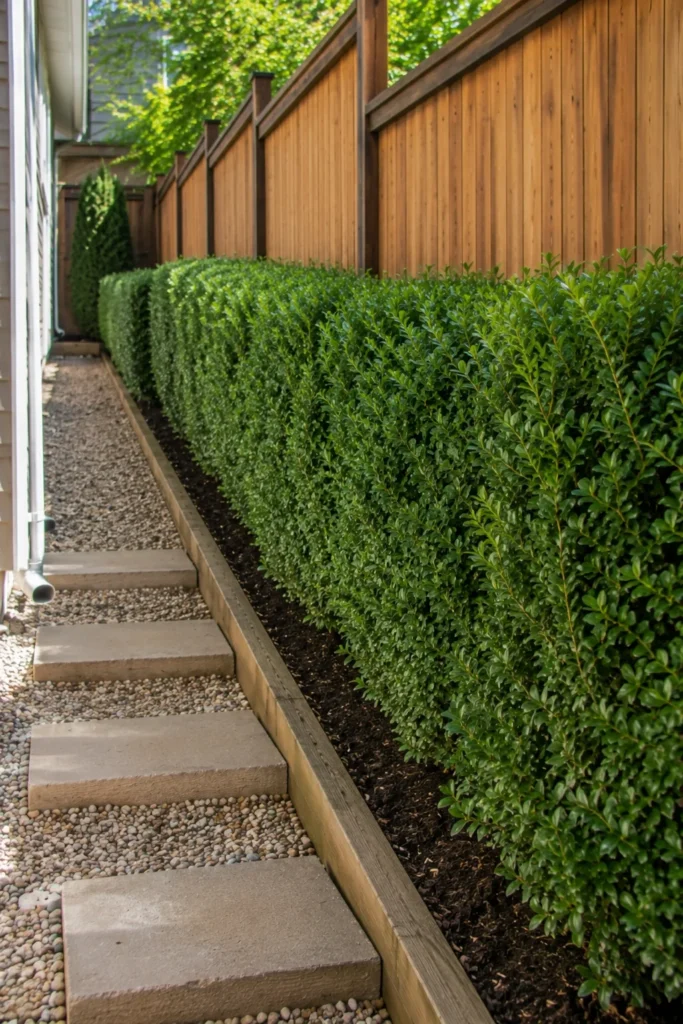
Why it works: A dense hedge will keep the views clear all year round, unlike deciduous shrubs that will be devoid of foliage in winter.
Best material: Boxwood; Textured with berries: holly.
Ideal for: Side yards that have a minimum of 3 feet of planting space next to the fence.
My advice: Trim top just a bit smaller than bottom. Helps to prevent lower limbs from becoming sparse with age.
8. Trellis with Climbing Vines

What makes it work: It requires very little ground space, and a vertical trellis provides screening height – which is important in a narrow yard.
Ideal plants: Clematis for blooms or climbing hydrangea for more lush foliage.
Ideal for: Side yards so narrow that a hedge or tree cannot be planted.
My suggestion: Use posts, not your fence, to attach the trellis. Over time, this helps prevent vines from damaging the fence.
9. Bamboo Screening Panels
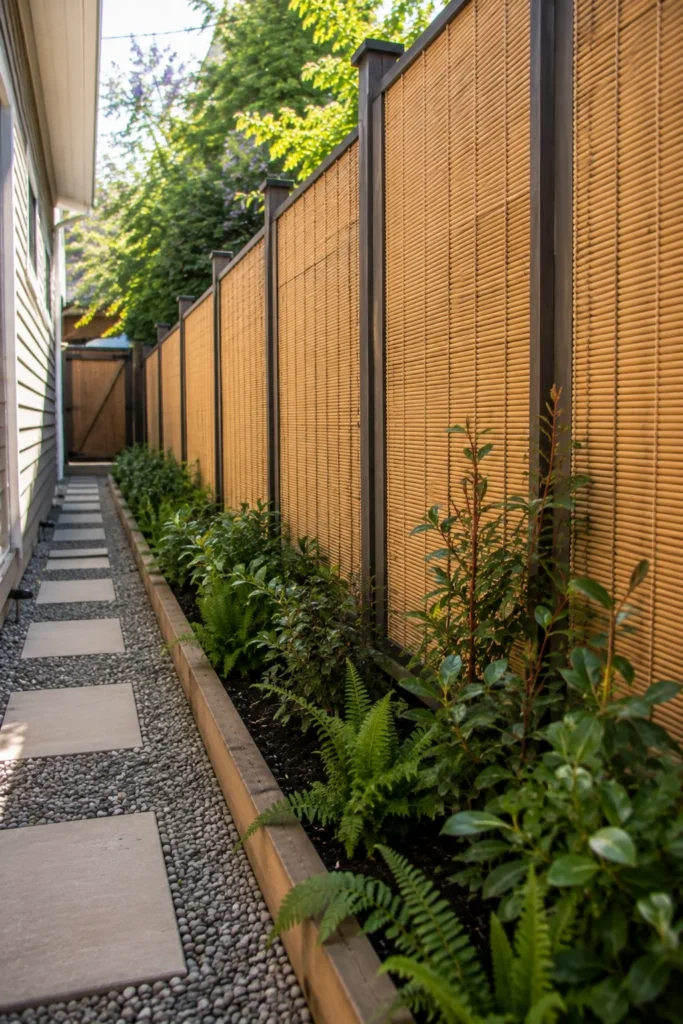
Why it works: It provides privacy right away, instead of waiting years for plants to grow.
Best materials: Rolled bamboo fencing or solid wood lattice panels will both be quickly installed along an existing fence.
Ideal for: People who want privacy now, not over time.
My suggestion: Use panels with a couple of pots of plants in front. This helps tone down the appearance and keeps it from looking like a wall.
Drainage Solutions for Narrow Yards
All the side yards I have encountered direct all the water to a foundation or a neighbor’s fence. The first thing to fix is that.
10. French Drain Along the Foundation
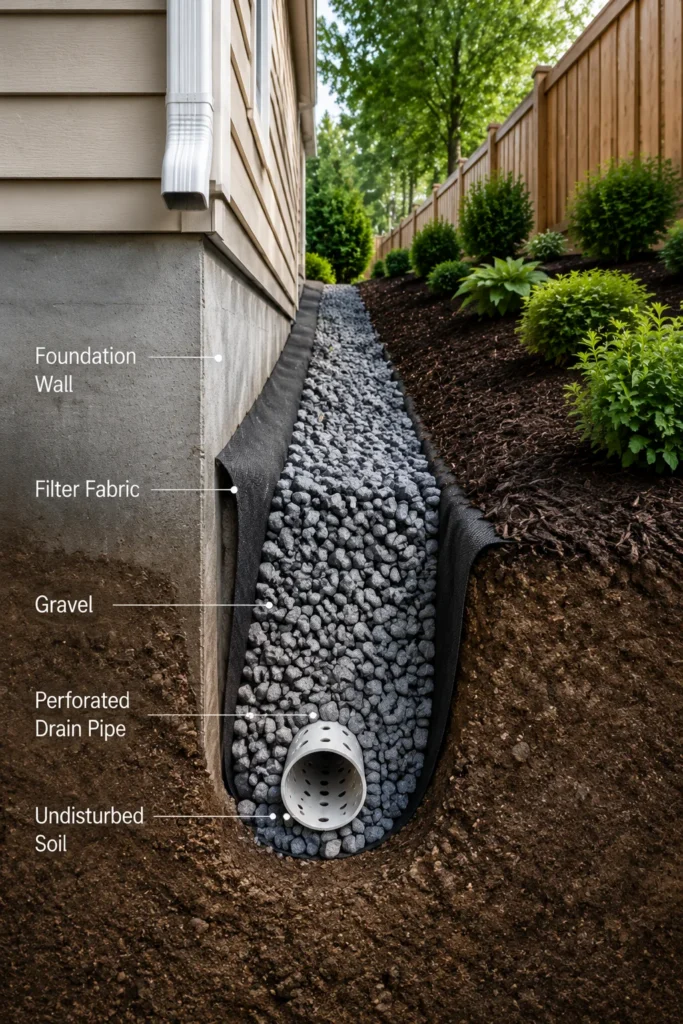
Why it works: A waterproof pipe with holes collects water before it reaches your foundation and sends it somewhere safer.
Best materials: 4″ perforated pipe, covered in fabric, in a trench filled with gravel.
Ideal for: Side yards where water puddles next to the house after rain.
My suggestion: Place the outlet in a visible area, such as a splash block. It’s much easier to verify it’s really draining.
11. Downspout Extension Channel

What makes it work: A longer downspout takes water farther from the house, preventing roof water from adding to an already wet, sloped side yard.
Best materials: Rigid PVC extensions or a buried corrugated pipe will both reliably carry water further away.
Ideal for: Homes with direct connection of the gutter downspout to the side yard.
My suggestion: It should be at least 6 feet from the foundation. Extensions of only a few minutes offer little benefit.
12. Permeable Pavers

Why it works: The spaces between the pavers allow water to filter through to the ground instead of running off to a low spot.
Best materials: Permeable concrete pavers or paver grids with gravel in them can accommodate foot traffic or light cart traffic.
Ideal for: Side yards that are being used as a walkway and have drainage issues.
My suggestion: Use fine gravel, not sand, to fill the spaces. Sand washes away and must be continually replenished.
13. Dry Creek Bed Channel

Why it works: A narrow stone channel provides a channel for runoff to follow the slope rather than spreading around at random and eroding.
Best materials: Mixed sizes of river rock over landscape fabric at the low point of the yard.
Ideal for: Side yards with a natural low spot that naturally drains to.
My suggestion: Be on the narrow side and stick to the fence line. Does not compromise your usable walking width.
Plants That Thrive in Narrow Sloped Spaces
Fences and the house wall often shade side yards, making them less sunny than other areas of the property. In this case, plant selection is paramount.
14. Dwarf Shrubs

Why it works: The plants grow compactly, providing structure and greenery without overcrowding a narrow sloped walkway.
Good plants: Dwarf boxwood and compact nandina will not grow out of hand if not pruned regularly.
Ideal for: Side yards that require some structure throughout the year but are tight.
My advice: Read the mature width on the tag twice. The only place where an extra foot of spread is really important is in the side yards.
15. Shade-Tolerant Groundcover

What makes it work: Low-light plants that spread fill the shady area created between the fenced yard and the house.
Ideal plants: Vinca minor or wild ginger will thrive in part to full shade.
Ideal for: North side yards with little sun.
My advice: Consult your local list of invasive plants before planting vinca. It is limited in some areas, and a native alternative is just as effective.
16. Ornamental Grasses for Narrow Beds

What it lacks: It does not spread out into a narrow planting strip as upright, clumping grasses do.
Best plants: Japanese forest grass in shady areas or fountain grass in more sunny areas.
Ideal for: Fence beds and narrow beds that need softening but not bulk.
My suggestion: Mow grasses back in late winter. Spring growth is significantly improved in a small, visible area.
17. Terraced Container Gardening

How it works: With stacked containers, no digging or grading is required to grow plants on a slope.
Best materials: Fiberglass planters in graduated sizes withstand the outdoor elements better than plastic or terra cotta.
Ideal for: Slopes that are too steep hillside landscaping or rented properties.
My suggestion: Use light material in the bottom 1/3 of large pots. It saves weight and money, and it doesn’t affect drainage.
18. Native Pollinator Plants

Why it works: Native flowering plants provide pollinators such as bees and butterflies with food and shelter and can withstand the area’s natural rainfall without additional watering.
Best plants: Look for a native seed mix appropriate for your state and/or region.
Ideal for: Sunny side yards where you want low-maintenance color and wildlife support.
My suggestion: Wait till fall to remove seed heads. Birds use the flowers when they are in bloom.
Finishing Touches for Function and Style
With structure, privacy, drainage and plants taken care of, these final touches complete the look.
19. Solar Path Lighting

Why it works: Low-voltage solar lights make a narrow side yard safe to walk in at night without any electrical wiring.
Best materials: Stake-mounted solar lights with warm LED lights are more in tune than those with bright white lights.
Ideal for: Any side yard used frequently for a walk to a gate, trash cans, or the back door.
My suggestion: Don’t put lights on both sides; put them on alternate sides. It’s not as much a walk on the red carpet as it is deliberate.
20. Side Gate Landscaping

The reason it works: The plants or pavers create a sense of design for the entire narrow space.
Best materials: Matching dwarf shrubs or pots of plants on both sides of the gate are good.
Ideal for: Side yards where the entrance gate is the first thing that visitors or guests see.
My suggestion: Keep any plants here low enough to allow the gate to open and close.
21. Mulch & Clean Edging

Why it works: A sloped side yard looks cared for when there’s a clear edge and fresh mulch.
Best materials: Shredded hardwood mulch with steel or aluminum edging will maintain their line on a slope better than plastic edging.
Ideal for: Any side garden, no matter how much you’ve done to it.
My recommendation: Re-edge twice yearly. Mulch and soil will move down slopes more rapidly than on level ground.
Comparing Your Side Yard Options
| Solution | Best for | Space Needed | Maintenance |
| Mini Retaining Walls | Slopes under 20% grade | 4+ feet wide | Low |
| Stepped Stone Path | Gradual, walkable slopes | 3+ feet wide | Very Low |
| French Drain | Water pooling near foundation | Any width | Very Low |
| Columnar Trees | Privacy in tight spaces | Under 6 feet wide | Low to medium |
| Gravel Bed Leveling | Utility or storage side yards | Any width | Low |
Frequently Asked Questions
What is the best landscaping for a narrow sloped side yard?
A combination of a stepped path, drainage fix, and columnar plants usually works best. Trying to fit one solution to every problem rarely works in a tight space.
How do you fix drainage in a sloped side yard?
Start by extending downspouts and adding a French drain along the foundation. A dry creek bed channel helps if water still pools after that.
What plants grow well in a shady, sloped side yard?
Shade-tolerant groundcover like wild ginger and grasses like Japanese forest grass both do well. Avoid full-sun plants here even if the tag says partial shade is fine.
Do I need a retaining wall for a small side yard slope?
Not always. Slopes under 15 percent grade often do fine with just groundcover and mulch, saving the wall for steeper sections.
How do I add privacy to a narrow sloped side yard?
Columnar evergreens or a trellis with climbing vines both add height without using much ground space. Bamboo panels work if you need privacy immediately.
Final Thoughts
That first muddy spring pushed me to fix every inch of that side yard properly.
A sloped side yard gets ignored more than any other part of most properties, but it doesn’t have to stay that way.
Pick one problem, drainage, privacy, or structure, and start there before tackling the rest.
Go measure your side yard this week and choose your first fix from this list.
