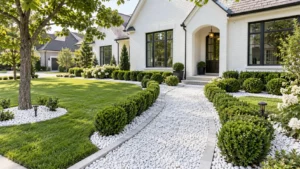
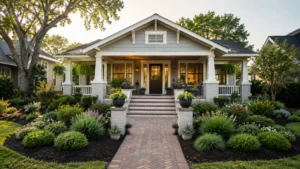
I had a set of worn-down grass and a crooked shrub brick landscaping in front of my house.
I kept putting off the repair because I didn’t think anything was interesting I could do with the space.
I did a little front-garden makeover, and I was wrong.
A tight strip doesn’t necessarily feel cramped or sparse. It just requires more intelligent decisions than a larger yard.
These ideas I’ve tried on my own house in the last 2 years. I included all of them because they worked!
Let’s get your entry looking its best for small front garden!
Entryway And Pathway Ideas
1. Create A Clear Walkway
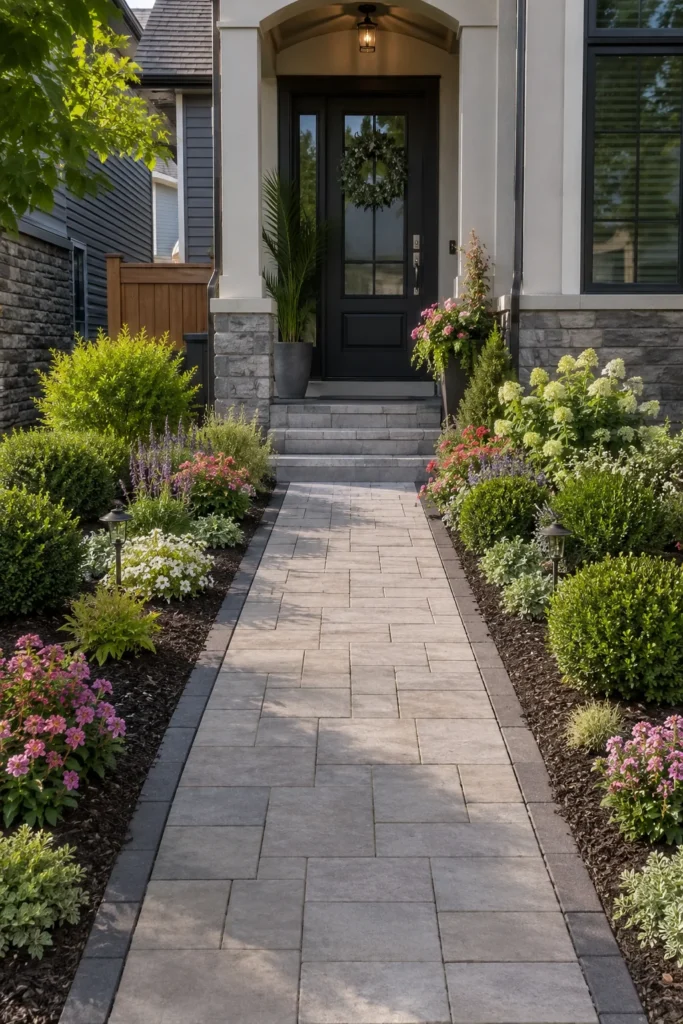
Your front door creates the first impression, and the walkway to it is just as important.
I replaced my cracked concrete path with concrete pavers, and it added instant completeness to the entire garden.
Ideal materials: Brick, Natural Stone, Concrete Pavers.
Ideal for: Houses where the entryway is not clearly defined or is compromised.
suggestion: The path should be at least three feet wide for two people to walk side by side.
2. Mix Materials Along The Path

Brick borders and gravel infill will provide rhythm for free.
I used large stone slabs and turf strips, alternating them along mine, and it feels custom-built, not store-bought.
Ideal materials: Brick, Gravel, Natural Stone Slabs.
Ideal for: Those who want a designer appearance without breaking the bank.
My suggestion: limit materials to 2 or 3, or the path becomes cluttered.
3. Frame The Entrance With Planters

Planting on both sides of a door instantly makes it feel welcoming.
I used matching urns of seasonal flowers, and changed them out every season to keep the entrance looking fresh.
Best material : Cast stone, glazed ceramic, or composite resin urns are the best materials.
Ideal for: Front doors that lack style or are unfinished.
My Suggestion: If you have an overhang porch, I suggest choosing a plant that will grow in part shade.
Low-Maintenance Ground Choices
4. Add A Gravel Accent Bed

Gravel provides texture and reduces upkeep almost to nothing.
Replaced a section of grass with a gravel strip and used drought-tolerant plants, and left it alone ever since.
Best material: Concrete, brick, or rock.
Ideal for: Dry weather or for those who are fed up with the task of edging grass.
My suggestion: Install steel edging to prevent gravel from getting on the sidewalk.
5. Try A Checkerboard Grass And Gravel Pattern

Alternating square grass tiles and white gravel will create a clean, geometric look.
I did this on my front walk, and it doesn’t look like a cold walk.
Best material: Sod squares, white marble chip gravel, and steel dividers are the best materials.
Ideal for: Contemporary or modern house facades.
My tip: Make sure that the squares are all the same size or the pattern will not be crisp.
6. Sheet Mulch Over Bad Soil

Sheet mulching corrects the compaction and debris in the front bed soil without digging.
Cover a rough area with cardboard, cover with garden soil, and plant within a week.
Best material: Sand, gravel, or gravel mix.
Ideal for: Soils with poor or rocky soils.
My suggestion: Is to thoroughly wet the cardboard layer before you add the soil, so that it breaks down evenly.
Plant Choices For Small Spaces
7. Build A Succulent Garden
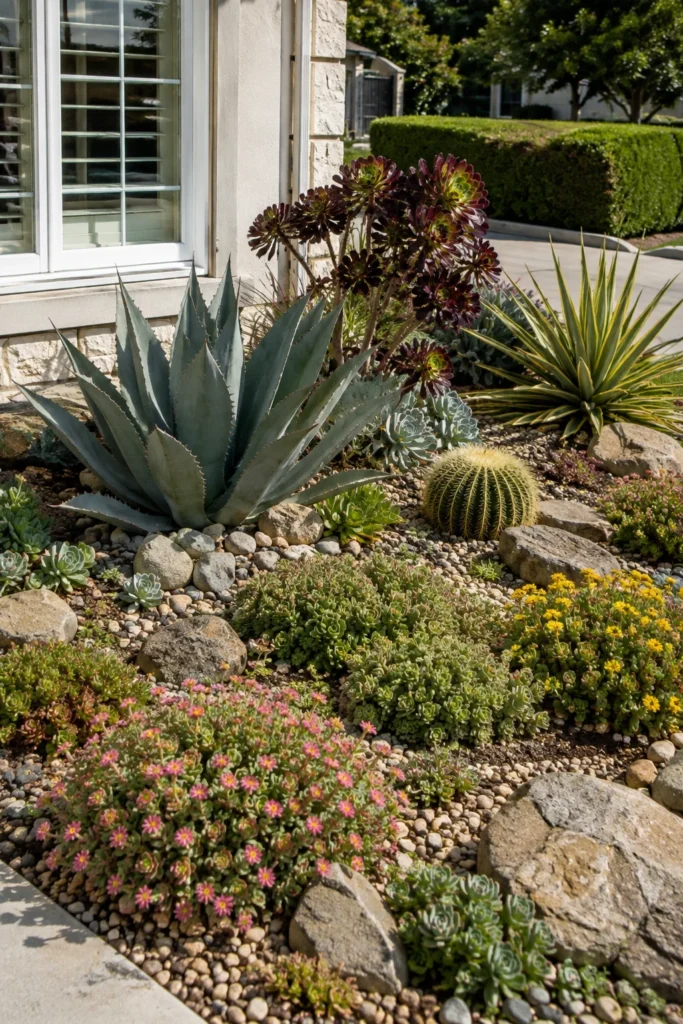
Succulents grow best in a tight, sunny location and require little water after established.
I planted some sedum, agave, and a small barrel cactus in a dry corner, and it seems like it was done on purpose all year long.
Best plants: Sedum, agave, and echeveria are the best plants.
Ideal for: Hot, sunny front gardens, with fast drainage.
My advice: Don’t overwater. It is better to give too much water than too little to more succulents.
8. Plant A Mini Cottage Garden

A cottage garden is a small space filled with color rather than grass.
I have daisies, lupines, and black-eyed Susans growing along my walkway, and it is wild in a good way.
Best plants: Black-eyed Susan, daisies, lupine.
Ideal for: Anyone who wants a soft, romantic front-garden look.
My suggestion: Let plants hang a little over the edge of the path for a more natural, less structured look.
9. Frame With Evergreen Shrubs

Evergreens will provide structure in your front garden year-round, even in winter.
I covered my foundation bed with boxwood, and it helps to keep my design together even after flowers have faded.
Ideal plants: Boxwood, small holly, small arborvitae. Ideal for: Homes that want a year-round look but don’t require much maintenance.
My advice: Cut twice a year, rather than once, and it will be a light shearing.
10. Add One Ornamental Tree Off-Center
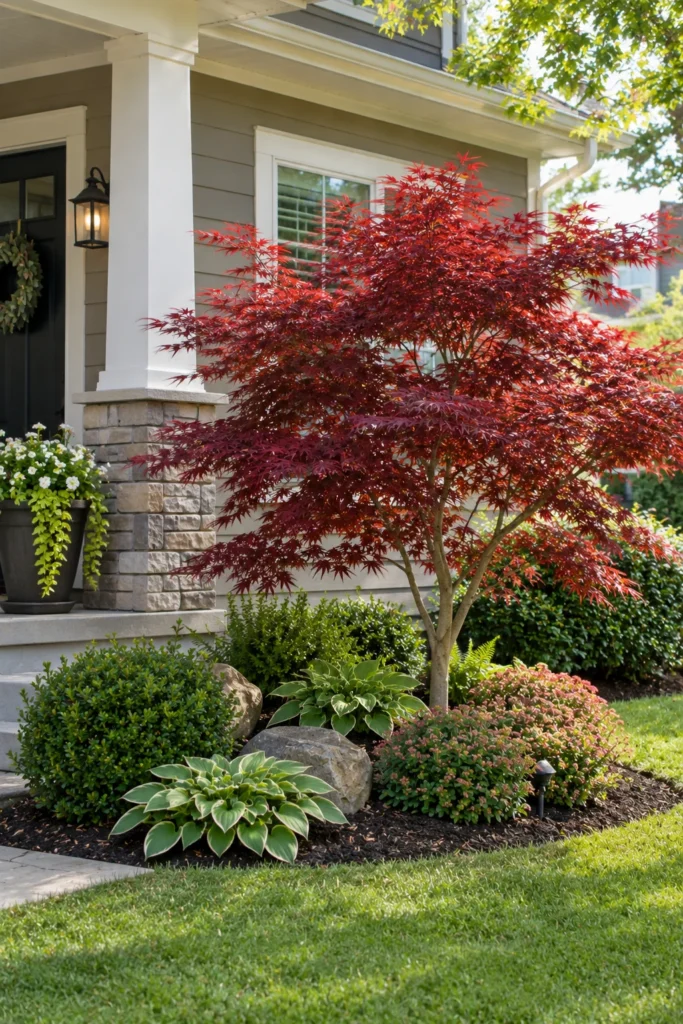
One small tree can provide a tree line, and instantly make a front garden more interesting.
I put a Japanese maple just off-center in my yard near my porch, and it’s the center of the whole yard.
Good plants: Japanese maple, crepe myrtle, dogwood.
Ideal for: Front gardens with no vertical elements.
My advice: Don’t use a dead center position. Nearly always it is better to use an off-center alignment.
Vertical And Space-Saving Ideas
11. Go Vertical With Wall Planters

Wall-mounted planters are a good way of adding greenery without taking up any ground space.
I added a row to my porch wall, and it completed the odd space beautifully!
Best material: Felt pocket planters, galvanized boxes, and cedar panels are the best materials.
Ideal for: Compact foundation beds where there is little or no space.
My suggestion: Plant in layers with plants at different levels.
12. Install A Trellis For Climbing Vines
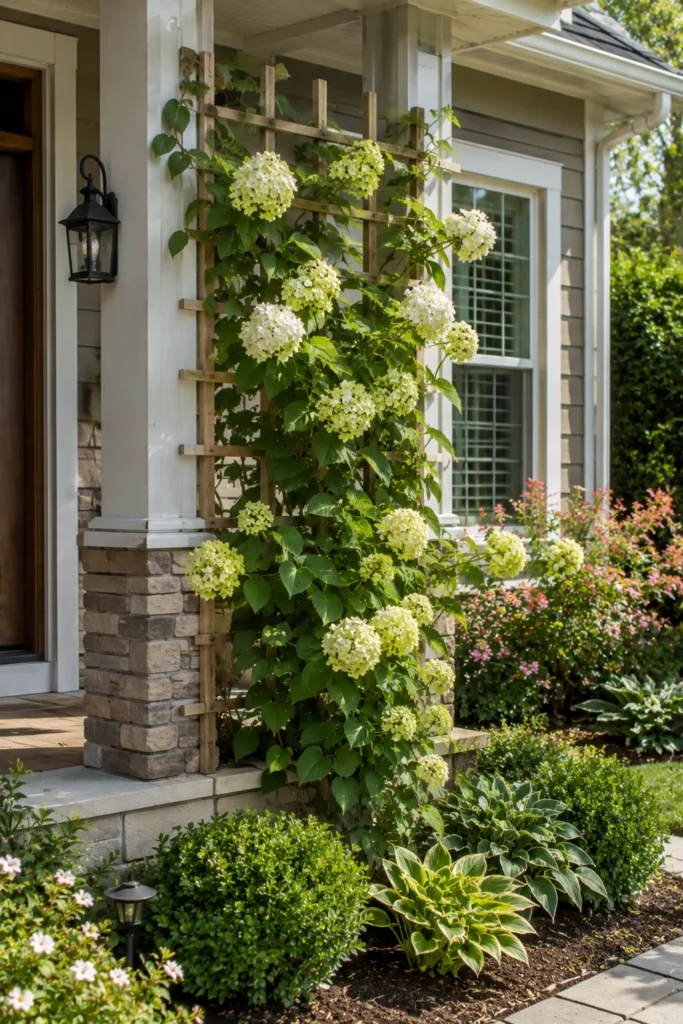
A trellis enables vines to climb up rather than spread out in your beds.
I used a climbing hydrangea to frame the entrance to my porch, and it has done just that!
Best plant: Climbing hydrangea, clematis, and jasmine are the best plants.
Ideal for: Narrow beds that require height, but not width.
My suggestion: Take care of young vines by soft tying them, rather than breaking new growth.
13. Use Raised Garden Beds

Raised beds clearly outline planting areas and remedy poor soil in a single stroke.
I created a low cedar raised bed to line my walkway, and it helps to keep the garden tidy.
Best material: Wood materials (cedar, corrugated metal, composite lumber) are the best materials.
Ideal for: Small gardens that need neat, tidy boundaries.
My suggestion: Don’t exceed 18″ in raised beds along walkways to maintain the line of sight.
Design And Finishing Touches
14. Add A Mirror For Depth
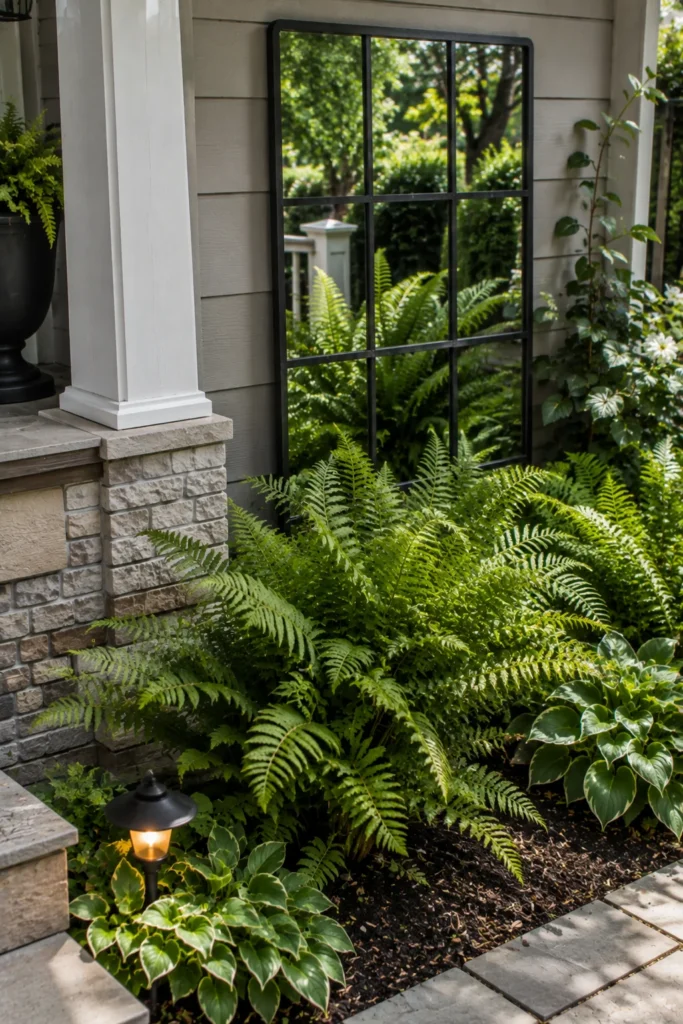
A mirror mounted in a planting bed will double a small space and can be weatherproofed.
I planted one in the back of a fern bed close to my front porch, and people always ask, “Did your garden grow?
Best materials: Acrylic mirror (rated for the outdoors) and framed metal mirror panels.
Ideal for: Small, confined front gardens that need depth.
My suggestion: Turn the mirror so that you can see greenery, not your front door or windows.
15. Group Plants By Similar Texture

Group similar plants together so you don’t make a small garden look cluttered or busy.
I ended up not mixing all the plants randomly, but grouping them by texture, and the entire bed looked more planned out.
Good plants: Lavender, yarrow, ornamental grasses.
Ideal for: Gardens in need of a little tidying up.
My suggestion: Plant the same 3 or 4 plants over and over, rather than planting new plants everywhere.
16. Add Low Voltage Lighting

Lighting enhances the front garden’s presence into the night.
I installed small path lights and uplighting along my walkway and on my Japanese maple, and the entrance looks great at night.
Best plant: Solar stake lights, low-voltage LED path lights, and uplights are the best materials. Best for: Homes that desire curb charm following sundown as well.
My suggestion: Light only one focal point and the path. Don’t light the entire bed.
17. Keep The Palette Simple

A small, crowded garden can be peaceful rather than hectic with a small selection of colors.
I only planted greens, whites, and one accent color in my front garden, and it looks so clean and tidy all year round!
Best plants: White hydrangea, boxwood, accent flower (such as salvia).
Ideal for: Anyone who wants a clean, tidy look for their front garden.
My tip: Choose an accent color, then select the other plants to complement it.
Quick Comparison: Path Materials For Small Front Gardens
| Material | Cost | Maintenance | Best style |
| Brick | $$ | Low | Traditional |
| Natural stone | $$$ | Low | Cottage or rustic |
| Concrete pavers | $ | Low | Modern |
| Gravel | $ | Medium | Minimalist |
FAQ
What is the cheapest way to landscape a small front garden?
Gravel beds, mulch, and a few well-placed perennials go the furthest for the least money. Save hardscaping for once you know your layout works.
How do I make a small front garden look bigger?
A mirror, a curved path, and layered plant heights all trick the eye into reading more depth than the space actually has.
What plants work best for a small front garden?
Compact shrubs, dwarf trees, and low groundcovers give structure without overwhelming a tight bed.
Do small front gardens need irrigation systems?
Not always. Drip irrigation helps in hot climates, but many small front gardens do fine with hand watering two or three times a week.
Final Thoughts
A small front garden doesn’t need to feel like a compromise.
I spent years assuming mine was too tiny to matter, and I was completely wrong.
Every idea here came from actually testing it on my own home.
Start with the entryway, then build outward from there.
Pick one idea from this list and start this weekend.