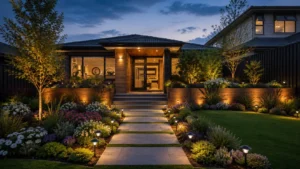
My front yard is as small as most driveways.
For years, I thought this meant I wouldn’t be able to have a real garden out front. I was wrong.
That is when I began to take the upgrade of the small front garden seriously, and it changed my perspective on the entire garden.
You can’t afford to waste any plants or space in a small yard. It’s not a restriction. It’s a good thing.
I had to do a couple of trial runs to work that out. I overplanted, then underplanted, until I got it just right.
The following 17 Tiny Front Garden designs helped me transform my postage-stamp yard into the nicest on the block.
Layout Tricks for a Small Front Yard
1. Curved Narrow Border Bed

A curved bed along the front of the house is deliberate; a straight strip is more likely to be an afterthought.
Best materials: Steel or brick edging that will keep the curve firm over time.
This is good for yards less than 15 feet deep.
My suggestion: Test the curve on the ground before digging a garden hose to see if it is the right curve. It’s a simple method to obtain the desired shape on the first try.
2. Single Specimen Tree Anchor
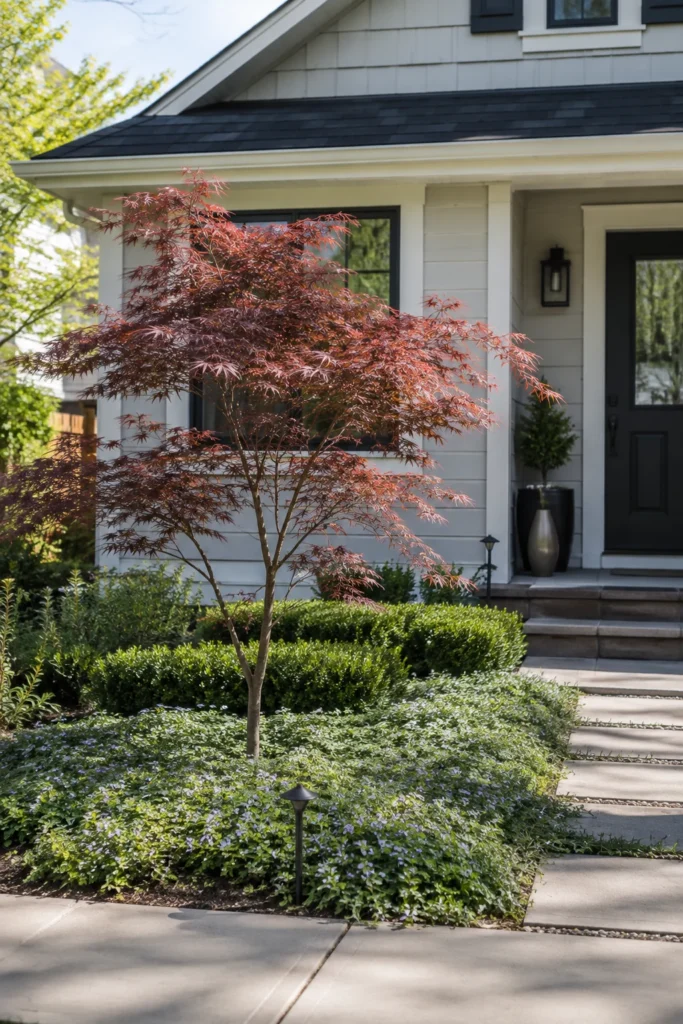
A small tree provides height and structure without taking up too much ground. It’s the one element that can transform a small yard from unplanned to planned.
The best plants: Are Japanese maple, crape myrtle, or a dwarf magnolia (depending on climate).
This is suitable for a yard where there is only one good location for a structure higher than eye level.
My suggestion: plant it off-center, NOT in the center. It is more natural and doesn’t obstruct the front door.
3. Layered Planting Rows

A narrow bed will look full if planted in tiered rows with tall plants in the back and short plants in the front.
Ideal plants: A combination of perennials that grow up in the rear and ground cover in the front.
This applies to any bed less than 3 feet deep.
My suggestion: Don’t plant plants in rows but in staggered rows. It conceals the bare soil more quickly as everything fills in.
4. Vertical Planter Wall
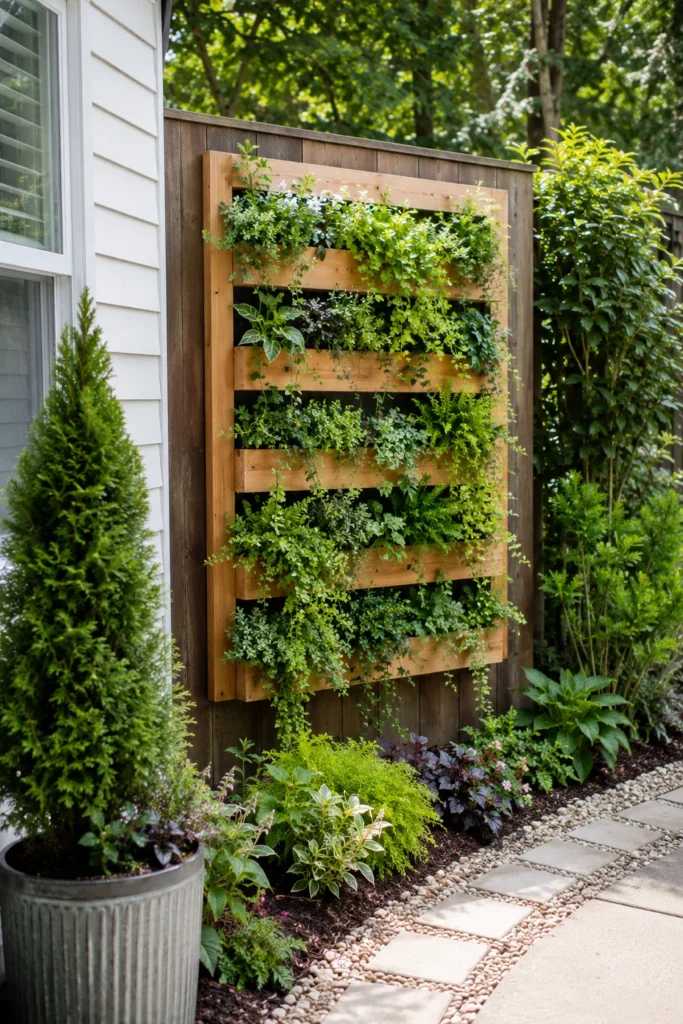
A vertical planter adds dimension to a garden when ground space is limited, and it attaches to a wall or fence.
Best materials: Cedar wall planters or modular felt pocket planters.
Perfect for a small yard with an empty fence or wall facing the street.
My advice: Don’t hang it up high; hang it at eye level. It is visible and is easier to water.
Plants That Make a Tiny Garden Feel Bigger
5. Dwarf Shrub Structure
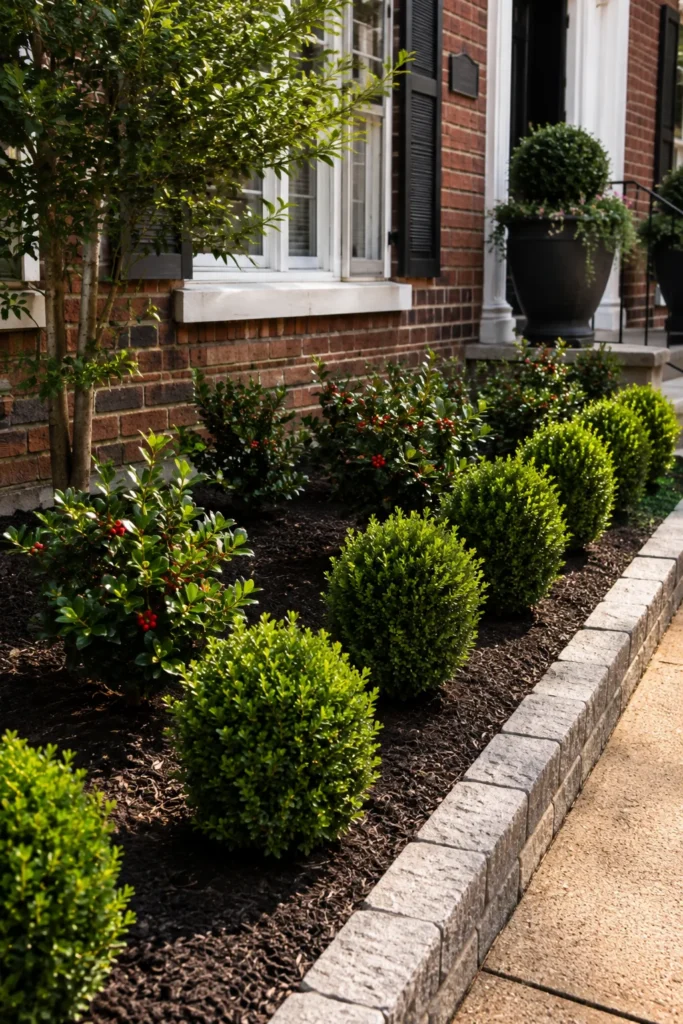
Dwarf shrubs provide year-round structure to a small yard without ever getting too big.
Best plants: Dwarf boxwood, Dwarf spirea or compact holly.
This is a good choice for anyone who doesn’t want to prune constantly.
My advice: Plant shrubs at full size when they are small; it will look sparse at first, but they will grow to full size. Putting them together now only means splitting them later.
6. Compact Ornamental Grasses

Small ornamental grasses provide movement and texture without taking up as much space as a large shrub.
Best material: Dwarf fountain grass and blue fescue are great options.
They’re suitable for use between other plants or as a border.
I suggest: Mowing the grasses back in late winter. The plants look much better in fresh spring growth than year-old plants.
7. Trailing Window Box Plants

Hanging plants that spill over an edge will add depth to a small space.
Best material: Trailing petunia, sweet potato vine, or creeping Jenny are the best plants.
Perfect for window boxes or the front edge of a raised bed.
My suggestion: Is to pinch back trailing plants early in the season. This encourages branching and creates a fuller spill later.
8. Repeating Color Palette
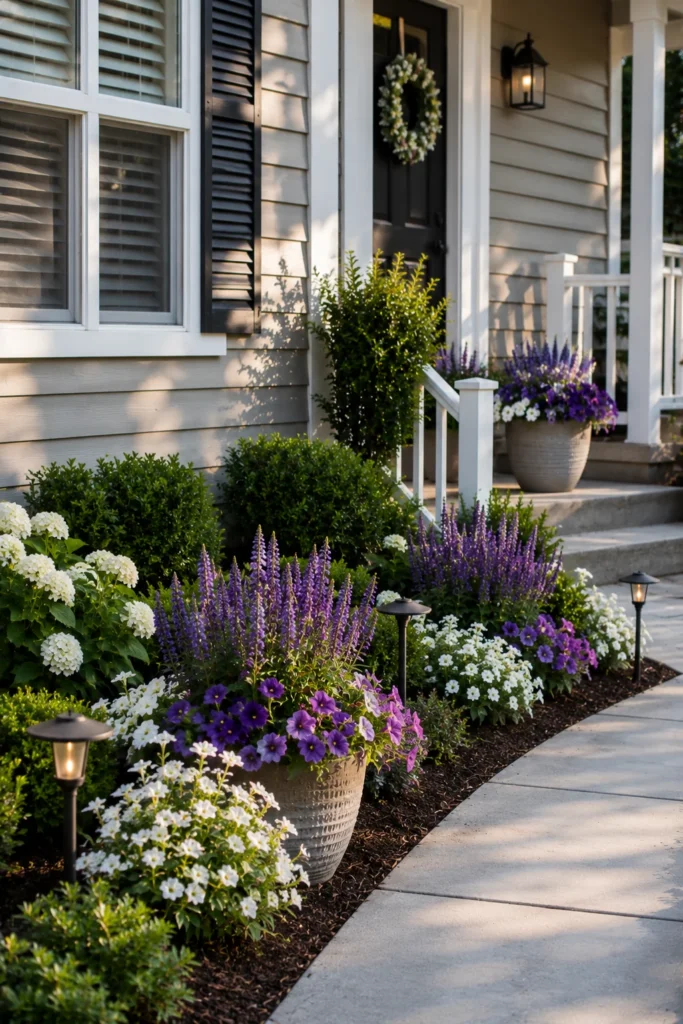
If you use the same 2 or 3 colors in the yard, it will connect all of the elements, even in a small yard. Too many colors in a small space can vie for attention.
Best material: The best way to do this is to choose one primary color, one accent color, and green as your neutral color.
This is perfect for those who want the yard to look designed, not just planted.
My hint: Use the accent color at least 3 times. One pop of color feels random. Three is the number of reads as a plan.
9. Evergreen Anchor Plants

It is important in a small yard to have evergreens to keep the space from appearing empty all winter, but more so than in a large yard.
Best plants: Small conifers or compact holly, or dwarf boxwood.
This is important for any yard with only 1 or 2 planting beds.
My suggestion: Is to have at least 33% evergreens in your plantings. It helps prevent the yard from vanishing each Jan. Hardscape features are essential for any garden, but they can be especially beneficial in small spaces.
Here’s how the most common dwarf shrubs compare for a small yard.
| Shrub | Mature Size | Sun needs | Season of Interest | Best for |
| Dwarf Boxwood | 2 to 3 ft | Full sun to part shade | Evergreen year-round | Formal edging |
| Dwarf Hydrangea | 3 to 4 ft | Part shade | Summer blooms | Color near the entry |
| Dwarf Spirea | 2 to 3 ft | Full sun | Spring and fall color | Low border |
| Compact Holly | 2 to 4 ft | Full sun to part shade | Evergreen, winter berries | Corner anchors |
Hardscape Features for Small Spaces
10. Mini Gravel Path

A short gravel path provides a footpath to walk on other than your planting bed.
Ideal materials: Pea gravel or decomposed granite, and edged with steel or brick.
This applies to any straight-line sidewalk-to-door path.
My suggestion: A minimum 30″-wide path. If it’s too narrow, it will be uncomfortable to walk on.
11. Small Paver Seating Nook

A small front yard can have a place to sit, instead of just a place to look at, with a small paved corner.
Best materials: Concrete or natural stone pavers (one small bistro set sized).
This is preferable in a yard that has a little extra space close to the porch.
My suggestion: Face the nook toward the street, not the front door. It creates a more private atmosphere.
12. Low Metal Edging

In a small yard, mulch, gravel, and soil don’t spill onto the sidewalk if it is kept cleanly edged.
Best materials: Steel or aluminum edging, flush with grass.
This works well for any bed adjacent to a walkway or driveway.
My suggestion: Go with black or dark bronze edging. It will not create a hard line around the bed, but rather fade out visually.
13. Decorative Pot Cluster

For added height and color, plant a temporary cluster of pots.
Best materials: 3-5 pots of different heights, clustered close to the entrance.
Renters and those who enjoy changing the scene every season will find this to be a great option.
My suggestion: Use an odd number of pots and have varying heights. Even numbers and the same height read as flat.
Low-Maintenance Small-Space Solutions
14. Raised Bed With Drip Irrigation

Daily watering is no longer on your list with a raised bed with built-in drip irrigation. It also warms up faster in the spring, giving plants a head start.
Best materials: Cedar or simple composite raised bed frame, with a simple drip line on a timer.
Perfect for those who are on the move or don’t want to water each day.
My advice: Don’t plant over the drip line; plant under it. Tubing can easily be laid on bare ground.
15. Groundcover Instead of Mulch

Living ground cover will serve the same function as mulch, but without the need to apply mulch annually.
Ideal plants: Creeping thyme, sedum or ajuga (depending on the amount of sun).
This is perfect for those who don’t want to purchase mulch each spring.
My advice: Plant the ground cover slightly closer together than indicated on the tag. It covers the ground more rapidly and leaves less bare ground for weeds to take hold.
16. Self-Seeding Annuals

Self-seeding annuals will reappear year after year, providing color without the need to replant.
Good plants: Cosmos, alyssum, or California poppy.
This is suitable for a low-maintenance yard where some year-to-year fluctuation is acceptable.
My suggestion: Deadhead a few flowers in the fall so that they will seed. Next year’s flower bed for free!
17. Solar Path Lights
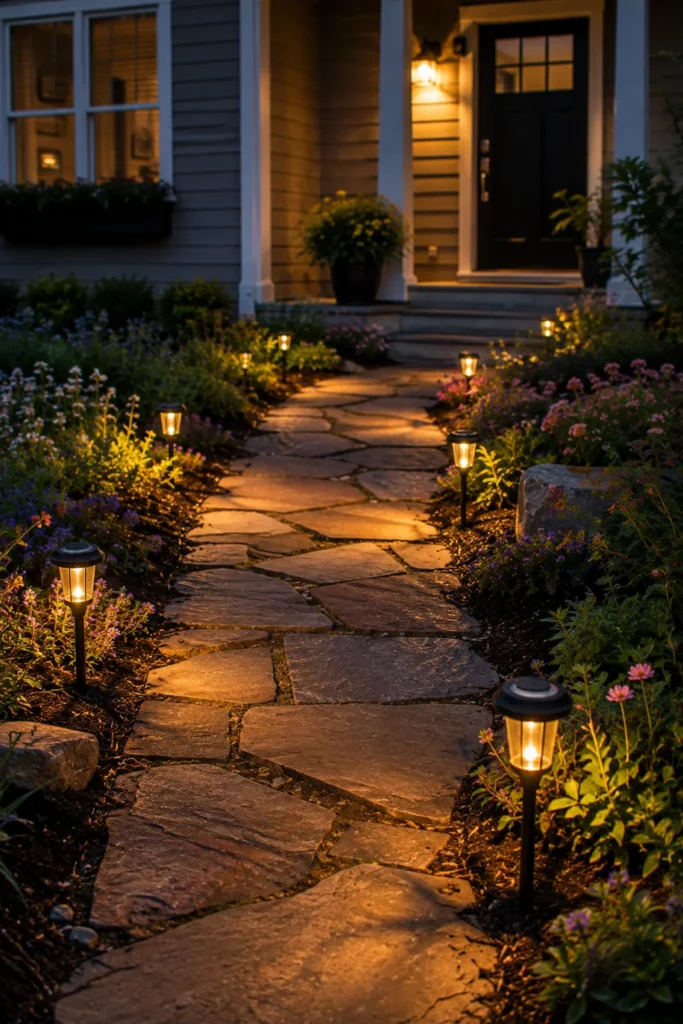
Curb appeal at nighttime is enhanced with small solar lights, no wiring and no electrician.
Best products: Solar stake lights or small solar lanterns along the edge of the path.
It’s an inexpensive weekend project for any little front yard!
My suggestion: Place lights slightly closer to the package than recommended. Tiny yards need more light per square foot at night.
Frequently Asked Questions
What’s the best layout for a tiny front garden?
A curved border bed with one anchor plant usually works better than a straight, symmetrical layout. Curves make a small space feel larger than it actually is.
How do I make a small front yard look bigger?
Layered planting heights, a repeating color palette, and one focal point all help. Avoid cramming in too many different plant types, since that makes a small space look busier and smaller. Curved lines also read as more spacious than straight, boxy layouts.
What plants work best in narrow garden beds?
Dwarf shrubs, compact grasses, and trailing plants all work well in beds under 3 feet deep. Skip anything that spreads aggressively, since it will outgrow a narrow bed fast.
Do I need a lawn in a tiny front yard?
No. Many tiny front yards look better and need less upkeep with ground cover or a small gravel area instead of turf.
How much does a small front yard makeover cost?
A basic DIY refresh with plants, mulch, and edging can often be done for a few hundred dollars. Adding hardscape like pavers or a raised bed will raise that cost, but usually not by much given the small footprint.
Final Thoughts
I used to think my front yard was too small to matter.
Now it’s the smallest yard on the street with the biggest curb appeal.
None of these designs need a huge budget or a huge space. They just need a plan that actually fits the size you have.
Small spaces reward good planning more than big ones do. Every choice shows.
Pick one design from this list and start there this weekend.