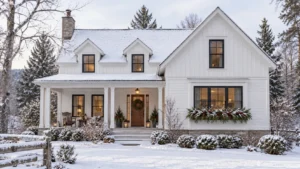
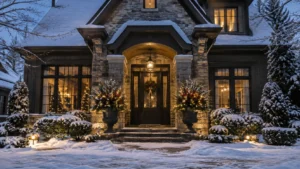
My first time getting ready for a winter plant was a dismal pile of frozen mush at Christmas time.
For that reason, I began taking the plunge into winter planters, one pot at a time.
After five years and a whole lot of broken-hearted arrangements, I now know what remains.
These are 15 winter container planters combos that I’ve actually maintained, or created to be completely lifeless.
Stick around. It’s time to give your porch a makeover.
Evergreen and Structural Containers
I always begin with a couple of evergreen pieces as they will be on display throughout the coldest part of the season.
1. Spruce Tip and Boxwood Planter

The fresh spruce tips last longer in their fragrance and color than any other cut greenery that I have ever used.
The two textures complement each other so well that this combo works. Spruce is natural, boxwood is custom.
Best materials: Cut spruce tips, boxwood clippings, or floral foam soaked before freezing temperatures set in.
Ideal for: Big containers placed either side by side or along the front door or steps.
My suggestion: Wetting the foam base before the first hard freeze. After that, it’s virtually impossible.
2. Cedar and Juniper Cone Combo
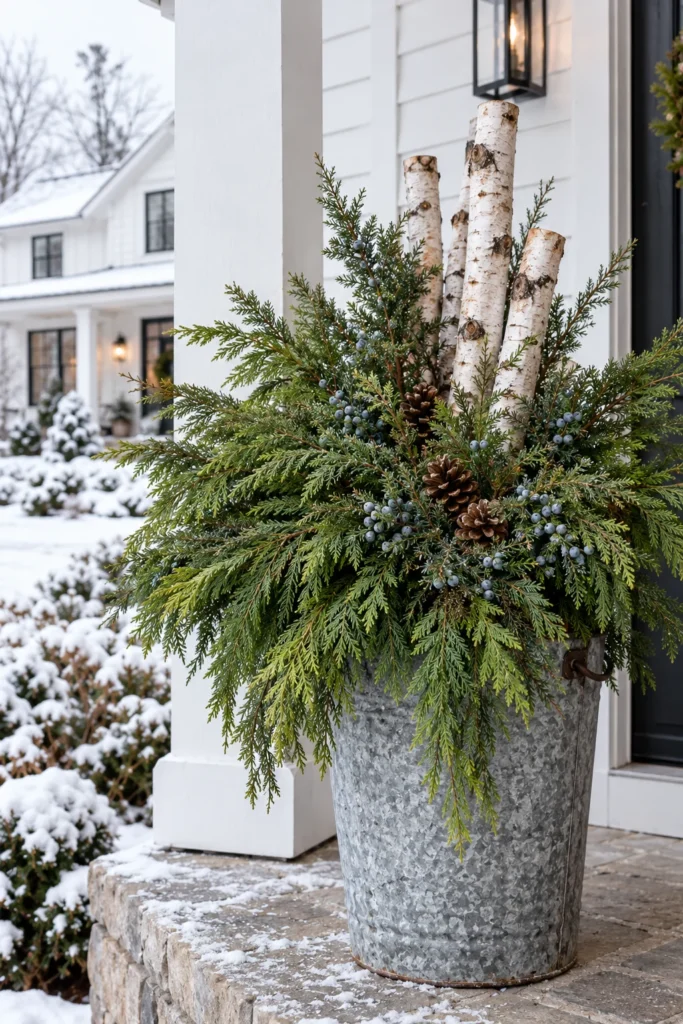
Most cold season combos don’t have the soft, feathery texture of cedar branches.
I find it works well with juniper, as the blue-green berries add a little color without being too Christmasy.
Best materials: Cedar branches, juniper sprigs and berries, small pinecones for stuffing.
Best for: A natural look, suitable for late winter after the holidays.
I suggest: Layering Cedar first, then juniper. It is not as difficult as the other way round.
3. Dwarf Conifer Trio For Winter Container Planters

Instant structure to any container is provided by three small potted conifers in varying heights.
This is a very easy one to do. Conifers are cold-hardy plants and require very little care throughout the growing season.
Best materials: 3 dwarf conifers in various varieties, and moss to cover the visible soil.
Ideal for: Anyone who doesn’t want the hassle of maintaining cut greenery for a living display.
My suggestion: Choose varieties in different shades of green so the tricolour doesn’t look dull.
4. Boxwood Ball Topiary Planter

The round boxwood ball, even in a simple pot, looks like a high-priced, custom-made item.
I like to use this combination when I want something that seems like it was meant to be there, but isn’t overly decorated.
Ideal materials: Boxwood topiary ball in a pot, neutral colored simple pot, gravel or moss topper.
Ideal for: Formal entrances or when used in pairs, symmetrically placed on either side of a door.
My suggestion: Burlap-wrap the pot on the coldest nights. It takes little effort to protect the roots.
Check Out: 21 Winter Window Box Combos
Berry and Branch Accented Containers
At least one container with berries is always a part of my garden, as it’s the first thing neighbors say.
5. Winterberry and Birch Planter

Winterberry is outstanding for its bright red fruit that stays on through the winter when the foliage has fallen.
The combination of white birch branches and the overall design makes a striking, eye-catching display, even without flowers.
Best materials: winterberry stems and birch branches; evergreen fill at the base.
Ideal for: A high-impact display in front of a mailbox or walkway.
My advice: buy stems a size bigger than you think! Once they read in a smaller size.
6. Red Twig Dogwood Cluster

The bright red stems are almost impossibly out of place against the fresh snow, and they’re relatively inexpensive for the effect they produce.
This is one of the simplest combinations in this entire list to come up with.
Best material : Twig dogwood branches, dried grass or evergreen fill, and floral foam are the best materials.
Ideal for: Low-budget displays which still make an impact.
My suggestion: Cut branches at an angle before putting them in. They can keep their water levels up longer.
7. Rose Hip and Greens Mix
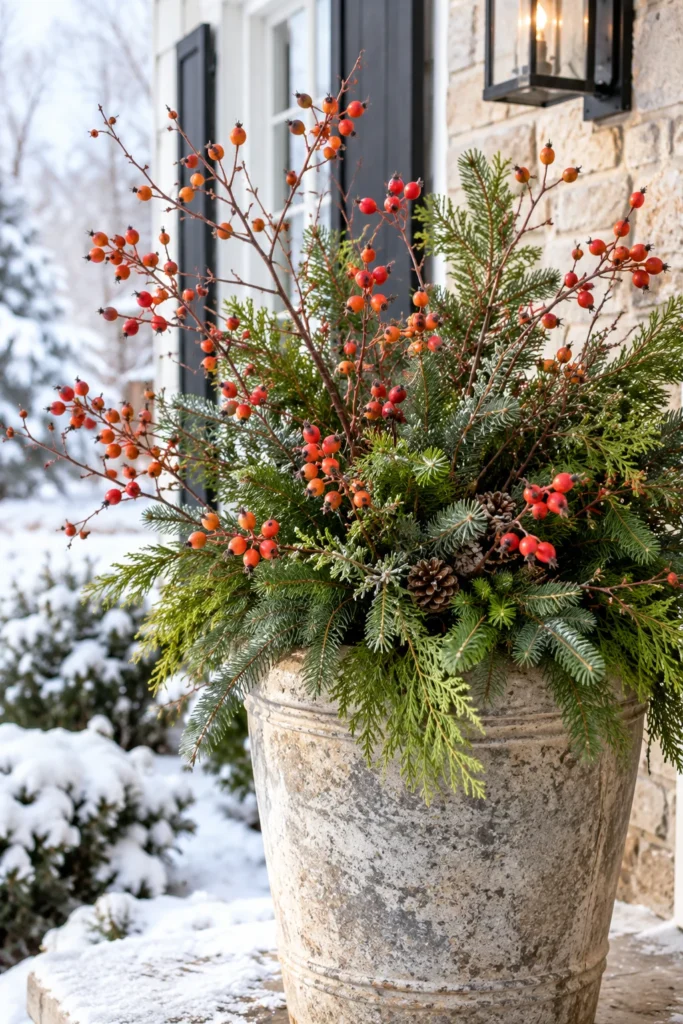
Most cold-weather combos don’t have any orange-red colour from rose hips.
I’m drawn to this combination because it’s a little different from the standard red and green colours.
Best material: Rose hip branches, mixed evergreen sprigs, and small pinecones are the best materials.
Ideal for: Those wishing a more subdued colour palette.
My suggestion: If you can, get rose hips from your local area. They dry quickly when shipped long distance.
Textural and Grass-Based Containers
Some of my favourite displays don’t use any colour and go all in on texture.
8. Pampas Grass and Dusty Miller

Pampas plumes and dusty miller with a silver hue bring a softness to the overall image, almost monochromatic.
This combination looks great in photos, especially when lightly dusted with snow.
Best material: Dried pampas grass, dusty miller leaves and a neutral gravel topper are the best materials.
Ideal for: Contemporary or modern homes that want texture instead of strong colours.
My hint: During windy weather, bring plumes indoors. When damaged, they lose fluff everywhere.
9. Ornamental Cabbage and Kale Planter

I always have to laugh about these rosettes; they become more colorful the colder it gets!
The leaves are ruffled for extra texture, and require no cut branches.
Best materials: Ornamental cabbage, ornamental kale, silver dust miller (filler).
Ideal for: A colourful, living display which is frostier than most flowers.
My suggestion: Plant them slightly closer together than the tag indicates for a fuller appearance.
10. Dried Grass and Pinecone Bundle

If you go on a fall walk and find your own materials, this combo is nearly free.
I used to have a lot of stuff in my yard, and I made this from it; it still gets compliments.
Best materials: Dried ornamental grass, foraged pinecones, and twine for bundling.
Ideal for: Budget containers or for those that prefer a natural, gathered look.
My advice: Let the grass dry completely inside before bundling. Grass is damp and moulds quickly in a pot.
Avoid containers that require a lot of maintenance, and opt for faux containers.
Low-Maintenance and Faux Containers
Artificial Pine and Berry Mix: A blend of artificial pine and berry flavours.
11. Artificial Pine and Berry Mix
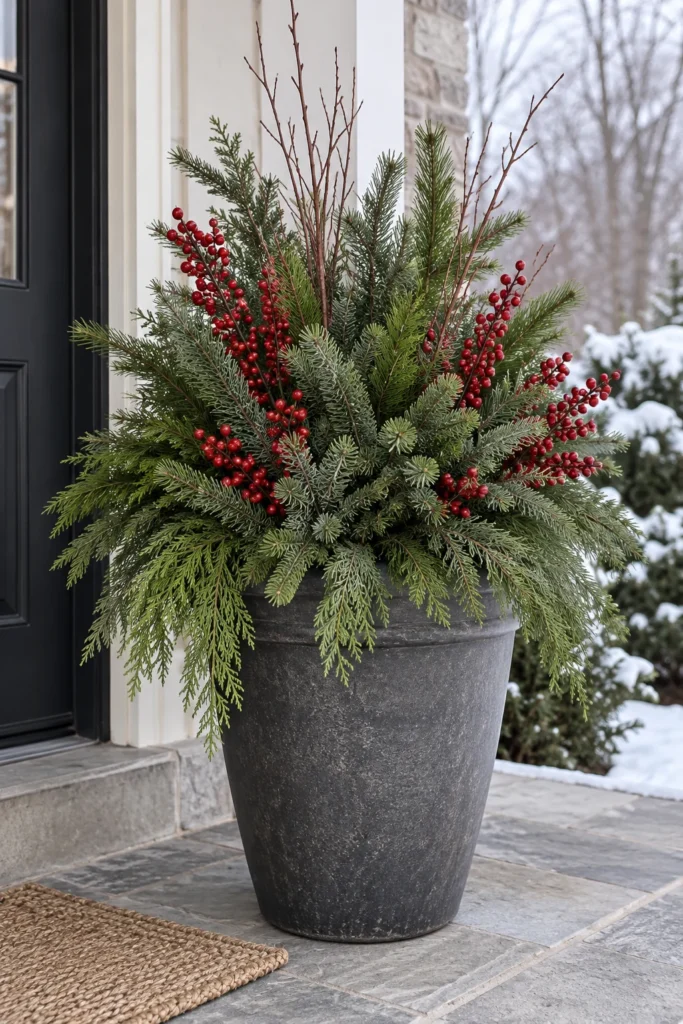
One of these is always near my back door, as I tend to forget to check it for weeks at a time.
Best material: Artificial pine branches, faux berry picks, and a weighted floral foam base work best.
Ideal for: low-traffic entrances or those who are on the road a lot during the winter.
My advice: bend the fake branches in your hands before installation. Stems taken straight from the box are stiff.
12. Preserved Boxwood Ball Planter

Preserved boxwood doesn’t lose water and retains its shape and colour.
My favorite for containers; I really don’t remember having until spring!
Use the best materials: Preserved boxwood balls, decorative gravel, and a strong, weatherproof pot.
Ideal for: Rental homes or vacation homes that are left unoccupied for weeks.
My suggestion: keep extras in a sheltered place during the dormant season. If dry, preserved greenery will last for many years.
13. LED Branch Light Planter
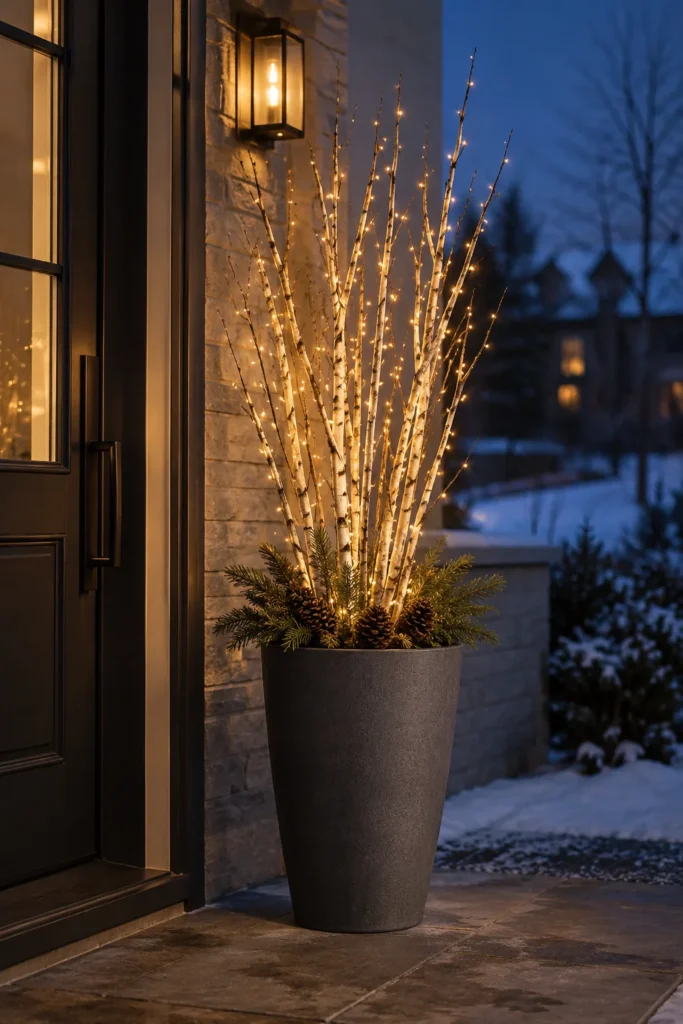
With minimal plant care, lit branches turn a plain container into an evening feature.
I used this in my dark corner entrance, and it has made a world of difference at night.
Ideal materials: Lighted branches (battery-operated), faux greenery fill, weatherproof timer.
Ideal for: Entrances that need to look good at night more than during the day.
My suggestion: Go for warm white lights, rather than cool white. Warm colours will photograph well against brick and wood.
Rustic and Farmhouse Style Containers
My two most recent selections are both very rustic and gathered.
14. Galvanized Bucket with Greens
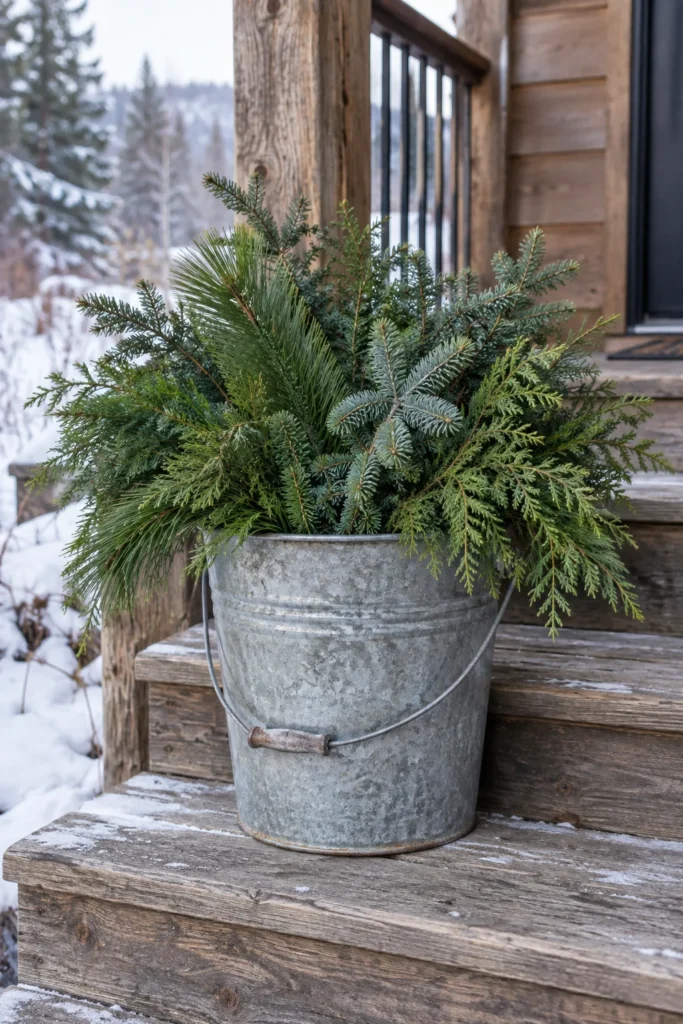
Add a mix of greenery to a galvanised bucket to instantly achieve a farmhouse look.
This is my personal favourite combination for porch steps, and it never goes out of style; I use it on my own porch steps each and every year.
Materials: Best materials are a galvanised metal bucket, mixed evergreen branches and burlap wrap for the base.
Ideal for: Farmhouse, cottage, or rustic-style houses.
My secret: Make a couple of additional holes to drain yourself. Most decorative buckets lack enough drainage.
15. Wood Crate Planter with Birch Logs

The wood crate is a bit rustic, and the stacked birch logs create a cosy yet understated look.
This is the one I’d most recommend to friends looking for an easy yet personal combo.
Best materials: Small birch logs, cedar sprigs between the logs, wood crate planter.
Ideal for: Entrance areas which are already somewhat natural and unrefined.
My suggestion: Spray the crate with a weatherproof sealant so that it will last for a year or more outside.
Which Container Material Actually Survives the Cold?
| Material | Cold Hardiness | Weight | Style |
| Terracotta | Poor, cracks easily | Light to medium | Classic, rustic |
| Galvanized Metal | Excellent | Light | Farmhouse, industrial |
| Wood | Good with sealing | Heavy | Rustic, natural |
| Fiberglass | Excellent | Light | Modern, versatile |
Frequently Asked Questions
What is the best container material for cold-weather displays?
Fiberglass and galvanized metal handle freezing temperatures best. Terracotta looks classic but cracks easily once water inside it freezes.
Do I need to bring my containers indoors for the cold months?
Not usually. Most combos on this list are designed to stay outside all season without extra protection.
How often should I water outdoor containers in winter?
Much less than summer. Water only when the soil is not frozen, roughly every couple of weeks.
Can I leave old soil in my containers over winter?
Yes, as long as drainage is solid. Just refresh the top few inches before adding new plants in spring.
What plants actually survive freezing temperatures in containers?
Dwarf conifers, boxwood, ornamental kale, and hellebore are some of the toughest options for cold-season container life.
Final Thoughts
I no longer dread the months between fall cleanup and spring planting, and that shift genuinely changed how I feel about my own front porch.
A few solid containers make that stretch actually enjoyable to look at.
Pick one combo from this list that matches your climate and your effort level.
Go build it this weekend, before the next cold snap moves in.
Your future self, walking up to that porch in February, will thank you.