The first spring I lived near the coast, half the new plants that I planted died by July.
That’s when I found out that coastal front yard landscaping is different from landscaping anywhere else.
Plants that would flourish fifty miles away from the sea are destroyed by salt spray, sandy soil, and constant winds.
All of this is a real yard item that has withstood the sea, not just a nursery tag reading “salt-tolerant”.
If it is here, I or someone I know has observed it to be holding up in the real ocean wind and at least one poor storm season.
I continue to lose plants now and then. But once I started planning around the coast and not fighting it, my losses dropped to near nothing, as listed below.
Salt-Tolerant Plant Choices
The selection was the key to each area’s success or failure in my yard. If it wasn’t built for salt, it didn’t last the first bad wind.
1. Beach or Dune Grass Border
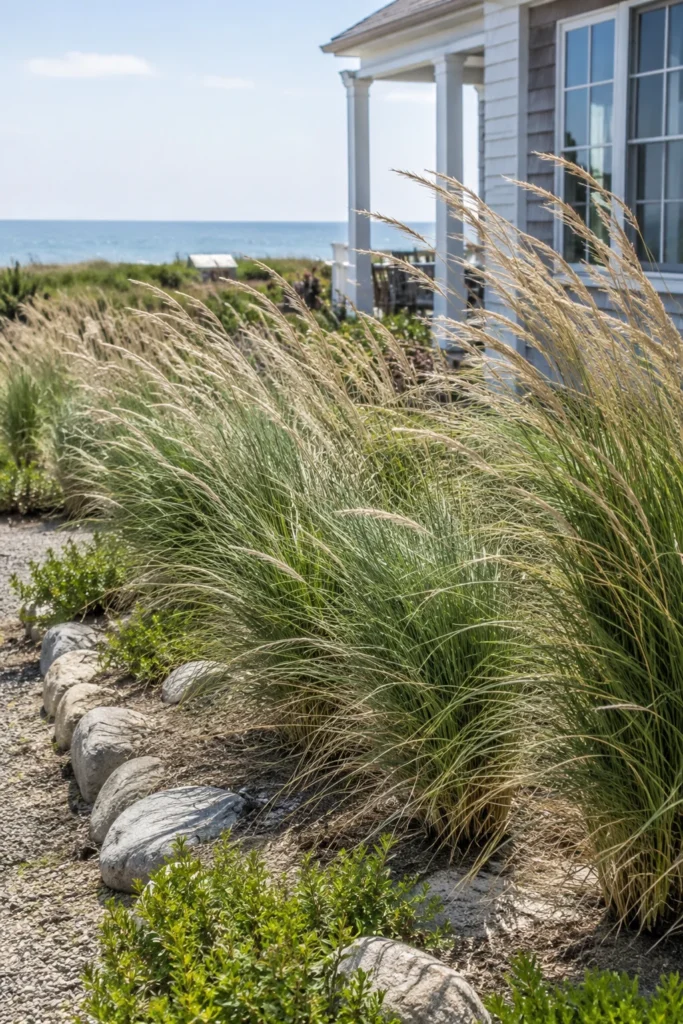
Beach grass anchors sandy soil and is impervious to salt spray. It’s the same plant doing the same thing on the dunes that are near you, only a little closer to the house.
Ideal for the forward part of any seaside garden.
My suggestion: don’t plant it in a straight line, but in a group, to create a more natural appearance rather than a farm.
2. Bayberry or Rugosa Rose Shrubs

These shrubs will tolerate direct salt wind, but will not brown at the edges. Rugosa rose brings color, rough, weather-proof leaves, and a fragrance, while bayberry brings the scent.
It’s best for yards that are fully exposed to salt and have no windbreak.
My advice: Grow them upwind of anything more fragile you’re protecting.
3. Succulents and Sedum Ground Cover
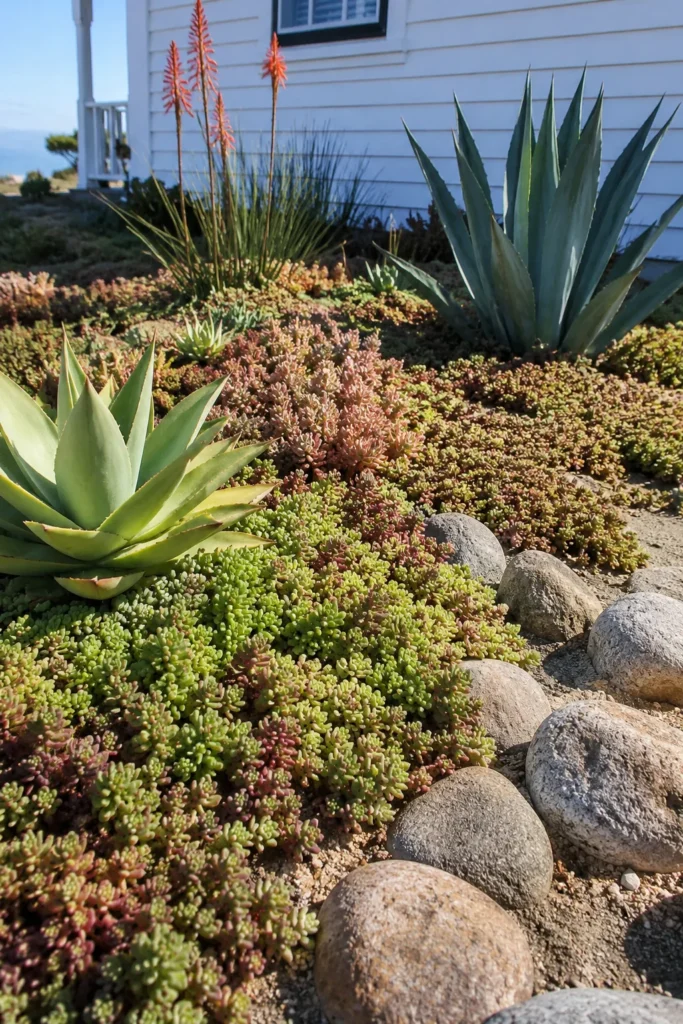
Sedum grows in sandy, dry soil and requires very little care once established. It spreads low and rapidly, filling in bare areas in one season.
Ideal for low beds that are close to a driveway or walkway.
My suggestion: Water it well the first month and then let it go. Then, leave it alone, except for the occasional visit from the gardener.
4. Native Coastal Wildflowers

Your soil and wind conditions are the same as those of the wildflowers of your coastline, so they know how to cope with them.
In most areas, it is safe to plant, easy to find, and reliable, such as seaside goldenrod and beach pea.
Useful for anyone who wants true color without being too gentle with their plants.
My recommendation: Don’t buy seed mixes intended for a general wildflower mix for your coastline; buy ones suited to your particular coastline.
5. A Salt-Hardy Small Tree

One hardy tree, such as eastern red cedar, provides shade and begins a windbreak.
Don’t use any wood that has a bad reputation for weak wood, as coastal storms put it to the test.
Best in yards that receive afternoon sun and no shade.
My suggestion: stake for the first 2 years. The wind blows along the coast and bends a young tree.
Coastal Front Yard Landscaping That Handles Sand and Salt
The most expensive lessons that I learned were from hardscape. It’s not like regular materials that don’t last this close to saltwater.
6. Composite Decking for Walkways

Unlike wood, composite doesn’t swell or rot in salt air within a few seasons. It also won’t split bare feet as they walk straight from the beach.
This is suitable for houses with heavy foot traffic and sand on people’s feet.
My tip: Go for a lighter shade. Dark composite will become extremely hot in the coastal sun.
7. Crushed Shell or Gravel Paths

Crushed shell drains are quick and easy to install, and look better than concrete in a coastal setting. They’re also less expensive to redo if a storm moves them.
Ideal for informal and laid-back seaside front yards.
My suggestion: – put a paver border around the shell to keep it from spreading out into the lawn.
8. Marine-Grade Stainless Fixtures
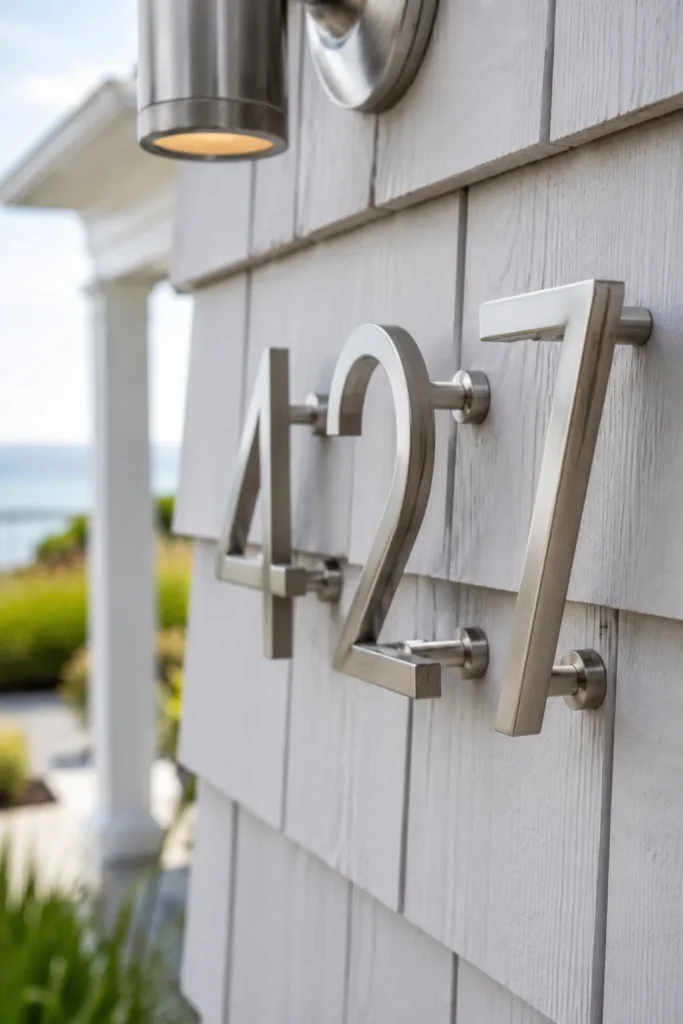
This is close to saltwater, and regular metal rusts rapidly, sometimes in one season. Marine-grade stainless or powder-coated aluminum lasts for years, not months.
Use this for house numbers, railings, and other small metal accents.
My advice: Occasionally, freshwater the metal fixtures. It will reduce corrosion more than most people realize.
9. Raised Planting Beds

You can manage soil quality with raised beds, rather than battling pure sand each season. Don’t use native ground to fill them; use real topsoil and compost.
For those looking for flower color, not salt-tough survivors.
My suggestion: Cover the bottom with landscape fabric to prevent the sand from eroding the good soil over time.
Wind and Erosion Control
Wind was the worst culprit in my yard, more than salt alone. This is the section I would have liked to do first.
10. A Windbreak Hedge

A dense hedge at the edge of the yard will reduce the wind speed as it approaches the rest of the yard. Over time, these two trees, wax myrtle and eastern red cedar, are effective.
This is ideal for yards that are directly in the wind off the water.
My suggestion: Plant the hedge more densely than you think you need to start with. Wind gets in all of your cracks.
11. Sand Fencing

Easy to install sand fencing with slats that prevent sand from accumulating against your house or driveway. It’s low cost and can be implemented during one storm season.
Best for yards that are right on or close to dune-adjacent property.
I recommend: Shifting it a little each year, as it will be covered with sand or will gradually stop functioning.
12. Erosion-Control Ground Cover
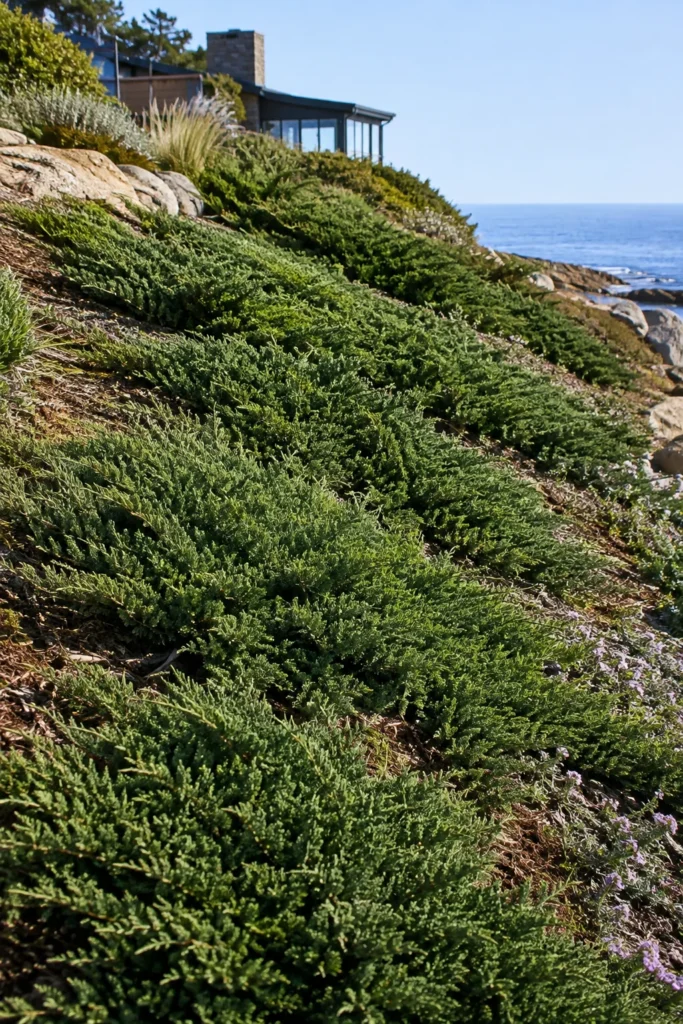
Mulch alone will not retain soil on slopes as well as low, spreading ground cover will. Both beach strawberry and creeping juniper hold the soil well.
This applies to any part of a coastal yard that slopes.
My suggestion: Don’t plant along the slope; plant at a 45-degree angle.
13. A Low Retaining Wall
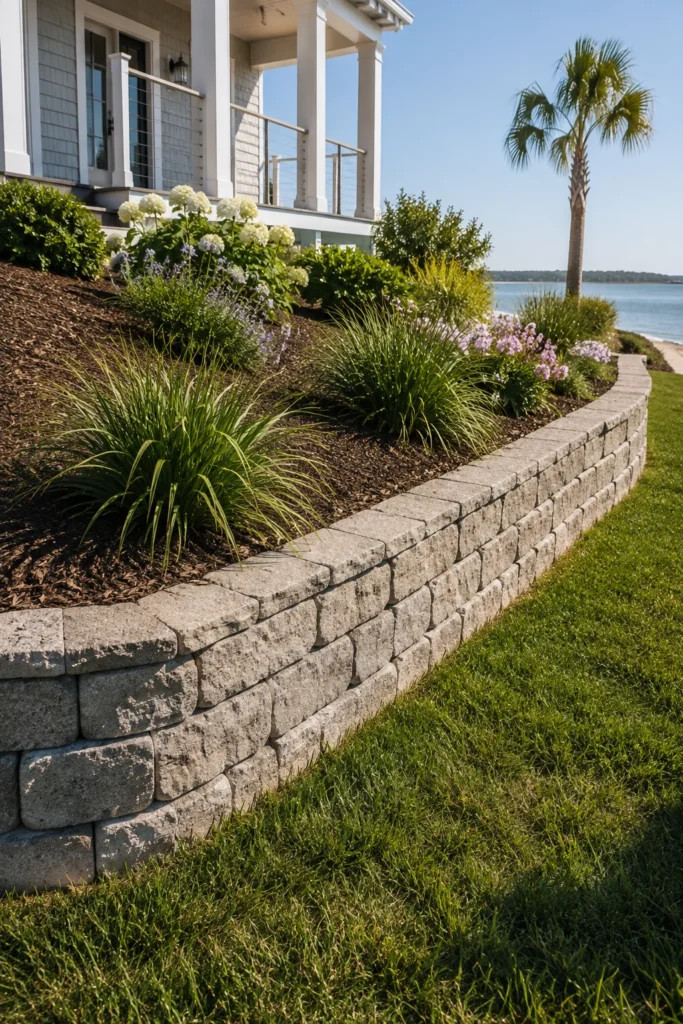
Short retaining wall to prevent erosion on yards adjacent to dune edges/slopes. Both stacked stone and concrete block are very resistant to salt.
Ideal for areas with visible erosion and soil loss due to storms.
My advice: Always include drainage gaps in the wall; otherwise, it will crack over time due to water pressure.
Color and Curb Appeal Near the Water
Initially, it was difficult to color the areas close to the coast. All it took was the right plants and not the wrong ones.
14. Weather-Resistant Container Gardens
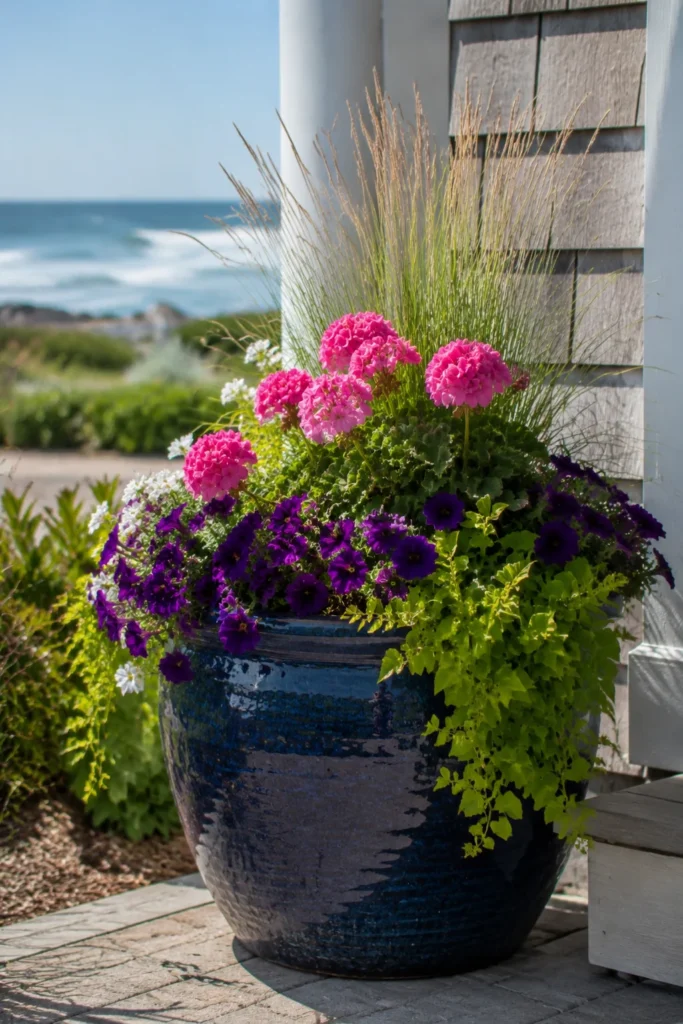
You can add color to containers without conflicting with the ground soil. Fiberglass or glazed ceramic pots will last longer than unglazed ceramic pots near salt spray.
It’s perfect for porches and entries that require a quick color boost.
My advice: Bring in light pots before any named storm. It saves them totally, each time.
15. Salt-Tolerant Flowering Perennials
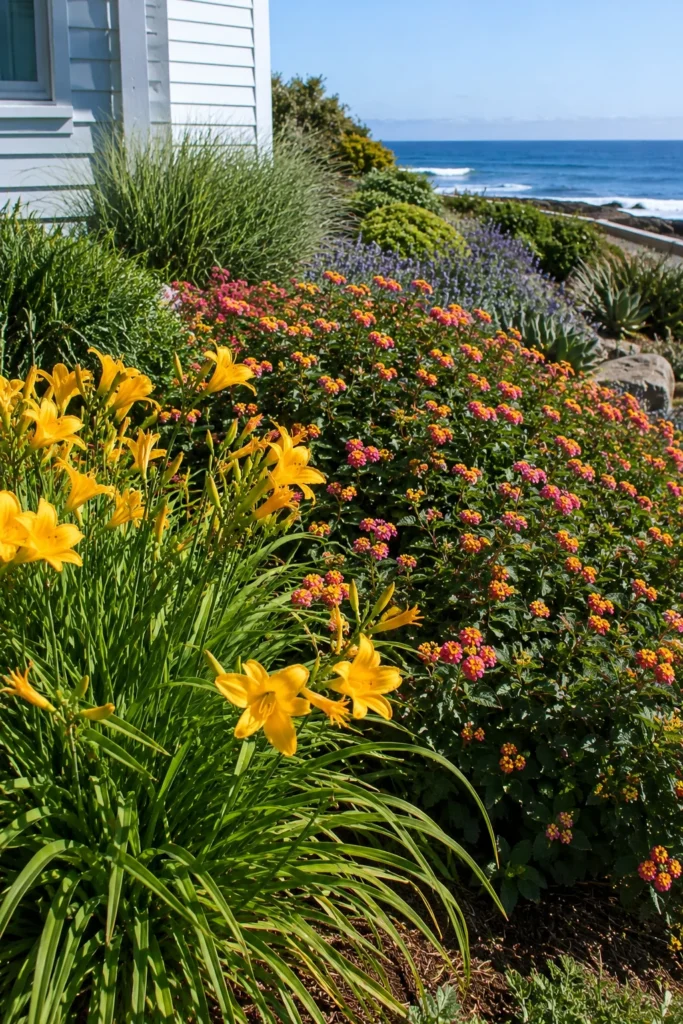
Spray and wind do not affect lantana or salt-tolerant daylilies. They provide a coastal yard color that isn’t green and gray all season.
Ideal for those who need a coastal yard that doesn’t have any flowers.
My rule: Lightly deadhead. Once established, coastal plants will quickly re-bloom.
16. Ornamental Grasses for Texture

Coastal wind causes grasses to constantly move, while most other plants can’t do it gracefully. Muhly grass is a soft pink fall color and is salt-tolerant.
This is great for adding texture with low maintenance.
My suggestion: Mow the grasses back very close in late winter, before they begin to grow.
17. A Coastal-Themed Mailbox and Post

A worn-down or painted wood post anchors the entire yard at the street. Cedar is more tolerant of saltwater than pine is near the saltwater.
Ideal for completing projects after the larger landscaping projects have been completed.
My recommendation: Seal wood posts annually. The finish will deteriorate more rapidly in salt-air conditions than in inland weather.
Lighting, Water, and Maintenance Details
The little things mattered more than I thought once the larger landscaping was done.
18. Corrosion-Resistant Outdoor Lighting

Coastal yards are a tough environment for standard outdoor lighting, as it can corrode quickly, even in a single season.
Stainless steel or marine-grade fixtures are also more durable and will last longer for a nominal initial investment.
This is ideal for walkways and entrances which require illumination at night.
My suggestion: Select fixtures that are specifically marked for coastal/marine use, rather than outdoor use.
19. Drip Irrigation for Sandy Soil

Regular sprinklers lose a lot of water to sandy soil before the roots can absorb it. Drip irrigation supplies water directly to the roots.
Best suited for any bed, whether or not it is made of sand-tolerant plants.
My recommendation: Only run it in the early morning. Evening watering will bring fungus in with the moist coastal air.
20. Mulch That Won’t Blow Away

Light mulch will blow off the coast within a few weeks of being applied. Pine bark nuggets or hardwood chips are better than loose mulch chips.
This can be used on any bed that is always bare, no matter how much mulching you do.
My advice: Mulch water immediately after application. It aids in settling.
21. A Seasonal Storm-Prep Checklist

More than any one plant selection could save your yard, a simple annual checklist.
Prevent stormwater drainage issues by trimming, securing, and testing drainage before storm season.
If you’ve lost plants or fixtures to storms before, this is the best option.
My advice: Repeat this walk the same week each year to make it a habit!
Quick Comparison Coastal Hardscape Materials
| Material | Salt Resistance | Cost | Best use |
| Composite Decking | High | $$$ | Walkways |
| Crushed Shell | High | $ | Paths |
| Marine-Grade Stainless | Very high | $$ | Fixtures |
| Untreated Wood | Low | $ | Avoid near spray |
Frequently Asked Questions
What plants survive best in a coastal front yard?
Beach grass, bayberry, and rugosa rose handle direct salt spray the best. Native coastal wildflowers also hold up better than most nursery imports.
How close to the water does salt damage start?
Direct salt spray usually reaches a few hundred feet from the shoreline, but wind can carry it further. If plants look scorched on one side only, that’s salt wind, not disease.
Does coastal landscaping cost more than regular landscaping?
Usually yes, mostly from corrosion-resistant materials and higher plant loss the first year. Budgeting an extra 15 to 20 percent covers most of that difference.
How do I stop sand from blowing into my yard?
Sand fencing and a dense windbreak hedge both trap blowing sand before it piles up. Ground cover on any slope also keeps loose sand from shifting further.
Should I use synthetic turf near the coast?
Synthetic turf holds up well against salt and drains sand easily without much upkeep. It’s a solid option if you want green without fighting real grass in sandy soil.
Final Thoughts
My coastal yard humbled me the first year. I lost more plants than I want to admit before I started listening to what already grows near the water.
Salt and wind aren’t obstacles once you plant with them instead of against them.
The list above is everything that’s actually held up through real storms, not just a calm summer.
It takes patience the first year or two. After that, a coastal yard settles into something surprisingly low-maintenance.
Pick two or three fixes from this list and get them started before the next storm season.