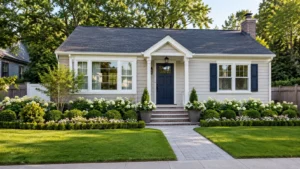
Small front yards don’t mean that there will be no end to the chores around the house during the weekend.
A few years ago I moved from a big yard to a small front yard, and it made me rethink everything! Less mowing and more compliments from neighbours were the result.
Here are 15 Low-Maintenance Small Front Yard Landscaping solutions for your tiny space.
These are some approaches that I have tried, not just theory.
For renters, most of these upgrades can be completed over a weekend or two, and for homeowners, they can help improve their home’s value.
One major benefit of small spaces is often overlooked. Each improvement is smaller in scale, resulting in quicker, less expensive work than in a large yard.
This is what makes a small yard a worthwhile investment.
Low Maintenance Landscaping Basics for Small Yards.
It’s best to rethink the approach to a small space before putting in any plants. T
he idea is to manage fewer plants, not more.
This is a subtraction, not an addition stage. Proper plant removal and a new layout are more about maintenance than buying new plants.
The most effective yard that requires the least maintenance is one that has the least amount of lawn.
1. Choosing Plants That Thrive on Neglect
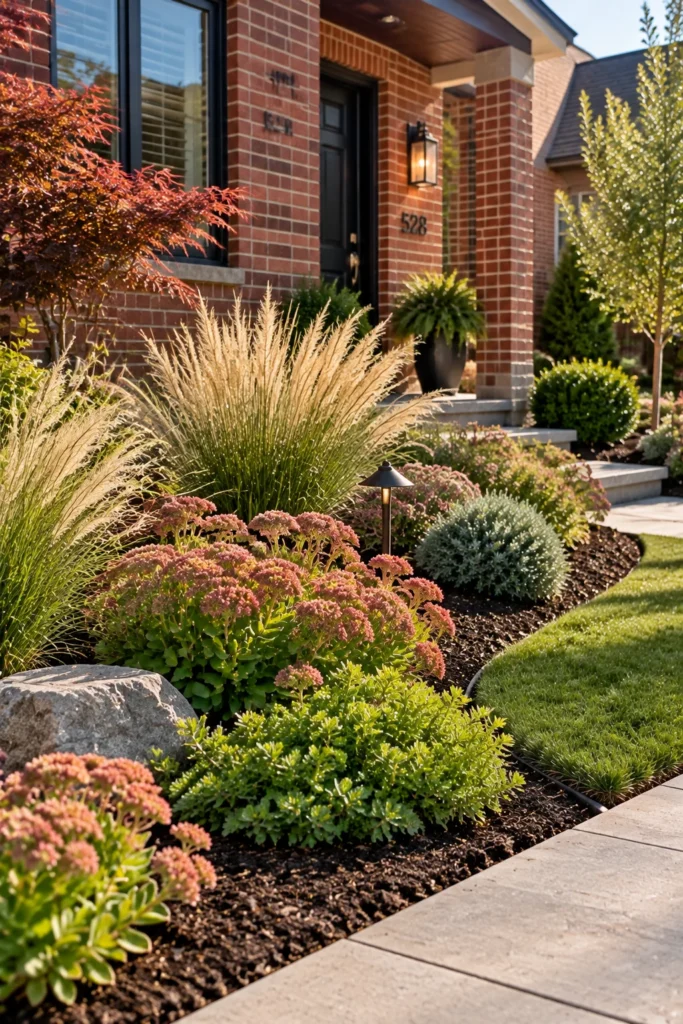
Some plants don’t require as much from you, and creating a yard around them will save you hours each month.
Sedum, daylilies, and ornamental grasses are all drought-resistant and will grow in average soil conditions.
I’ve killed numerous high-maintenance plants in the past trying this route, but my lawn has been happier since.
It’s better to select hardy plants from the beginning than to nurture weak plants for several years.
Now I assess a plant’s water needs before I assess how it looks in the pot. It has saved me the most time in total.
2. Reducing Lawn Size to Cut Down Yard Work

In most yards, grass is one of the most demanding features, particularly in a small yard where mowing can feel like too much work for such a small area.
I saved almost 50% on my mowing time by replacing some of my lawn with a mulched bed.
Any amount of reduction, even a small one, will make a difference.
Some signs indicate you have more lawn than necessary.
- Mowing requires more than an hour per week!
- It’s difficult to reach corners and edges with a mower.
- Even in the sun, grass struggles in shady spots.
Smaller lawns require less water, too, which is important if you’re on a budget.
3. Why Xeriscaping Works So Well in Small Spaces
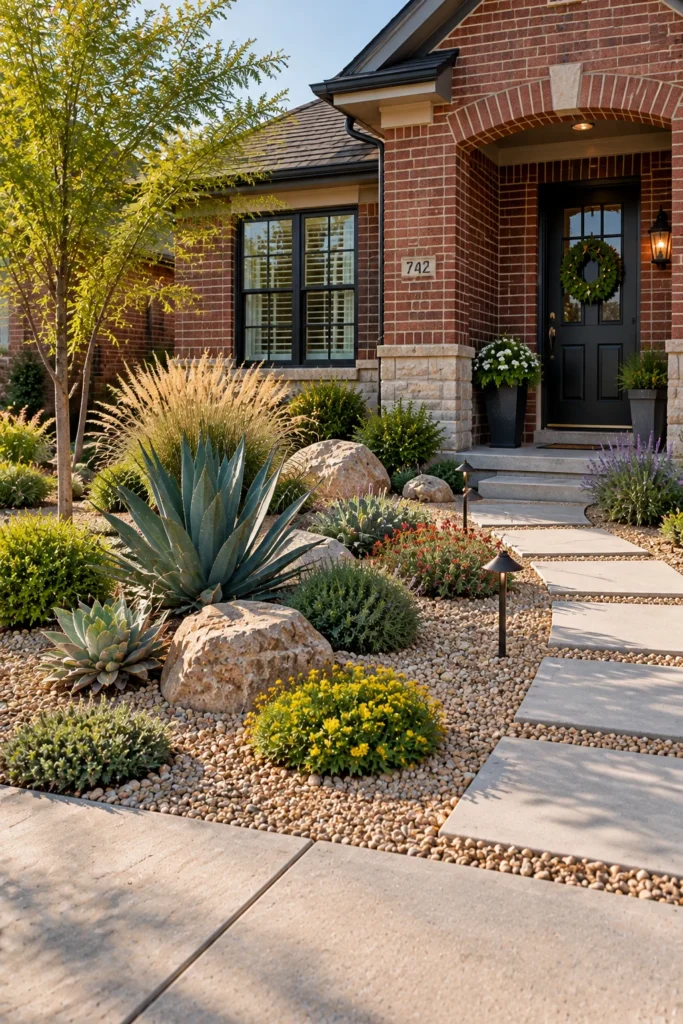
For small yards, xeriscaping, or drought-tolerant landscaping, is particularly well-suited because there’s less space to landscape.
Drought-tolerant plants with gravel or mulch help minimise watering and weeding.
I use this method in my own front bed and water it maybe once a week during the hottest part of the summer.
This style also doesn’t look sparse; it looks intentional and modern.
Structured plants and gravel have a sense of design. A lawn that is unevenly mowed is not the kind that’s going to win the praise.
Ground Cover and Mulch Options
Plants are not the only thing that matters; what covers the ground between the plants matters as well.
It wasn’t until I looked at my mulched beds side by side with the dirt patches that I had much to consider about ground cover.
I knew the difference in weeds would make me choose one. This is one of the easiest on this list to cover bare soil.
4. Mulch Beds That Save Time Every Season
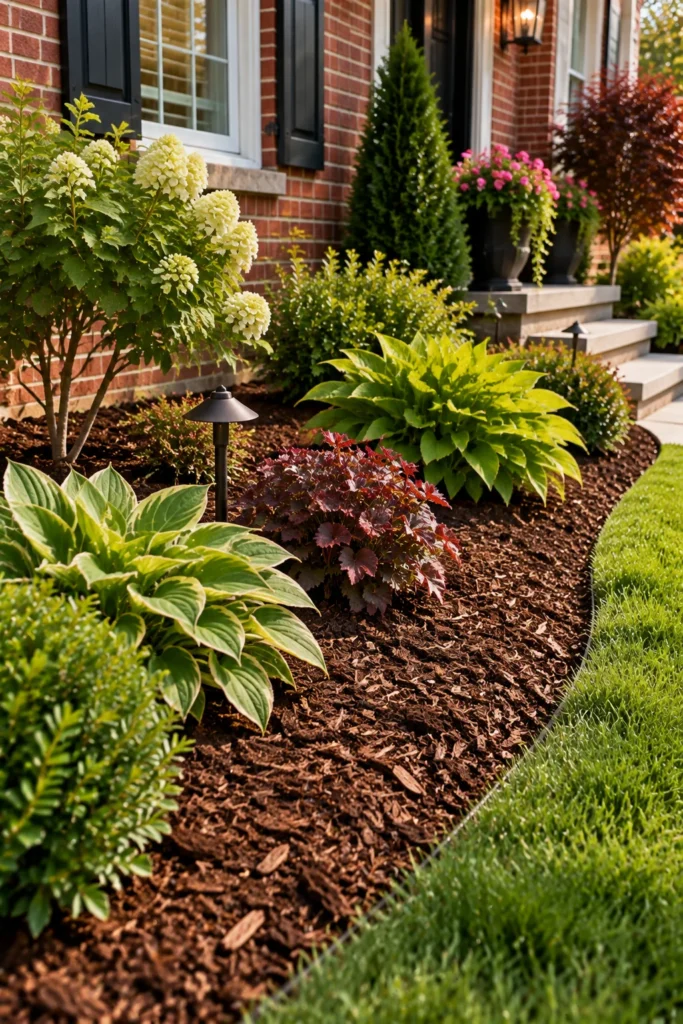
Shredded hardwood mulch prevents weed growth and retains moisture, so you’ll water less and pull fewer weeds.
I update mine yearly, and this one afternoon of work makes me happy that I don’t have to weed weekly throughout the summer.
Typically, 2-3 inches should suffice.
Mulch also decomposes slowly and enriches the soil beneath the mulch.
I consider it a one-time maintenance task, and then I don’t have to do it the rest of the year.
5. Gravel and Rock Gardens for Zero Mowing

Once gravel beds are installed, they do not require mowing, watering or fertilising.
A combination of decomposed granite or river rock and drought-resistant plants will create a clean, modern appearance.
Last year I did a small side strip of gravel and haven’t done anything with it since, other than using the leaf blower now and then.
Rock gardens also are more tolerant of foot traffic than most groundcover plants, especially if near a front walkway.
I put in a few flat stepping stones through mine, for that very reason. It still appears purposeful rather than a shortcut.
6. Artificial Turf as a Low Maintenance Alternative

If you don’t want the hassle of mowing, artificial turf isn’t for you, but for small yards, it does away with mowing altogether.
Today’s synthetic turf is much more lifelike than older synthetic turf.
I didn’t think it would work until I saw a neighbour put it in, and now I really can’t tell that it’s not grass.
It is more expensive than seed or sod, but is more appropriate for a small space than a large lawn.
The smaller the front yard, the better, because it is the best size to warrant the cost. I would be hesitant to use it on anything bigger than that.
Here is a quick comparison of the main ground cover options for a small yard.
| Ground Cover Option | Maintenance Level | Typical Cost | Best For |
| Mulch | Low, refresh yearly | Low | Beds with mixed plants |
| Gravel or rock | Very low | Moderate | Modern, xeriscape style beds |
| Artificial turf | Very low | High | Small lawns with heavy use |
| Groundcover plants | Low to moderate | Low | A filled in, natural look |
Plant Selection Ideas
The first choice of plants is the most important and eliminates most future maintenance headaches.
In the past, I purchased plants that I liked the looks of at the garden centre.
Now, I research water requirements and mature plant size first and second. This has reduced my plant replacement costs a lot.
7. Perennials That Come Back Without Fuss
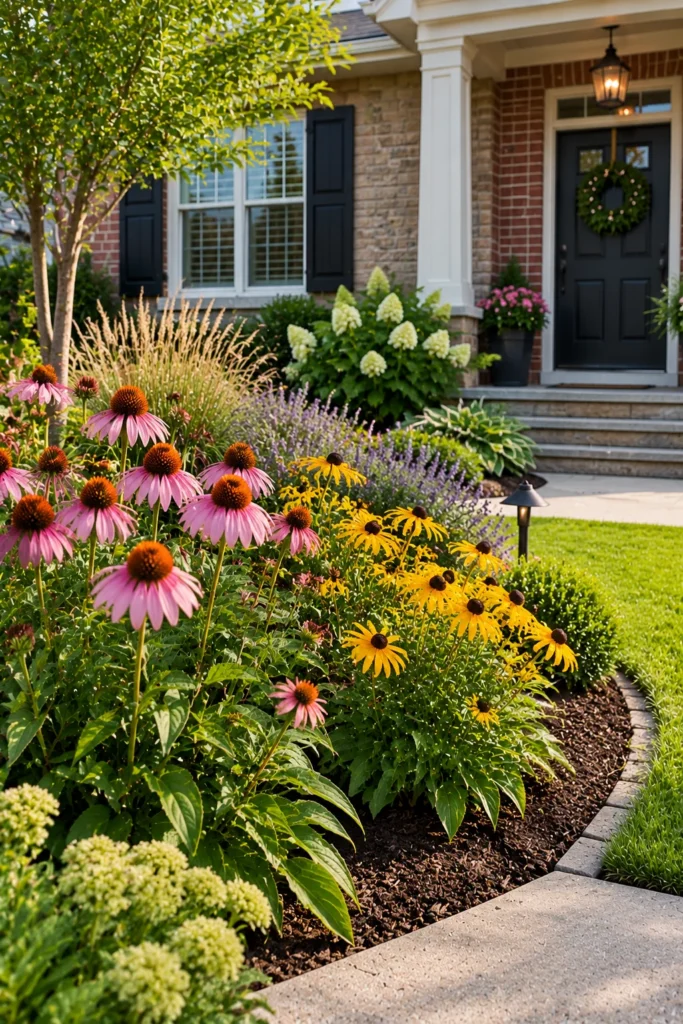
Coneflower, black-eyed Susan, and hosta will come back without replanting. In four years, I have never replanted my own perennial bed, and it still fills in completely each spring.
This sort of reliability is exactly what a low-maintenance yard requires.
I do a light cleanup each spring, cutting back the old growth from the previous year before new growth.
That’s practically all they require for maintenance. Otherwise, they take care of themselves.
8. Native Plants for a Low-Maintenance Small Front Yard Landscaping
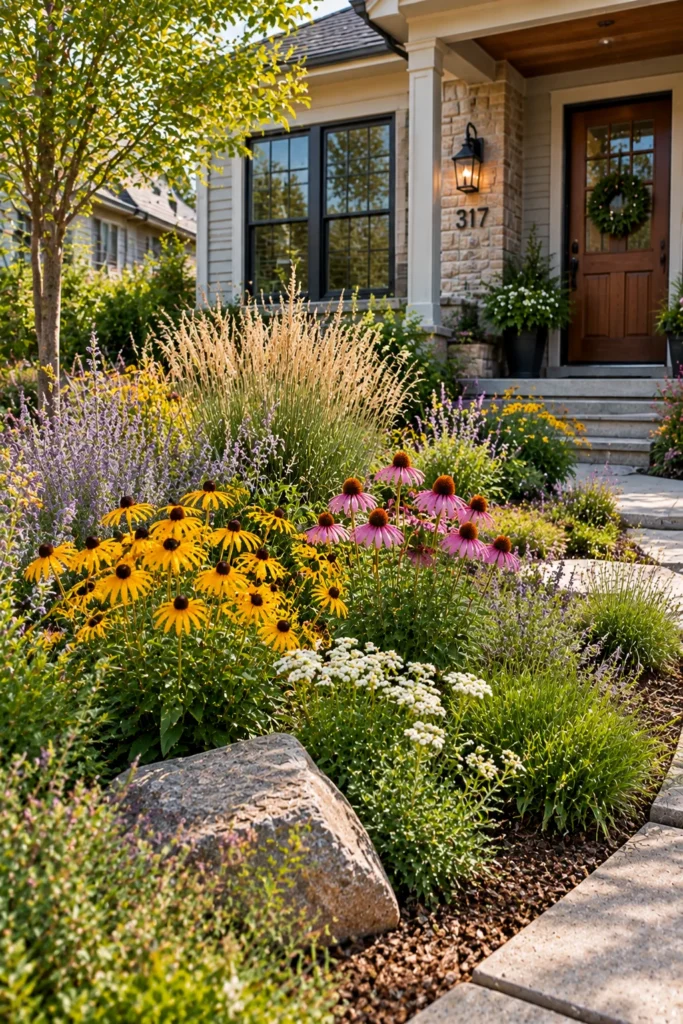
Native plants are already used to the local climate and require less watering and less overall maintenance.
It’s a great way to avoid trial and error, and you can check with a local extension office to see what native options are available.
I changed over multiple beds to native plants and saw a decrease in disease and pest problems.
Native plants also require less fertiliser as they are adapted to the soil conditions in this area.
I completely cut out fertilising two of my beds, and the plants were not affected. This was one less chore on my fall to-do list.
9. Evergreen Shrubs for Year Round Structure

Boxwood, dwarf holly and juniper retain their form and colour in winter without the need for seasonal pruning.
A handful of evergreens keep a small yard from being totally devoid of greenery.
My front bed has only 3 shrubs, and that’s all I need for a bed this size.
I cut them back every year in the early spring, and they don’t require much other maintenance.
Evergreens are also the first plants neighbours see in winter, when all other plants have dropped their leaves. Caring for a small yard, even with a little green in January.
Design Tricks for Small Spaces
Some design options can help a small yard feel bigger and more manageable.
In addition, it’s easier to make layout changes in a small yard than in a large one, making it a great place to try new ideas.
I did my own layout twice before I got some that I liked. Both attempts were not very expensive or time-consuming.
10. Making a Small Yard Look Bigger

Curved bed lines deceive the eyes to make the bed look larger than it is, instead of straight lines.
I redesigned my own beds with gentle curves rather than rectangles, and the yard really does feel bigger now!
Also, odd numbers of plants read better than even numbers and are less crowded.
I didn’t want curved beds for years because I thought they would look untidy. It’s the exact opposite when they are installed properly.
11. Vertical Gardening to Save Ground Space
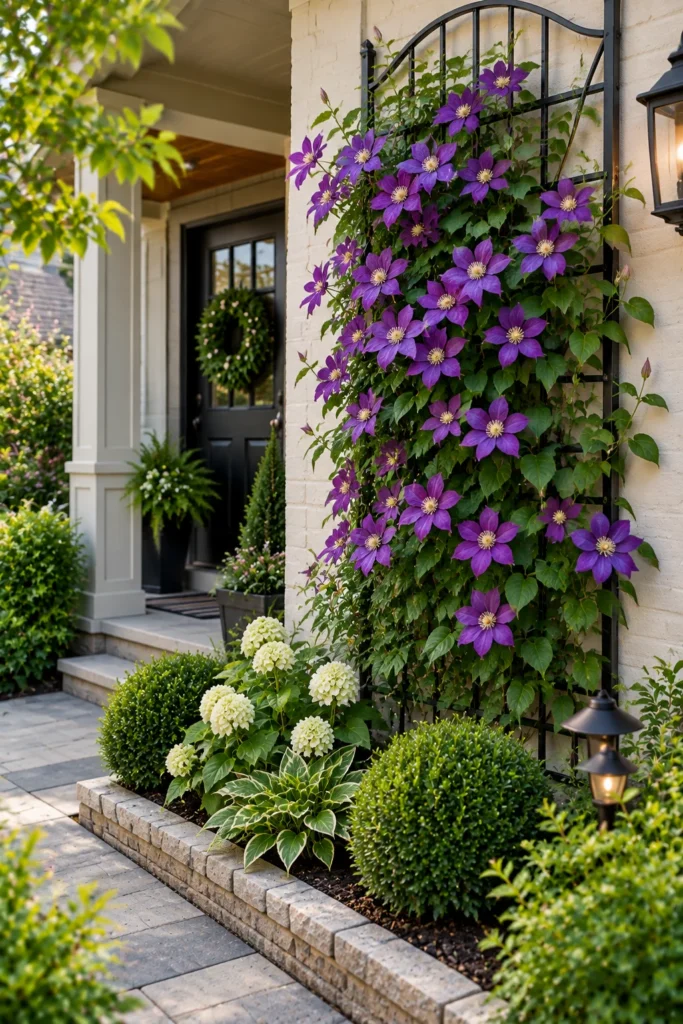
Rather than growing out, grow up to conserve valuable space in a small yard.
Growing on trellises, hanging planters, and wall-mounted containers all provide greenery without occupying bed space.
I planted one trellis of clematis that climbs up it, and it’s filling a vertical corner that would otherwise be empty.
Vertical features also create the illusion of a taller yard and help to open up a small yard. It’s a trick you can use in small apartment gardens, and it’s just as effective in a garden.
12. Simple Layouts That Are Easy to Maintain
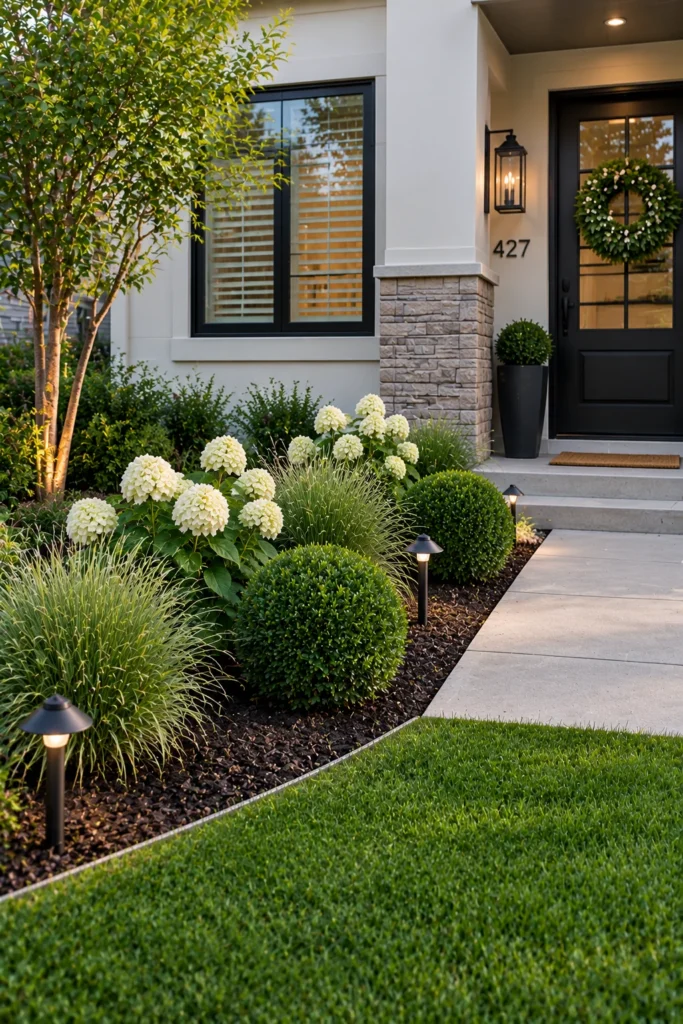
A small yard with lots of plants is harder to care for than a simple yard because it likely requires more attention and a more complex schedule.
It is easier to maintain a bed if you repeat three or four types of plants.
I found out this from an overplanted first small yard with too many varieties to keep track of.
Repetition is also more elegant than variation within a limited area. Well-beaten plants are used by a few plants, not a dozen.
Practical Upgrades That Save Time
Some simple extras make maintenance less ongoing than any one plant.
These upgrades are likely the most cost-effective because they are a one-time investment that can last for years.
I wish I had done all three earlier, rather than spreading them out over the seasons. Doing them together has little downside.
13. Drip Irrigation for Hands Off Watering
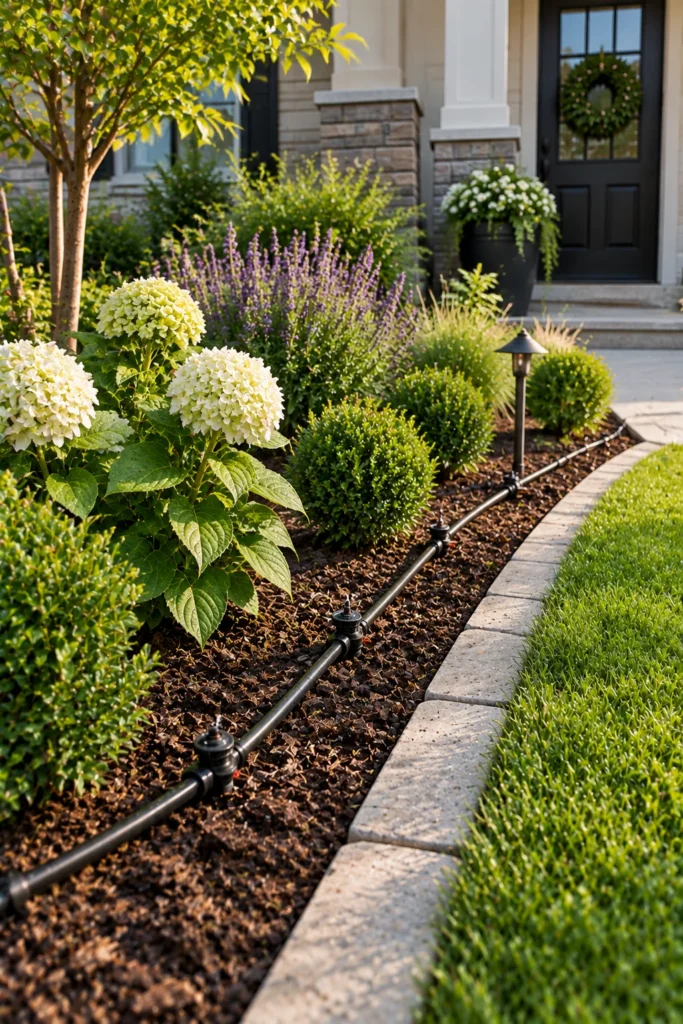
Drip irrigation provides water to the plant’s roots on a timer, so there’s no more waiting around with a hose in the evening.
I put in a simple drip system myself in an afternoon, and in the first month I saved a lot of time.
Most kits are easy to set up and can be done in a weekend.
I still do the same thing every season; as temperatures fluctuate, I check the timer settings. After that, it’s a system that requires little maintenance.
14. Edging That Cuts Down on Trimming
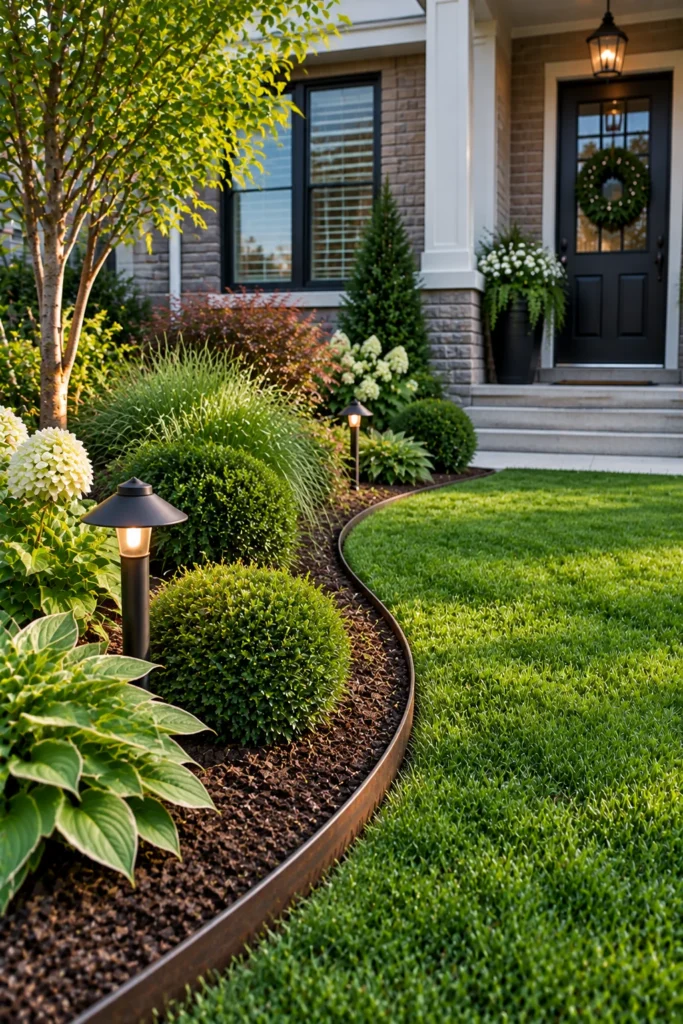
Clean edging around lawns and beds will result in a more attractive lawn and less string trimming. Any edging is better than no edging, and steel or plastic are best.
I edged my own beds and reduced the amount of time I spent trimming by about 50%.
It also helps prevent mulch from spreading onto the lawn, which was a minor but persistent problem before installation.
15. Solar Lighting for Easy Evening Curb Appeal
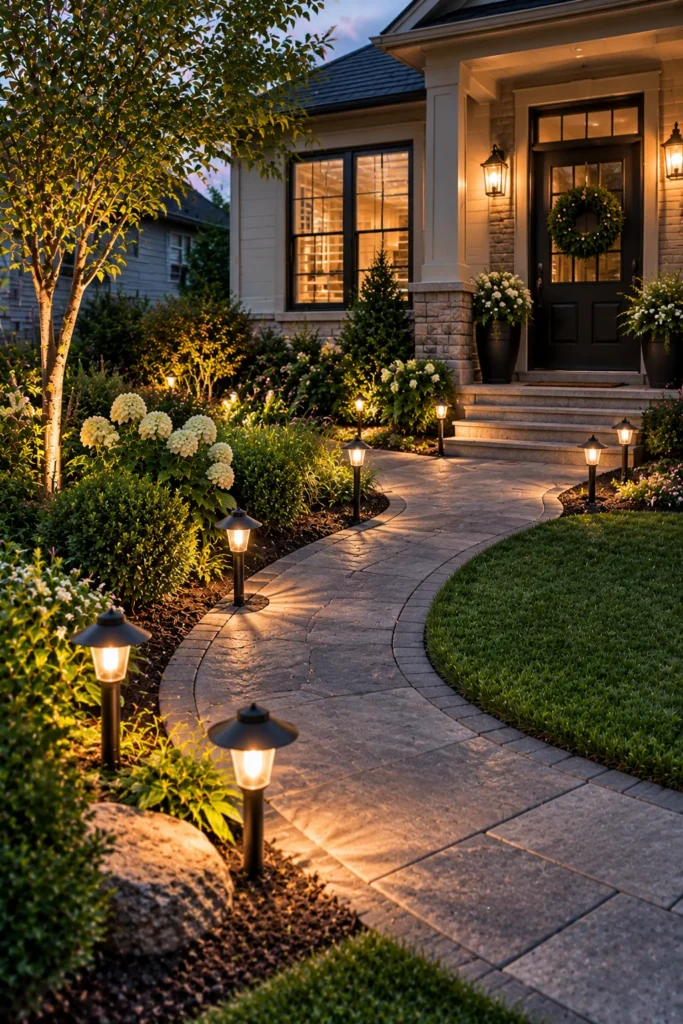
Solar path lights require no wiring or electricity and are the easiest of these upgrades.
After dark, you can create evenly lit, attractive front walkways by installing them every 3 to 4 feet.
I did a set myself, and it took about an hour; I didn’t need any tools other than a shovel.
They also have automatic daytime charging, so there’s really nothing to maintain once they’re in the ground.
FAQs
1. What are the best low-maintenance plants for a small fron yard?
Dwarf shrubs, ornamental grasses, succulents, lavender, boxwood, and other drought-tolerant perennials are great choices for reducing routine maintenance.
2. How can I make a small front yard look bigger?
Use curved pathways, layered planting, light-colored gravel, vertical planters, and plants of different heights to create a sense of depth and space.
3. What is the easiest landscaping for a small front yard?
Gravel beds combined with a few attractive shrubs, container plants, and defined edging can create a stylish landscape with minimal upkeep.
4. How can I reduce watering and maintenance?
Choose plants suited to your local climate, group plants with similar water needs, use mulch or gravel to retain moisture, and consider drip irrigation.
5. Can a small front yard still have good curb appeal with low maintenance?
Yes. A simple combination of attractive plants, clean edging, a defined walkway, and a few decorative elements can create strong curb appeal without requiring extensive upkeep.
Final Thoughts
Small does not have to mean plain, and low maintenance does not have to mean boring.
The right plant choices and a few smart upgrades can make a tiny front yard genuinely enjoyable rather than another chore.
I spend a fraction of the time on my own small yard now compared to my old large one.
A small yard also forgives mistakes faster than a large one does. If something does not work, it is a quick fix rather than a full weekend project.
Pick two or three ideas from this list to start. You can always add more once you see how much time you get back.