My front yard was once the epitome of an uninteresting place: only grass, a sad-looking shrub and a mailbox leaning slightly to the left.
I spent a whole spring creating a simple front yard landscaping design, and it’s night and day from the street.
It didn’t cost much; it just required the right plan for each area of the yard.
I’ve done a lot of things wrong, such as poor plant placement or not getting a permit I needed.
I have included all of this in this list so that you can jump straight to the good part.
Planting Beds and Borders
I always say to people, “Begin here. Beds and borders are the most affordable item on this list that will add to curb appeal.
1. Layered Foundation Planting
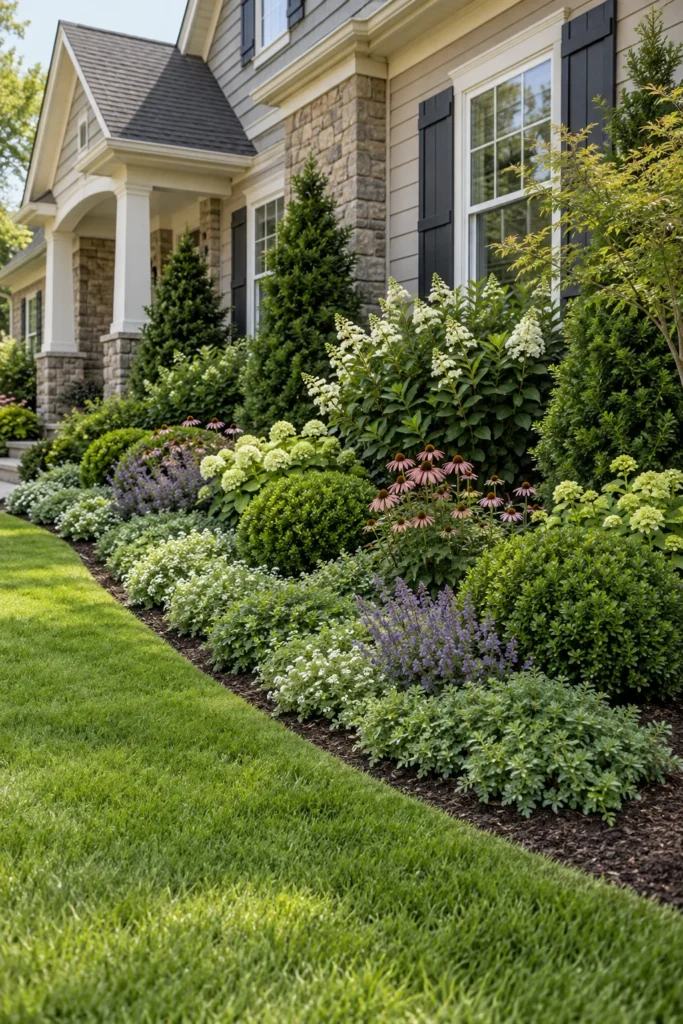
Layered planting is a technique that involves planting tall shrubs in the rear, medium plants in the middle and ground cover in the front along the house foundation.
It works for almost any home style and conceals bare foundation walls.
My suggestion: Give plants 18″ or more of space from the house for air circulation and maintenance.
2. Curved Flower Bed Border

A curved border creates a more natural look than straight borders and helps break up hard lines. It suits yards with open lawn areas that need some form.
My suggestion: Is to mark the curve with a garden hose first! It’s much easier to adjust than to dig and redo.
3. Mixed Perennial Border
A perennial border bloom mix provides colour throughout the spring, summer, fall and winter.
This is ideal for homeowners who want long-lasting colour without replanting annually.
My suggestion: 3, 5 or any odd number. It looks denser than individual plants spread out.
4. Evergreen Anchor Shrubs

Structure beds year-round with evergreen shrubs such as boxwood or holly.
A great choice for anyone who would like to see green all year round rather than bare dirt in the winter months.
My suggestion: Choose slow-growing plants along sidewalks. Fast growers will require continuous trimming to keep them in bounds.
5. Seasonal Color Rotation Bed

A small rotation bed that you change 3-4 times a year will keep your yard looking fresh for each season.
This is ideal for homeowners who like to get their hands dirty and are willing to put in the effort to maintain their garden.
My suggestion: Make this bed as small as possible and close to the front door. It is more important to have a small bed close to the front door than a large bed farther out, or a tiny rotating bed.
Walkways and Entryways
The walk to the front door is the first impression before you arrive at the door. This is where many yards are lacking.
6. Paver Stone Walkway

Paver stones form a clean, durable path that works for most homes. They’re a good option for replacing a broken concrete sidewalk.
My suggestion: If you are using brick or stone pavers, consider using the same material for the roof or other elements of your home.
7. Gravel Path with Steel Edging

One of the least expensive walkway improvement projects is to install a gravel path with steel edging. It will work in any yard, whether it’s a cottage, modern, or drought-resistant yard.
My suggestion: Line with weed barrier fabric below. If not, then weed pulling will be necessary throughout the summer.
8. Brick Herringbone Walkway

A simple path looks better with a herringbone brick pattern. Ideal for traditional and colonial style homes.
My suggestion: Get a wet saw to cut edges. Hand-cutting brick wastes a considerable amount.
9. Lantern-Lined Entry Path
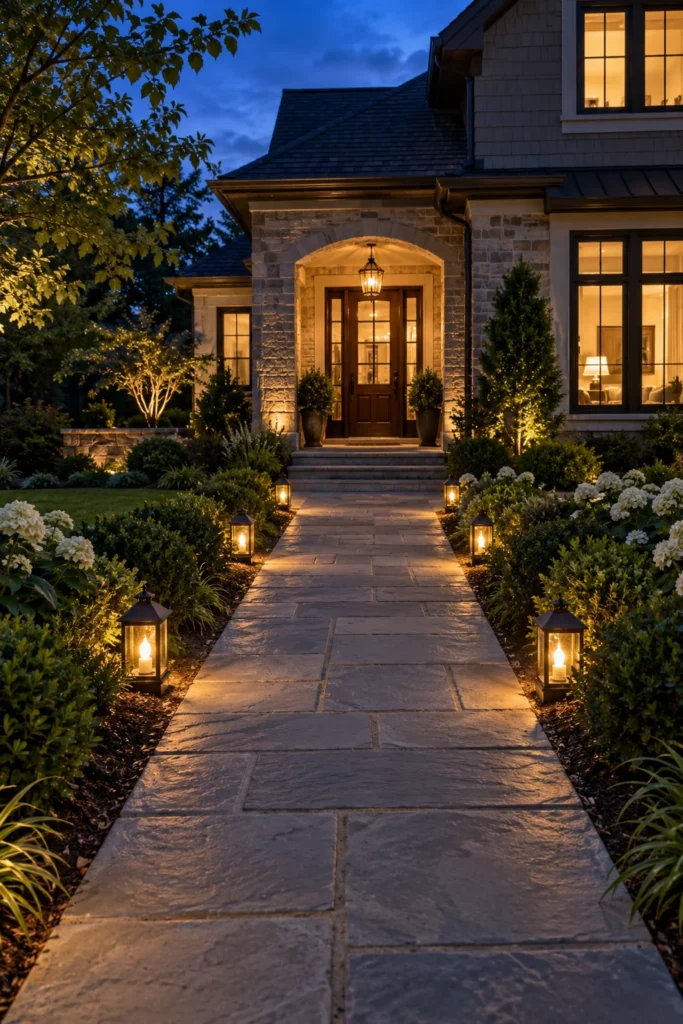
Front walkway with small lanterns to direct the eye directly to your door, day or night. This is a good solution for longer front paths that need a focal line.
My suggestion: Place lanterns evenly, about every 4-6 feet, for an even distribution.
10. Arched Trellis Entry

A simple walkway becomes a veritable entrance moment with an arched trellis to support climbing vines. Ideal for home gardeners who are willing to prune and train a plant over time.
My suggestion: If you need coverage in the first year or two, plant a fast climber, such as clematis.
Lighting and Evening Appeal
Your yard doesn’t need to stop being beautiful at night, and good lighting will show it. This is the most overlooked category.
11. Solar Path Lights
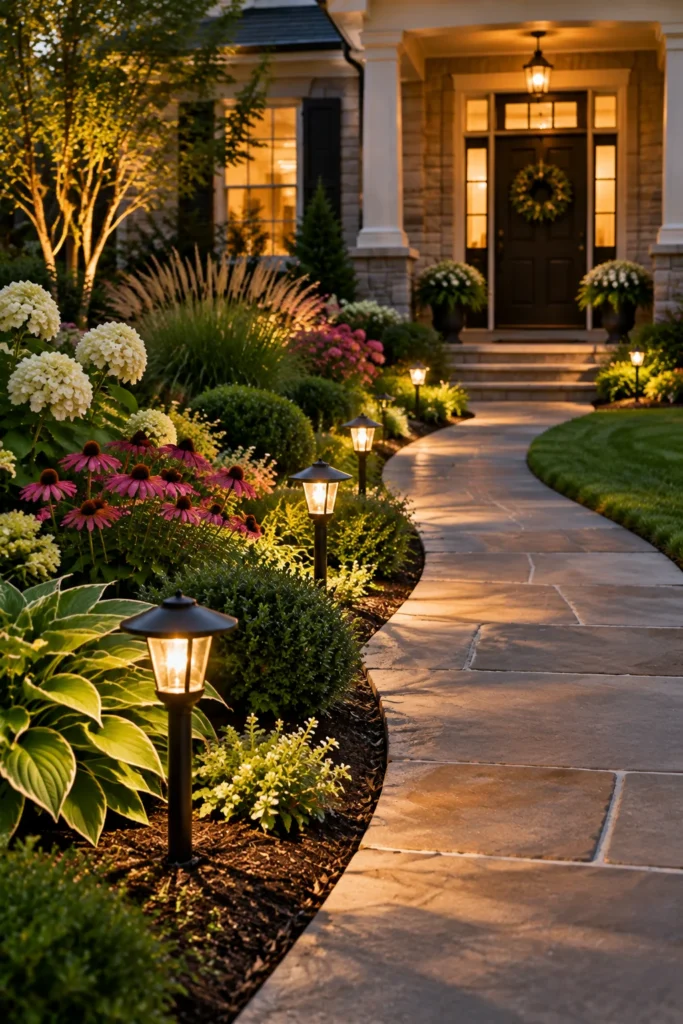
The simplest lighting project is using solar path lights, since there’s no wiring involved. These are ideal for holidaymakers or anyone who wants to see the results in the afternoon.
My advice: Don’t put them in the shade under trees; put them in full sun during the day.
12. Uplighting for Trees

At night, uplighting for a mature tree creates dramatic shadows and makes your entire yard appear larger. This is appropriate for yards with one or more strong-growing trees.
My suggestion: Don’t use cool blue lights; use warm white lights. Light looks much more natural on bark and leaves.
13. Lantern-Style Porch Sconces
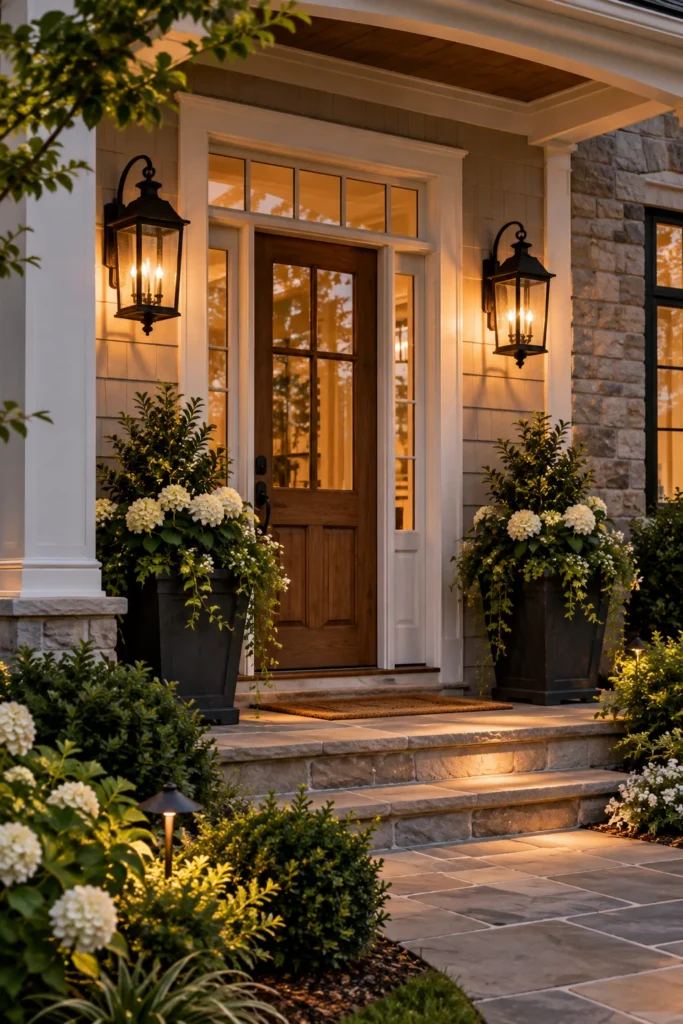
Lantern-style sconces are a great addition to the front door and make it look more interesting at a low cost. An easy weekend project for nearly any homeowner.
My suggestion: If you want to coordinate the finish with your door hardware, try a metal finish.
14. String Lights Over the Entry
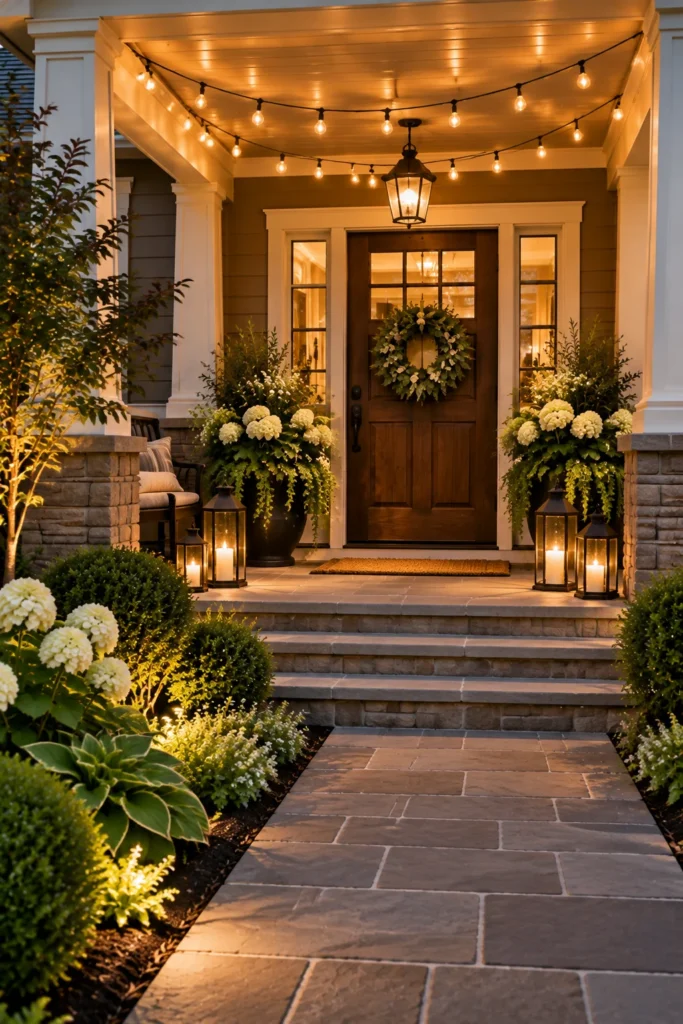
String lights are a great way to illuminate a porch or entryway and create a warm, inviting atmosphere. This is a great idea for homes with an outdoor living space they use for evening entertaining.
My suggestion: Use outdoor-rated LED string lights. Regular indoor lights won’t stand up to the weather.
Structural and Hardscape Features
These are larger projects, but they have a significant visual impact in the completed yard. This group is more expensive and time-consuming.
15. Low Stone Retaining Wall
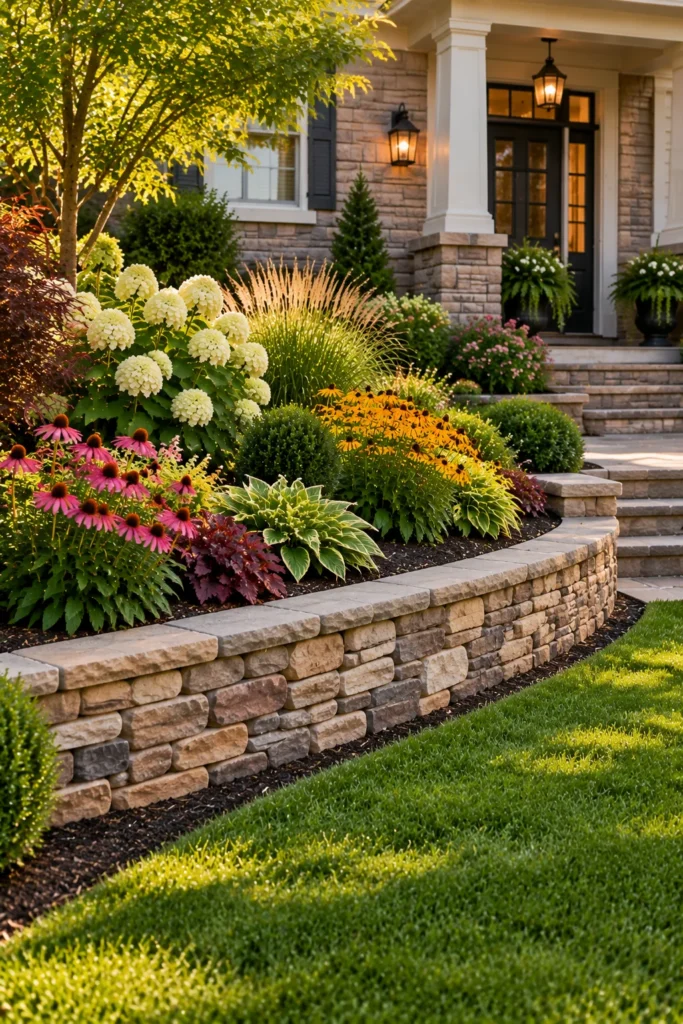
A retaining wall can transform a sloped yard into a multi-level planting area with a low wall. Perfect for yards with any grade change near the street.
My advice: If you need to add more than a couple of feet, check whether you need a permit.
16. Raised Garden Bed Border
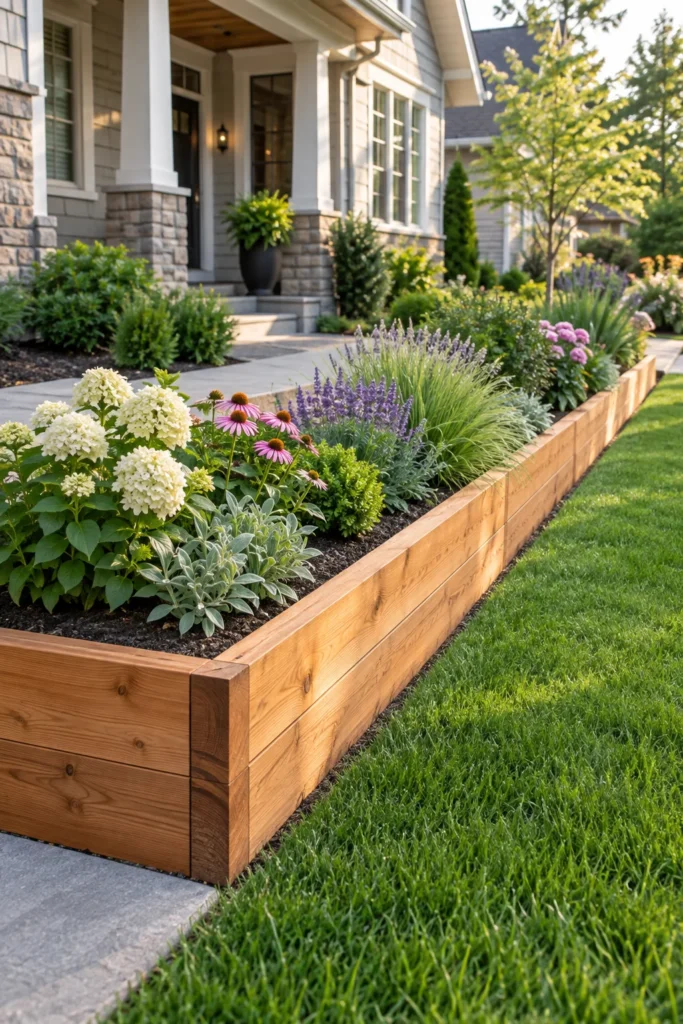
Raised beds at the front of a garden provide structure and make gardening easier on your back. They are ideal for those who want a specific flower or vegetable area in front of the home.
My suggestion: Use rot-resistant wood, such as cedar, so the bed lasts more than a couple of seasons.
17. Decorative Fence Accent

A decorative fence along a bed or property line will add definition without closing off the entire yard. It suits cottage and craftsman-style houses.
My suggestion: Keep the fence around 2 to 3 feet tall to accentuate the space without obscuring the view.
18. Stone or Brick Edging.

Beds and lawns can be edged with simple stone for a neat, tidy look at an affordable price. This is one of the simplest yard style enhancements.
My suggestion: Make sure your edging is slightly lower than your mower height so it rolls right over it.
19. Water Feature Focal Point

If you’re looking for some sound and movement in your otherwise static yard, a small water feature such as a fountain or basin is a great option.
It is suitable for homeowners who want a genuine focal point near the entrance.
My advice: Place the feature near a power source. It will be a lot more costly to run electrical lines later.
Low-Maintenance and Budget-Friendly Options
Not everyone wants a yard that requires weekend after weekend of labour. These options are intentional and require far less maintenance.
20. Mulch Bed Refresh

The easiest, least expensive way to transform an entire yard into a cared-for area in one night is to add fresh mulch. It works in practically any yard, style, or budget.
My advice: Leave a few inches between tree trunks and mulch; otherwise, it will rot.
21. Native Plant Bed
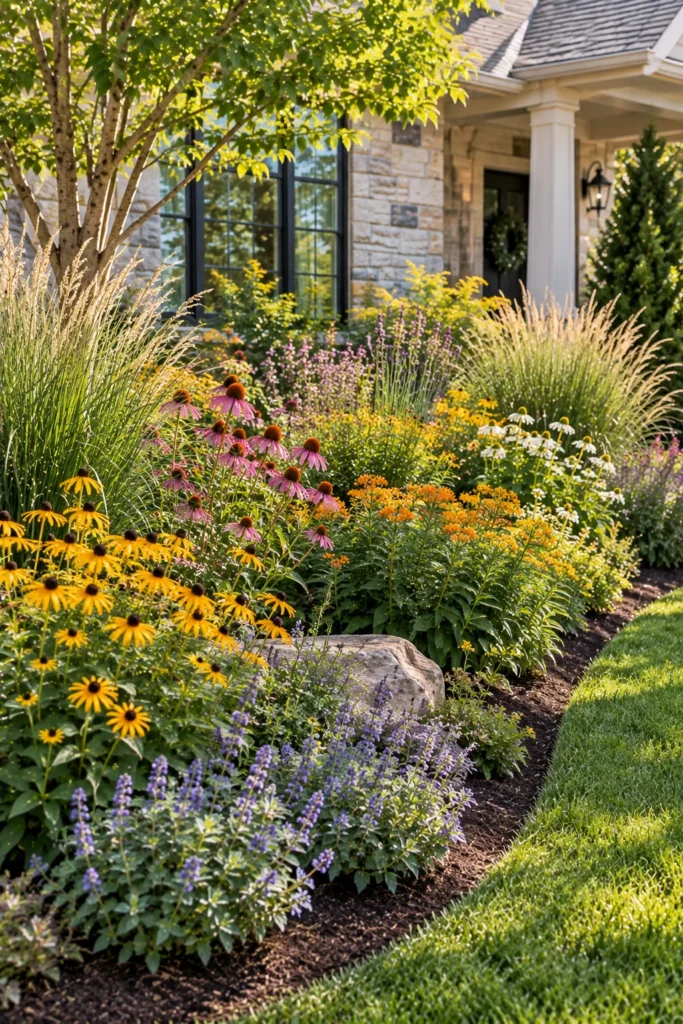
Native plants don’t require as much water or fertiliser as other plants because they are adapted to your climate—the ideal choice for those seeking a low-maintenance garden with a full appearance.
My suggestion: Ask your local extension office for a list of native plants for your area.
22. Ornamental Grass Border
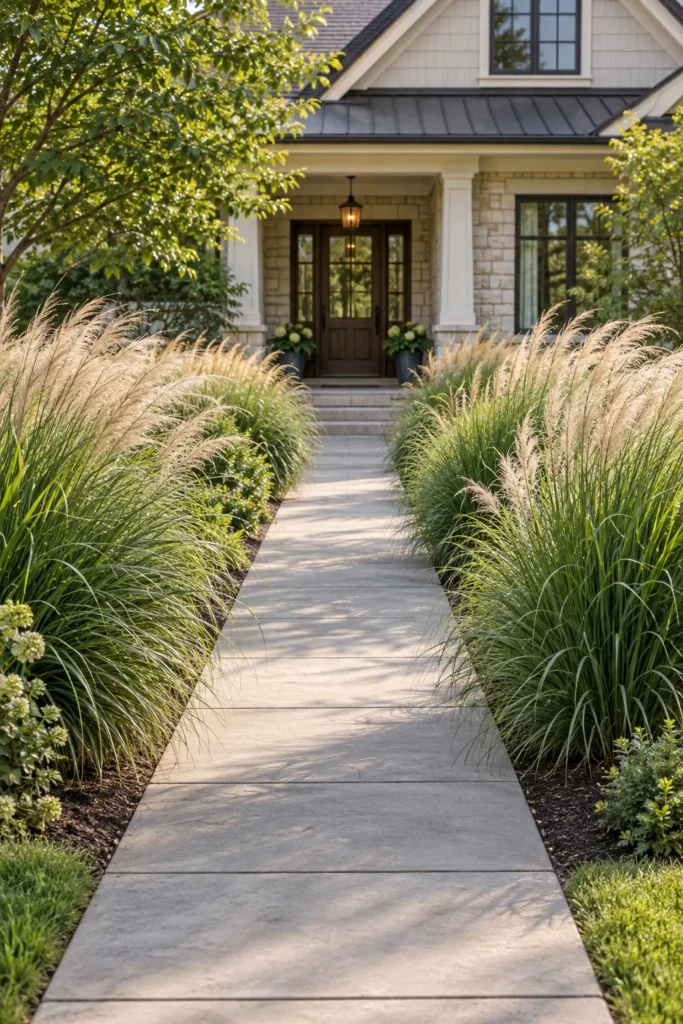
Ornamental grasses provide movement and texture, require little watering and feeding once established. They work well in contemporary and naturalistic landscaping.
My suggestion: Mow grasses back to the ground in late winter before they start to grow.
23. Rock Garden Bed
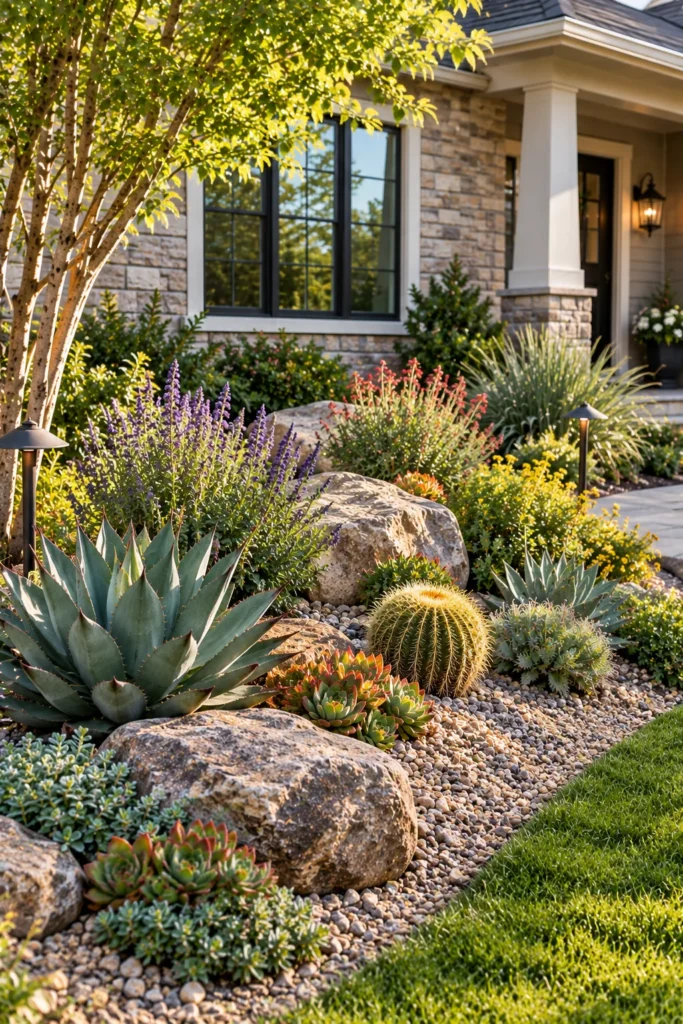
In a rock garden bed, water-hungry plants are replaced with water-resistant stones, gravel, and a few drought-tolerant succulents. Perfect for dry regions or those that don’t want to pay a high water bill.
My suggestion: Vary the rock sizes; don’t use the same size throughout—it looks much more natural.
Unique Focal Points
Each excellent yard has a single thing that captures the initial gaze. These are two options that do just that.
24. Specimen Tree Planting
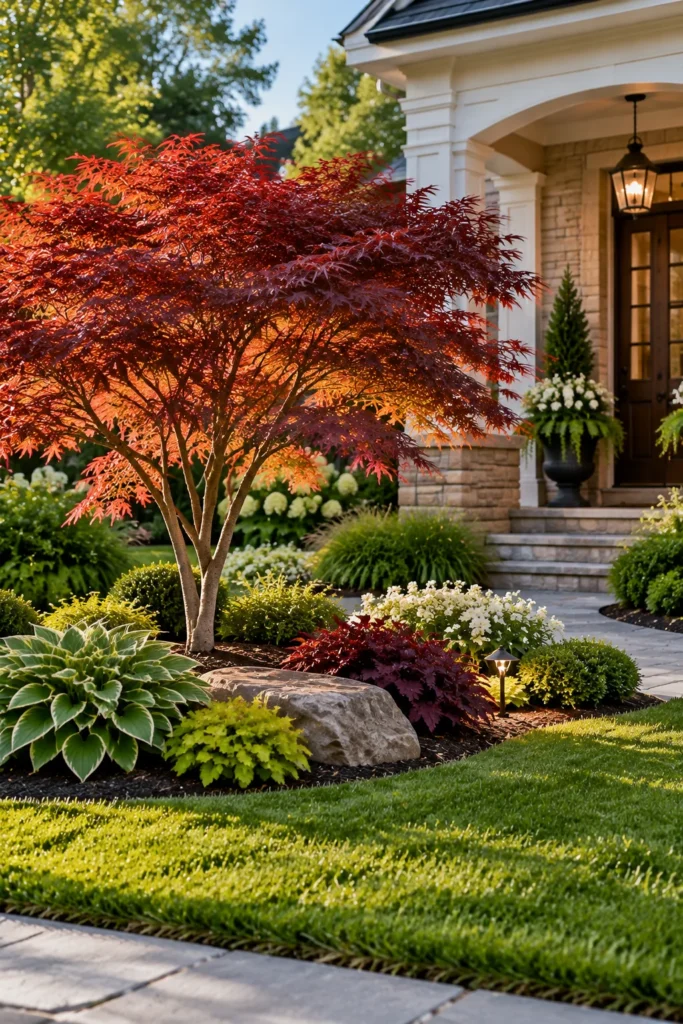
When you plant one specimen tree, such as a Japanese maple, where it can be seen from the street, it instantly grabs attention.
This works best in a yard that doesn’t already have a strong vertical element.
My suggestion: Allow it to grow to full size. Ten years later, when a tree is planted next to the house, there are difficulties.
25. Sculptural Planter or Urn
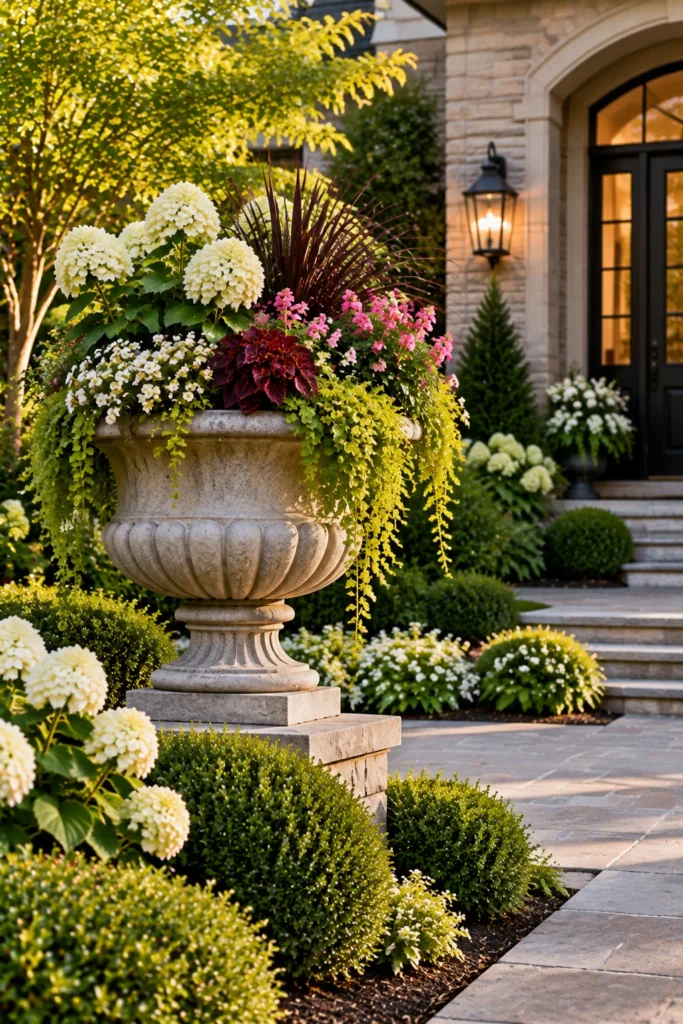
The one large planter – sculptural in form – placed at a focal point in the yard will instantly add elegance with minimal planting.
This is ideal for those who don’t want the burden of continuous upkeep.
My rule : Make it larger than you think you can do. There is a difference between oversized planters and undersized planters: oversized ones are purposeful, while undersized ones are an afterthought.
Quick Comparison: Landscaping Styles
Not sure which overall style fits your yard? Here’s a quick side-by-side.
| Style | Maintenance | Water Needs | Best For |
| Cottage Garden | High | Moderate to High | Flower lovers, hands-on gardeners |
| Modern Minimalist | Low | Low | Clean lines, busy schedules |
| Xeriscape | Very low | Very low | Dry climates, water-conscious homeowners |
| Woodland Naturalistic | Moderate | Moderate | Shaded yards, informal look |
Frequently Asked Questions
How much does front yard landscaping cost on average?
Small updates like mulch and new plants can cost a few hundred dollars, while full redesigns with hardscape often run several thousand. Get a couple of local quotes since prices vary a lot by region.
What’s the cheapest way to boost curb appeal fast?
Fresh mulch, trimmed edges, and a couple of new plants by the door make an immediate difference for very little money. It’s the fastest return on investment on this whole list.
What are the best low-maintenance plants for front yards?
Native plants, ornamental grasses, and evergreen shrubs need the least ongoing care once established. They’re a smart starting point for anyone new to landscaping.
When is the best time of year to start landscaping projects?
Early spring or early fall are ideal since temperatures are mild and plants establish roots more easily. Avoid planting in the peak heat of summer if you can.
Do I need a permit for front yard landscaping projects?
Simple planting and mulch usually don’t require a permit, but retaining walls, fences, and some hardscape often do. Check with your city or HOA before starting anything structural.
Final Thoughts
Your front yard doesn’t need a total overhaul to make a real difference.
Even one or two changes from this list can completely shift how your house feels from the curb.
I started with just a mulch refresh and a curved bed, and that alone changed how I felt pulling into my own driveway.
Bigger projects can wait until you’re ready for them.
Pick one upgrade from this list and get it done before the season changes.